 Food Lens Images are for illustrative purposes only, may be inaccurate, and do not guarantee the presence or absence of specific ingredients.
 Food Lens · Recipe ingredients
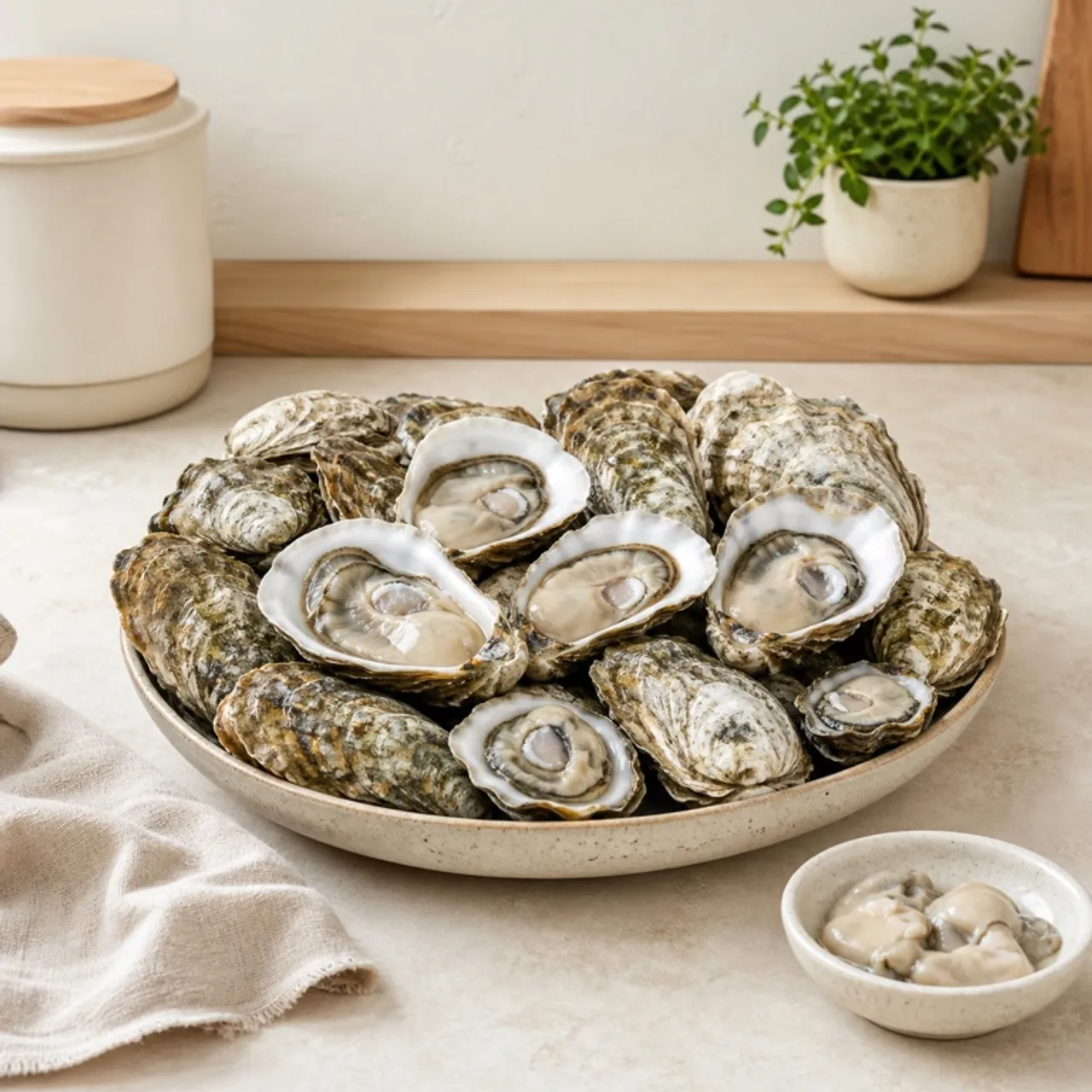
Oysters
Briny and mineral with a clean, oceanic salinity; texture is silky and tender when raw, becoming firmer and more savory when cooked. Flavor ranges from sweet and mild (Pacific, Kumamoto) to bold and metallic (European flat) to richly saline (Atlantic/Eastern).
Lens VerifiedOysters are bivalve mollusks harvested from saltwater estuaries and coastlines, prized for their briny, mineral-rich flavor and silky texture. They are one of the oldest cultivated foods in human history, eaten raw on the half shell or cooked in chowders, fritters, and stuffings. Their flavor varies dramatically by region — from sweet and buttery Pacific varieties to bold, intensely saline Atlantic ones.
Where it comes from
Oysters have been gathered along tidal coastlines since prehistoric times, with evidence of oyster middens — ancient shell mounds — found across Europe, Asia, and the Americas.
Varieties — Key varieties include Eastern oysters (Crassostrea virginica) from the Atlantic US, Pacific oysters (Magallana gigas), Kumamoto, Olympia (a tiny Pacific Northwest native), and European flat oysters (Ostrea edulis). Each imparts distinct salinity and sweetness.
In France, oysters are a New Year's Eve tradition and a symbol of luxury. In the American South, oyster roasts are a communal winter celebration. Japanese kaiseki meals celebrate local oyster varieties as seasonal delicacies.
In a modern kitchen — Oyster bars have become a fixture of modern dining culture. Chefs pair raw oysters with craft cocktails and regional hot sauces, while smoked oysters are popular as a pantry shortcut in dips and compound butters.
Buying it
Buy oysters live, with tightly closed shells or shells that snap shut when tapped. Avoid any that are already open and do not close. Fresh oysters should smell of clean seawater. For shucked oysters sold in jars, look for plump, cream-colored flesh in clear liquid with no sour odor.
Storing it
Canned or smoked oysters keep sealed in the pantry; once opened, refrigerate the rest in a covered container with its liquid and use within a few days. Fresh oysters in the shell need to stay well-chilled and be cooked promptly.
Keeps about 2 days in the fridge.
Out of oysters? Good swaps
General cooking guidance — always check the labels on the products you use. Listahan’s allergen checks run automatically when you plan a recipe in the app. Not medical advice.
Recipes that use oysters
Common questions about oysters
What can I use instead of oysters?
Good swaps include , , . Each behaves a little differently — see the swaps above for notes, and always check labels for allergens.
How do I store oysters?
Canned or smoked oysters keep sealed in the pantry; once opened, refrigerate the rest in a covered container with its liquid and use within a few days. Fresh oysters in the shell need to stay well-chilled and be cooked promptly. It keeps about 2 days in the fridge.
More recipe ingredients
See all


Make oysters about your kitchen — with Listahan Pro
Everything above is free, forever. Pro adds the Household Lens — the same food, seen for your family:
-
Checked for each member
Flags oysters per person against your household's allergies and school rules — not just a generic "contains" tag.
-
Pantry-aware
Knows whether you already have it, what is running low, and the best swap from what is in your kitchen tonight.
-
What it costs near you
A real price from the Presyo community index, so you can plan the budget — not guess.
-
Your household memory
Who likes it, plus your own private notes — brand, where you keep it, who skips it.
Allergen safety is always free — Pro adds the automation, never the safety.
Cook with oysters — safely
Plan a recipe in Listahan and the household allergen check runs automatically — every plan, every swap, every lunchbox. Safety is never paywalled.