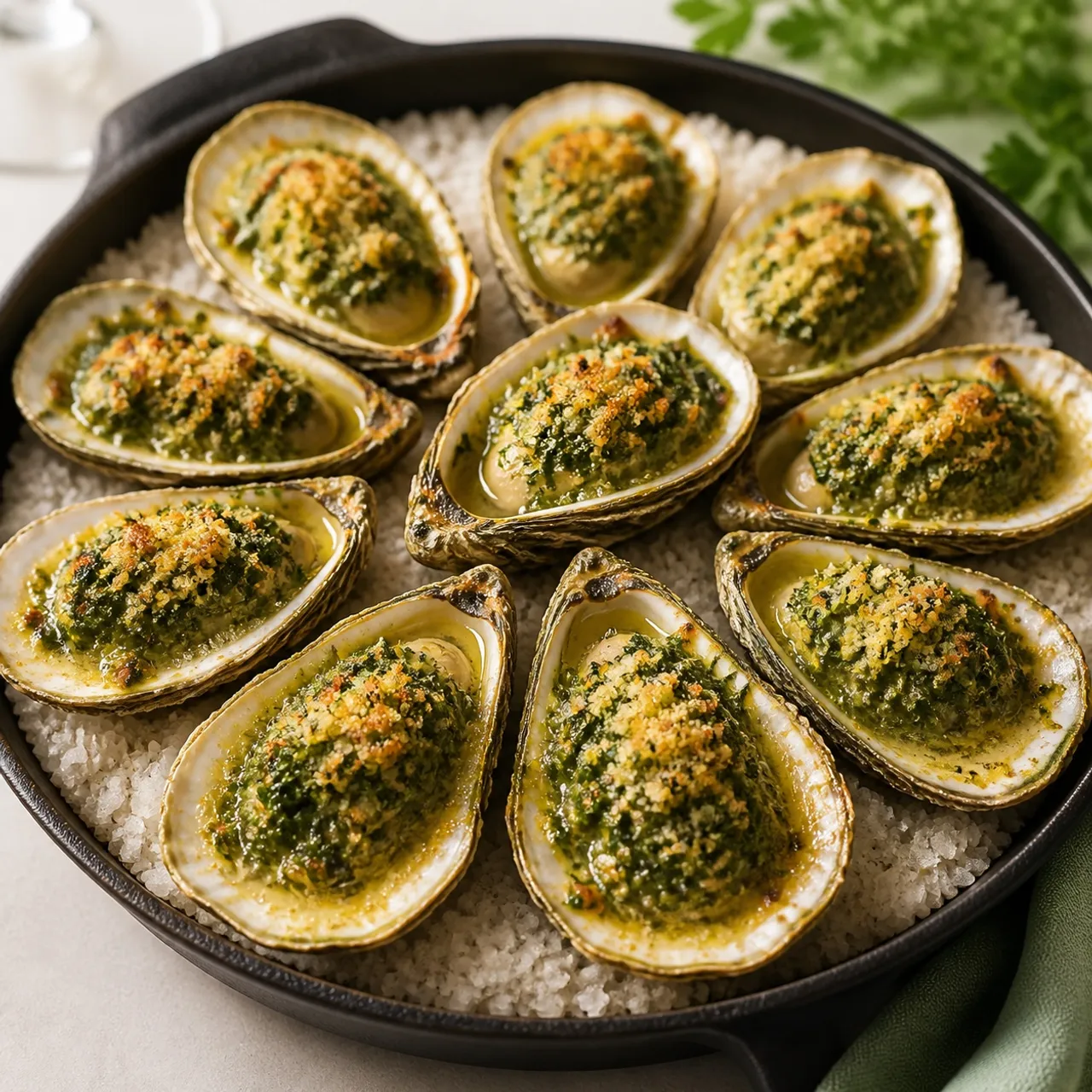
 Cajun & Creole Images are for illustrative purposes only, may be inaccurate, and do not guarantee the presence or absence of specific ingredients.
 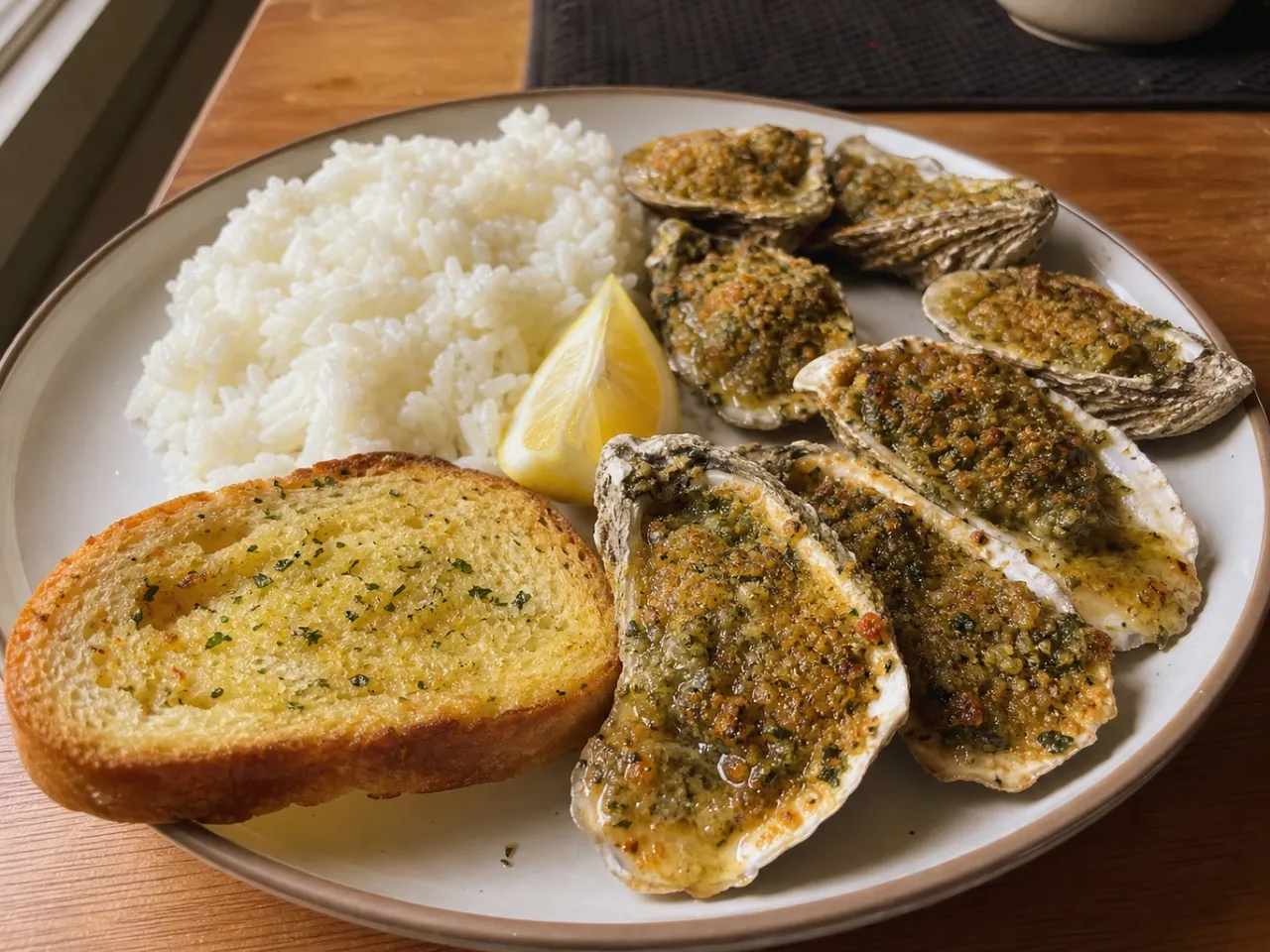 Serving Images are for illustrative purposes only, may be inaccurate, and do not guarantee the presence or absence of specific ingredients.
 Oysters Rockefeller
Plump oysters blanketed in a rich purée of spinach, butter, herbs, and Pernod, then broiled until bubbling — an Antoine's classic and New Orleans at its most elegant.
Contains common allergens
In the app, Listahan checks these against your household automatically.
Instructions
6 steps- 1
Heat the oven to 450 F (230 C) and spread a layer of rock salt on a baking sheet to hold the oyster shells level.
- 2
Melt the butter in a skillet over medium heat and saute the shallot and garlic until softened, about 3 minutes.
- 3
Add the spinach and cook until wilted, then stir in the Pernod if using and cook for 1 minute more; let cool slightly.
- 4
Spoon a small amount of the spinach mixture over each oyster in its shell.
- 5
Top each with a sprinkle of breadcrumbs and Parmesan.
- 6
Nestle the oysters into the rock salt and bake until the topping is golden and the oysters are just cooked through, 8 to 10 minutes; serve immediately.
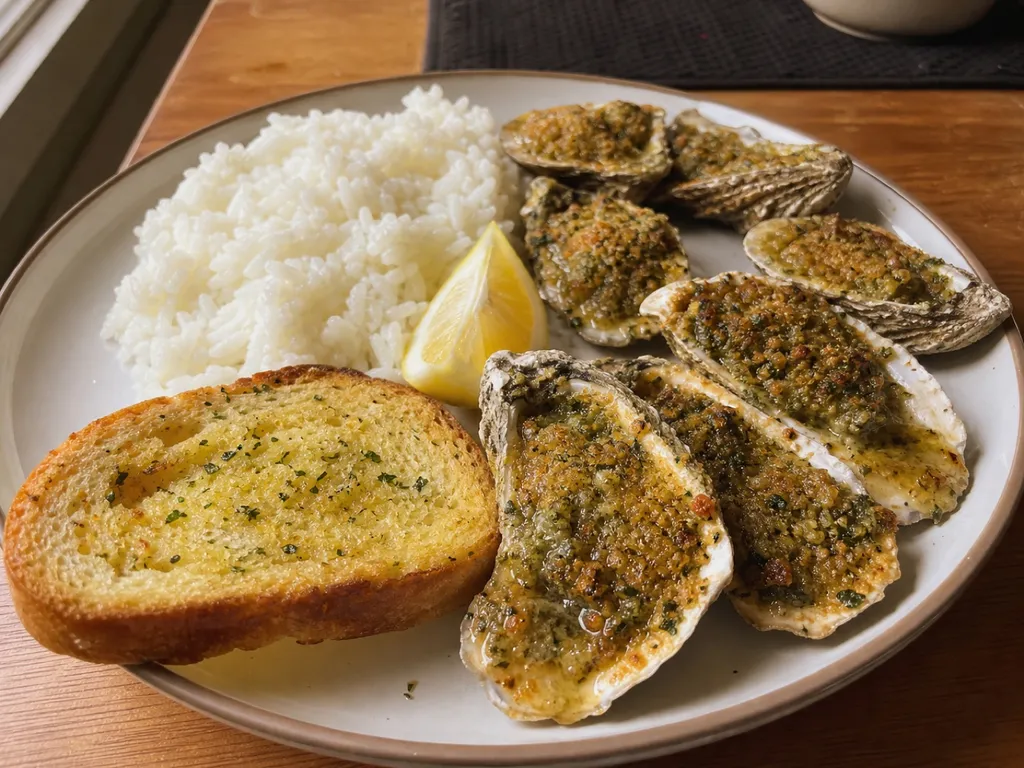 Images are for illustrative purposes only, may be inaccurate, and do not guarantee the presence or absence of specific ingredients.
 Listahan Family Score™
55/100
Works for many families
Score reflects how well this recipe fits a typical busy household. In the app, your Family Score is personalized to your household's allergens, kids, and pantry.
Nutrition
per serving215
Calories
3 g
Protein
11 g
Carbs
18 g
Fat
Estimated per serving. Actual values depend on the brands and portions you use.
Listahan cooking guide
Chef notes & practical guide
Technique notes, ingredient swaps, serve-alongside ideas, storage guidance, and equipment for this recipe.
Cultural context
Oysters Rockefeller was created in 1899 at Antoine's restaurant in New Orleans by Jules Alciatore, who needed a substitute for the French escargots he could no longer source reliably. He topped locally abundant Gulf oysters with a rich, green herb sauce and named the dish after John D. Rockefeller — the wealthiest American of the era — because the sauce was so rich it called for the richest name he could think of. The original recipe remains a closely guarded secret, but the core idea of baked oysters under a verdant, butter-heavy herb mixture has inspired countless variations across Louisiana and beyond.
Listahan note
This version builds the topping from a base of butter, spinach, and aromatic greens, keeping the focus on the briny oyster beneath rather than burying it in cream.
Technique cues
- Drain excess liquid from cooked spinach by squeezing it firmly in a clean kitchen towel — even a small amount of water left behind will dilute the topping and prevent it from browning properly under the broiler.
- Use the oyster's own cupped shell as the baking vessel and nestle it in a bed of rock salt or crumpled foil on the baking sheet to keep it level so the topping stays centered and the oyster liquor doesn't spill.
- Broil close to the element — 4 to 5 inches away — and watch continuously; the topping should bubble and take on golden edges in 3 to 4 minutes, and there is a narrow window between perfectly caramelized and overcooked.
Kitchen flow
- Parallel prep
- Mix the compound butter topping up to an hour ahead and refrigerate; shuck the oysters, set on rock salt on the baking sheet, and top them all at once just before broiling so they go into the oven together.
- Make-ahead
- The compound butter can be made up to 3 days ahead and refrigerated tightly wrapped, or frozen for up to 1 month; bring to room temperature for 15 minutes before spreading.
- Leftover move
- Any unused compound butter is excellent melted over grilled fish, tossed with pasta, or spread on bread for a quick savory toast.
- Cleanup rhythm
- Line the baking sheet with rock salt before setting the oyster shells — it stabilizes the shells and protects the pan from shell fragments; discard the salt and rinse the sheet immediately after serving.
Ingredient brief
Role, handling, and swap guidance for each key ingredient.
fresh oysters on the half shell
centerpiece
Purpose: Live oysters shucked fresh carry the briny, oceanic flavor that the dish is built around; the liquor left in the shell after shucking also steams the oyster gently from below as it bakes.
Handling: Shuck just before assembling or ask your fishmonger to shuck same-day; keep refrigerated and level on ice until ready to top and bake.
Adaptation: No real substitute for live oysters; jarred oysters lack the shell and lose significant texture.
fresh spinach
topping base and color
Purpose: Spinach provides the signature green color and mild, vegetal body that balances the richness of butter and the saltiness of the oyster without overpowering its delicate flavor.
Handling: Wilt in a dry pan, transfer to a towel, and squeeze out as much water as possible before chopping and combining with other topping ingredients.
Adaptation: Watercress and tarragon in varying ratios is closer to classic versions; kale requires longer wilting and has a stronger flavor.
unsalted butter
richness and binding
Purpose: Butter is the backbone of the topping, carrying fat-soluble flavors from the herbs and garlic while providing the richness that justified Rockefeller's name in the first place.
Handling: Soften to room temperature before mixing with the greens and aromatics so it blends into a cohesive, spreadable compound.
Adaptation: Dairy-free butter substitutes work structurally but will have a lighter flavor; do not use oil, which won't hold the topping together.
Pernod or anise-flavored liqueur
aromatic depth
Purpose: A splash of Pernod adds a subtle anise note that echoes the tarragon or fennel fronds used in classical versions and gives the topping a complexity that separates it from plain buttered spinach.
Handling: Stir a small amount — about a teaspoon per serving — directly into the compound butter mixture; it will cook off under the broiler, leaving only aroma.
Adaptation: Omit entirely and add a pinch of fennel pollen or dried tarragon to achieve a similar anise background without alcohol.
breadcrumbs
crust and texture contrast
Purpose: A thin layer of breadcrumbs on top absorbs butter and browns under the broiler, creating a contrast of textures between the crispy topping and the soft, warm oyster beneath.
Handling: Panko creates a lighter, crispier crust than standard breadcrumbs; toss with a small amount of melted butter before spreading over the topping.
Adaptation: Gluten-free panko works equally well; skip entirely for a saucier, crust-free version.
Parmesan
umami and browning
Purpose: Finely grated Parmesan adds savory depth and accelerates browning under the broiler due to its low moisture and high protein content.
Handling: Grate finely and mix into the topping or sprinkle over the breadcrumbs as the outermost layer.
Adaptation: Pecorino Romano is sharper and saltier but works well; omit for a dairy-reduced version.
Technique notes
- The broiler is the only right tool for this dish — baking at conventional oven heat takes too long and steams the oyster past its ideal just-cooked texture; the goal is to heat the oyster through while barely browning the top, which takes 3-4 minutes under a hot broiler.
- Keep the topping thin — about a tablespoon per oyster — so the oyster can be tasted through it; a thick mound of spinach butter defeats the purpose and makes the dish heavy.
- Rock salt is the traditional base for presenting baked oysters at the table — it holds shells level, retains heat, and looks striking; crumpled foil achieves the same function if rock salt is unavailable.
Ingredient swaps
- Shellfish-safe direction
- For guests who cannot eat oysters but love the flavor profile, use large mushroom caps or thick zucchini rounds as the base and treat with the same topping and broiling method.
- Gluten-free direction
- Substitute gluten-free panko breadcrumbs in equal measure — they brown and crisp similarly under the broiler.
- Dairy-free option
- Use a high-quality dairy-free butter and omit the Parmesan, adding a tablespoon of nutritional yeast for umami in its place.
Serve alongside
- Shrimp remoulade on bibb lettuce
- French bread with Creole butter
- Crisp green salad with champagne vinaigrette
- Muscadet or Chablis
- Classic Sazerac cocktail
- Sparkling water with lemon
Serving suggestions only — check pairings for your household's allergens.
Storage & reheating
- Assembled, uncooked oysters can be topped and refrigerated for up to 30 minutes before broiling — any longer and the topping begins to weep moisture into the shell.
- Cooked Oysters Rockefeller do not store well; serve immediately from the oven, as the texture of a reheated oyster deteriorates significantly.
Equipment
- Rimmed baking sheet lined with rock salt or crumpled foil — stabilizes shells and protects the pan
- Oyster knife and protective glove or thick kitchen towel for safe shucking
- Broiler-safe oven with a top element — necessary for the fast, high-heat finish
- Small offset spatula or spoon — for spreading the compound butter evenly over each oyster
Make this household-aware
Listahan Pro checks this recipe against your household's allergens, finds pantry-aware swaps, builds the shopping list, and helps you plan the week around it.
Plan it in Listahan
Add Oysters Rockefeller to your week, check it against your household's allergens, and build the shopping list automatically.
More Cajun & Creole recipes
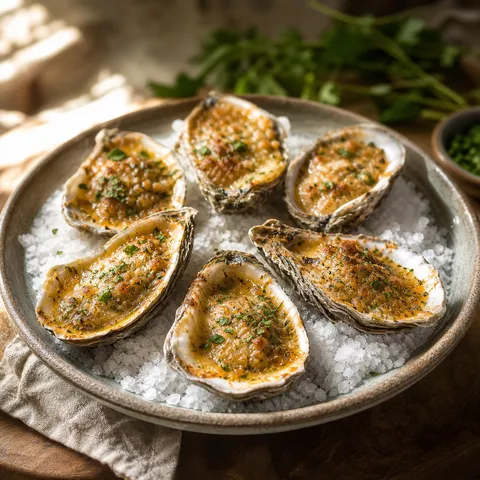 Cajun & Creole Lens Verified Images are for illustrative purposes only, may be inaccurate, and do not guarantee the presence or absence of specific ingredients.
 Oysters Bienville
A classic New Orleans baked oyster dish crowned with a rich shrimp-and-mushroom cream sauce, browned to perfection on the half shell.
 Cajun & Creole Lens Verified Images are for illustrative purposes only, may be inaccurate, and do not guarantee the presence or absence of specific ingredients.
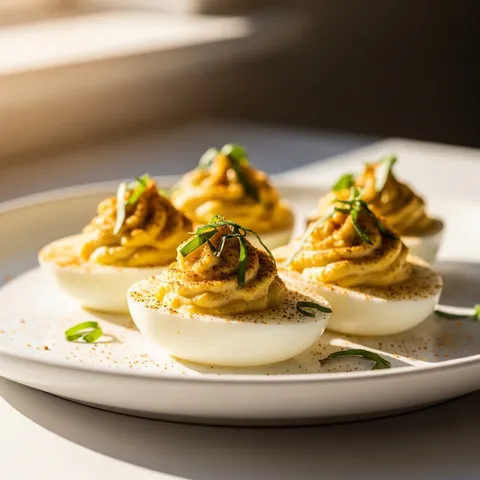
 Cajun Deviled Eggs
Classic deviled eggs with a Louisiana twist — creamy yolk filling spiked with hot sauce, Creole mustard, and cayenne, topped with a sprinkle of smoked paprika.
 Cajun & Creole Lens Verified Images are for illustrative purposes only, may be inaccurate, and do not guarantee the presence or absence of specific ingredients.
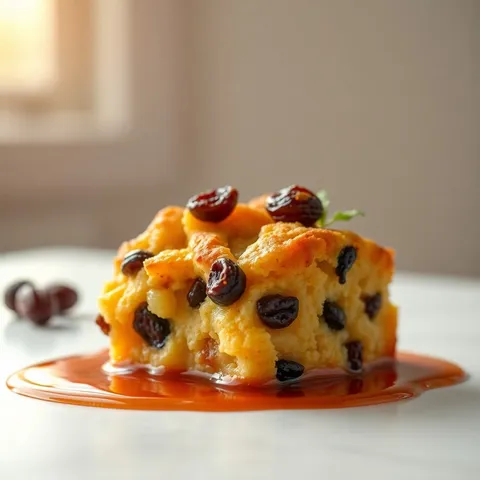
 Creole Bread Pudding
Day-old French bread soaked in a rich custard of cream, eggs, and vanilla, baked golden, then drowned in a warm bourbon-laced whiskey sauce.