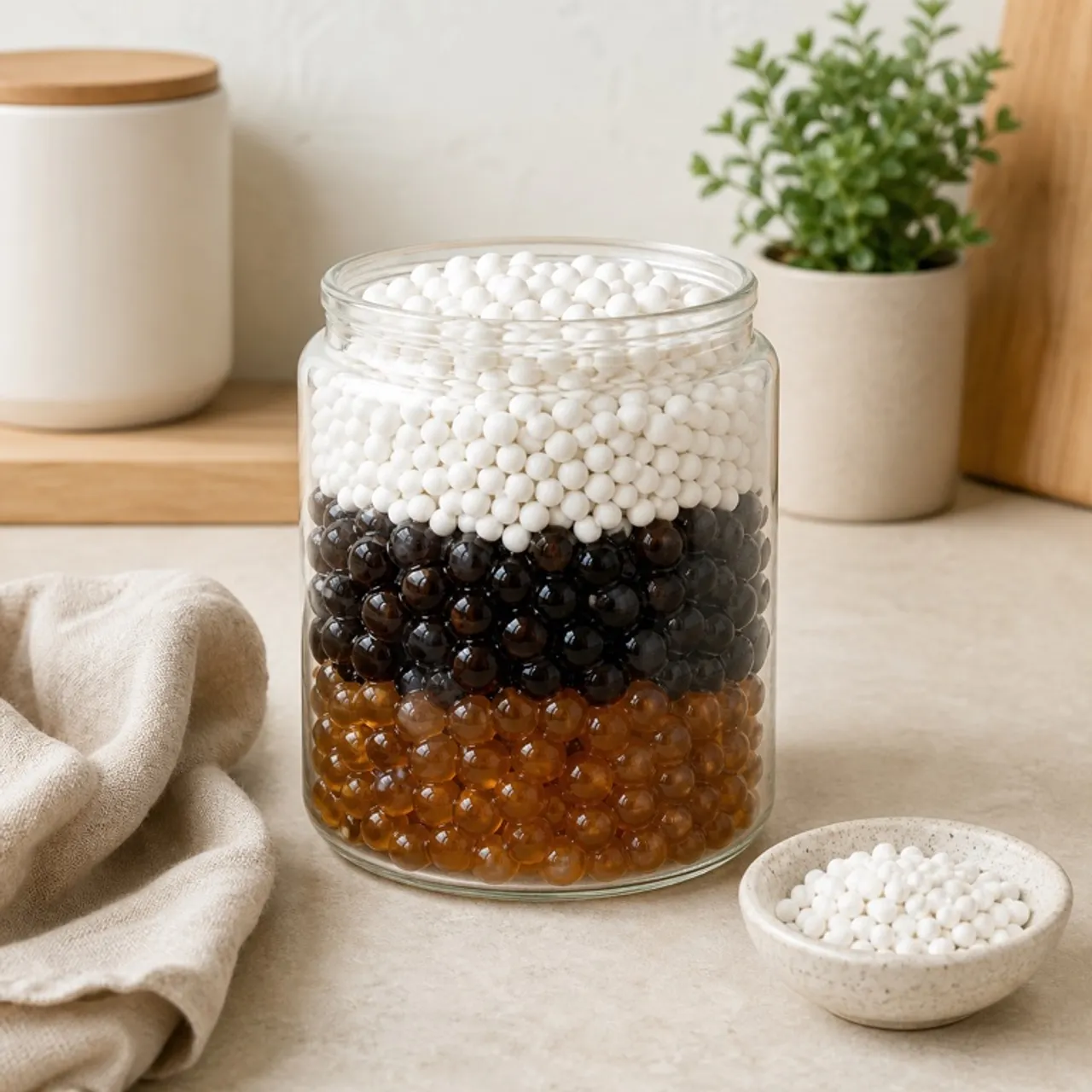
 Food Lens Images are for illustrative purposes only, may be inaccurate, and do not guarantee the presence or absence of specific ingredients.
 Food Lens · Recipe ingredients
Tapioca Pearls
Almost flavorless on their own, with a distinctively springy, chewy, almost gummy texture; they absorb and carry the sweetness of whatever syrup or liquid they're cooked in.
Lens VerifiedTapioca pearls are small, chewy spheres made from tapioca starch extracted from cassava root. They are best known as the signature 'bubbles' in bubble tea, but they also star in creamy coconut milk desserts, Filipino ginataan, and Southeast Asian puddings. When cooked, they turn from chalky white to translucent and develop a satisfying, springy bite.
Where it comes from
From a South American root that crossed oceans, tapioca pearls became the defining chew of Taiwanese bubble tea and the heart of generations of Southeast Asian coconut sweets.
Varieties — Standard pearls are about 6–8mm; mini pearls (boba) run 3–5mm. Black pearls get their color from brown sugar or caramel added during production. White/clear pearls are the uncolored original. Quick-cooking and instant versions are also available.
Bubble tea has become a global youth phenomenon originating from Taiwan's night market culture. In Southeast Asia, tapioca pearls in coconut desserts are a multigenerational comfort food long predating the bubble tea wave.
In a modern kitchen — Cooked pearls begin to harden after a few hours, so they're best prepared close to serving time or kept warm in sugar syrup.
Buying it
Look for uniformly sized, dry pearls with no clumping. Black pearls are most common for bubble tea; white pearls suit lighter desserts where color matters. Check the package for cooking time — standard pearls take 20–30 minutes; quick-cook versions promise less but deliver slightly less chew.
Storing it
Store dried tapioca pearls in a sealed container in a cool, dry pantry. Once cooked, they dry out and harden quickly, so use them the same day and refrigerate leftovers only briefly, in syrup.
Keeps about 1 year in the pantry.
Out of tapioca pearls? Good swaps
- sago pearls — Made from palm starch rather than cassava; similar appearance and chew; used interchangeably in most desserts
- small taro balls — Chewy, slightly starchy; common in Taiwanese desserts alongside or instead of tapioca
- konjac pearls — Firmer and lower-calorie; similar visual effect in drinks
General cooking guidance — always check the labels on the products you use. Listahan’s allergen checks run automatically when you plan a recipe in the app. Not medical advice.
Recipes that use tapioca pearls
Common questions about tapioca pearls
Is tapioca pearls vegan?
Tapioca Pearls is generally plant-based and suitable for a vegan diet, but brands differ — confirm on the label.
What can I use instead of tapioca pearls?
Good swaps include sago pearls, small taro balls, konjac pearls. Each behaves a little differently — see the swaps above for notes, and always check labels for allergens.
How do I store tapioca pearls?
Store dried tapioca pearls in a sealed container in a cool, dry pantry. Once cooked, they dry out and harden quickly, so use them the same day and refrigerate leftovers only briefly, in syrup. It keeps about 1 year in the pantry.
More recipe ingredients
See all


Make tapioca pearls about your kitchen — with Listahan Pro
Everything above is free, forever. Pro adds the Household Lens — the same food, seen for your family:
-
Checked for each member
Flags tapioca pearls per person against your household's allergies and school rules — not just a generic "contains" tag.
-
Pantry-aware
Knows whether you already have it, what is running low, and the best swap from what is in your kitchen tonight.
-
What it costs near you
A real price from the Presyo community index, so you can plan the budget — not guess.
-
Your household memory
Who likes it, plus your own private notes — brand, where you keep it, who skips it.
Allergen safety is always free — Pro adds the automation, never the safety.
Cook with tapioca pearls — safely
Plan a recipe in Listahan and the household allergen check runs automatically — every plan, every swap, every lunchbox. Safety is never paywalled.