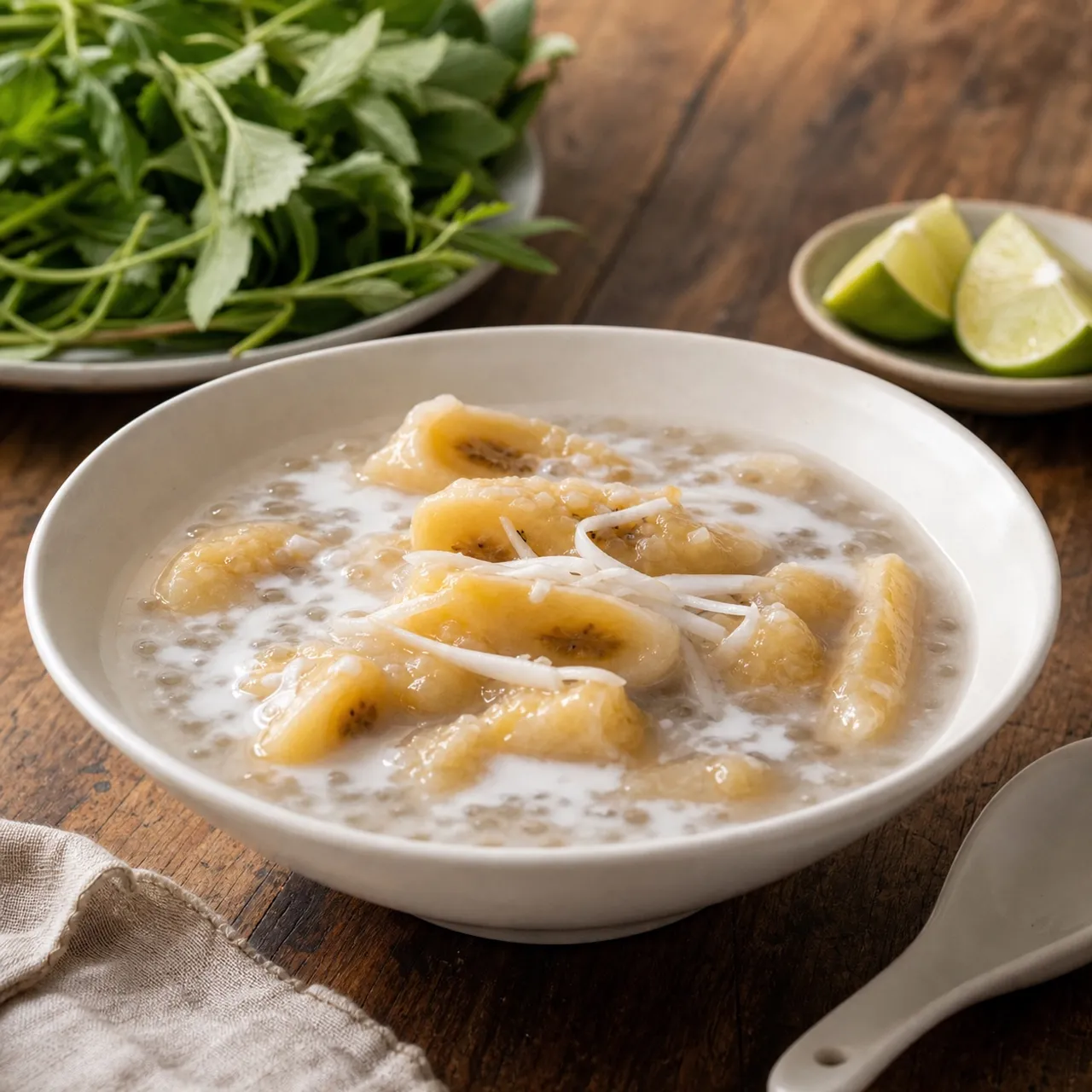
 Vietnamese Images are for illustrative purposes only, may be inaccurate, and do not guarantee the presence or absence of specific ingredients.
 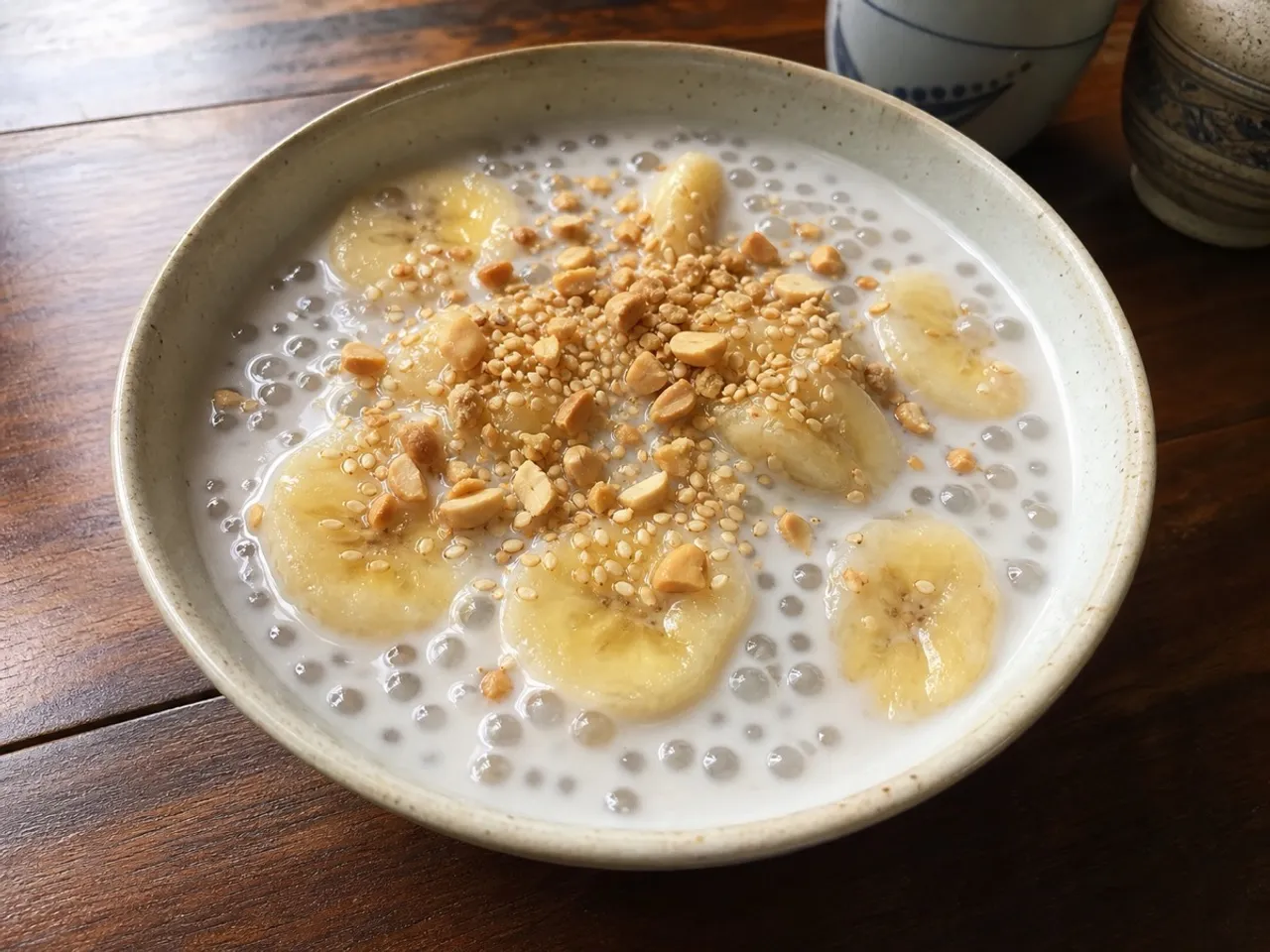 Serving Images are for illustrative purposes only, may be inaccurate, and do not guarantee the presence or absence of specific ingredients.
 Chè Chuối (Banana, Coconut and Tapioca Dessert)
A warm, sweet soup made with bananas, coconut milk, and tapioca pearls.
Contains common allergens
In the app, Listahan checks these against your household automatically.
Good to know
- One-pot
- Ready in under 30 minutes
Matched from this dish's own ingredients and timing. Browse more: one-pot dinners30-minute meals
Instructions
6 steps- 1
Prepare Tapioca: Soak the small tapioca pearls in cold water for 15 minutes. Drain.
- 2
Prepare Bananas: Peel the bananas and cut them diagonally into 1/2-inch thick slices. Toss them with 1 tbsp of sugar and let sit for 10 minutes.
- 3
Cook Tapioca: In a pot, bring 2 cups of water to a boil. Add the soaked tapioca pearls and simmer for 10 minutes until they turn translucent with just a tiny white dot in the center. Do not drain.
- 4
Make Soup: Pour the coconut milk into the pot with the tapioca. Add the remaining sugar and salt. Bring to a very gentle simmer (do not boil rapidly or the coconut milk may separate).
- 5
Add Bananas: Gently drop the banana slices into the simmering liquid. Cook for 5-7 minutes until the bananas are tender but still hold their shape.
- 6
Serve: Ladle the warm soup into small bowls. Top generously with crushed peanuts and toasted sesame seeds.
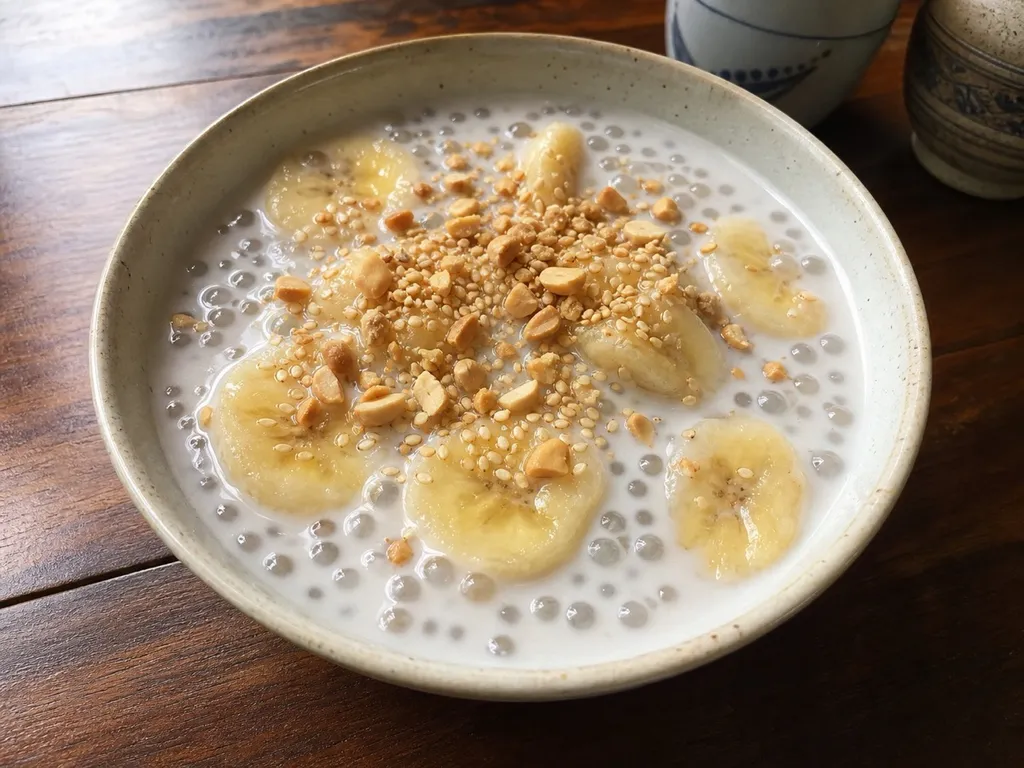 Images are for illustrative purposes only, may be inaccurate, and do not guarantee the presence or absence of specific ingredients.
 Listahan Family Score™
78/100
Good fit for most families
Score reflects how well this recipe fits a typical busy household. In the app, your Family Score is personalized to your household's allergens, kids, and pantry.
Nutrition
per serving175
Calories
3 g
Protein
38 g
Carbs
3 g
Fat
Estimated per serving. Actual values depend on the brands and portions you use.
Listahan cooking guide
Chef notes & practical guide
Technique notes, ingredient swaps, serve-alongside ideas, storage guidance, and equipment for this recipe.
Cultural context
Che chuoi is one of the most beloved everyday desserts across southern Vietnam, sold by street vendors in small plastic cups or glass bowls and eaten warm or at room temperature throughout the day. Che (Vietnamese sweet soups and puddings) form a broad dessert category distinct from baked sweets, and the chuoi (banana) version relies on the starchy Saba banana or plantain, which holds its shape during simmering unlike the Cavendish bananas common in Western grocery stores. The tapioca pearls and coconut milk are the dish's twin signatures.
Listahan note
This version specifies Saba bananas or firm plantains because they hold shape and provide the right starchy texture when simmered; Cavendish bananas turn to mush and make the che soupy and indistinct.
Technique cues
- Cook tapioca pearls separately in plenty of water before adding to the coconut milk — adding dry pearls directly to coconut milk causes them to stick together and to the pot, producing gummy clumps rather than individual pearls.
- Add the banana slices to the simmering coconut mixture only in the final 5 minutes; prolonged heat destroys their texture and they dissolve into the liquid, losing their role as the dish's centerpiece.
- Thick coconut milk added at the very end (off the heat) rather than cooked through the entire process preserves its richness and prevents the cream from splitting into a greasy layer, which happens when coconut fat is overcooked.
Kitchen flow
- Parallel prep
- Cook tapioca pearls in a separate pot while you prepare the coconut milk base in another; both will be ready around the same time so you can combine them for the final simmer.
- Make-ahead
- The che can be made up to 4 hours ahead; add the banana slices and stir in the thick coconut milk only when reheating before serving to prevent the banana from over-softening.
- Leftover move
- Leftover che chuoi can be refrigerated and served cold over crushed ice the next day as a refreshing cold dessert — add a splash of coconut milk to loosen it before serving.
- Cleanup rhythm
- The tapioca pot needs soaking immediately in hot water — cooked tapioca bonds to the bottom and sides if it dries; the coconut milk pot rinses easily while still warm.
Ingredient brief
Role, handling, and swap guidance for each key ingredient.
4 ripe Saba bananas or plantains (must be firm, not mushy Cavendish)
main body and sweetness
Purpose: Saba bananas and plantains contain more starch and hold their shape during simmering, providing the distinct tender-firm texture the dessert is built around.
Handling: Peel and slice on a diagonal into 1-inch pieces so they look attractive in the bowl; do not slice too thin or they will soften too quickly.
Adaptation: Yellow plantains (not fully black-ripe) sliced the same way are the most widely available substitute in North American grocery stores.
1/4 cup small tapioca pearls (bot bang)
textural contrast and body
Purpose: Fully cooked tapioca pearls become translucent and chewy, providing the signature textural element that distinguishes che from a simple fruit compote.
Handling: Simmer in plenty of unsalted water for 15-20 minutes until fully translucent with no white center; drain and rinse in cold water to stop cooking and prevent clumping.
Adaptation: Sago pearls behave identically and are interchangeable at the same measurement.
1 can (14 oz) coconut milk
cooking medium and rich cream base
Purpose: Coconut milk provides the fatty, fragrant liquid that carries all other flavors and transforms the dessert from a simple syrup into something rich and satisfying.
Handling: Shake the can well before opening; if the recipe calls for thick coconut cream on top, open without shaking and scoop the solidified cream off the surface.
Adaptation: Oat cream (culinary grade) can replace coconut milk for a nut-free, coconut-free version, though the flavor profile changes significantly.
1/3 cup sugar
sweetness
Purpose: Sugar sweetens the che to a level that complements the natural sweetness of the banana without overwhelming it; Saba bananas and plantains are less sweet than Cavendish, so the sugar does more work.
Handling: Add early in the coconut milk simmer so it dissolves completely before the banana is added.
Adaptation: Palm sugar adds a slightly caramel, slightly smoky note that makes the dessert taste more complex and is traditional in some regional versions.
1/4 cup crushed roasted peanuts
garnish texture and fat
Purpose: Peanuts provide the savory-salty crunch that contrasts the sweet, creamy base — the sweet-salty interplay is a deliberate finishing note in Vietnamese dessert tradition.
Handling: Crush roughly and scatter just before serving so they do not soften in the warm liquid.
Adaptation: Toasted sesame seeds, used in the same way, give a subtler nuttiness and work well as a peanut-free option.
Technique notes
- A pinch of salt in the coconut milk base amplifies all the other flavors significantly — the dish tastes flat without it even if the peanut garnish is salted.
- Serve warm rather than hot; at very high temperatures the coconut milk can break and the separate fat appears greasy on the surface — pulling it off the heat and resting for 2 minutes before serving prevents this.
- For a restaurant-style presentation, ladle the warm che into a glass bowl, add a tablespoon of the reserved thick coconut cream on top, and scatter the sesame seeds and peanuts in a pattern rather than stirring them in — the contrast of white cream against the yellow che is the visual signature of the dish.
Ingredient swaps
- Peanut-free direction
- Replace crushed peanuts with toasted sesame seeds or crushed roasted pumpkin seeds for a similar salty-crunchy garnish without allergen risk.
- Lower-sugar option
- Reduce sugar to 1/4 cup and allow the natural sweetness of ripe Saba bananas to compensate; the che will be noticeably less sweet but still balanced.
- Vegan confirmation
- This recipe is naturally vegan as written; confirm the sugar brand is vegan (some use bone char in processing) if that is a concern.
Serve alongside
- other Vietnamese che served alongside for a che party spread (che ba mau, che dau xanh)
- plain sticky rice (xoi) to contrast the sweet, creamy dessert
- fresh lychee or longan fruit as a palate cleanser
- jasmine green tea, served hot — the astringency cuts through the coconut richness
- cold Vietnamese iced coffee (ca phe sua da) as a contrast pairing
- plain warm water, which is the traditional accompaniment for Vietnamese sweet desserts
Serving suggestions only — check pairings for your household's allergens.
Storage & reheating
- Refrigerate covered for up to 3 days; the tapioca pearls harden when cold, which is why the dish is traditionally served warm or at room temperature.
- Reheat gently on the stovetop over low heat with a splash of coconut milk or water to loosen; stir frequently to prevent sticking.
- The che does not freeze well — tapioca pearls become opaque and grainy after thawing.
Equipment
- medium saucepan for the coconut milk base
- separate small saucepan for cooking tapioca pearls
- fine mesh strainer for draining and rinsing tapioca
- wide shallow bowls or glasses for serving
Make this household-aware
Listahan Pro checks this recipe against your household's allergens, finds pantry-aware swaps, builds the shopping list, and helps you plan the week around it.
Plan it in Listahan
Add Chè Chuối (Banana, Coconut and Tapioca Dessert) to your week, check it against your household's allergens, and build the shopping list automatically.
More Vietnamese recipes
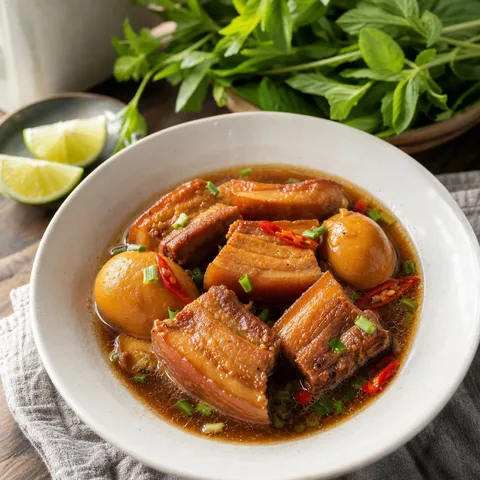 Vietnamese Lens Verified Images are for illustrative purposes only, may be inaccurate, and do not guarantee the presence or absence of specific ingredients.
 Thịt Kho Tàu (Caramelized Pork and Eggs)
Meltingly tender pork belly and hard-boiled eggs braised in a rich, sweet, and savory coconut juice caramel, perfect over steamed rice.
 Vietnamese Lens Verified Images are for illustrative purposes only, may be inaccurate, and do not guarantee the presence or absence of specific ingredients.
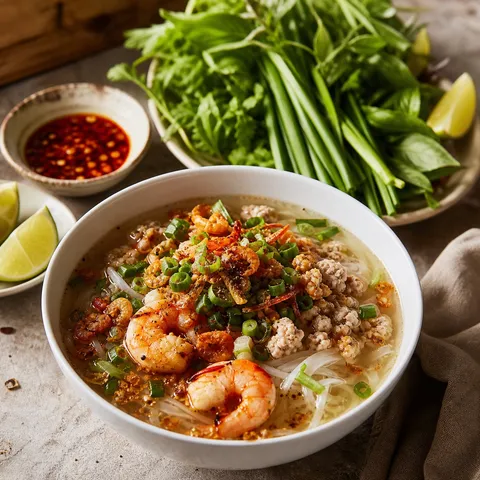
 Hủ Tiếu (Pork and Seafood Noodle Soup)
A Vietnamese pork-bone broth noodle soup loaded with ground pork, shrimp, and dried shrimp over chewy tapioca noodles, finished with garlic chives and fried garlic.
 Vietnamese Lens Verified Images are for illustrative purposes only, may be inaccurate, and do not guarantee the presence or absence of specific ingredients.
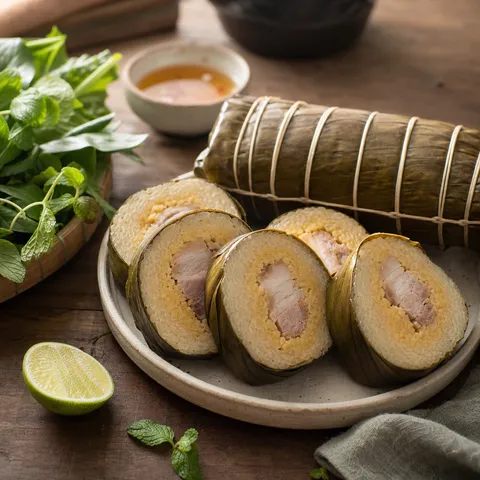
 Bánh Tét (Cylindrical Sticky Rice Cake)
The Southern equivalent of Bánh Chưng, rolled into a cylinder.