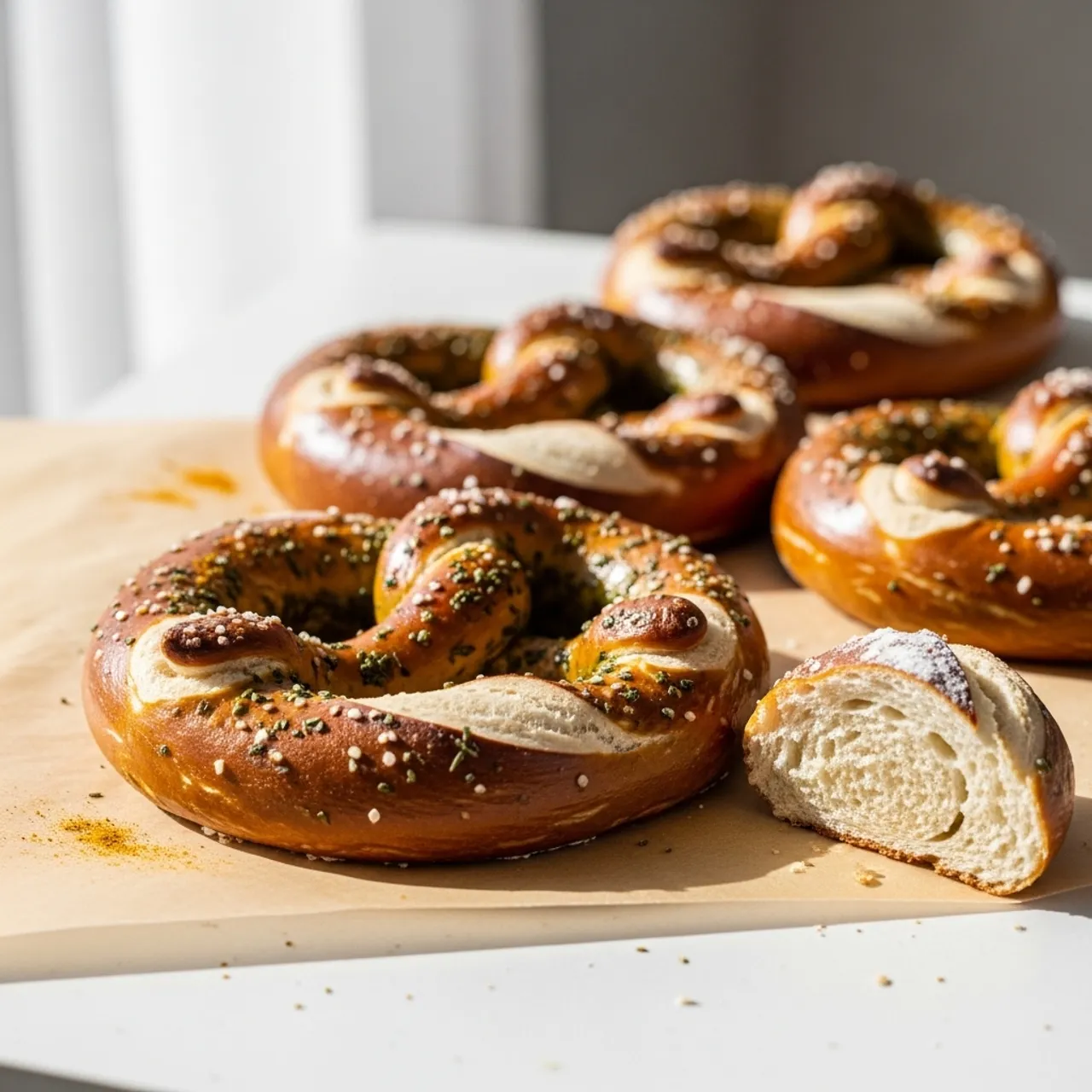
 Bakery Images are for illustrative purposes only, may be inaccurate, and do not guarantee the presence or absence of specific ingredients.
 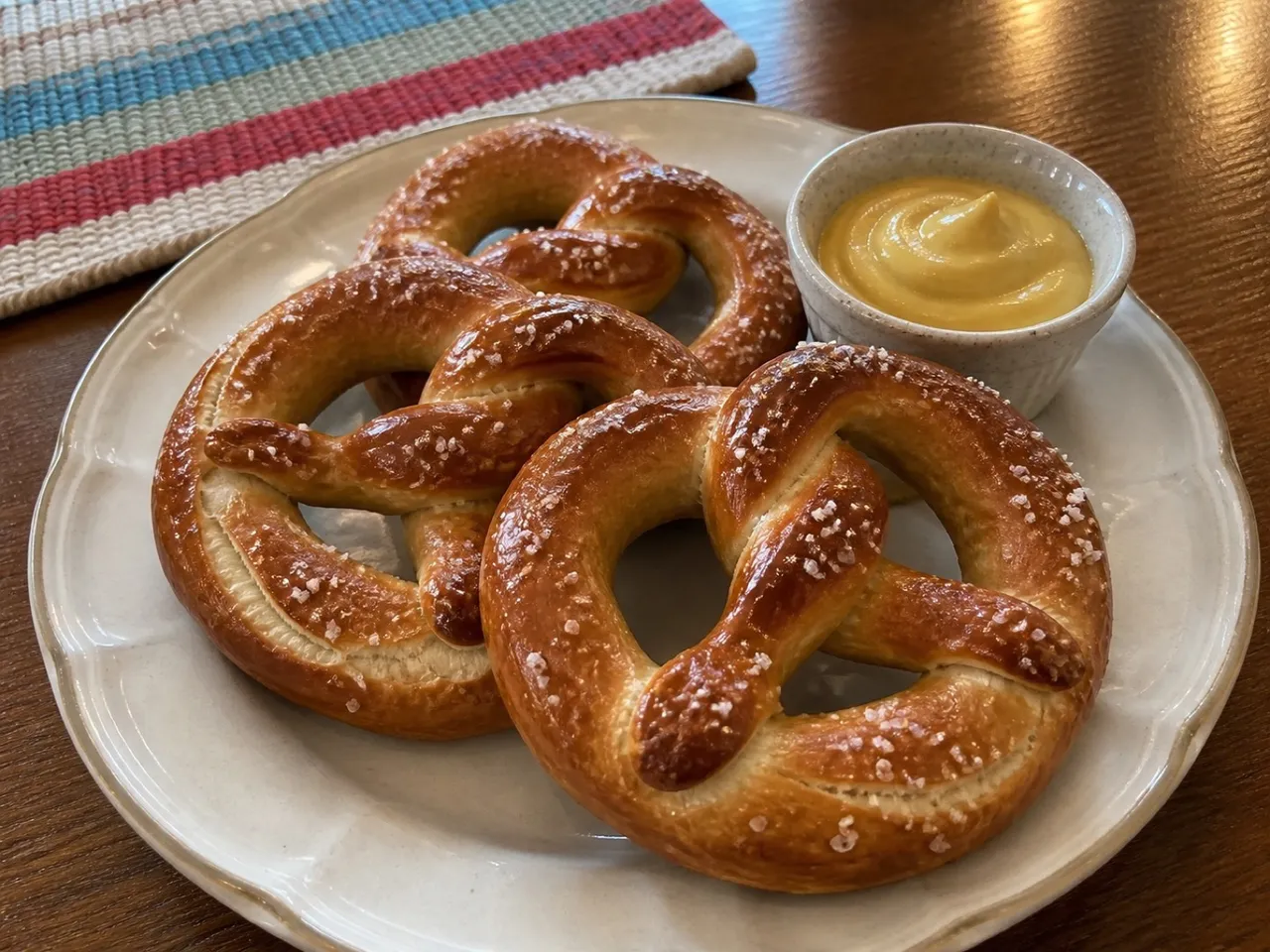 Serving Images are for illustrative purposes only, may be inaccurate, and do not guarantee the presence or absence of specific ingredients.
 Pretzels
Enjoy the ultimate pub-style snack with these glorious, twisted soft pretzels, sporting a beautifully deep, alkaline-dipped mahogany crust generously speckled with coarse, crunchy salt.
Contains common allergens
In the app, Listahan checks these against your household automatically.
Instructions
6 steps- 1
In a large bowl, dissolve the yeast and sugar in the warm water. Let sit for 5 minutes. Stir in the melted butter, salt, and flour until a dough forms.
- 2
Turn out onto a lightly floured surface and knead for 5 minutes until smooth. Place in an oiled bowl, cover, and let rise for 1 hour until doubled.
- 3
Preheat the oven to 450°F (230°C) and line two baking sheets with parchment paper brushed lightly with oil.
- 4
Divide the dough into 8 equal pieces. Roll each piece into a long rope (about 20 inches long). Make a U-shape with the rope, cross the ends over each other twice, and press the ends onto the bottom of the U to form a pretzel shape.
- 5
In a large, wide pot, bring the water and baking soda to a rolling boil. Carefully drop 1-2 pretzels at a time into the boiling water for 30 seconds. Remove with a slotted spatula and place on the prepared baking sheets.
- 6
Sprinkle immediately with coarse pretzel salt. Bake for 12-15 minutes until dark golden brown and shiny.
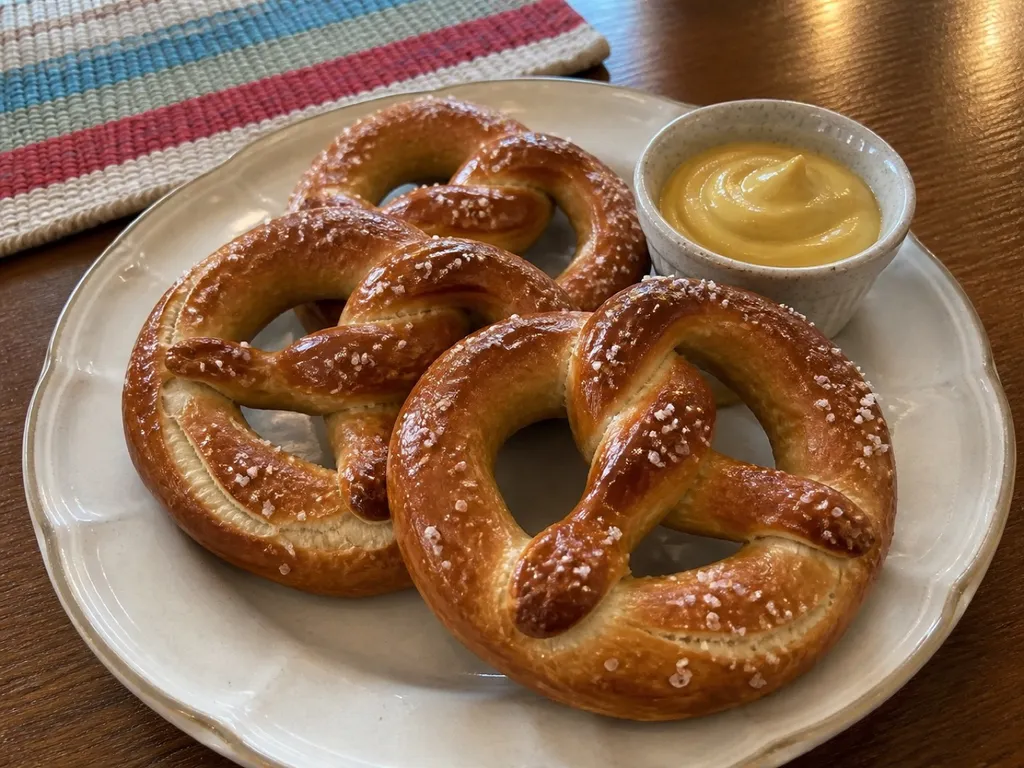 Images are for illustrative purposes only, may be inaccurate, and do not guarantee the presence or absence of specific ingredients.
 Listahan Family Score™
78/100
Good fit for most families
Score reflects how well this recipe fits a typical busy household. In the app, your Family Score is personalized to your household's allergens, kids, and pantry.
Nutrition
per serving260
Calories
6 g
Protein
49 g
Carbs
4 g
Fat
Estimated per serving. Actual values depend on the brands and portions you use.
Listahan cooking guide
Chef notes & practical guide
Technique notes, ingredient swaps, serve-alongside ideas, storage guidance, and equipment for this recipe.
Cultural context
Pretzels have a documented history in German-speaking Europe dating to at least the 12th century, and Christian monastic bakeries are frequently cited as their origin -- the looped shape was said to represent arms crossed in prayer. The lye dip that gives pretzels their distinctive dark mahogany crust and chewy skin was likely a happy accident before becoming a deliberate technique. German immigrants brought the pretzel to Pennsylvania in the 18th century, establishing the American soft pretzel tradition that reached its popular zenith in stadium food and Auntie Anne's mall kiosks. The hard shelf-stable pretzel snack developed separately as a byproduct of overbaked soft pretzels.
Listahan note
This version uses food-grade lye for the traditional dip because it is the only way to achieve the authentic pretzel's mahogany crust and specific chew; baking soda is offered as a home-safe substitute with notes on the difference.
Technique cues
- The lye or baking soda bath must be alkaline enough to catalyze the Maillard reaction at the oven temperatures involved -- this is what creates the dark, glossy crust and the distinctive pretzel flavor that a plain baked dough cannot produce.
- Coarse pretzel salt should be applied to the dipped, wet surface immediately and generously; the salt will partially dissolve into the soft surface and partially remain as crunchy crystals after baking.
- Bake on a very hot surface (450 F) until deeply browned -- a lightly golden pretzel is under-baked and will taste more like bread; the deep mahogany color is the correct endpoint.
Kitchen flow
- Parallel prep
- Prepare the lye or baking soda bath and line baking sheets while the dough rests after kneading; shaping and dipping flow quickly together and should not be interrupted by prep.
- Make-ahead
- Shaped, uncooked pretzels can be frozen on a tray before dipping, then transferred to bags; dip frozen and bake directly, adding 2 to 3 minutes to the bake time.
- Leftover move
- Day-old soft pretzels cut into cubes and toasted at 300 F make excellent pretzel croutons for soup or a cheese fondue dunker.
- Cleanup rhythm
- Neutralize residual lye solution on surfaces with a splash of white vinegar before rinsing; lye solution should be poured down the drain with plenty of water, never left in open containers.
Ingredient brief
Role, handling, and swap guidance for each key ingredient.
bread flour
chewy, structured dough
Purpose: Bread flour's higher protein gives pretzels their characteristic chew, which is more pronounced than in soft buns or rolls made from all-purpose flour.
Handling: The pretzel dough is moderately stiff -- it should clear the sides of the mixer bowl cleanly and feel smooth but firm after kneading.
Adaptation: All-purpose flour produces an acceptable pretzel with a softer, less chewy bite; the crust development and flavor from the alkaline bath are the same regardless of flour type.
food-grade lye
crust alkalinity and Maillard accelerator
Purpose: Lye creates a highly alkaline surface on the shaped pretzel that reacts with heat to produce the specific dark brown crust, chewy skin, and distinctive savory pretzel aroma that define the classic product.
Handling: Always add lye to water, never the reverse; use protective gloves and glasses as lye solution is caustic. A 3 to 4 percent solution (30 to 40 grams lye per liter water) is standard.
Adaptation: Dissolve 50 grams of baking soda in 1 liter of water for a safer alternative that produces similar results; baked baking soda (roasted at 250 F for 1 hour) is more alkaline and closer to the lye result.
butter
dough enrichment
Purpose: A small amount of butter in the dough adds richness and a slightly softer interior crumb that contrasts pleasantly with the chewy, dark exterior crust.
Handling: Melt and cool before adding to the dough; room-temperature or softened butter can also be worked in by hand.
Adaptation: Vegan butter or neutral oil at the same amount works for a dairy-free pretzel without noticeably affecting texture.
coarse pretzel salt
finishing texture and flavor
Purpose: Coarse salt provides the crunchy textural contrast and briny hit that is inseparable from the pretzel experience; fine salt dissolves completely and leaves neither crunch nor visual appeal.
Handling: Have salt ready before dipping so you can apply it immediately to the wet, freshly dipped surface while it is still tacky.
Adaptation: Fleur de sel or Maldon sea salt flakes are excellent alternatives; kosher salt is a practical substitute though the crystals are smaller.
Technique notes
- Roll each pretzel rope slightly thinner than you think necessary -- the dough puffs during baking and a rope that looks good in raw form will be noticeably thicker once baked.
- The traditional pretzel shape requires crossing the rope at two points to create the distinctive arms-crossed look; a simple U-bend with one cross is an acceptable shortcut that bakes identically.
- Dip pretzels for exactly 20 to 30 seconds per side -- longer in a baking soda bath or shorter in lye for equivalent alkalinity; over-dipping can cause the crust to peel away from the dough during baking.
Ingredient swaps
- Lye-free direction
- Use baked baking soda (baking soda roasted at 250 F for 1 hour) dissolved in water; it is more alkaline than regular baking soda and produces a darker crust and more authentic flavor than raw baking soda.
- Dairy-free option
- Replace butter with vegan butter at equal measure; the pretzel texture and crust are identical and the dairy contribution to the overall flavor is minor.
- Whole wheat direction
- Replace up to 30 percent of bread flour with whole wheat for a nuttier, heartier pretzel; the crust color and alkaline flavor from the bath remain the same.
Serve alongside
- Beer cheese dip
- Whole-grain mustard
- Cream cheese and chive spread
- German lager or Hefeweizen
- Sparkling apple cider
- Cold soda water with lime
Serving suggestions only — check pairings for your household's allergens.
Storage & reheating
- Soft pretzels are best eaten within 2 hours of baking. Store loosely covered at room temperature for up to 1 day; they soften significantly overnight. Reheat in a 375 F oven for 5 minutes. Do not refrigerate -- the cold makes them stale faster.
Equipment
- Large pot or deep baking dish for the alkaline bath
- Protective gloves and glasses if using lye
- Slotted spoon or spider
- Parchment-lined baking sheet
Make this household-aware
Listahan Pro checks this recipe against your household's allergens, finds pantry-aware swaps, builds the shopping list, and helps you plan the week around it.
Plan it in Listahan
Add Pretzels to your week, check it against your household's allergens, and build the shopping list automatically.
More Bakery recipes
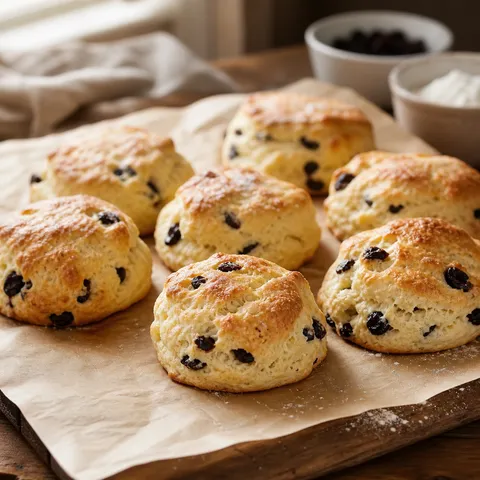 Bakery Lens Verified Images are for illustrative purposes only, may be inaccurate, and do not guarantee the presence or absence of specific ingredients.
 Scones
Flaky and buttery British baked goods, often with currants or berries.
 Bakery Lens Verified Images are for illustrative purposes only, may be inaccurate, and do not guarantee the presence or absence of specific ingredients.
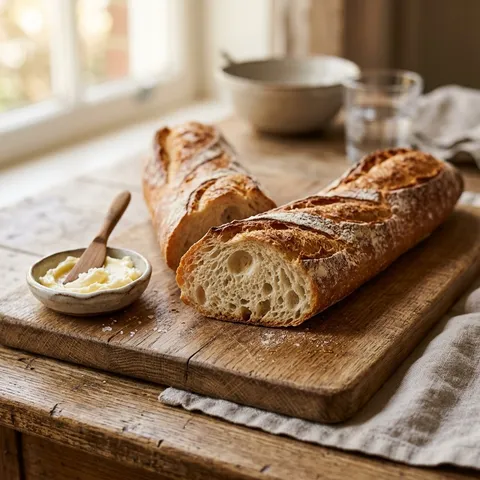
 French Baguette
Savor the authentic crunch of this rustic French baguette, featuring a beautifully crackling golden crust and a soft, airy, and utterly irresistible crumb.
 Bakery Lens Verified Images are for illustrative purposes only, may be inaccurate, and do not guarantee the presence or absence of specific ingredients.
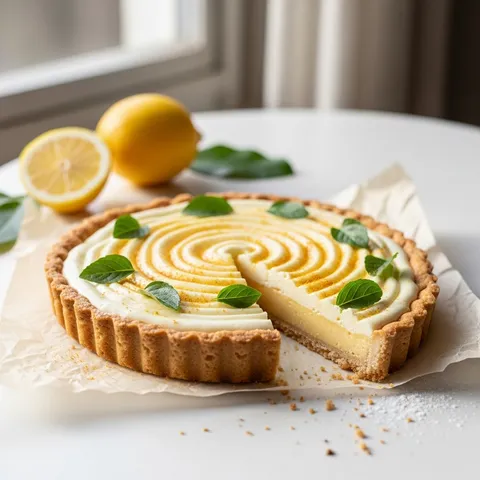
 Lemon Tart
Brighten your dessert spread with this elegant lemon tart, perfectly balancing a brilliantly zesty, silky-smooth lemon curd inside a crisp and buttery sweet pastry shell.