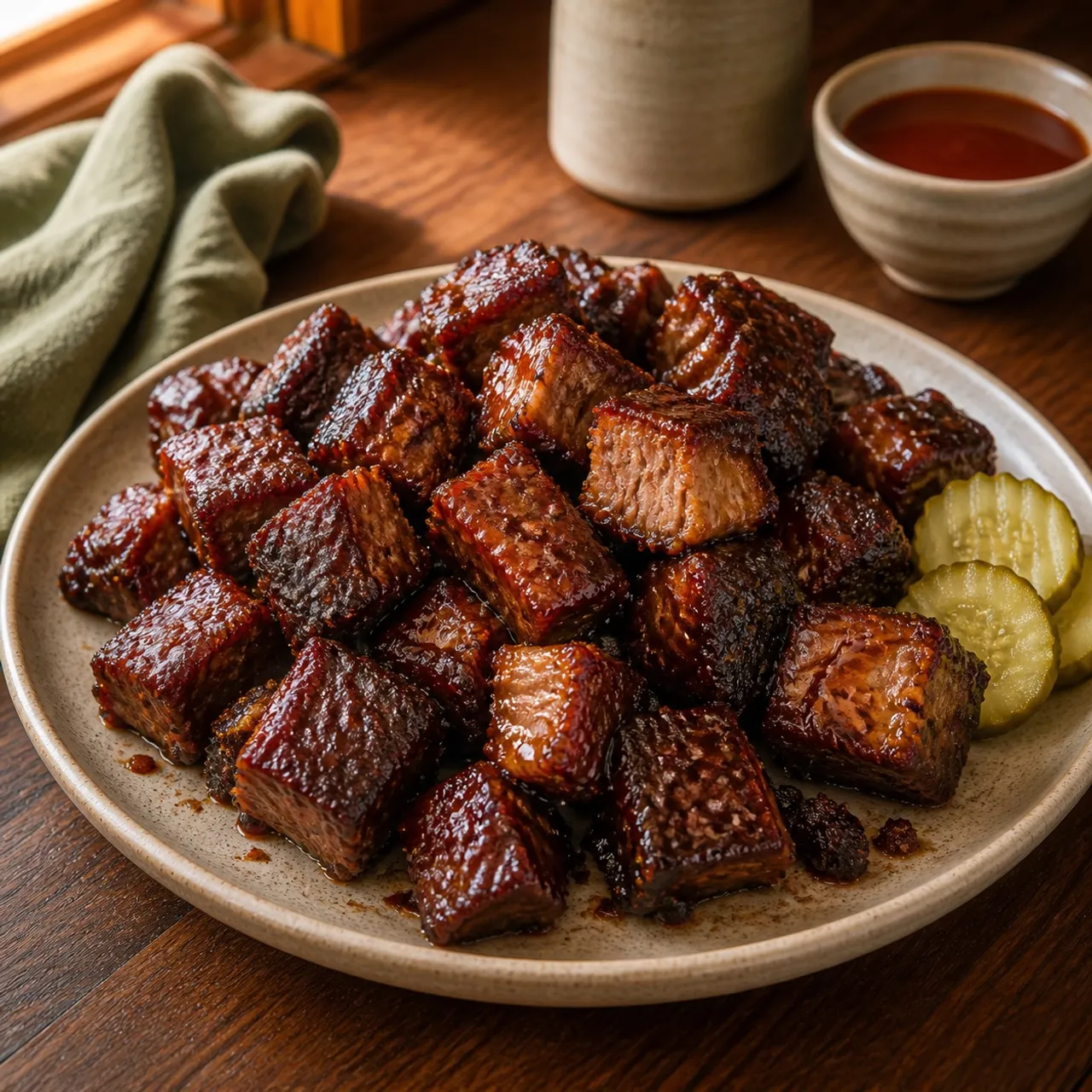
 Bbq Images are for illustrative purposes only, may be inaccurate, and do not guarantee the presence or absence of specific ingredients.
 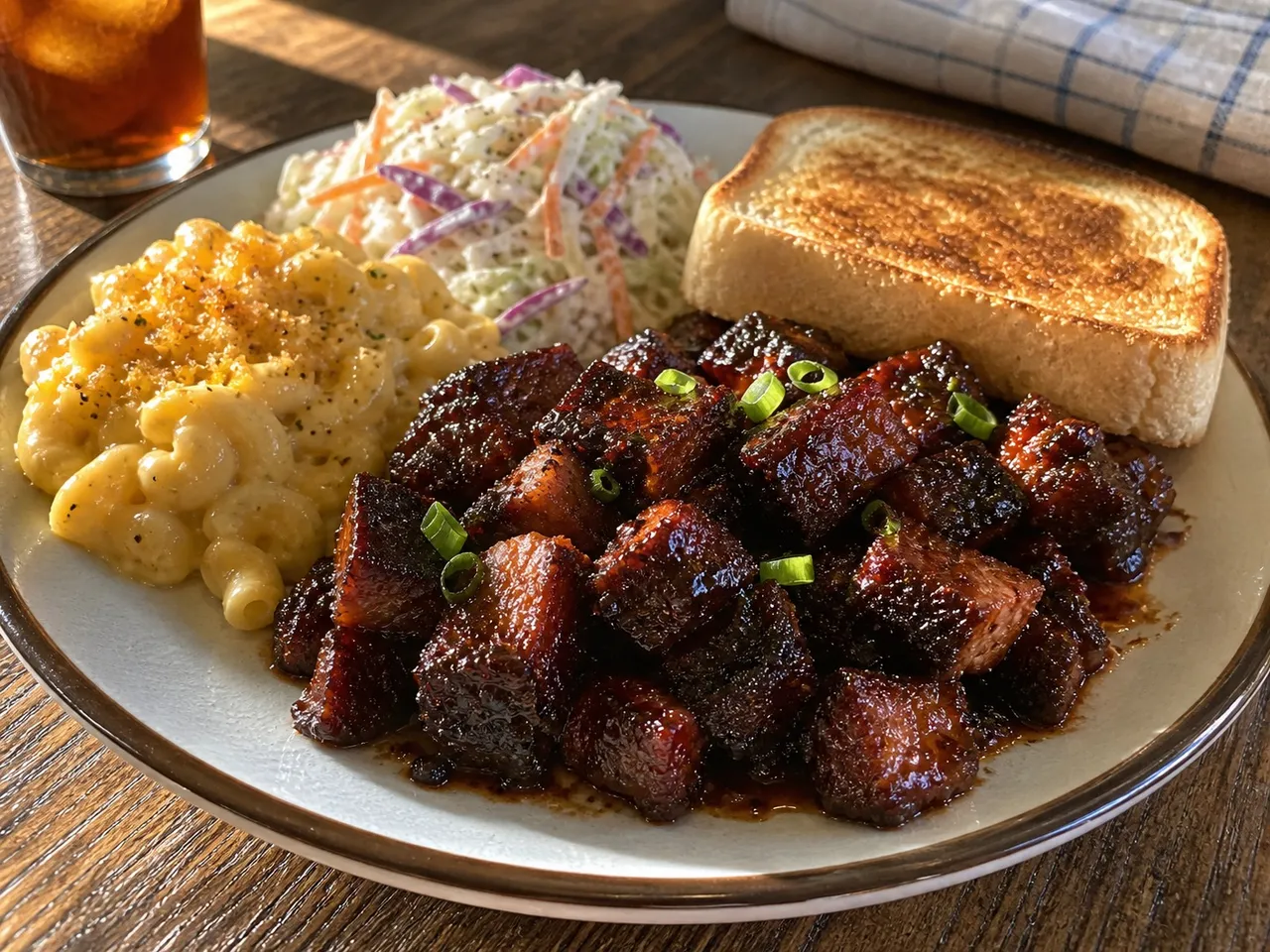 Serving Images are for illustrative purposes only, may be inaccurate, and do not guarantee the presence or absence of specific ingredients.
 Burnt Ends
Kansas City's prized "meat candy" — cubes of smoked brisket point re-smoked in sweet barbecue sauce until caramelized.
Contains common allergens
In the app, Listahan checks these against your household automatically.
Instructions
6 steps- 1
Season the brisket point with the barbecue rub and smoke at 225 degrees Fahrenheit until the internal temperature reaches about 200 degrees; rest.
- 2
Cut the point into roughly 1-inch cubes.
- 3
Toss the cubes in a foil pan with the barbecue sauce, honey, and pats of butter.
- 4
Return the pan to the smoker for 1.5 to 2 hours, until the sauce thickens and the edges caramelize.
- 5
Stir once or twice so every cube gets glazed and sticky.
- 6
Serve as-is, piled on a bun, or spooned over mac and cheese.
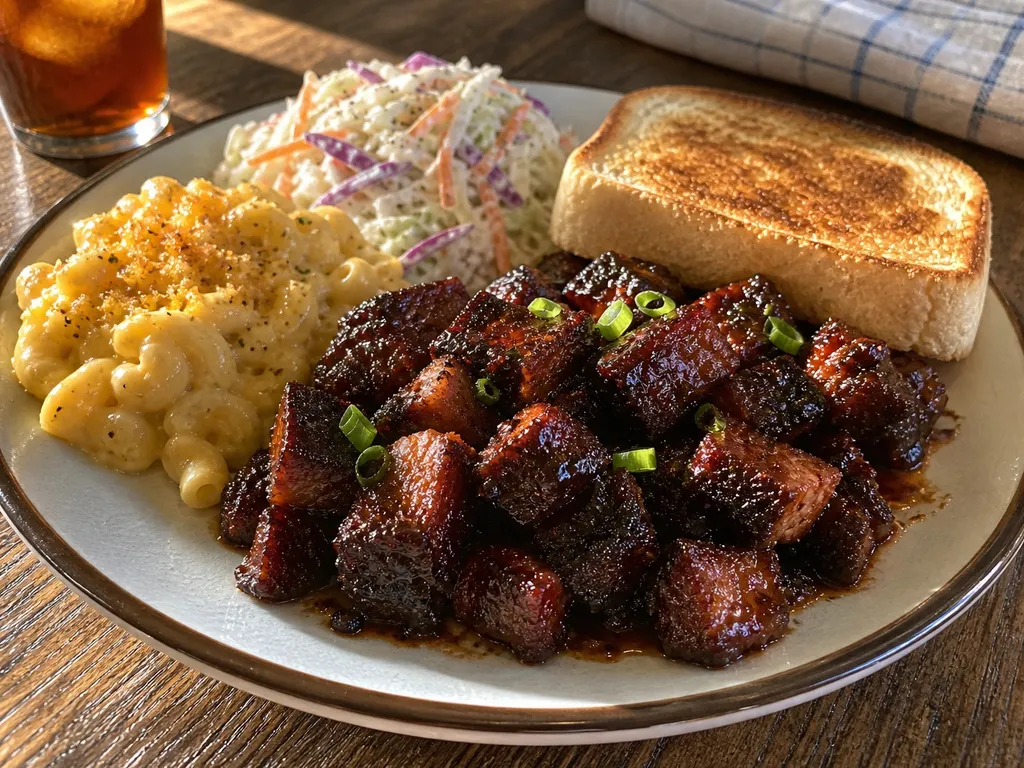 Images are for illustrative purposes only, may be inaccurate, and do not guarantee the presence or absence of specific ingredients.
 Listahan Family Score™
76/100
Good fit for most families
Score reflects how well this recipe fits a typical busy household. In the app, your Family Score is personalized to your household's allergens, kids, and pantry.
Nutrition
per serving525
Calories
43 g
Protein
20 g
Carbs
30 g
Fat
Estimated per serving. Actual values depend on the brands and portions you use.
Listahan cooking guide
Chef notes & practical guide
Technique notes, ingredient swaps, serve-alongside ideas, storage guidance, and equipment for this recipe.
Cultural context
Burnt ends were originally the discarded scraps of smoked brisket — the overcooked, dried-out tips that Kansas City pitmasters gave away at the counter or sold cheaply in paper bags while the prime slices went to paying customers. Food writer Calvin Trillin is often credited with popularizing them after writing about Arthur Bryant's in Kansas City in 1972, which sparked a demand that transformed a throwaway cut into the most prized item on the menu. Today true burnt ends are made specifically from the point of a smoked brisket, double-smoked and sauced until they become cubed nuggets of caramelized, concentrated beef.
Listahan note
This version uses the point cut separated from a fully smoked brisket flat, cubed and returned to the smoker with sauce and butter for a second pass that builds the characteristic sticky, candy-like exterior.
Technique cues
- Separate the point from the flat only after the brisket has been fully smoked to around 195 degrees — pulling it earlier means the point has not yet rendered its fat fully, and the burnt ends will be greasy rather than rich.
- Toss the cubes with sauce and a small pat of butter before the second smoke; the butter emulsifies into the sauce as it melts and creates a glaze that clings to the meat rather than pooling at the bottom of the pan.
- Stir the cubes gently every 30 to 45 minutes during the second smoke to ensure all sides caramelize evenly — the pieces on the outside of the pan brown faster than those in the center.
Kitchen flow
- Parallel prep
- Prepare the sauce mixture and have the foil pan ready before separating the point from the flat so the cubes go immediately into the second smoke while still hot.
- Make-ahead
- Complete the first full brisket smoke a day ahead and refrigerate; the next day, cube the cold point and proceed to the second smoke — cold cubes hold their shape better during cubing.
- Leftover move
- Leftover burnt ends reheat beautifully as a pizza topping with caramelized onions and pickled red onion, or tossed through mac and cheese in the last 5 minutes of baking.
- Cleanup rhythm
- Use a disposable foil pan for the second smoke and toss it after cooking; the heavy caramelized glaze is nearly impossible to scrub from a metal pan.
Ingredient brief
Role, handling, and swap guidance for each key ingredient.
brisket point
primary protein
Purpose: The point is the fattier, more heavily marbled half of a whole packer brisket; its high fat and collagen content makes it ideal for the extended double-smoke that defines burnt ends.
Handling: After the full brisket smoke, slice the point away from the flat and cube it into approximately 1.5-inch pieces — too small and they dry out, too large and the centers stay soft.
Adaptation: Chuck roast cut into cubes and smoked to 205 degrees is a popular and accessible alternative that delivers similar richness in less time.
Kansas City-style BBQ sauce
glaze
Purpose: The sweet, thick sauce caramelizes around the cubes during the second smoke, building the candy-like exterior that makes burnt ends distinct from plain cubed brisket.
Handling: Toss the cubes generously with sauce so each piece is well-coated before returning to the smoker.
Adaptation: A honey chipotle sauce adds a smokier, spicier character; a sweet mustard sauce gives a Carolina-meets-KC hybrid profile.
unsalted butter
glaze enricher
Purpose: Butter melts into the sauce during the second smoke and creates a richer, more cohesive glaze that clings to the meat rather than running off as a thin liquid.
Handling: Cube cold butter and scatter it over the sauced brisket pieces in the pan before returning them to the smoker.
Adaptation: Omit for a dairy-free version; the glaze will be thinner but still effective.
brown sugar
caramelization booster
Purpose: A light dusting of brown sugar over the sauced cubes accelerates caramelization and helps the exterior set into the signature dark, slightly crispy crust.
Handling: Sprinkle sparingly over the cubes after tossing with sauce — a tablespoon or two for the full batch is sufficient.
Adaptation: Honey or maple syrup drizzled over the cubes achieves similar caramelization with a different flavor note.
Technique notes
- The goal in the second smoke is contrast: the exterior should be dark, slightly firm, and almost candy-coated while the interior stays yielding and moist — pull the cubes when they look lacquered, not when they look wet.
- Do not overcrowd the foil pan during the second smoke; cubes packed tightly braise in each other's steam rather than caramelizing, which defeats the whole point of the double cook.
- Serve burnt ends immediately after pulling from the smoker while the glaze is still at its most vibrant — they soften as they sit and lose some of the textural contrast that makes them exceptional.
Ingredient swaps
- Budget-friendly shortcut
- Use chuck roast cut into 1.5-inch cubes and smoked at 250 degrees for 6 to 7 hours until probe-tender, then sauce and return to the smoker for 1 to 1.5 hours — nearly identical result at a fraction of the brisket price.
- Lower-sugar direction
- Use an unsweetened tomato sauce base spiked with balsamic vinegar and a small amount of date syrup for a lower-sugar glaze that still caramelizes attractively.
Serve alongside
- White bread or potato rolls for sopping sauce
- Dill pickles and sliced white onion
- KC baked beans with molasses and bacon
- Ice-cold Coca-Cola or root beer
- Boulevard Pale Ale or any American amber ale
Serving suggestions only — check pairings for your household's allergens.
Storage & reheating
- Refrigerate burnt ends in an airtight container for up to 3 days; the glaze softens in the refrigerator but the flavor deepens.
- Reheat in a 325-degree oven in a foil-covered pan with a drizzle of sauce for 15 minutes, then uncover for 5 minutes to re-crisp the exterior slightly.
- Burnt ends freeze well for up to 2 months in vacuum-sealed bags; thaw overnight in the refrigerator and reheat as above.
Equipment
- Disposable full-size foil steam pan for the second smoke
- Long-handled tongs for stirring without lifting out of the smoker
- Sharp slicing knife for clean cubing of the brisket point
Make this household-aware
Listahan Pro checks this recipe against your household's allergens, finds pantry-aware swaps, builds the shopping list, and helps you plan the week around it.
Plan it in Listahan
Add Burnt Ends to your week, check it against your household's allergens, and build the shopping list automatically.
More Bbq recipes
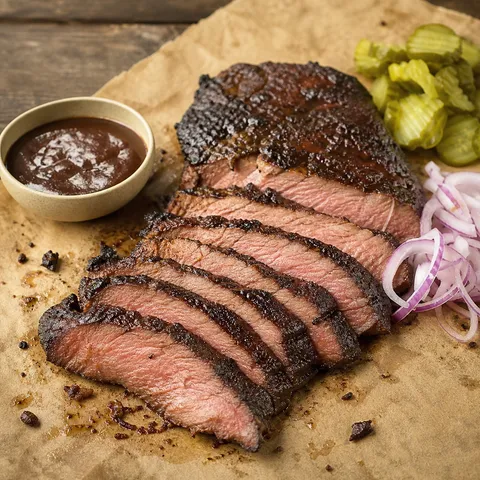 Bbq Lens Verified Images are for illustrative purposes only, may be inaccurate, and do not guarantee the presence or absence of specific ingredients.
 Santa Maria Tri-Tip
California-style Santa Maria tri-tip roast seasoned simply with garlic, pepper, and salt, then grilled over red oak for a smoky crust.
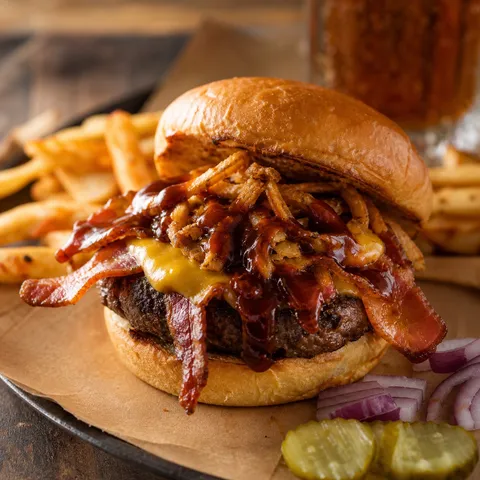 Bbq Lens Verified Images are for illustrative purposes only, may be inaccurate, and do not guarantee the presence or absence of specific ingredients.
 BBQ Bacon Cheeseburgers
Thick beef patties grilled over an open flame, topped with crispy bacon, melted cheddar, and smoky BBQ sauce on a toasted bun.
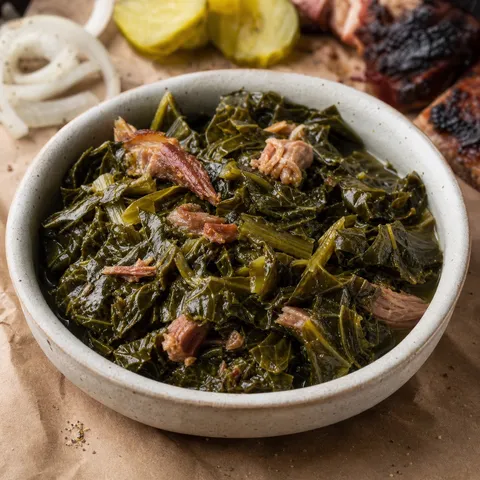 Bbq Lens Verified Images are for illustrative purposes only, may be inaccurate, and do not guarantee the presence or absence of specific ingredients.
 Southern Collard Greens
Slow-simmered collard greens with smoked ham hock, cider vinegar, and a touch of heat, a soulful Southern BBQ side.