 Food Lens Images are for illustrative purposes only, may be inaccurate, and do not guarantee the presence or absence of specific ingredients.
 Food Lens · Condiments
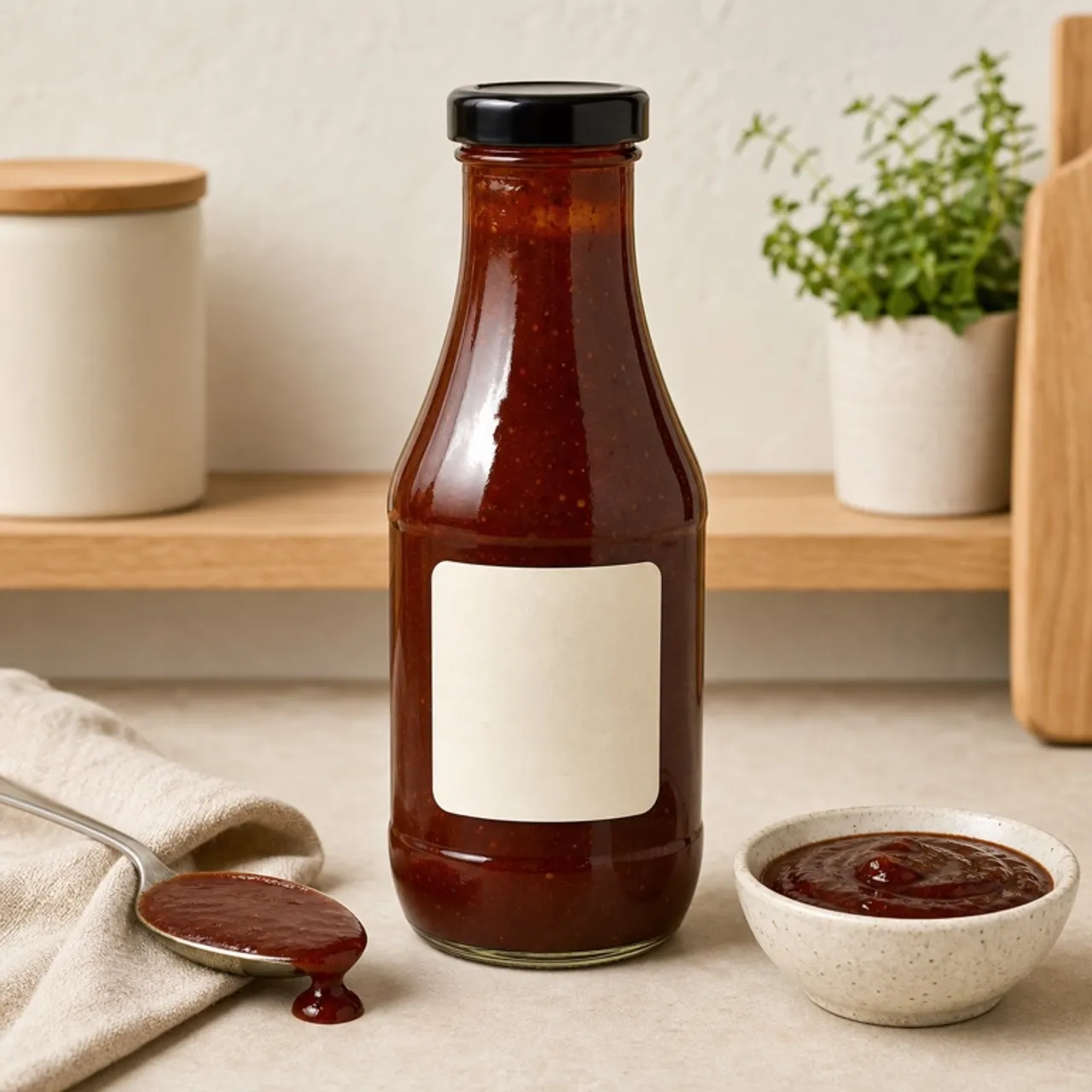
BBQ sauce
Bold and complex — sweet from sugar or molasses, tangy from vinegar or tomatoes, smoky from paprika or liquid smoke, with varying levels of heat and savory depth from Worcestershire and spices.
Lens VerifiedBarbecue sauce is a thick, tangy-sweet American condiment built on a base of tomatoes or vinegar, sugar, and spices. It serves as a marinade, basting liquid, and finishing sauce for grilled and smoked meats. Regional styles vary dramatically — from the vinegar-forward sauces of the Carolinas to the tomato-rich, molasses-heavy Kansas City style.
Where it comes from
Barbecue sauce evolved from the vinegar and pepper-based basting sauces of the American colonial South, later diversifying into regional styles as tomatoes, molasses, and mustard entered local traditions.
Varieties — Kansas City style (thick, sweet, tomato-molasses); Carolina vinegar style (thin, tangy, pepper-forward); Alabama white sauce (mayonnaise-based); Texas style (tomato with less sweetness, more heat); mustard-based South Carolina variants.
Barbecue is deeply tied to American regional identity — in some states, debates over the correct sauce style are taken with genuine seriousness. Community barbecue events have long served as social anchors across the South.
In a modern kitchen — Craft and small-batch barbecue sauces have exploded in popularity. Many home cooks now make custom batches, adjusting sweetness and heat. It's also increasingly used as a pizza base, in tacos, and in fusion applications.
Buying it
Look for sauces without high-fructose corn syrup as the first sweetener if you want a cleaner base. Check for smoke flavor — real smoked paprika or hickory smoke powder indicates more care than plain 'natural flavor.' Thicker sauces caramelize better; thinner sauces penetrate meat more.
Storing it
Refrigerate BBQ sauce after opening and keep it tightly capped to slow flavor loss and mold growth. Unopened bottles hold well in a cool pantry; once opened, use within the timeframe printed on the label.
Keeps about 1 year in the fridge.
Out of bbq sauce? Good swaps
General cooking guidance — always check the labels on the products you use. Listahan’s allergen checks run automatically when you plan a recipe in the app. Not medical advice.
Recipes that use bbq sauce
Common questions about bbq sauce
Is bbq sauce vegan?
BBQ sauce is generally plant-based and suitable for a vegan diet, but brands differ — confirm on the label.
What can I use instead of bbq sauce?
Good swaps include , . Each behaves a little differently — see the swaps above for notes, and always check labels for allergens.
How do I store bbq sauce?
Refrigerate BBQ sauce after opening and keep it tightly capped to slow flavor loss and mold growth. Unopened bottles hold well in a cool pantry; once opened, use within the timeframe printed on the label. It keeps about 1 year in the fridge.
More condiments
See all


Make bbq sauce about your kitchen — with Listahan Pro
Everything above is free, forever. Pro adds the Household Lens — the same food, seen for your family:
-
Checked for each member
Flags bbq sauce per person against your household's allergies and school rules — not just a generic "contains" tag.
-
Pantry-aware
Knows whether you already have it, what is running low, and the best swap from what is in your kitchen tonight.
-
What it costs near you
A real price from the Presyo community index, so you can plan the budget — not guess.
-
Your household memory
Who likes it, plus your own private notes — brand, where you keep it, who skips it.
Allergen safety is always free — Pro adds the automation, never the safety.
Cook with bbq sauce — safely
Plan a recipe in Listahan and the household allergen check runs automatically — every plan, every swap, every lunchbox. Safety is never paywalled.