 Bbq Images are for illustrative purposes only, may be inaccurate, and do not guarantee the presence or absence of specific ingredients.
  Serving Images are for illustrative purposes only, may be inaccurate, and do not guarantee the presence or absence of specific ingredients.
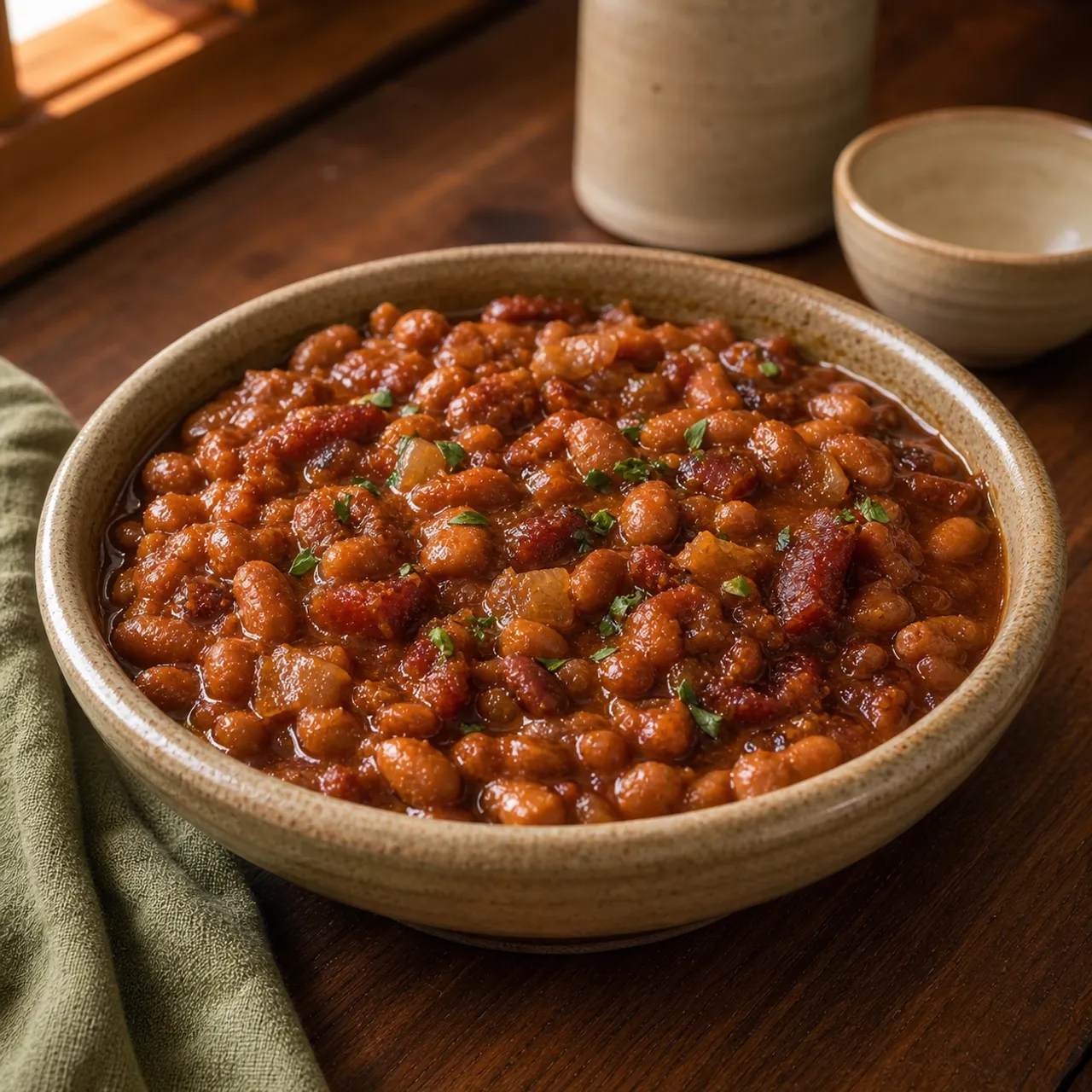
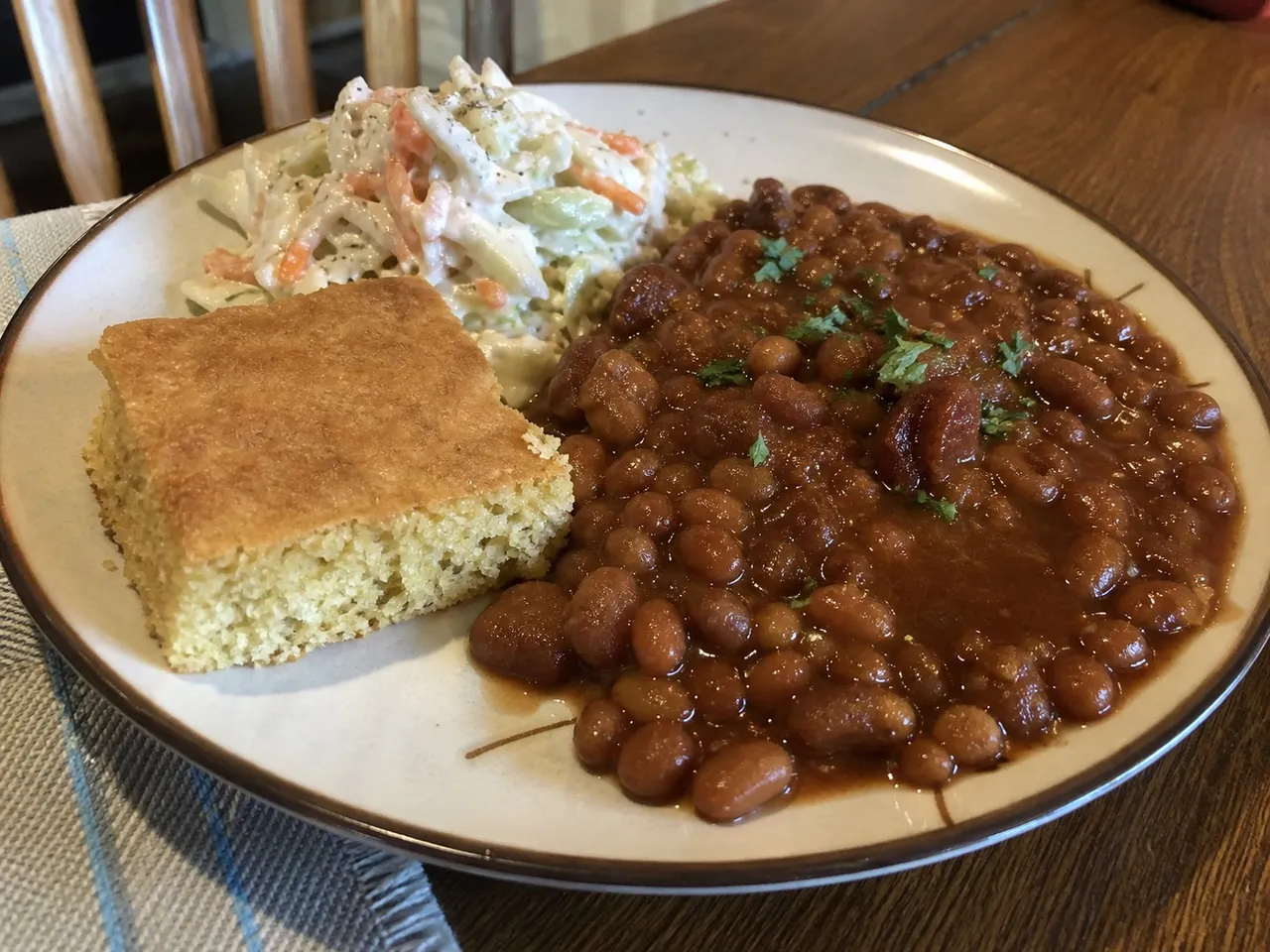
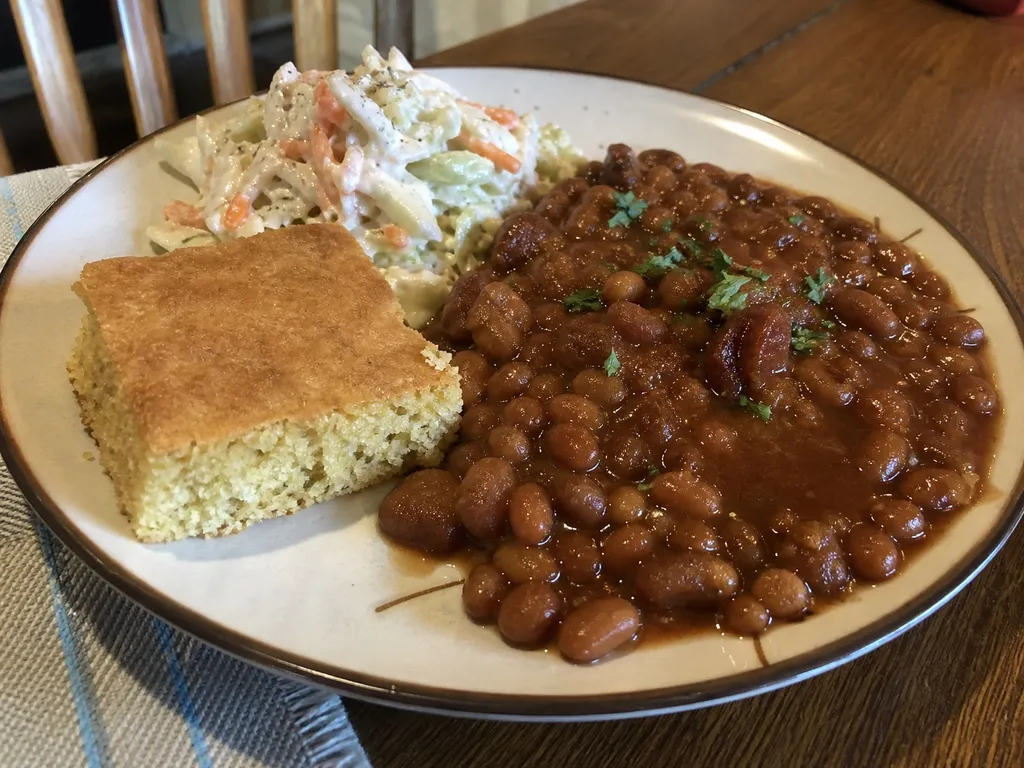
 BBQ Baked Beans
Smoky, sweet baked beans loaded with bacon, brown sugar, and barbecue sauce, baked low and slow until thick and caramelized.
Contains common allergens
In the app, Listahan checks these against your household automatically.
Good to know
- One-pot
Matched from this dish's own ingredients and timing. Browse more: one-pot dinners
Instructions
6 steps- 1
Preheat the oven to 325 degrees Fahrenheit.
- 2
In a large oven-safe pot or Dutch oven, cook the chopped bacon over medium heat until crisp. Remove the bacon with a slotted spoon and set aside, leaving the fat in the pot.
- 3
Add the diced onion and bell pepper to the bacon fat and cook 5 minutes, until softened.
- 4
Stir in the drained beans, ketchup, barbecue sauce, brown sugar, molasses, mustard, vinegar, garlic powder, black pepper, and most of the reserved bacon. Bring to a gentle simmer.
- 5
Cover and bake for 1.5 hours, then uncover for the final 30 minutes so the sauce thickens and turns deep and glossy.
- 6
Stir, top with the remaining bacon, rest 10 minutes, and serve warm alongside smoked meats.
 Images are for illustrative purposes only, may be inaccurate, and do not guarantee the presence or absence of specific ingredients.
 Listahan Family Score™
79/100
Good fit for most families
Score reflects how well this recipe fits a typical busy household. In the app, your Family Score is personalized to your household's allergens, kids, and pantry.
Nutrition
per serving190
Calories
4 g
Protein
35 g
Carbs
4 g
Fat
Estimated per serving. Actual values depend on the brands and portions you use.
Listahan cooking guide
Chef notes & practical guide
Technique notes, ingredient swaps, serve-alongside ideas, storage guidance, and equipment for this recipe.
Cultural context
Baked beans have indigenous North American origins — Native peoples were cooking beans with bear fat and maple syrup in clay pots long before European contact. Colonists adapted the technique with molasses, salt pork, and onion, and the dish became a New England staple. When American barbecue culture spread westward and southward in the 19th and 20th centuries, baked beans became one of its canonical sides, enriched with smoky pork trimmings, brown sugar, and a generous pour of whatever barbecue sauce was nearby. The smoker-baked version — where a covered cast-iron pot absorbs wood smoke alongside the brisket — elevates the dish from a pantry side into something that tastes like it was slow-cooked with the whole meal in mind.
Listahan note
This version builds depth by starting with smoked bacon and diced onion as the flavor base, sweetening with brown sugar and molasses, and finishing the beans in the smoker uncovered so they absorb wood smoke and develop a thick, jammy sauce.
Technique cues
- Cook the bacon and onion in the cast-iron pot or Dutch oven before adding the remaining ingredients — browning these aromatics first creates a savory base that canned beans alone cannot achieve.
- Leave the pot uncovered for the last 30 to 45 minutes in the smoker; this concentrates the sauce and allows the surface beans to absorb direct smoke, which distinguishes smoked baked beans from oven-baked ones.
- The sauce will thicken significantly as the beans cool, so pull them from the smoker when the consistency looks slightly thinner than ideal — they will set to the right texture by the time they reach the table.
Kitchen flow
- Parallel prep
- Start the bacon and onion in the cast-iron pot on the stovetop while preheating the smoker; combine and transfer the pot directly to the smoker so the beans start absorbing smoke from the first minute.
- Make-ahead
- BBQ baked beans improve overnight as the flavors meld; make a full batch the day before and reheat gently in the pot at 300 degrees, adding a splash of water if the sauce has thickened too much.
- Leftover move
- Leftover baked beans make an outstanding breakfast component — serve them over scrambled eggs with hot sauce and warm cornbread, or spoon onto a piece of toast for a hearty morning bowl.
- Cleanup rhythm
- Soak the cast-iron or enameled pot immediately after serving with warm water; the molasses and sugar in the sauce harden into a difficult crust if left to cool and dry.
Ingredient brief
Role, handling, and swap guidance for each key ingredient.
canned navy beans
protein and body
Purpose: Pre-cooked canned beans are the practical choice for a barbecue-day side because they only need to absorb flavor in the smoker rather than cook through from dry beans, which would require separate overnight soaking.
Handling: Drain and rinse the beans to remove excess sodium from the canning liquid, then taste the sauce for salt before seasoning.
Adaptation: Great northern beans have a creamier texture; kidney beans hold their shape better during the long smoke and suit a chunkier, heartier style.
thick-cut smoked bacon
fat base and pork flavor
Purpose: Bacon rendered in the pot at the start coats the pan with smoky, seasoned fat that every subsequent ingredient is cooked in, building a foundational smokiness that permeates the entire dish.
Handling: Cut into half-inch lardons and render slowly over medium heat until the fat is translucent and the edges just begin to crisp.
Adaptation: Salt pork is the traditional ingredient and produces a more subtle, lard-like richness; smoked turkey leg meat is a widely used substitute in kitchens that avoid pork.
molasses
deep sweetener
Purpose: Molasses adds bittersweet depth and a dark color that brown sugar alone cannot produce, and it is the ingredient most responsible for the complex, slightly bitter-sweet sauce characteristic of classic baked beans.
Handling: Stir in with the brown sugar and barbecue sauce; it blends most easily when the liquid in the pot is warm.
Adaptation: Sorghum syrup is a traditional Southern substitute with a milder, grassy sweetness; dark maple syrup gives a similar depth with a distinctly different character.
brown sugar
primary sweetener
Purpose: Brown sugar balances the acidity of the tomato base and vinegar in the barbecue sauce while contributing to the caramelized, jammy sauce texture.
Handling: Add in stages and taste as you go — the sweetness level depends on the salt and tang of the other ingredients already in the pot.
Adaptation: Coconut sugar adds a mild caramel-like sweetness with less intense flavor; for a less sweet version, reduce by half and increase the vinegar slightly.
yellow mustard
tang and emulsifier
Purpose: Mustard adds sharpness that counteracts the sweetness of the sugar and molasses, and its emulsifying properties help the sauce bind into a cohesive, glossy consistency.
Handling: Stir in during the combining phase; the quantity is small but the impact on flavor balance is significant.
Adaptation: Dijon mustard gives a more complex, wine-vinegar edge; whole grain mustard adds textural interest and a slightly sharper bite.
Technique notes
- Stir in a half cup of finely diced brisket flat or burnt end trimmings into the beans before the smoker phase — the fat and collagen from the brisket enrich the sauce and create a beans-and-brisket dish that is better than either would be alone.
- Taste for balance before sending into the smoker: the raw sauce should be slightly sweeter and saltier than you want the finished beans, because the long smoke concentrates and intensifies every flavor component.
- A splash of apple cider vinegar stirred in at the very end of cooking brightens the entire dish and cuts through the accumulated sweetness, making the beans taste more complex and less cloying.
Ingredient swaps
- Vegetarian direction
- Replace the bacon with two tablespoons of olive oil and a teaspoon of smoked paprika; add a quarter teaspoon of liquid smoke to the sauce and use vegetable broth in place of any meat drippings.
- Lower-sugar direction
- Reduce brown sugar by half and replace molasses with a tablespoon of balsamic vinegar, which contributes depth and slight sweetness without the glycemic load.
Serve alongside
- Texas brisket or Carolina pulled pork
- Skillet cornbread with honey butter
- Creamy coleslaw
- Iced sweet tea
- Any American amber lager
Serving suggestions only — check pairings for your household's allergens.
Storage & reheating
- Refrigerate cooled baked beans in an airtight container for up to 5 days; the sauce thickens further in the refrigerator and may need a splash of water or broth when reheating.
- Reheat on the stovetop over medium-low heat with a splash of water, stirring occasionally, until warmed through; avoid high heat which causes the sugars to scorch on the bottom of the pot.
- Freeze in freezer-safe containers for up to 3 months; thaw overnight in the refrigerator and thin with broth during reheating.
Equipment
- 10-inch cast-iron skillet or enameled Dutch oven
- Wooden spoon with a long handle for stirring without burning hands at the smoker
- Smoker or covered charcoal grill for the final uncovered phase
Make this household-aware
Listahan Pro checks this recipe against your household's allergens, finds pantry-aware swaps, builds the shopping list, and helps you plan the week around it.
Plan it in Listahan
Add BBQ Baked Beans to your week, check it against your household's allergens, and build the shopping list automatically.
More Bbq recipes
 Bbq Lens Verified Images are for illustrative purposes only, may be inaccurate, and do not guarantee the presence or absence of specific ingredients.
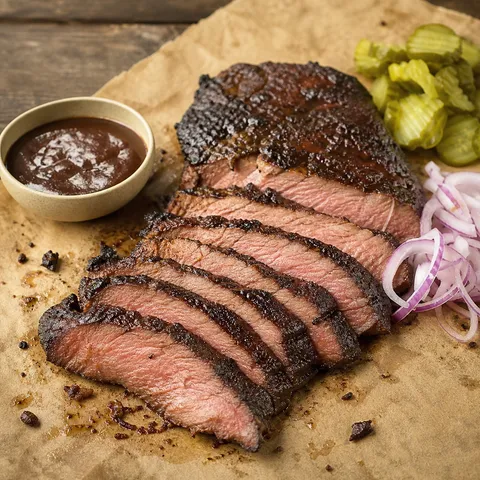
 Santa Maria Tri-Tip
California-style Santa Maria tri-tip roast seasoned simply with garlic, pepper, and salt, then grilled over red oak for a smoky crust.
 Bbq Lens Verified Images are for illustrative purposes only, may be inaccurate, and do not guarantee the presence or absence of specific ingredients.
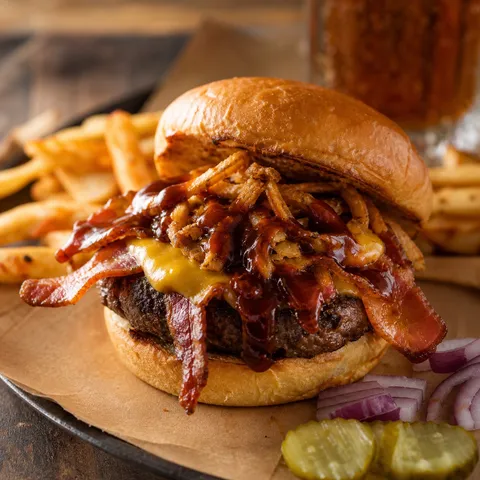
 BBQ Bacon Cheeseburgers
Thick beef patties grilled over an open flame, topped with crispy bacon, melted cheddar, and smoky BBQ sauce on a toasted bun.
 Bbq Lens Verified Images are for illustrative purposes only, may be inaccurate, and do not guarantee the presence or absence of specific ingredients.
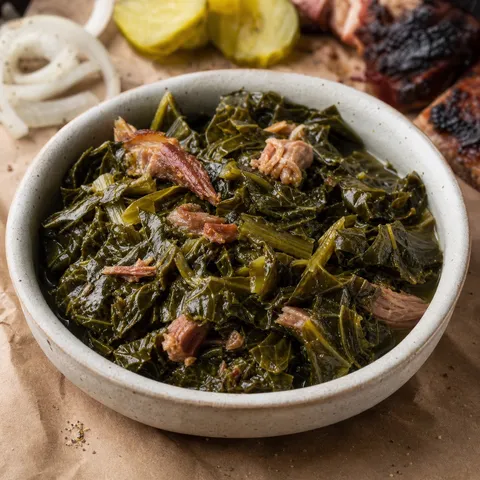
 Southern Collard Greens
Slow-simmered collard greens with smoked ham hock, cider vinegar, and a touch of heat, a soulful Southern BBQ side.