 North American Images are for illustrative purposes only, may be inaccurate, and do not guarantee the presence or absence of specific ingredients.
  Serving Images are for illustrative purposes only, may be inaccurate, and do not guarantee the presence or absence of specific ingredients.
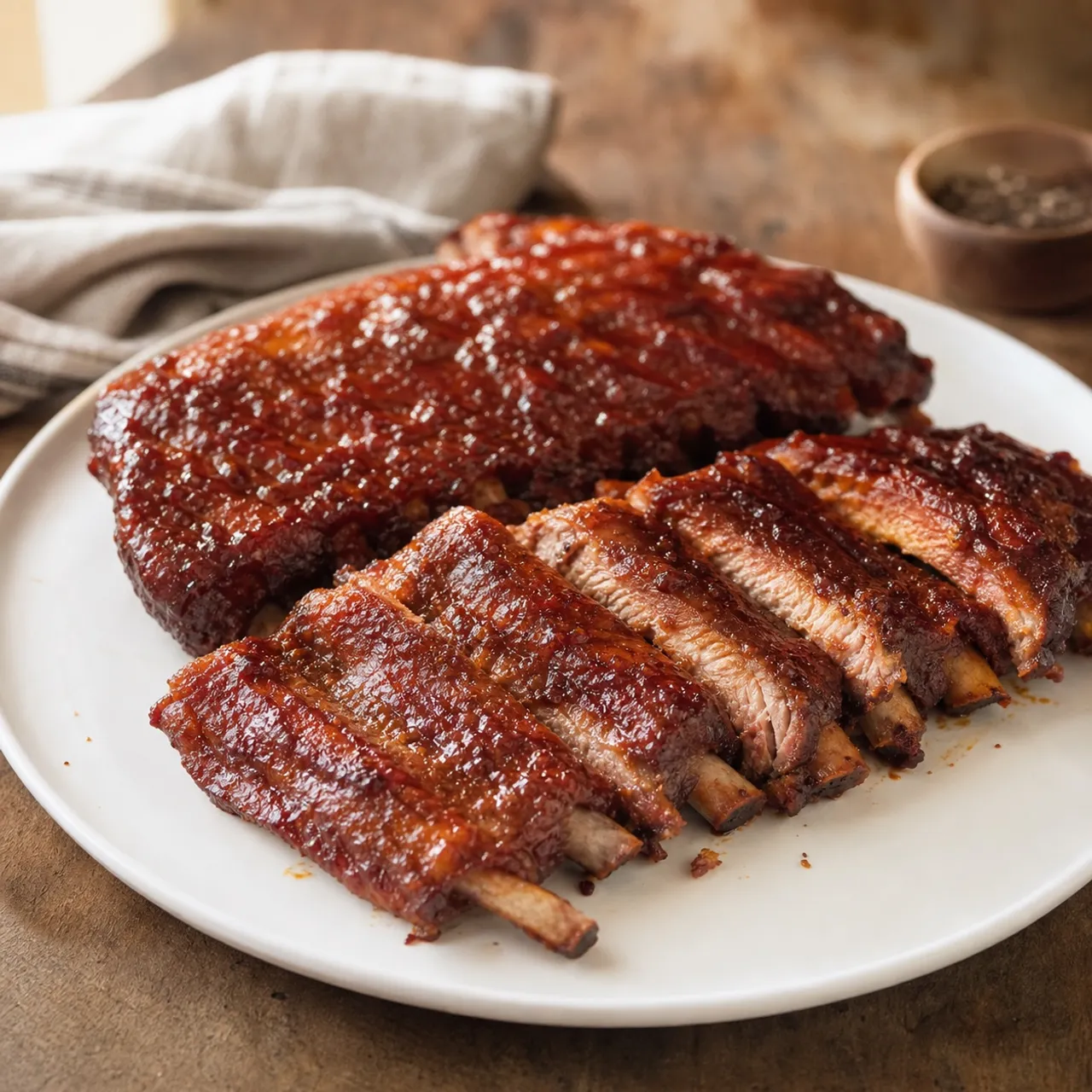
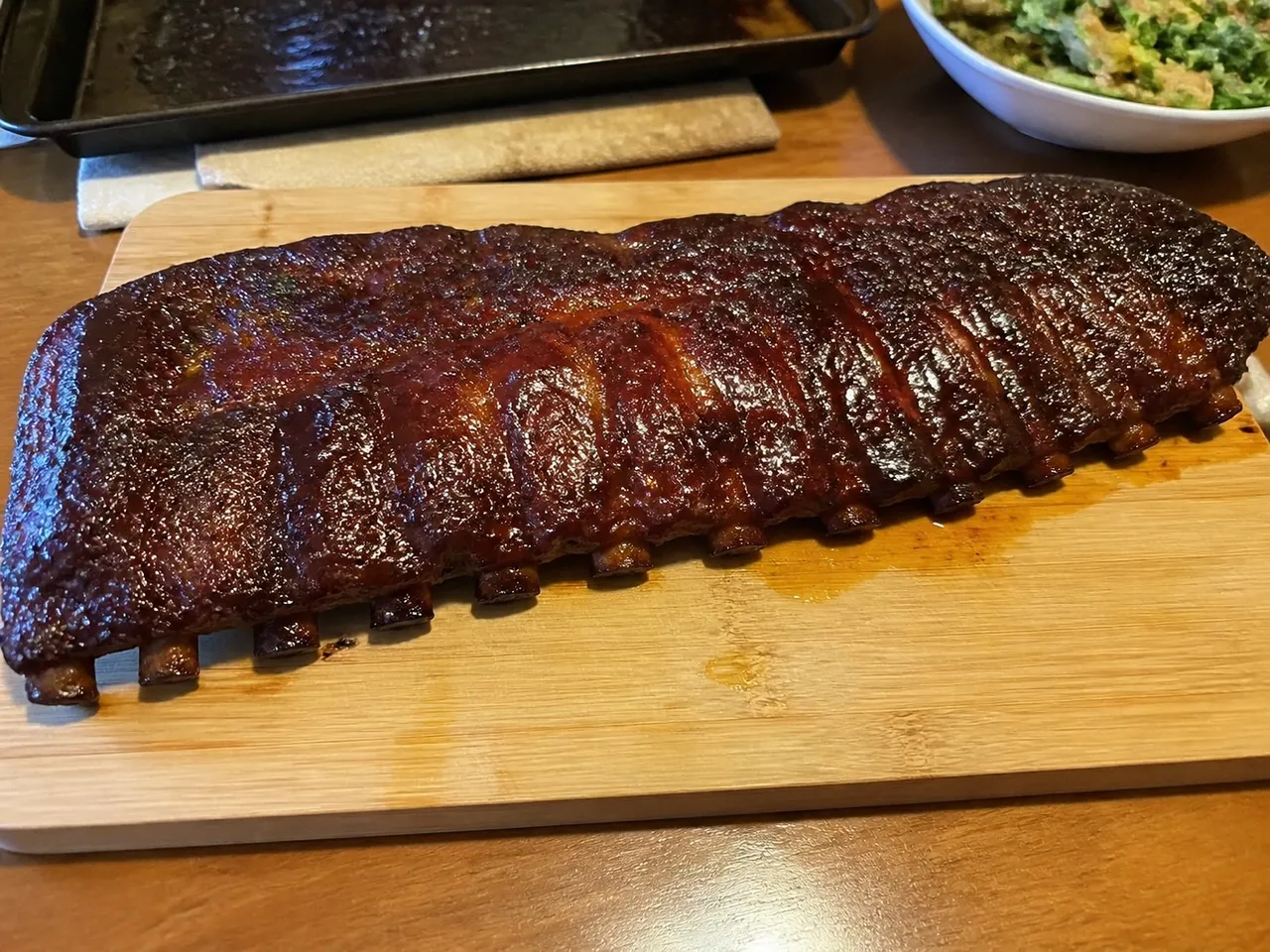
 BBQ Ribs
Baby back pork ribs rubbed with smoked paprika, garlic, and brown sugar, then slow-cooked and glazed in thick BBQ sauce until fall-off-the-bone tender.
No common allergens detected
Based on this recipe's ingredient list. Always verify with your own brands and labels.
Instructions
6 steps- 1
Preheat the oven to 275°F (135°C). Prepare the ribs by removing the thin, papery membrane from the back of each rack using a paper towel for grip.
- 2
In a small bowl, mix the brown sugar, smoked paprika, garlic powder, onion powder, salt, and black pepper to create a dry rub. Massage the rub generously into both sides of the ribs.
- 3
Tightly wrap each rack individually in heavy-duty aluminum foil, sealing the edges completely to trap the steam. Place the wrapped ribs on a large baking sheet.
- 4
Bake the ribs for 2.5 to 3 hours until the meat is exceedingly tender and begins to pull away from the ends of the bones.
- 5
Carefully remove the foil (watch out for hot steam) and discard the accumulated juices. Turn the oven setting to broil on high.
- 6
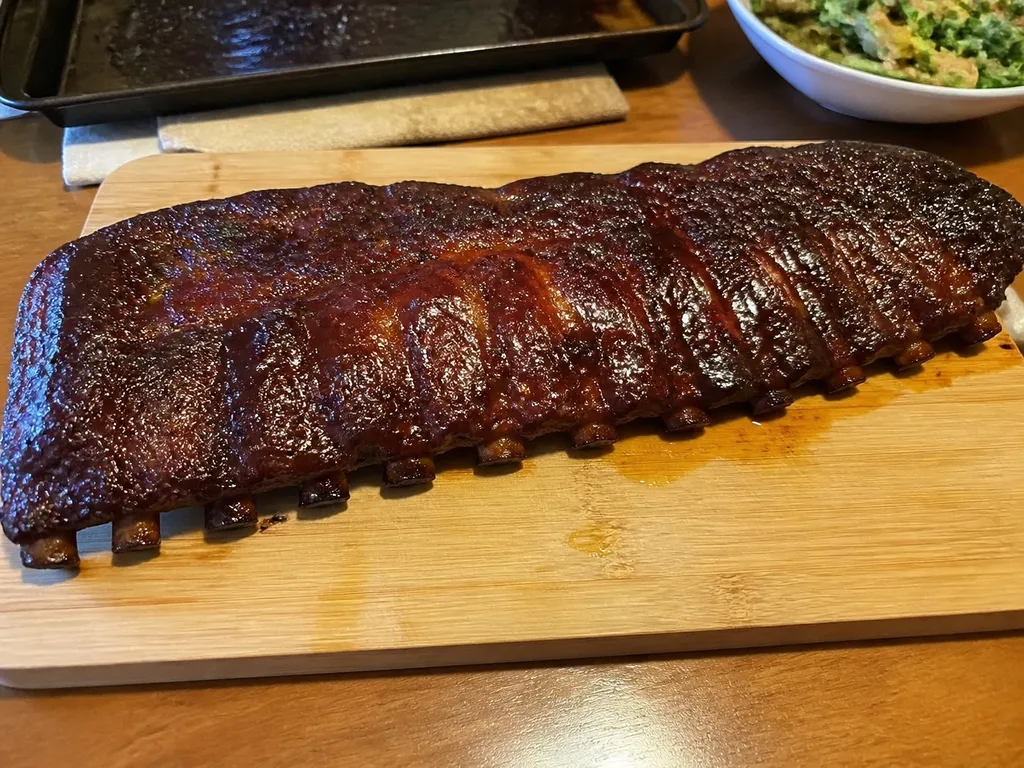
Brush a thick layer of BBQ sauce over the top of the ribs. Broil for 3-5 minutes, watching closely, until the sauce bubbles, caramelizes, and becomes delightfully sticky. Let rest for 10 minutes before slicing into individual ribs.
 Images are for illustrative purposes only, may be inaccurate, and do not guarantee the presence or absence of specific ingredients.
 Listahan Family Score™
73/100
Good fit for most families
Score reflects how well this recipe fits a typical busy household. In the app, your Family Score is personalized to your household's allergens, kids, and pantry.
Nutrition
per serving215
Calories
1 g
Protein
52 g
Carbs
1 g
Fat
Estimated per serving. Actual values depend on the brands and portions you use.
Listahan cooking guide
Chef notes & practical guide
Technique notes, ingredient swaps, serve-alongside ideas, storage guidance, and equipment for this recipe.
Cultural context
Barbecued ribs occupy a central place in American regional cooking, with distinct traditions emerging in the Carolinas, Kansas City, Memphis, and Texas over the 18th and 19th centuries. The Kansas City approach, which is what this recipe most closely resembles, is characterized by a sweet, thick tomato-based sauce applied at the end of a long, low cook rather than as a continuous basting. The low-and-slow principle originated as a practical method for rendering fat and connective tissue in tougher cuts, with the oven standing in for the pit or smoker in a home kitchen version.
Listahan note
This version uses a foil-wrapped oven method that replicates the steam environment of indirect pit cooking, then finishes the ribs unwrapped under a broiler to caramelize the sauce into the lacquer that defines a well-made rack.
Technique cues
- Removing the membrane from the back of the rack is not optional if you want the rub to season the meat from below; the membrane is impermeable and blocks flavor penetration while also staying chewy and unpleasant to eat.
- The 275F foil-wrapped stage is doing most of the work: the trapped steam tenderizes the connective tissue and renders the fat over 2.5-3 hours, which is why the finishing stage is short.
- Apply the BBQ sauce only in the last 20-30 minutes of cooking; added earlier, the sugar in the sauce burns before the meat is done.
Kitchen flow
- Parallel prep
- Apply the rub the night before and refrigerate uncovered; this develops flavor and allows the rub to bond more firmly to the meat surface before wrapping.
- Make-ahead
- Complete the foil-wrapped oven stage, chill the racks overnight, then add the sauce and broil just before serving; the ribs will be tender and the timing more flexible.
- Leftover move
- Strip leftover rib meat from the bone and use it in baked beans, tacos, or a barbecue sandwich on toasted bread with extra sauce and slaw.
- Cleanup rhythm
- Line the baking sheet with two layers of foil before placing the wrapped ribs; any drips stay contained and the sheet requires no scrubbing.
Ingredient brief
Role, handling, and swap guidance for each key ingredient.
2 racks baby back pork ribs (about 4 lbs)
Main protein
Purpose: Baby back ribs have a higher meat-to-bone ratio and shorter cook time than spare ribs, making them well-suited to the home oven method.
Handling: Remove the silver skin membrane from the back of each rack using a paper towel to grip the slippery surface; start at one end and pull in one steady motion.
Adaptation: St. Louis-style spare ribs can substitute but require an extra 30-45 minutes in the foil stage due to more connective tissue.
1 tbsp smoked paprika
Color, depth, and smoke note
Purpose: Smoked paprika adds a suggestion of wood smoke that the oven method cannot produce on its own, bringing the rub closer to a pit-smoked result.
Handling: Mix with all other rub spices in a bowl first and apply from height for even coverage across the entire surface.
Adaptation: Regular paprika can substitute but will not carry the smoke note; add 1/4 teaspoon of liquid smoke to the sauce instead if you want that element.
1 1/2 cups thick BBQ sauce
Glaze and finishing layer
Purpose: A thick sauce clings to the rib surface under the broiler rather than running off; thin sauce requires multiple applications to build up the same caramelized layer.
Handling: Brush on a thin initial coat, broil until it caramelizes and darkens, then apply a second coat for a lacquered finish.
Adaptation: Homemade or store-bought vinegar-based Carolina sauce gives a tangier, less sweet finish that works well with the rich pork.
2 tbsp brown sugar
Rub sweetener and crust builder
Purpose: Brown sugar in the dry rub caramelizes during the foil stage and contributes to the crust that the sauce adheres to during the finish.
Handling: Press the rub into the meat firmly with your hands rather than just sprinkling; the fat on the surface helps the spices bond.
Adaptation: Coconut sugar works as a substitute with a slightly less sweet, more complex flavor that holds up well at low cooking temperatures.
Technique notes
- Check the ribs for doneness by picking up one end of the rack with tongs; if the rack bends significantly and the meat begins to crack at the bend, the connective tissue has broken down and the ribs are done.
- The bone pullback test (where meat contracts and exposes about 1/4 inch of bone) is a useful visual cue alongside the bend test; rely on both rather than time alone.
- Broil with the oven door slightly ajar to prevent the element from cycling off; consistent broiler heat is what produces an even caramelized glaze rather than spotty charring.
Ingredient swaps
- Gluten-free direction
- Verify your BBQ sauce is gluten-free; many commercial sauces use thickeners or flavor additives that contain gluten. The rub as written is gluten-free.
- Lower-sugar direction
- Reduce brown sugar in the rub by half and use an unsweetened or reduced-sugar BBQ sauce; the finish will be less lacquered but still flavorful.
- Smoker upgrade
- If you have a smoker, use it at 225F with hickory or apple wood instead of the foil-wrapped oven stage for the full pit-smoked result; everything else stays the same.
Serve alongside
- Classic potato salad with mustard and celery
- Creamy coleslaw
- Cornbread with honey butter
- Baked beans with bacon
- Sweet iced tea
- Cold lager or amber ale
- Bourbon and cola
Serving suggestions only — check pairings for your household's allergens.
Storage & reheating
- Refrigerate leftover ribs in a sealed container for up to 4 days; keep any remaining sauce separately for reheating.
- Reheat wrapped in foil in a 300F oven for 20-25 minutes until warmed through; unwrap in the last 5 minutes and brush with sauce to re-glaze.
- Freeze cooked ribs wrapped tightly in foil for up to 2 months; thaw overnight in the refrigerator before reheating.
Equipment
- Large rimmed baking sheet for holding the wrapped racks
- Heavy-duty aluminum foil for a tight seal during the steam stage
- Pastry brush for applying BBQ sauce in thin, even coats
Make this household-aware
Listahan Pro checks this recipe against your household's allergens, finds pantry-aware swaps, builds the shopping list, and helps you plan the week around it.
Plan it in Listahan
Add BBQ Ribs to your week, check it against your household's allergens, and build the shopping list automatically.
More North American recipes
 North American Lens Verified Images are for illustrative purposes only, may be inaccurate, and do not guarantee the presence or absence of specific ingredients.
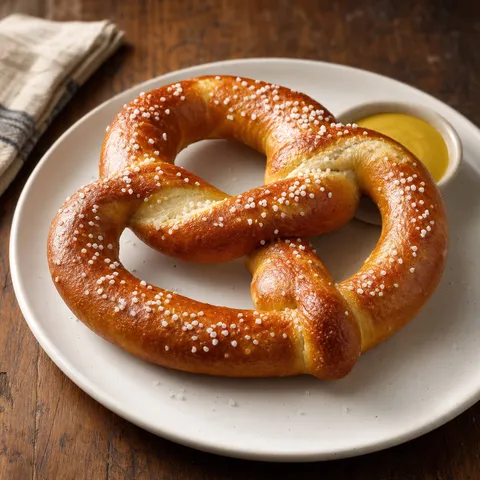
 Soft Pretzels
Chewy golden mall-style pretzels with a salty crust, brushed in butter.
 North American Lens Verified Images are for illustrative purposes only, may be inaccurate, and do not guarantee the presence or absence of specific ingredients.
 Gumbo
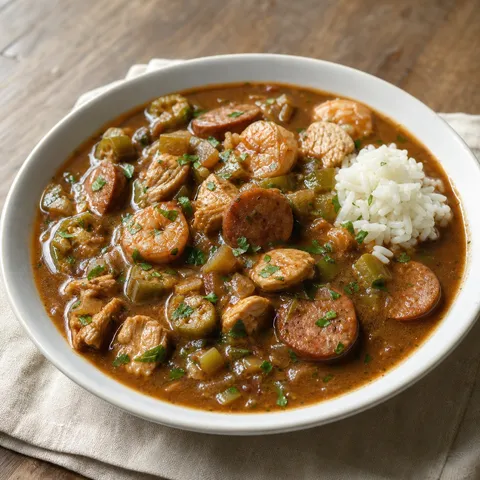
A Louisiana-style gumbo of chicken thighs and Andouille sausage simmered with okra, the Cajun holy trinity, and a dark roux, served over rice.
 North American Lens Verified Images are for illustrative purposes only, may be inaccurate, and do not guarantee the presence or absence of specific ingredients.
 New York Cheesecake
A dense, ultra-creamy baked cheesecake with a buttery graham cracker crust and a faintly tangy, melt-in-your-mouth filling.