 Bbq Images are for illustrative purposes only, may be inaccurate, and do not guarantee the presence or absence of specific ingredients.
  Serving Images are for illustrative purposes only, may be inaccurate, and do not guarantee the presence or absence of specific ingredients.
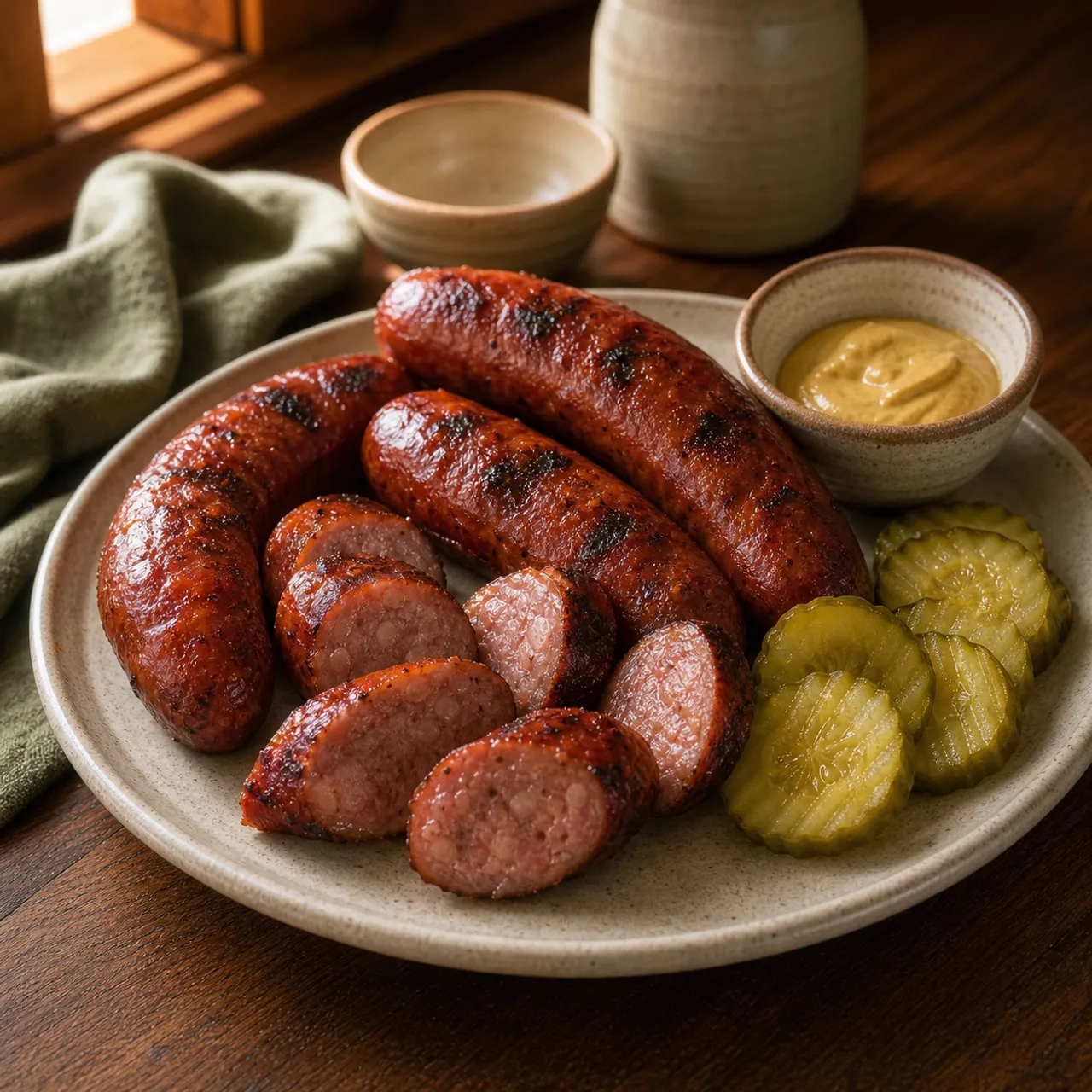
 Smoked Sausage (Hot Links)
Spicy smoked beef-and-pork hot link sausages, smoked or grilled until snappy and lightly charred.
Contains common allergens
In the app, Listahan checks these against your household automatically.
Instructions
5 steps- 1
Preheat a smoker to 250 degrees Fahrenheit, or a grill to medium heat, and lightly oil the grates.
- 2
Leave the hot links whole for a juicier snap, or prick lightly in a few spots if preferred.
- 3
Smoke the hot links for about 1 to 1.5 hours, until they reach an internal temperature of 160 degrees and the casings are taut and lightly blistered — or grill over medium heat for 12 to 15 minutes, turning occasionally, until browned and cooked through.
- 4
Let rest 5 minutes.
- 5
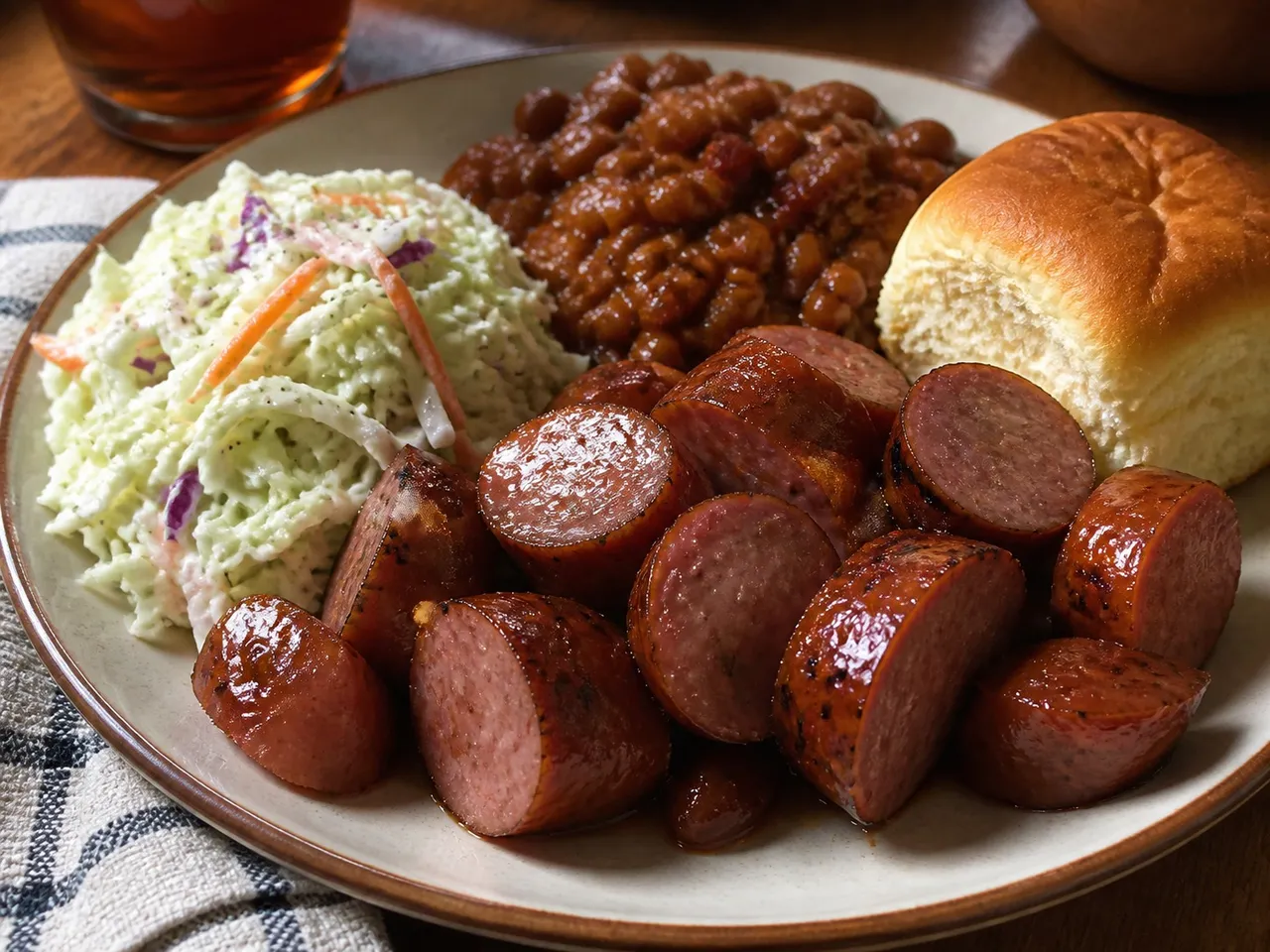
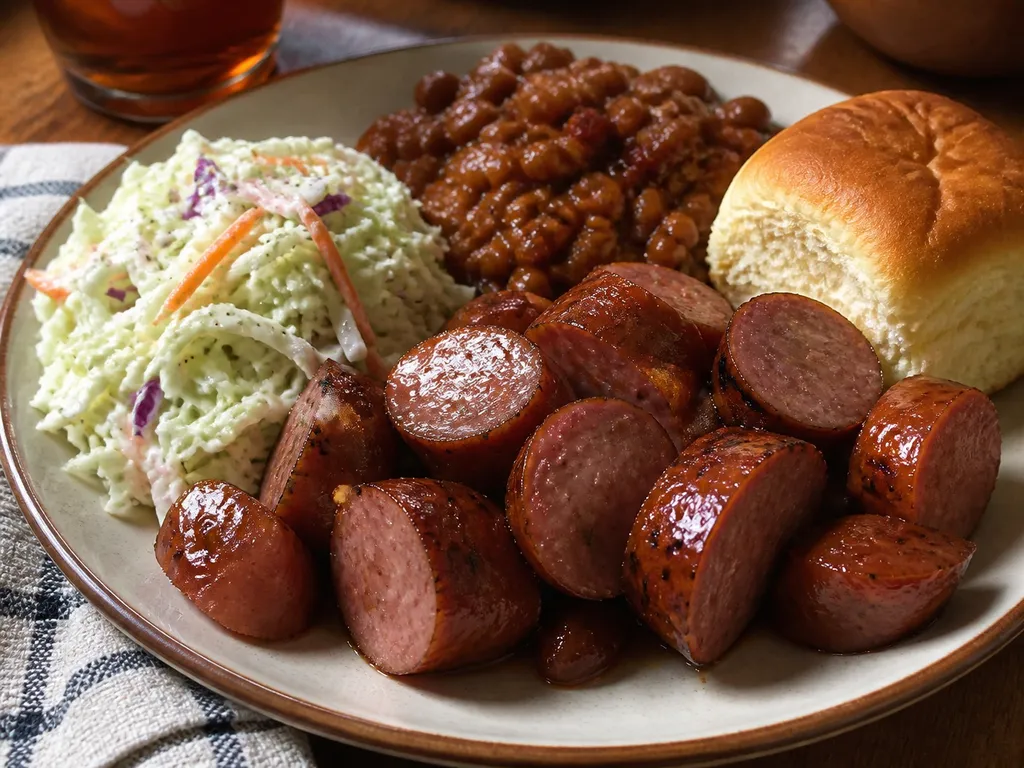
Slice and serve on white bread or buns with barbecue sauce, sliced onion, and pickles.
 Images are for illustrative purposes only, may be inaccurate, and do not guarantee the presence or absence of specific ingredients.
 Listahan Family Score™
66/100
Works for many families
Score reflects how well this recipe fits a typical busy household. In the app, your Family Score is personalized to your household's allergens, kids, and pantry.
Nutrition
per serving515
Calories
26 g
Protein
13 g
Carbs
40 g
Fat
Estimated per serving. Actual values depend on the brands and portions you use.
Listahan cooking guide
Chef notes & practical guide
Technique notes, ingredient swaps, serve-alongside ideas, storage guidance, and equipment for this recipe.
Cultural context
Hot links are one of the great overlooked heroes of American barbecue — a coarsely ground, heavily spiced pork sausage with deep roots in African American cooking in Texas and the broader South. They became a fixture of Texas barbecue menus as a less expensive, faster-cooking complement to brisket and ribs, often served sliced over butcher paper or stuffed into white bread with a slick of yellow mustard. The spice profile — cayenne, black pepper, red pepper flakes, garlic — sets hot links apart from milder smoked sausages, and the snap of the natural hog casing when you bite through is one of the defining sensory moments of a classic barbecue plate.
Listahan note
This version focuses on sourcing or making a coarsely ground pork hot link with natural casing, smoked over hardwood until the skin blisters and the fat inside renders to a juicy, peppery interior.
Technique cues
- Smoke hot links at a slightly higher temperature than brisket — around 275 to 300 degrees — so the casing tightens and snaps rather than staying soft and wrinkled; the skin should blister and brown, not steam.
- Never pierce the casing before or during smoking — the fat inside needs to stay sealed to keep the sausage moist; pricking releases the juices that make a hot link great and results in a dryer, less flavorful sausage.
- Let the links rest for 5 minutes after pulling from the smoker before slicing; the interior fat and juices need time to redistribute or they will pool on the cutting board rather than staying in the sausage.
Kitchen flow
- Parallel prep
- If buying pre-made links, pull them from the refrigerator 20 minutes before they go on the smoker so the casing adjusts gradually and does not split from thermal shock.
- Make-ahead
- Smoked hot links can be fully cooked a day ahead and reheated quickly on a hot grill for 3 to 4 minutes per side, which re-crisps the casing and heats the interior without overcooking.
- Leftover move
- Slice leftover hot links and toss them into a pot of red beans and rice, or serve cold on a charcuterie board alongside pickled vegetables and grainy mustard — the smoke flavor holds beautifully at room temperature.
- Cleanup rhythm
- Hot links drip significant fat during smoking; use a foil-lined drip tray and replace it after the cook rather than trying to scrub hardened fat from the smoker floor.
Ingredient brief
Role, handling, and swap guidance for each key ingredient.
pork hot links
primary protein
Purpose: Hot links are the vehicle for all the spice and smoke — the coarse grind, the natural casing, and the high fat content all work together to produce a sausage that holds up to direct smoke without drying out.
Handling: Keep refrigerated until the smoker is at temperature, then place directly on the grate without any additional seasoning on the exterior — the sausage is fully seasoned inside.
Adaptation: Andouille sausage has a similar coarse grind and spice profile; kielbasa is milder and slightly sweeter but works with the same smoking method.
natural hog casings
casing and snap
Purpose: Natural casings produce the characteristic snap on the first bite and allow smoke to penetrate while still containing the fat and juice inside the sausage.
Handling: If making sausage from scratch, rinse salt-packed casings thoroughly under cold water inside and out, then soak in warm water for 30 minutes before stuffing.
Adaptation: Collagen casings are a shelf-stable alternative that behaves similarly to natural casing; they produce a slightly thicker bite.
cayenne pepper
primary heat
Purpose: Cayenne is what distinguishes a hot link from a plain smoked sausage — the heat should be present on every bite, not just an occasional surprise.
Handling: In a from-scratch sausage, use at a ratio of roughly one teaspoon per pound of meat for moderate heat; adjust upward for a traditional Texas-style burn.
Adaptation: Ground arbol chile gives a bright, sharp heat; chipotle adds heat with a smokier, more complex character.
coarsely ground pork shoulder
meat base
Purpose: Pork shoulder has the fat-to-lean ratio — roughly 70/30 — that makes a sausage moist and flavorful without being greasy.
Handling: Grind through a large die to keep the texture coarse and rustic; fine-ground hot links taste more like hot dogs than proper smoked sausage.
Adaptation: A blend of pork and beef (roughly 70/30 pork to beef) produces a slightly darker, more robust sausage.
Technique notes
- The internal temperature target for smoked sausage is 160 degrees Fahrenheit — unlike large cuts where you are seeking collagen breakdown, sausage is done when the proteins set and the fat renders fully, which happens precisely at that temperature.
- For extra casing snap and a drier, more concentrated exterior, hang or rack the links at room temperature for 30 minutes before smoking to form a pellicle — a tacky surface layer that smoke adheres to more effectively.
- Grill-finishing the links over direct high heat for 2 minutes per side chars the casing slightly and creates a textural contrast that complements the juicy interior.
Ingredient swaps
- Lower-heat direction
- Replace hot links with a fully cooked mild smoked kielbasa or andouille and reduce cayenne if making from scratch; the smoking technique and timing remain identical.
- Poultry alternative
- Smoked chicken or turkey sausage with a similar coarse grind and natural casing can be smoked at the same temperature and time; fat content is lower so watch for drying out and pull at 165 degrees internal.
Serve alongside
- Pinto beans with smoked ham hock
- Sliced white bread with yellow mustard
- Dill pickle slices and raw white onion rings
- Lone Star beer or any ice-cold American lager
- Dr Pepper served over crushed ice
Serving suggestions only — check pairings for your household's allergens.
Storage & reheating
- Refrigerate smoked sausage links in an airtight container or resealable bag for up to 5 days; the smoke flavor deepens over the first day or two.
- Reheat on a medium-hot grill or cast-iron skillet for 3 to 4 minutes per side until the casing crisps and the interior is heated through; avoid the microwave which steams the casing soft.
- Freeze fully smoked links in a vacuum-sealed bag for up to 3 months; thaw overnight in the refrigerator and reheat as above.
Equipment
- Offset smoker or kamado grill for steady low-to-moderate temperature
- Instant-read thermometer for checking 160-degree internal target
- Sausage stuffer and large-die meat grinder if making from scratch
Make this household-aware
Listahan Pro checks this recipe against your household's allergens, finds pantry-aware swaps, builds the shopping list, and helps you plan the week around it.
Plan it in Listahan
Add Smoked Sausage (Hot Links) to your week, check it against your household's allergens, and build the shopping list automatically.
More Bbq recipes
 Bbq Lens Verified Images are for illustrative purposes only, may be inaccurate, and do not guarantee the presence or absence of specific ingredients.
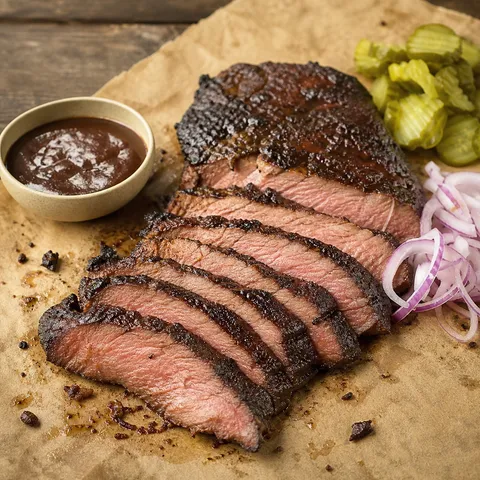
 Santa Maria Tri-Tip
California-style Santa Maria tri-tip roast seasoned simply with garlic, pepper, and salt, then grilled over red oak for a smoky crust.
 Bbq Lens Verified Images are for illustrative purposes only, may be inaccurate, and do not guarantee the presence or absence of specific ingredients.
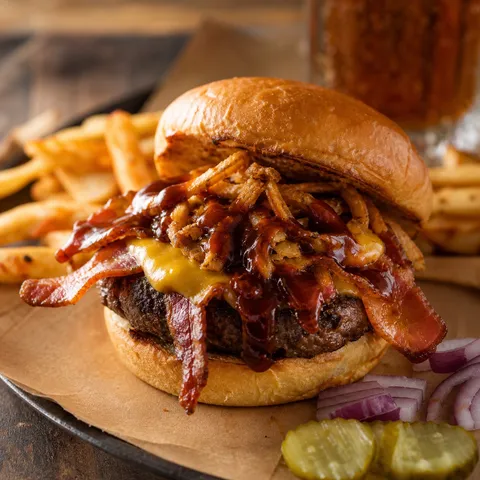
 BBQ Bacon Cheeseburgers
Thick beef patties grilled over an open flame, topped with crispy bacon, melted cheddar, and smoky BBQ sauce on a toasted bun.
 Bbq Lens Verified Images are for illustrative purposes only, may be inaccurate, and do not guarantee the presence or absence of specific ingredients.
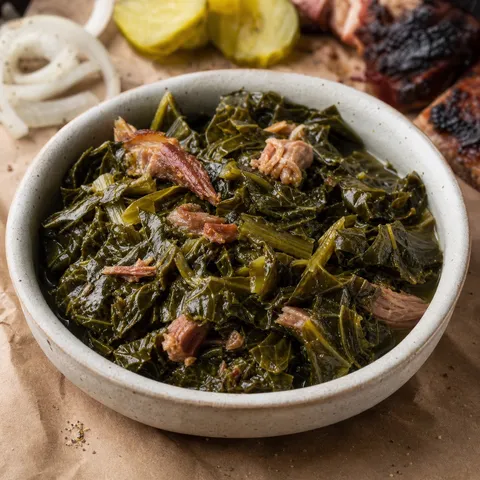
 Southern Collard Greens
Slow-simmered collard greens with smoked ham hock, cider vinegar, and a touch of heat, a soulful Southern BBQ side.