 Brazilian Images are for illustrative purposes only, may be inaccurate, and do not guarantee the presence or absence of specific ingredients.
  Serving Images are for illustrative purposes only, may be inaccurate, and do not guarantee the presence or absence of specific ingredients.
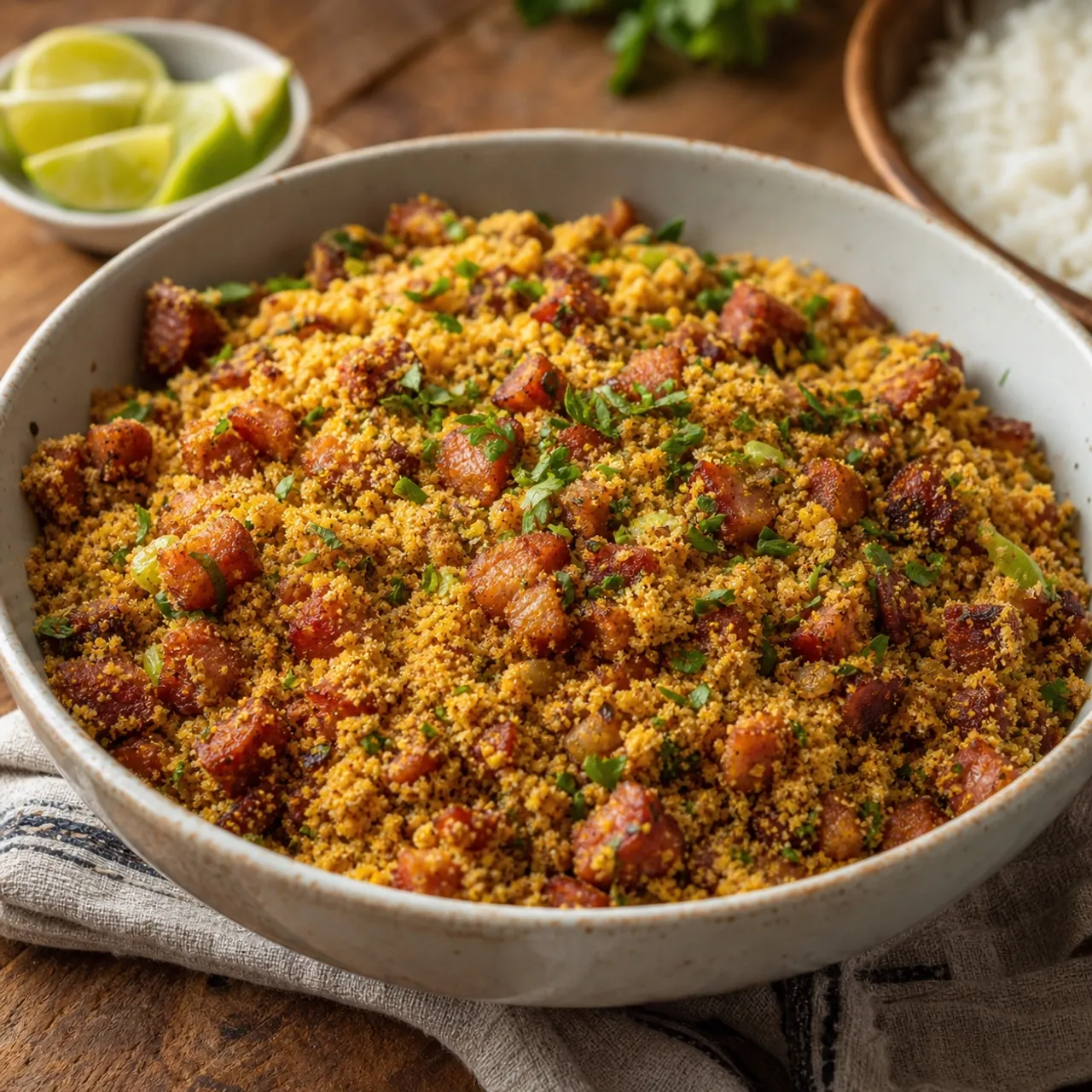
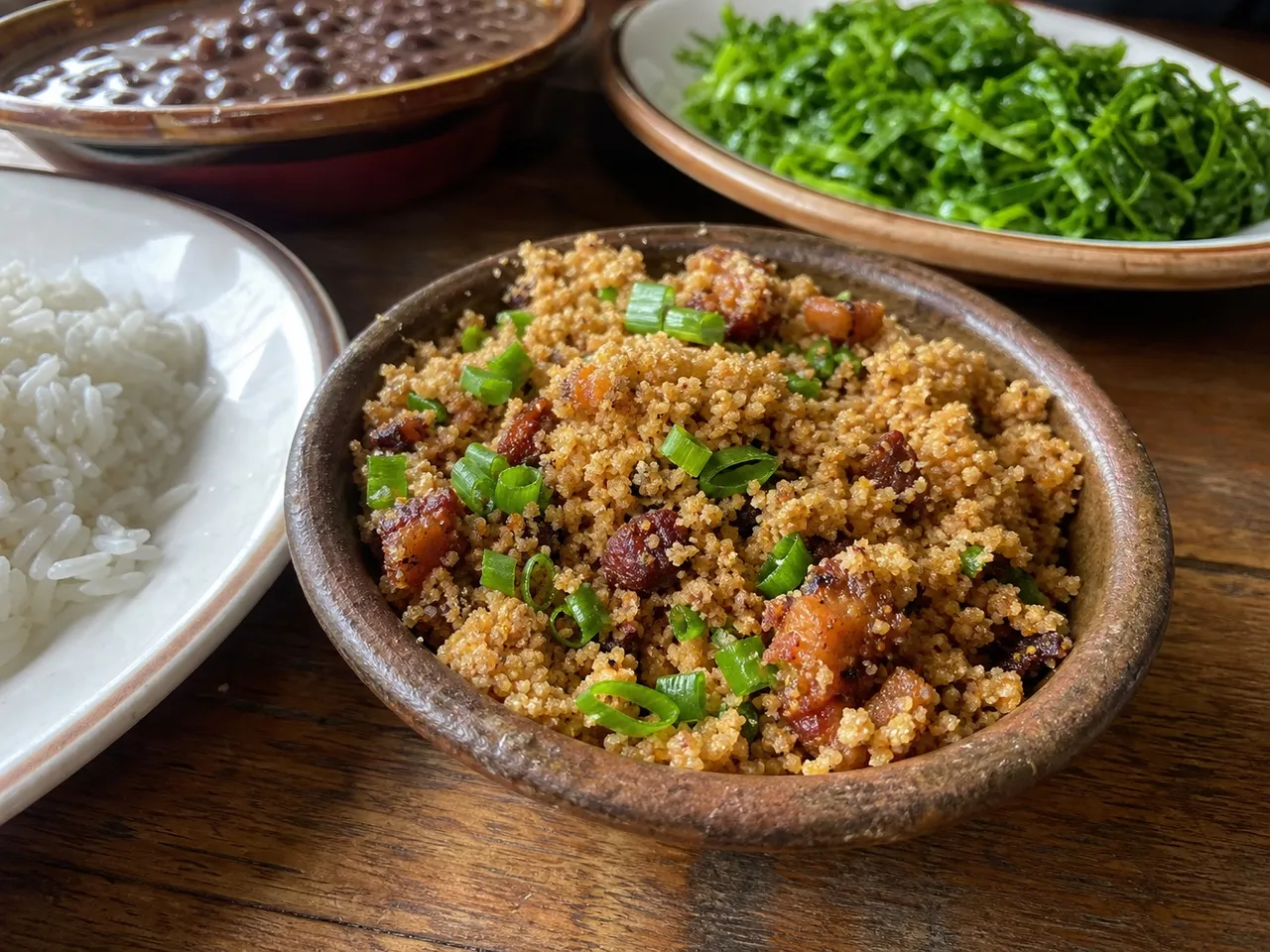
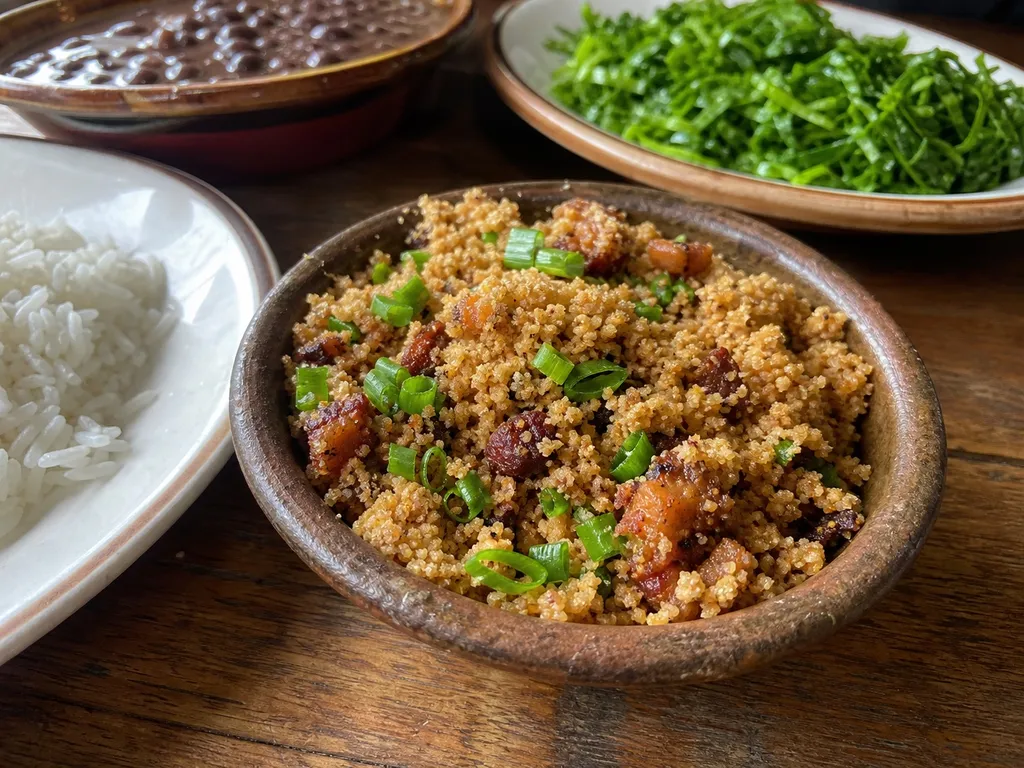
 Farofa (Toasted Cassava Flour with Bacon)
Crunchy toasted cassava flour cooked with crisped bacon and onion, the essential crumbly topping for feijoada and churrasco.
Contains common allergens
In the app, Listahan checks these against your household automatically.
Good to know
- Ready in under 30 minutes
Matched from this dish's own ingredients and timing. Browse more: 30-minute meals
Instructions
6 steps- 1
In a large skillet over medium heat, cook the bacon until crisp and the fat has rendered, about 6 minutes.
- 2
Add the butter, onion, and garlic, and sauté until the onion is soft and golden, about 4 minutes.
- 3
Reduce the heat to low and gradually stir in the cassava flour, mixing constantly to coat every grain in the fat.
- 4
Continue toasting the flour for 5-6 minutes, stirring often, until it turns light golden and fragrant.
- 5
Season with salt to taste and stir in the green onion.
- 6
Serve warm, sprinkled over feijoada, grilled meats, or rice and beans.
 Images are for illustrative purposes only, may be inaccurate, and do not guarantee the presence or absence of specific ingredients.
 Listahan Family Score™
71/100
Good fit for most families
Score reflects how well this recipe fits a typical busy household. In the app, your Family Score is personalized to your household's allergens, kids, and pantry.
Nutrition
per serving85
Calories
3 g
Protein
2 g
Carbs
7 g
Fat
Estimated per serving. Actual values depend on the brands and portions you use.
Listahan cooking guide
Chef notes & practical guide
Technique notes, ingredient swaps, serve-alongside ideas, storage guidance, and equipment for this recipe.
Cultural context
Farofa's name comes from farinha, the cassava flour Indigenous Tupi-Guarani communities in Brazil ground from manioc root long before European contact, using it as a shelf-stable staple. Over centuries it became the default finishing touch on the Brazilian table, toasted in whatever fat was on hand to add crunch and richness to rice-and-bean meals.
Listahan note
This version renders real bacon fat first and layers butter on top of it, so the cassava flour toasts in two fats instead of one, giving it a deeper savory edge than a plain butter farofa.
Technique cues
- Cassava flour doesn't behave like wheat flour when heated - it never thickens into a paste, it just toasts, so the goal is color and aroma, not consistency.
- Adding the flour gradually while stirring constantly coats each granule evenly in fat, which is what gives good farofa its glossy, separate grains instead of a dry, dusty texture.
- The bacon fat rendered first, followed by butter, gives two distinct flavor layers a single fat can't replicate.
Kitchen flow
- Parallel prep
- Dice the bacon and onion while the pan heats so you move straight from rendering fat into sautéing without a pause
- Make-ahead
- Farofa keeps well made a few hours ahead and left uncovered at room temperature; a quick re-toast in a dry skillet revives the crunch
- Leftover move
- Sprinkle leftover farofa over eggs or leftover rice the next morning instead of trying to reheat it as a standalone side
- Cleanup rhythm
- Wipe the skillet out with a paper towel while still warm, since cooled cassava flour residue hardens and takes real scrubbing
Ingredient brief
Role, handling, and swap guidance for each key ingredient.
bacon
Savory fat and crunch
Purpose: Its rendered fat is the primary cooking medium, and its crisped bits add texture throughout
Handling: Dice small and cook until the fat fully renders and the pieces crisp
Adaptation: Diced smoked linguiça or pancetta both work and shift the flavor slightly smokier or milder
butter
Secondary fat added after the bacon
Purpose: Layers a rounder, slightly nutty richness on top of the bacon fat
Handling: Add once the bacon is crisp so it doesn't burn in the hot pan
Adaptation: A dairy-free butter alternative keeps the method the same with a milder finish
onion
Aromatic sweetness
Purpose: Softened in the fat before the flour goes in, it perfumes the whole batch
Handling: Chop finely so it cooks through in the few minutes before the flour is added
Adaptation: Shallot gives a subtler, sweeter version
farinha de mandioca (cassava flour)
The dish's defining ingredient
Purpose: This coarse, toasted cassava flour is what makes farofa farofa - there's no real substitute for its texture
Handling: Add gradually while stirring constantly so every bit toasts evenly instead of clumping
Adaptation: Toasted panko can mimic the crunch in a pinch, though the flavor and texture will be noticeably different
green onion
Fresh, sharp finish
Purpose: Stirred in off the heat, it adds a raw bite that balances the rich, toasted flour
Handling: Slice thin and fold in right before serving so it stays bright and crisp
Adaptation: Fresh parsley or chives work as a milder substitute
Technique notes
- Keep the heat at medium-low once the flour goes in - cassava flour scorches fast and unevenly on high heat, going from golden to burnt in seconds.
- Stir in a steady folding motion rather than fast circles; folding coats the granules without compacting them into clumps.
- Taste for salt only after toasting, since the bacon and butter both contribute salt that's easy to underestimate before the flour absorbs it.
Ingredient swaps
- Dairy-free option
- Use a neutral oil or dairy-free butter in place of the butter; the bacon fat alone still carries plenty of flavor
- Vegetarian direction
- Swap the bacon for a couple extra tablespoons of butter plus a pinch of smoked paprika to echo the smoky note without meat
- Lower-sodium direction
- Cut the bacon quantity by half and season the flour lightly, since bacon and any added salt compound quickly
Serve alongside
- Feijoada (Brazilian black bean and pork stew)
- Feijão Tropeiro (Brazilian Beans with Bacon and Eggs)
- grilled picanha or other churrasco cuts
- white rice and black beans
- Cold Brazilian lager
- caipirinha alongside a full churrasco spread
- iced hibiscus tea for a non-alcoholic option
Serving suggestions only — check pairings for your household's allergens.
Storage & reheating
- Store at room temperature in a sealed container up to 2 days
- Refrigerate up to a week if it contains bacon, then re-toast briefly in a dry pan to restore crunch
- Not recommended for freezing since the texture turns pasty once thawed
Equipment
- Large heavy skillet
- Wooden spoon for constant stirring
- Fine sieve if you need to sift out clumps
- Sharp knife for dicing bacon and onion
Make this household-aware
Listahan Pro checks this recipe against your household's allergens, finds pantry-aware swaps, builds the shopping list, and helps you plan the week around it.
Plan it in Listahan
Add Farofa (Toasted Cassava Flour with Bacon) to your week, check it against your household's allergens, and build the shopping list automatically.
More Brazilian recipes
 Brazilian Lens Verified Images are for illustrative purposes only, may be inaccurate, and do not guarantee the presence or absence of specific ingredients.
 Pudim de Leite (Brazilian Flan)
A silky caramel-topped milk pudding made with sweetened condensed milk, the most requested dessert at any Brazilian family gathering.
 Brazilian Lens Verified Images are for illustrative purposes only, may be inaccurate, and do not guarantee the presence or absence of specific ingredients.
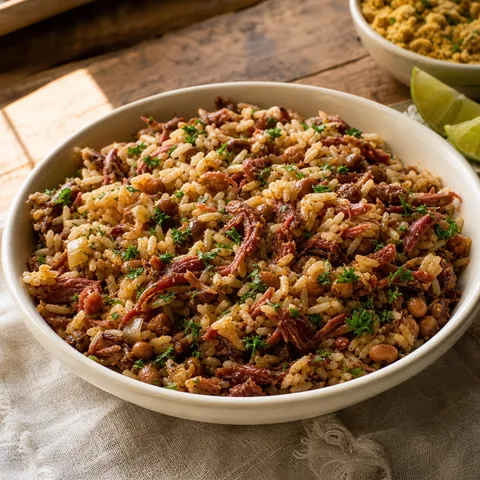
 Arroz Carreteiro (Brazilian Rice with Dried Beef)
A smoky one-pot rice from the gaúcho cattle-drivers of southern Brazil, cooked with shredded dried beef, tomato, and peppers.
 Brazilian Lens Verified Images are for illustrative purposes only, may be inaccurate, and do not guarantee the presence or absence of specific ingredients.
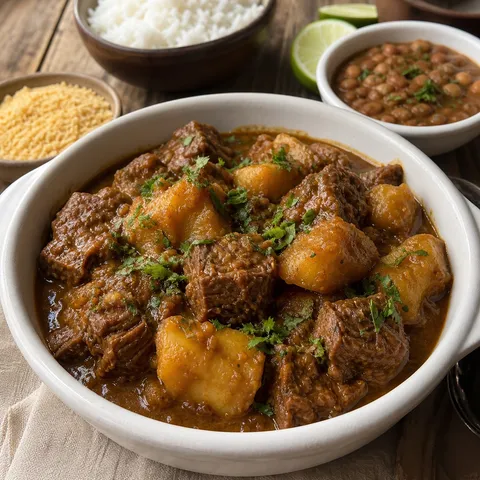
 Vaca Atolada (Beef and Cassava Stew)
"Stuck cow" stew: fall-apart beef short ribs braised with cassava until the pot turns thick and glossy, a Minas Gerais farmhouse classic.