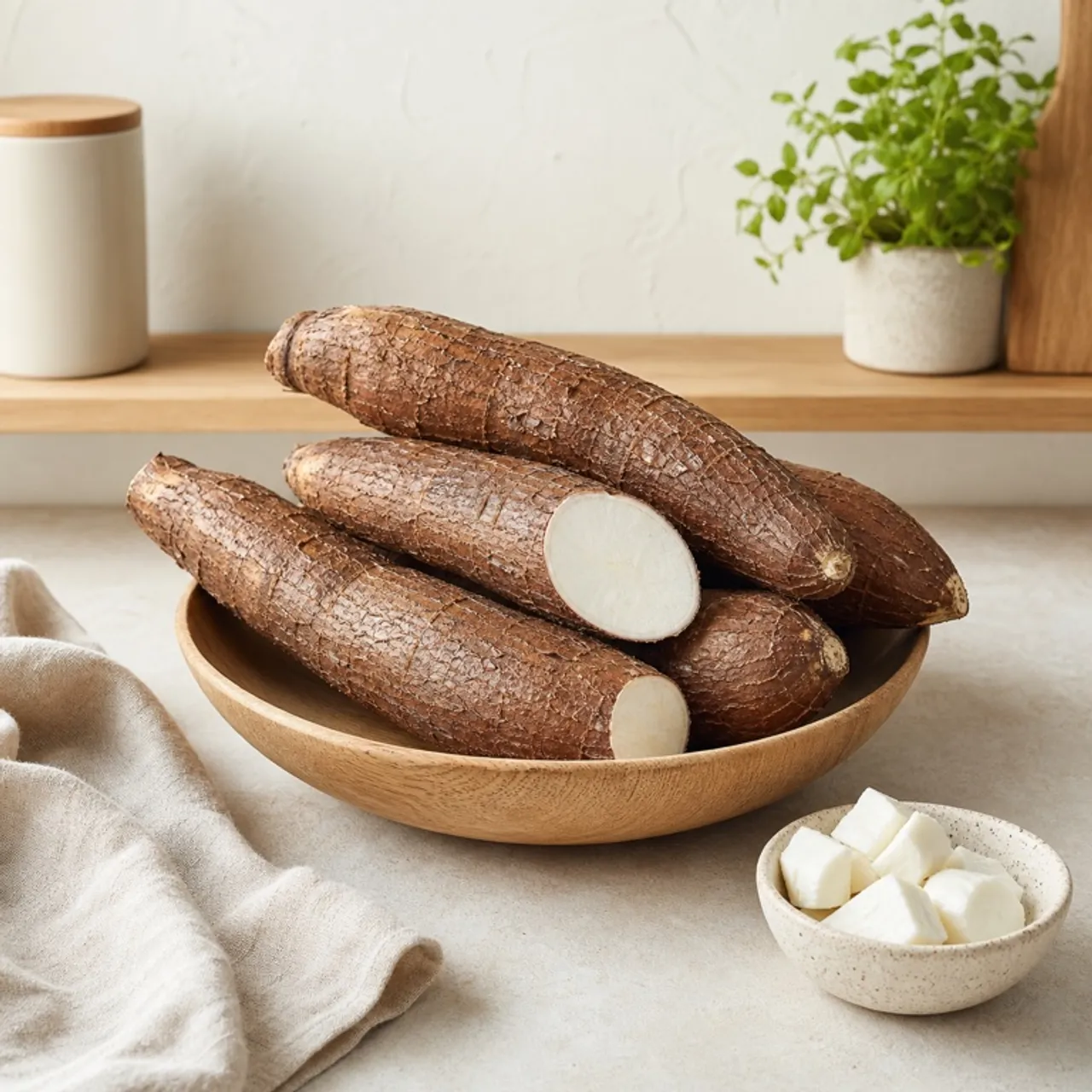
 Food Lens Images are for illustrative purposes only, may be inaccurate, and do not guarantee the presence or absence of specific ingredients.
 Food Lens · Recipe ingredients
Cassava
Mild, starchy, and slightly sweet with an earthy, root-vegetable quality. The texture when boiled is dense and slightly fibrous with a creamier interior than potato. When fried, the exterior becomes shatteringly crisp while the interior stays dense and pillowy. Cassava takes on surrounding flavors well — garlic, citrus, herbs, and spiced broths all penetrate readily.
Lens VerifiedCassava (Manihot esculenta) — also called manioc, yuca, or tapioca root — is a starchy tuberous root and one of the world's most important food crops, feeding hundreds of millions of people across tropical Africa, Asia, Latin America, and the Caribbean. Its white flesh is dense, starchy, and mildly flavored, making it an extraordinarily versatile cooking ingredient that can be boiled, fried, roasted, fermented, dried, or processed into flour and starch. It is the source of tapioca pearls and cassava flour.
Where it comes from
Cassava was domesticated in the Amazon basin of South America approximately 8,000–10,000 years ago and introduced to Africa and Asia by Portuguese traders in the 16th century, becoming a global staple crop.
Varieties — Two main types exist: 'sweet' cassava (low in prussic acid, used fresh) and 'bitter' cassava (higher in prussic acid, requiring thorough cooking or processing before it is safe to eat). In grocery stores, the cassava sold fresh is the sweet type. Processed products include cassava flour (whole-root), tapioca flour/starch (extracted starch), and gari or farinha (fermented and dried cassava meal used in West African and Brazilian cuisines).
Cassava is foundational to the food cultures of the Amazon basin, coastal West Africa, the Caribbean, and Central America. In Jamaica, bammy — a flat cassava cake eaten alongside fried fish — has deep Taíno Indigenous roots. In Brazil, farofa (toasted cassava flour) appears at nearly every table.
In a modern kitchen — Cassava flour has become widely popular as a whole-root alternative flour in contemporary baking. Yuca fries have entered mainstream restaurant menus as a popular alternative to potato fries — crispier exterior with a fluffy, dense center.
Buying it
Fresh cassava is sold in wax-coated form to prevent drying (the wax extends shelf life). Choose firm, unblemished roots with no soft spots, cracks, or mold. When cut, the flesh should be bright white with no grey, blue, or black discoloration — discoloration indicates deterioration. Frozen cassava (pre-peeled and cut) is a convenient and reliable alternative that performs equally well in most cooked applications.
Storing it
Store whole, unpeeled cassava in a cool, dry pantry spot and use within a week or so — the flesh dries out and can develop mold once cut. Peel and use cut pieces right away, or wrap and refrigerate them briefly.
Keeps about 7 days in the pantry.
Out of cassava? Good swaps
General cooking guidance — always check the labels on the products you use. Listahan’s allergen checks run automatically when you plan a recipe in the app. Not medical advice.
Recipes that use cassava
Common questions about cassava
Is cassava vegan?
Cassava is generally plant-based and suitable for a vegan diet, but brands differ — confirm on the label.
What can I use instead of cassava?
Good swaps include , , . Each behaves a little differently — see the swaps above for notes, and always check labels for allergens.
How do I store cassava?
Store whole, unpeeled cassava in a cool, dry pantry spot and use within a week or so — the flesh dries out and can develop mold once cut. Peel and use cut pieces right away, or wrap and refrigerate them briefly. It keeps about 7 days in the pantry.
More recipe ingredients
See all


Make cassava about your kitchen — with Listahan Pro
Everything above is free, forever. Pro adds the Household Lens — the same food, seen for your family:
-
Checked for each member
Flags cassava per person against your household's allergies and school rules — not just a generic "contains" tag.
-
Pantry-aware
Knows whether you already have it, what is running low, and the best swap from what is in your kitchen tonight.
-
What it costs near you
A real price from the Presyo community index, so you can plan the budget — not guess.
-
Your household memory
Who likes it, plus your own private notes — brand, where you keep it, who skips it.
Allergen safety is always free — Pro adds the automation, never the safety.
Cook with cassava — safely
Plan a recipe in Listahan and the household allergen check runs automatically — every plan, every swap, every lunchbox. Safety is never paywalled.