 Brazilian Images are for illustrative purposes only, may be inaccurate, and do not guarantee the presence or absence of specific ingredients.
  Serving Images are for illustrative purposes only, may be inaccurate, and do not guarantee the presence or absence of specific ingredients.
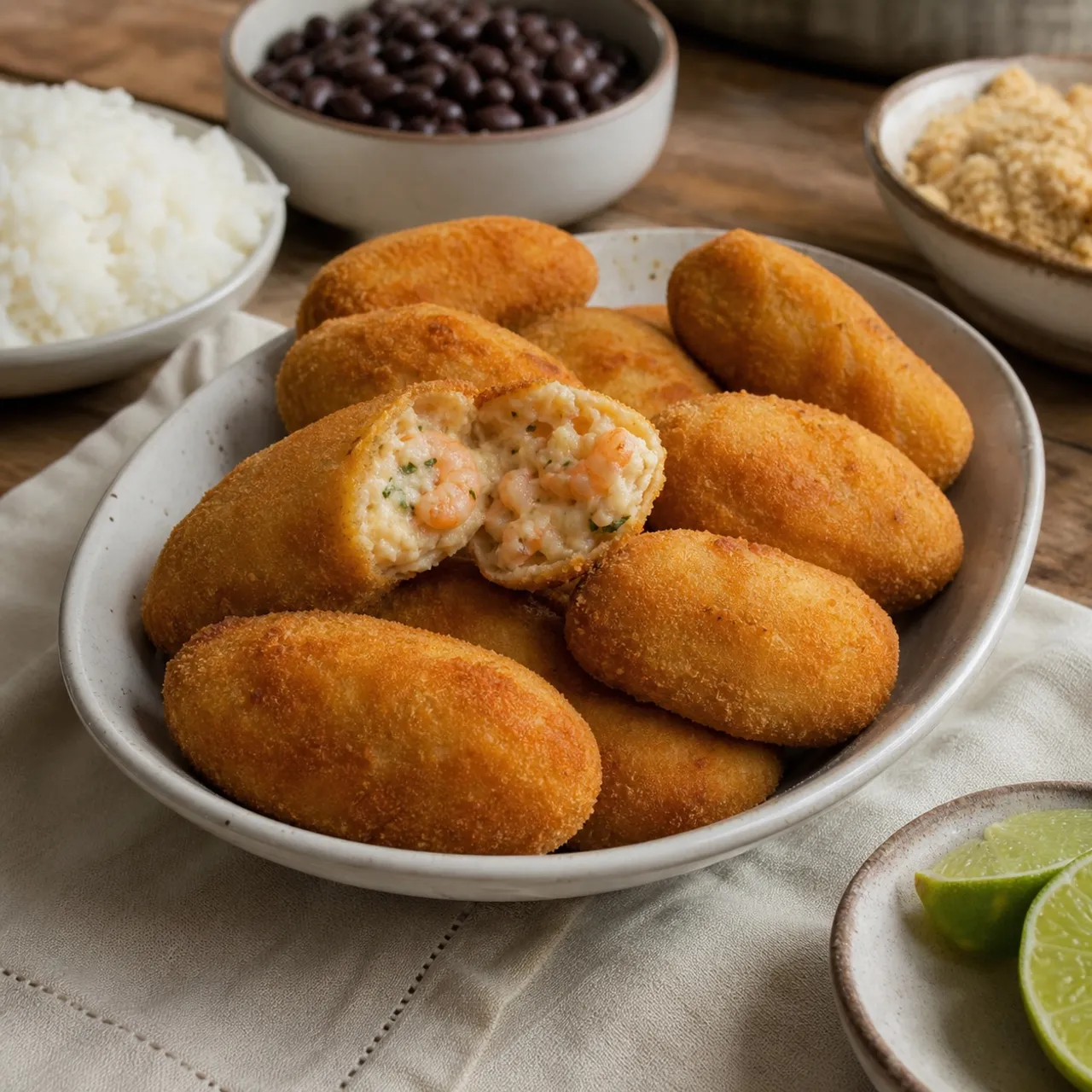
 Risole de Camarão (Shrimp Risole)
Crescent-shaped breaded fritters filled with creamy shrimp and catupiry cheese, a crowd favorite at Brazilian birthday parties.
Contains common allergens
In the app, Listahan checks these against your household automatically.
Good to know
- Crispy
Matched from this dish's own ingredients and timing. Browse more: crispy recipes
Instructions
7 steps- 1
Heat the milk and butter in a saucepan until the butter melts, then add the flour and salt all at once, stirring vigorously over low heat until a smooth dough ball forms; let cool.
- 2
Meanwhile, sauté the chopped shrimp in olive oil with garlic for 4-5 minutes until pink and cooked, then stir in the catupiry cheese off heat to make a creamy filling; let cool.
- 3
Roll the cooled dough out on a floured surface and cut into circles.
- 4
Place a spoonful of shrimp filling on each circle, fold over into a half-moon, and pinch the edges to seal.
- 5
Dip each risole in beaten egg, then coat in breadcrumbs.
- 6
Heat the frying oil to 350°F and fry the risoles in batches for 3-4 minutes until golden brown and crisp.
- 7
Drain on paper towels and serve hot.
 Images are for illustrative purposes only, may be inaccurate, and do not guarantee the presence or absence of specific ingredients.
 Listahan Family Score™
68/100
Works for many families
Score reflects how well this recipe fits a typical busy household. In the app, your Family Score is personalized to your household's allergens, kids, and pantry.
Nutrition
per serving675
Calories
32 g
Protein
56 g
Carbs
36 g
Fat
Estimated per serving. Actual values depend on the brands and portions you use.
Listahan cooking guide
Chef notes & practical guide
Technique notes, ingredient swaps, serve-alongside ideas, storage guidance, and equipment for this recipe.
Cultural context
Risoles are one of the anchor items in Brazil's salgadinho tradition, the spread of small breaded and fried snacks served at birthday parties, weddings, and bakery counters nationwide. The dough is built like a choux paste, milk and butter brought to a simmer before flour is beaten in off heat, then rolled and folded around a filling rather than piped and baked. The shrimp-and-catupiry version reflects how central Catupiry brand cream cheese became to Brazilian party food after its introduction in the early 20th century.
Listahan note
This version pairs a garlicky sauteed shrimp filling with catupiry cream cheese inside a milk-and-butter dough, then breads and fries it, matching the half-moon shape and crisp shell found at a typical Brazilian buffet table.
Technique cues
- The dough is made like a roux-based paste: flour goes into hot milk and butter all at once and is stirred vigorously until it pulls into a single smooth mass, a technique closer to choux pastry than a rolled pie dough.
- Cooking the shrimp just until pink before it goes off heat matters, shrimp continues cooking residually and in the fryer later, so overcooking here leads to rubbery shrimp in the final fried pastry.
- The double coating, egg wash then breadcrumbs, is what creates the crisp golden shell; skipping either step leaves a pale, less crunchy crust that also releases more oil during frying.
Kitchen flow
- Parallel prep
- Make the dough first and let it cool while you saute the shrimp filling, so both are ready to assemble at the same time.
- Make-ahead
- Both the dough and the cooled shrimp filling can be refrigerated separately up to a day ahead before assembling and frying.
- Leftover move
- Fried leftovers recrisp best in a 375F oven for 8 to 10 minutes rather than the microwave, which makes the breading go soft.
- Cleanup rhythm
- Set up the egg-wash and breadcrumb stations in shallow dishes with one hand dedicated to wet ingredients and one to dry to avoid clumping breadcrumbs.
Ingredient brief
Role, handling, and swap guidance for each key ingredient.
shrimp, peeled, deveined, and chopped
the primary filling protein
Purpose: chopped shrimp cooks quickly and distributes evenly through the small pastry pockets, unlike whole shrimp which would create an uneven bite
Handling: chop into small, uniform pieces after peeling and deveining so filling and dough seal together neatly
Adaptation: chopped cooked crawfish or a firm white fish both work as a seafood alternative
catupiry or cream cheese
creamy binder for the shrimp filling
Purpose: catupiry is a soft, mild, stretchy Brazilian cream cheese brand so iconic it appears as a filling option across nearly every Brazilian salgadinho; it binds the shrimp into a cohesive filling without overpowering it
Handling: stir it in off the heat so it stays creamy rather than breaking or turning oily
Adaptation: a standard cream cheese or mascarpone gives a similar richness though a milder tang than true catupiry
all-purpose flour, plus extra for dusting
structure for the choux-style dough
Purpose: the flour absorbs the hot milk and butter mixture to form a pliable, rollable dough that holds together around the filling without cracking
Handling: add it all at once to the hot milk and butter, then stir vigorously and continuously until a smooth ball forms
Adaptation: a 1:1 gluten-free flour blend can work but the dough will be more fragile and prone to tearing when rolled
breadcrumbs
the crisp outer coating
Purpose: breadcrumbs are what give the fried risole its signature crunchy shell, distinct from the smooth dough underneath
Handling: coat each dipped risole evenly, pressing gently so the crumbs adhere on all sides
Adaptation: panko gives an even crispier, more shatter-prone crust than fine traditional breadcrumbs
Technique notes
- Stir the dough vigorously and continuously the moment the flour hits the hot milk, hesitating even briefly leads to lumps that never fully smooth out.
- Roll the cooled dough on a well-floured surface, since it is stickier than a standard pastry dough and will tear if rolled too thin.
- Fry in batches without crowding the pot, too many risoles at once drops the oil temperature and results in greasy, pale pastries instead of a crisp golden shell.
Ingredient swaps
- Shellfish-free direction
- Swap the shrimp for shredded cooked chicken or hearts of palm to make a shellfish-free version of the same dough and technique.
- Baked instead of fried
- Brush breaded risoles with oil and bake at 400F for 18 to 20 minutes, turning once, for a lighter version with a less crisp shell.
- Gluten-free direction
- Use a gluten-free flour blend for the dough and gluten-free breadcrumbs for coating, though the dough will need gentler handling.
Serve alongside
- farofa
- Brazilian rice with broccoli
- salpicao (chicken and vegetable salad)
- chilled chopp (draft beer)
- guarana soda
- a caipirinha for an adult gathering
Serving suggestions only — check pairings for your household's allergens.
Storage & reheating
- Refrigerate fried risoles in an airtight container for up to 3 days.
- Reheat in a 375F oven for 8 to 10 minutes to restore crispness.
- Unfried breaded risoles freeze well for up to 2 months; fry straight from frozen, adding a minute or two to the frying time.
Equipment
- medium saucepan
- rolling pin
- shallow dishes for breading station
- deep pot or fryer with a thermometer
Make this household-aware
Listahan Pro checks this recipe against your household's allergens, finds pantry-aware swaps, builds the shopping list, and helps you plan the week around it.
Plan it in Listahan
Add Risole de Camarão (Shrimp Risole) to your week, check it against your household's allergens, and build the shopping list automatically.
More Brazilian recipes
 Brazilian Lens Verified Images are for illustrative purposes only, may be inaccurate, and do not guarantee the presence or absence of specific ingredients.
 Pudim de Leite (Brazilian Flan)
A silky caramel-topped milk pudding made with sweetened condensed milk, the most requested dessert at any Brazilian family gathering.
 Brazilian Lens Verified Images are for illustrative purposes only, may be inaccurate, and do not guarantee the presence or absence of specific ingredients.
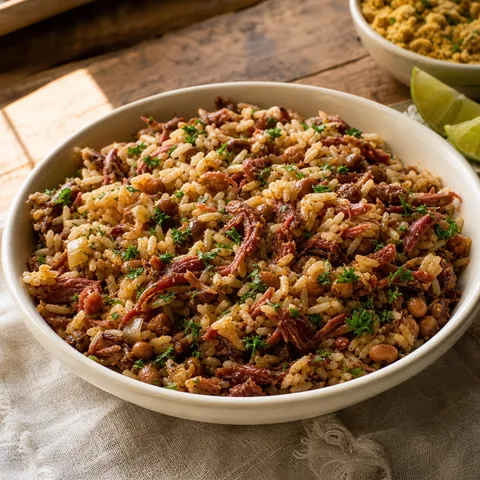
 Arroz Carreteiro (Brazilian Rice with Dried Beef)
A smoky one-pot rice from the gaúcho cattle-drivers of southern Brazil, cooked with shredded dried beef, tomato, and peppers.
 Brazilian Lens Verified Images are for illustrative purposes only, may be inaccurate, and do not guarantee the presence or absence of specific ingredients.
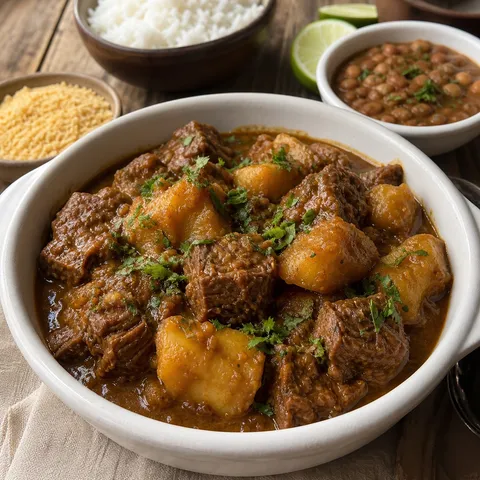
 Vaca Atolada (Beef and Cassava Stew)
"Stuck cow" stew: fall-apart beef short ribs braised with cassava until the pot turns thick and glossy, a Minas Gerais farmhouse classic.