 Breads Images are for illustrative purposes only, may be inaccurate, and do not guarantee the presence or absence of specific ingredients.
 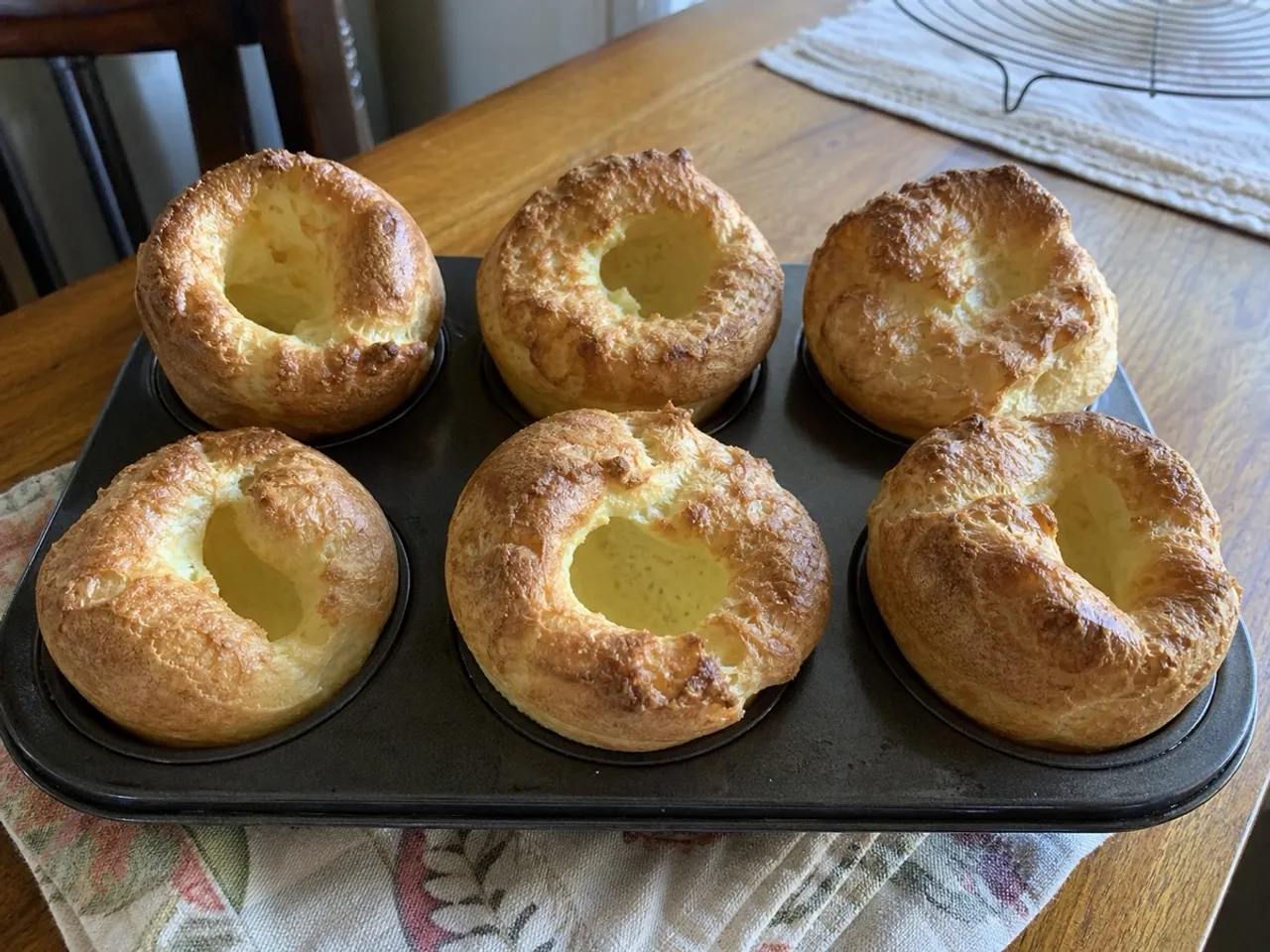 Serving Images are for illustrative purposes only, may be inaccurate, and do not guarantee the presence or absence of specific ingredients.
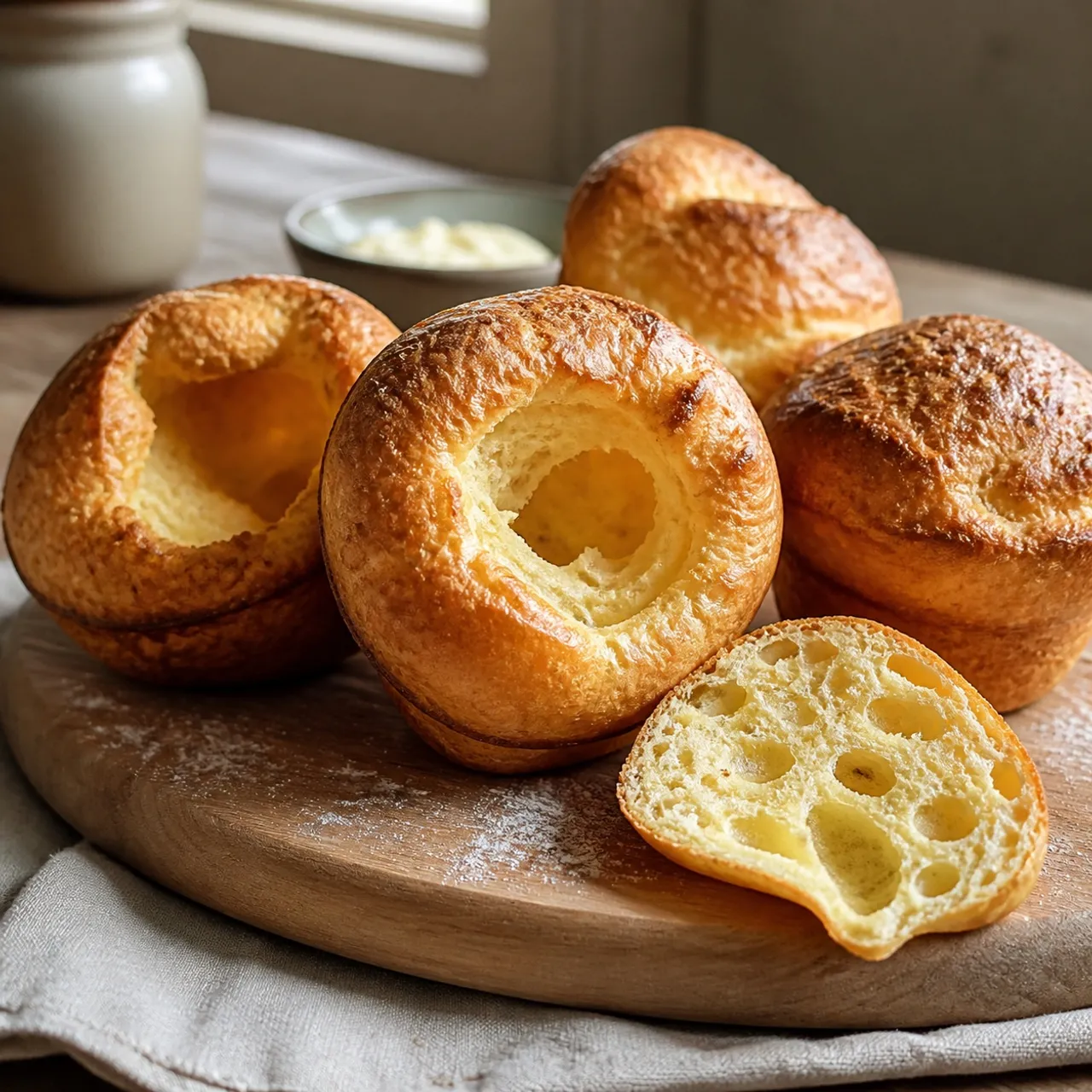
 Classic Popovers
Airy, egg-based rolls that puff dramatically in a hot oven, crisp outside and hollow and steamy within.
Contains common allergens
In the app, Listahan checks these against your household automatically.
Good to know
- Crispy
Matched from this dish's own ingredients and timing. Browse more: crispy recipes
Instructions
8 steps- 1
Place a popover pan or muffin tin in the oven and preheat to 450°F (230°C).
- 2
Whisk eggs and milk together until well combined.
- 3
Whisk in flour and salt just until smooth; do not overmix.
- 4
Whisk in melted butter.
- 5
Carefully remove the hot pan and grease each cup generously with butter.
- 6
Fill each cup about two-thirds full with batter.
- 7
Bake 20 minutes at 450°F without opening the door, then reduce heat to 350°F (175°C) and bake 15-18 minutes more until deep golden and very puffed.
- 8
Pierce each popover with a skewer to release steam, then serve immediately.
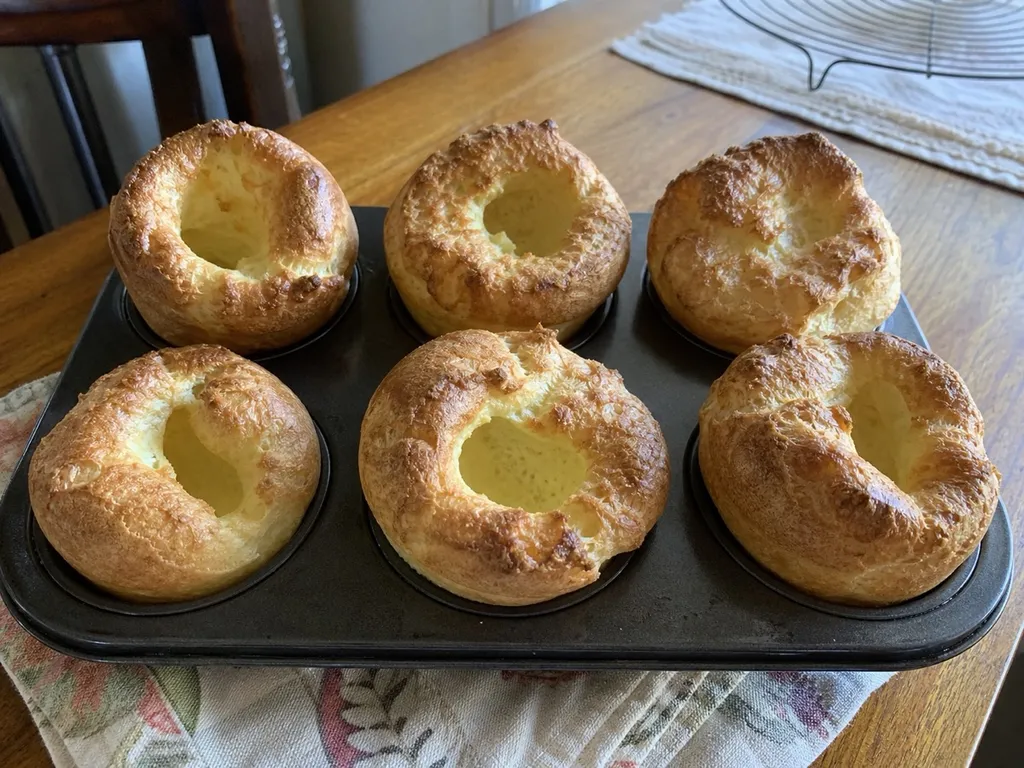 Images are for illustrative purposes only, may be inaccurate, and do not guarantee the presence or absence of specific ingredients.
 Listahan Family Score™
70/100
Good fit for most families
Score reflects how well this recipe fits a typical busy household. In the app, your Family Score is personalized to your household's allergens, kids, and pantry.
Nutrition
per serving170
Calories
7 g
Protein
21 g
Carbs
6 g
Fat
Estimated per serving. Actual values depend on the brands and portions you use.
Listahan cooking guide
Chef notes & practical guide
Technique notes, ingredient swaps, serve-alongside ideas, storage guidance, and equipment for this recipe.
Cultural context
Popovers are the American branch of the same batter family as Yorkshire pudding: eggs, milk, flour, heat, and steam doing most of the work. Where Yorkshire pudding is often tied to roast drippings, popovers became a standalone bread for breakfast, brunch, and holiday tables, usually baked in buttered cups until tall and hollow.
Listahan note
This version keeps the batter plain and dependable so the rise is the main event. The priorities are room-temperature ingredients, a fully hot pan, and patience with the oven door.
Technique cues
- Room-temperature eggs and milk help the batter hit the hot pan without cooling it down too much. That early blast of heat is what turns moisture into steam fast enough to lift the sides.
- A few small flour streaks are better than a tough batter. Whisk until smooth enough to pour, then stop before the gluten gets overworked.
- The second, lower-temperature bake dries the shell after the big rise. Pulling them too early gives you impressive height for a minute, then collapse.
Kitchen flow
- Parallel prep
- While the oven and pan heat, bring the eggs and milk to room temperature, melt the butter, and set out a skewer for venting.
- Make-ahead
- The batter is best baked soon after mixing, but you can measure the dry ingredients and set out the pan earlier.
- Leftover move
- Split leftover popovers and toast them, then serve with jam, roast beef, scrambled eggs, or a small spoonful of gravy.
- Cleanup rhythm
- Fill the mixing bowl with warm water while the popovers bake, then wipe the pan once it cools so any butter film comes off easily.
Ingredient brief
Role, handling, and swap guidance for each key ingredient.
Large eggs
Structure and lift
Purpose: Eggs set the walls of the popover while their moisture helps create the steam that puffs the batter.
Handling: Bring them to room temperature before mixing so the batter warms evenly in the oven.
Adaptation: Extra-large eggs can make the batter looser and more custardy, so stay with large eggs when possible.
Whole milk
Liquid base
Purpose: Whole milk gives the batter enough richness while still staying fluid enough to rise dramatically.
Handling: Use it at room temperature and whisk it thoroughly with the eggs before adding flour.
Adaptation: Lower-fat milk makes a lighter, slightly less rich popover; some unsweetened non-dairy milks work, but the rise and browning can be less even.
All-purpose flour
Starchy framework
Purpose: All-purpose flour gives the popover enough structure to climb without turning bready or dense.
Handling: Spoon and level if measuring by volume, or weigh it for the most consistent batter thickness.
Adaptation: Bread flour can make the shell chewier; cake flour tends to make the structure more delicate.
Unsalted butter
Fat and pan coating
Purpose: Melted butter rounds out the batter, while extra butter in the hot cups helps the outside crisp and release cleanly.
Handling: Melt it before mixing, and grease the hot pan generously but carefully.
Adaptation: Neutral oil can grease the pan in a pinch, though the finished popovers will miss some buttery flavor.
Technique notes
- Preheat the pan with the oven. Batter poured into a lukewarm cup spreads before it lifts.
- Fill the cups about two-thirds full. Too little batter makes squat popovers; too much can spill before the walls set.
- Pierce each popover right after baking so steam can escape. That small vent helps keep the crisp shell from softening immediately.
Ingredient swaps
- Muffin tin path
- Use a standard muffin tin if you do not have a popover pan; the popovers will be shorter and wider but still hollow if the tin is hot.
- Non-dairy milk path
- Use an unsweetened, neutral-tasting non-dairy milk and expect a slightly less rich shell with more variable browning.
- Savory add-in
- Add a small pinch of cracked pepper or finely chopped chives to the batter, but keep additions light so they do not weigh down the rise.
- Sweet table direction
- Serve the plain popovers with honey butter, berry jam, or lemon curd instead of changing the batter itself.
Serve alongside
- Roast beef with pan gravy
- Soft scrambled eggs
- Strawberry jam and salted butter
- Creamy tomato soup
- Hot black tea
- Drip coffee
- Sparkling apple cider
Serving suggestions only — check pairings for your household's allergens.
Storage & reheating
- Refrigerate cooled popovers in a loosely covered container for up to 2 days, knowing the shells will soften.
- Reheat in a 350 F oven until warm and crisp at the edges, rather than microwaving.
- Freeze cooled popovers in a sealed bag for up to 1 month; thaw briefly, then re-crisp in the oven.
Equipment
- Popover pan or standard muffin tin
- Mixing bowl
- Whisk
- Skewer or paring knife
Make this household-aware
Listahan Pro checks this recipe against your household's allergens, finds pantry-aware swaps, builds the shopping list, and helps you plan the week around it.
Plan it in Listahan
Add Classic Popovers to your week, check it against your household's allergens, and build the shopping list automatically.
More Breads recipes
Rice Crust for Quiches or Pies
A simple pressed crust made from cooked rice that holds savory quiche and pie fillings beautifully.
 Breads Lens Verified Images are for illustrative purposes only, may be inaccurate, and do not guarantee the presence or absence of specific ingredients.
 Kentucky Biscuits
Tall, flaky Southern-style biscuits with a tender crumb, perfect with butter and jam.
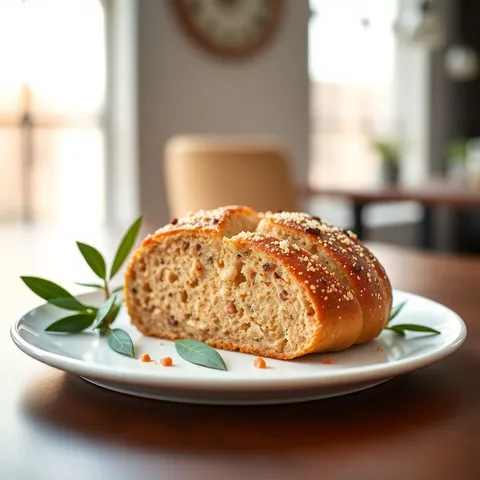 Breads Lens Verified Images are for illustrative purposes only, may be inaccurate, and do not guarantee the presence or absence of specific ingredients.
 Bread Machine Sage-Wheat Bread
A fragrant whole-wheat loaf scented with sage and a hint of cornmeal, made effortlessly in a bread machine.