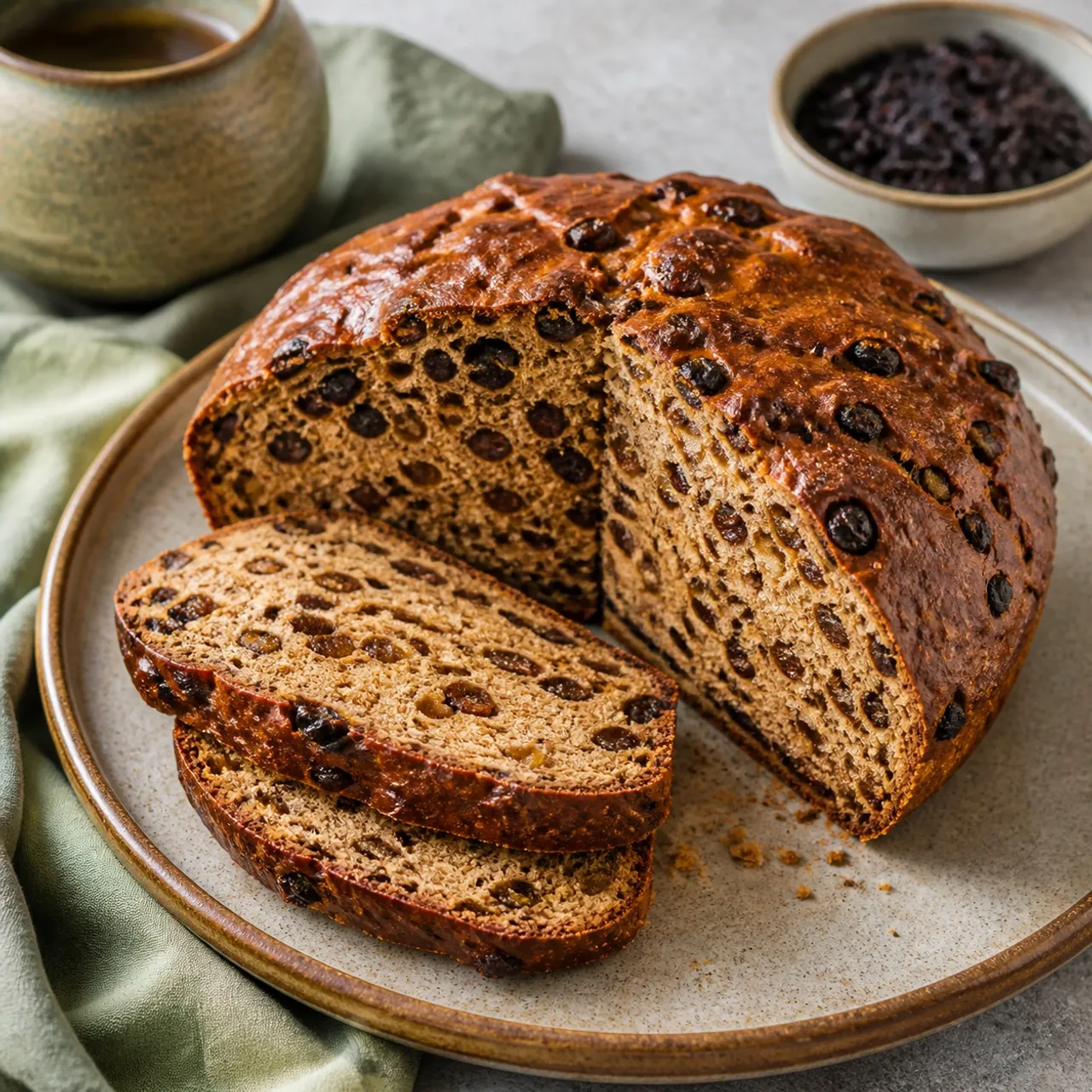
 British & Irish Images are for illustrative purposes only, may be inaccurate, and do not guarantee the presence or absence of specific ingredients.
 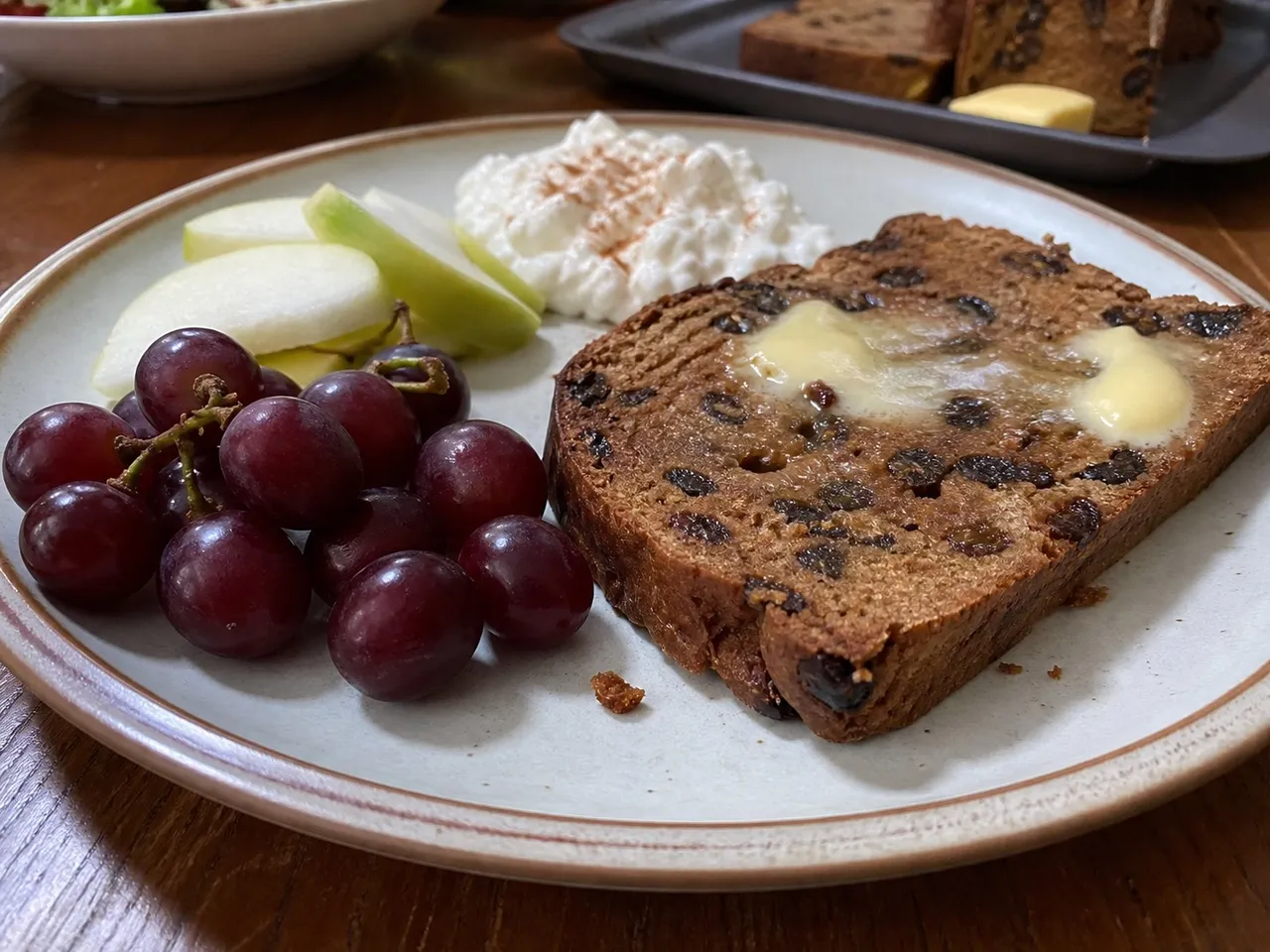 Serving Images are for illustrative purposes only, may be inaccurate, and do not guarantee the presence or absence of specific ingredients.
 Barmbrack
Ireland's festive yeasted loaf studded with sultanas and raisins soaked in tea, fragrant with mixed spice — traditionally served on Halloween with butter.
Contains common allergens
In the app, Listahan checks these against your household automatically.
Instructions
8 steps- 1
Pour the cooled tea over the sultanas, raisins, and mixed peel and let soak for at least 2 hours, or overnight.
- 2
Mix the flour, yeast, mixed spice, sugar, and a pinch of salt in a large bowl, then rub in the butter.
- 3
Add the beaten egg and enough of the soaking liquid drained from the fruit to bring the mixture together into a soft dough.
- 4
Knead for 8 to 10 minutes until smooth and elastic, then fold in the soaked, drained fruit until evenly distributed.
- 5
Place in an oiled bowl, cover, and let rise in a warm place for about 1 1/2 hours, until doubled in size.
- 6
Knock back the dough, shape into a round or loaf tin, cover, and prove again for 30 to 40 minutes.
- 7
Bake at 180C (350F) for 40 to 45 minutes, until deeply golden and the loaf sounds hollow when tapped on the base.
- 8
Brush the warm loaf with a little sugar dissolved in hot water for a glossy finish, and serve sliced and buttered.
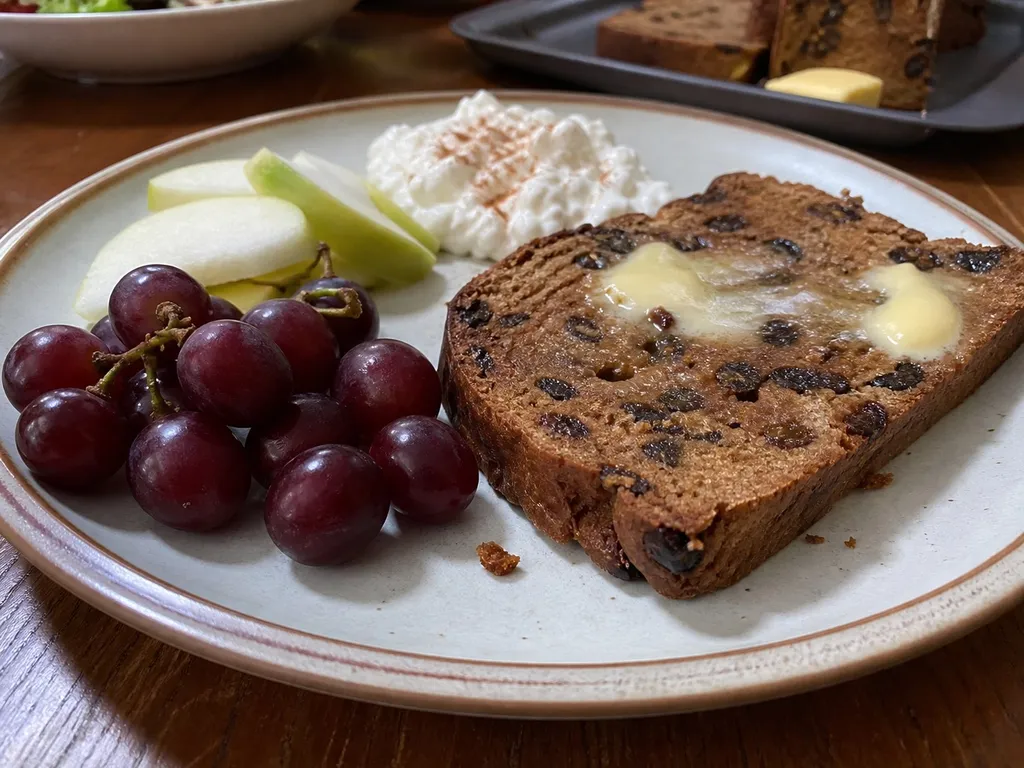 Images are for illustrative purposes only, may be inaccurate, and do not guarantee the presence or absence of specific ingredients.
 Listahan Family Score™
74/100
Good fit for most families
Score reflects how well this recipe fits a typical busy household. In the app, your Family Score is personalized to your household's allergens, kids, and pantry.
Nutrition
per serving270
Calories
7 g
Protein
57 g
Carbs
1 g
Fat
Estimated per serving. Actual values depend on the brands and portions you use.
Listahan cooking guide
Chef notes & practical guide
Technique notes, ingredient swaps, serve-alongside ideas, storage guidance, and equipment for this recipe.
Cultural context
Barmbrack — from the Irish 'bairín breac,' meaning 'speckled bread' — is an Irish fruit-studded yeast loaf that has been baked for Halloween and the Feast of Samhain for centuries. The tradition of hiding objects inside the loaf — a ring, a coin, a piece of cloth — and reading the finder's fortune from their token is a pre-Christian divination practice that survived into modern Irish life and remains a genuine custom in many Irish households. It sits between a bread and a cake: chewy and yeast-leavened, not crumbling-tender like a soda bread, but studded with tea-soaked dried fruit that gives every slice a concentrated sweetness.
Listahan note
This version soaks the fruit overnight in strong black tea so the raisins and sultanas plump fully and release their flavor slowly into the crumb throughout the loaf.
Technique cues
- Do not be tempted to add all the flour at once; the dough should be slightly stickier than a standard bread dough at first, and working in extra flour gradually prevents the loaf from becoming dense and dry.
- The tea-soaked fruit must be thoroughly drained before adding it to the dough or the excess liquid will throw off the hydration balance and make the bread gummy inside.
- The loaf is done when it sounds hollow when tapped on the bottom and an internal temperature of 190 to 195 degrees is reached; relying on color alone leads to underbaking because the dark fruit and tea staining make the crust look done before the center is set.
Kitchen flow
- Parallel prep
- Start the fruit soaking the night before baking day; the dough itself comes together quickly and rises while you prepare the rest of the day.
- Make-ahead
- Barmbrack keeps well and is often considered better on day two when the crumb has fully set and the fruit flavor has distributed more evenly through the loaf.
- Leftover move
- Slices toasted and buttered are the classic way to eat barmbrack after the first day; the toasting firms the crumb and brings out the caramelized fruit flavor in each slice.
- Cleanup rhythm
- Grease the loaf tin well and line the base with parchment; the sticky fruit dough adheres strongly to bare metal and is difficult to remove without tearing the loaf.
Ingredient brief
Role, handling, and swap guidance for each key ingredient.
mixed dried fruit — raisins, sultanas, currants, candied peel
flavor and texture throughout
Purpose: The combination of fruit types provides variety: raisins for deep sweetness, currants for tartness, candied peel for a citrus brightness that keeps the loaf from being cloyingly sweet.
Handling: Soak in strong black tea overnight so the fruit fully plumps and the tea infuses into the fruit before they are added to the dough.
Adaptation: Dried cranberries, chopped dried apricots, or dried cherries can replace some or all of the traditional fruit mixture for a different character.
strong black tea
soaking liquid and flavor builder
Purpose: The tannins in the tea temper the sweetness of the fruit and transfer into the dough, adding a subtle earthy depth that distinguishes barmbrack from an ordinary fruit loaf.
Handling: Brew very strong — two tea bags per cup — and pour it over the fruit while still hot so the fruit absorbs maximum liquid.
Adaptation: Spiced chai tea adds warm cinnamon and cardamom notes; Earl Grey gives a faint bergamot perfume.
active dry yeast
leavening
Purpose: Yeast gives barmbrack its characteristic chewy, bread-like crumb that distinguishes it from baking-powder quick breads like soda bread.
Handling: Proof in warm liquid with a pinch of sugar before using to confirm it is active, especially if the yeast has been stored for a while.
Adaptation: Instant yeast can be added directly to the dry ingredients without proofing; use 25 percent less by weight than active dry yeast.
mixed spice
warm background flavor
Purpose: The warming spice blend — typically cinnamon, nutmeg, cloves, and allspice — connects the loaf to its autumn and Halloween origins and complements the tea-steeped fruit.
Handling: Add to the flour before mixing so it distributes evenly through the dough.
Adaptation: Pumpkin pie spice is a close American equivalent; or combine equal parts cinnamon, nutmeg, and ground cloves.
Technique notes
- Brush the loaf with a sugar syrup glaze immediately out of the oven — one tablespoon of sugar dissolved in one tablespoon of boiling water — to create the traditional shiny, slightly sticky top.
- If adding the fortune-telling ring, press it into the dough just before placing the loaf in the tin so it does not settle to the bottom; wrapping it in parchment paper first makes it easy to spot when slicing.
- A slightly enriched dough using an egg and a small amount of butter produces a softer, more cake-like crumb if you prefer barmbrack closer to the tea-loaf end of the spectrum rather than the bread end.
Ingredient swaps
- Dairy-free direction
- The recipe is naturally dairy-free when made with water or oat milk to activate the yeast; use plant-based butter or oil if enriching the dough.
- Lower-sugar direction
- Reduce the added sugar by half and rely on the natural sweetness of the soaked fruit; the loaf will be less sweet but the fruit flavor becomes more pronounced.
- Alcohol variation
- Soak the fruit in Irish whiskey or a dark rum instead of tea for an adults-only version with a more robust, warming flavor profile.
Serve alongside
- Thick-sliced butter on warm slices
- Mature white cheddar
- Apple butter or quince paste
- Milky Irish breakfast tea
- Hot apple cider
- A small glass of Irish whiskey
Serving suggestions only — check pairings for your household's allergens.
Storage & reheating
- Barmbrack keeps wrapped in a clean cloth or parchment at room temperature for four to five days and the flavor deepens noticeably after the first day.
- The loaf freezes well for up to two months; slice before freezing so individual pieces can be taken out and toasted directly from frozen.
Equipment
- Standard 9-by-5-inch loaf tin for a well-proportioned loaf that bakes through evenly
- Large mixing bowl for the overnight fruit soak
- Instant-read thermometer to confirm the center is fully baked
- Pastry brush for applying the sugar glaze immediately after baking
Make this household-aware
Listahan Pro checks this recipe against your household's allergens, finds pantry-aware swaps, builds the shopping list, and helps you plan the week around it.
Plan it in Listahan
Add Barmbrack to your week, check it against your household's allergens, and build the shopping list automatically.
More British & Irish recipes
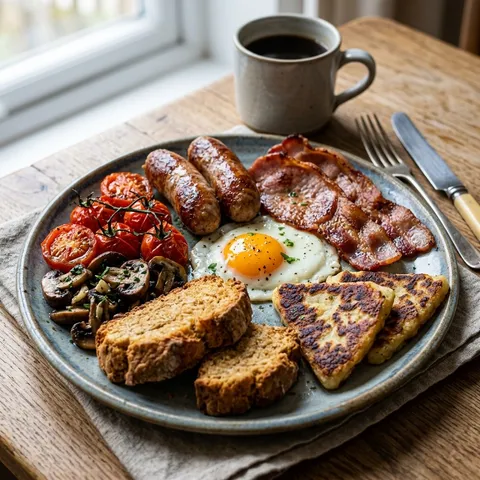 British & Irish Lens Verified Images are for illustrative purposes only, may be inaccurate, and do not guarantee the presence or absence of specific ingredients.
 Ulster Fry
Northern Ireland's legendary fry-up: bacon, sausages, eggs, black pudding, potato bread, and soda bread — fuller and heartier than its English cousin.
 British & Irish Lens Verified Images are for illustrative purposes only, may be inaccurate, and do not guarantee the presence or absence of specific ingredients.
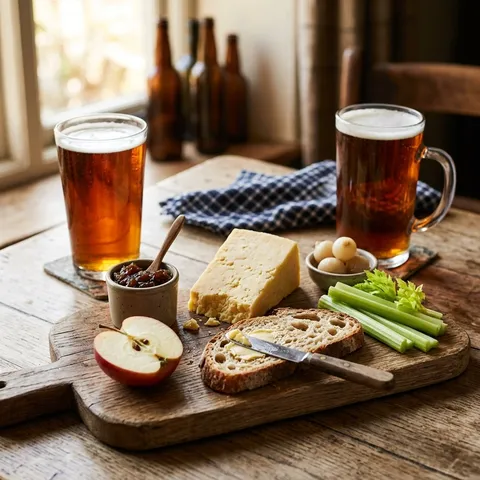
 Ploughman's Lunch
Sharp aged cheddar, crusty bread, tangy Branston pickle, and a boiled egg — a beloved no-cook British lunch that's greater than the sum of its parts.
 British & Irish Lens Verified Images are for illustrative purposes only, may be inaccurate, and do not guarantee the presence or absence of specific ingredients.
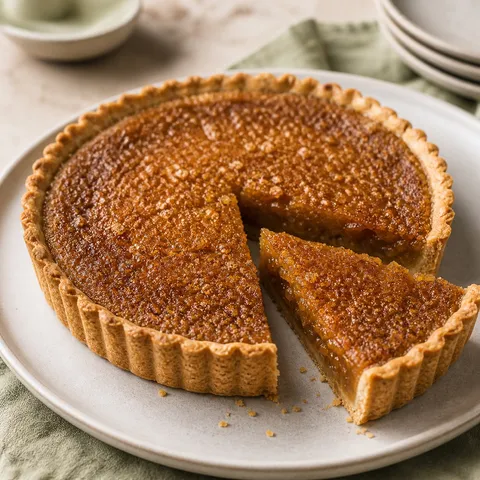
 Treacle Tart
A sweet, sticky tart filled with golden syrup and fresh breadcrumbs, with a gently caramelized top and a hint of lemon — Harry Potter's favorite dessert.