 British & Irish Images are for illustrative purposes only, may be inaccurate, and do not guarantee the presence or absence of specific ingredients.
  Serving Images are for illustrative purposes only, may be inaccurate, and do not guarantee the presence or absence of specific ingredients.
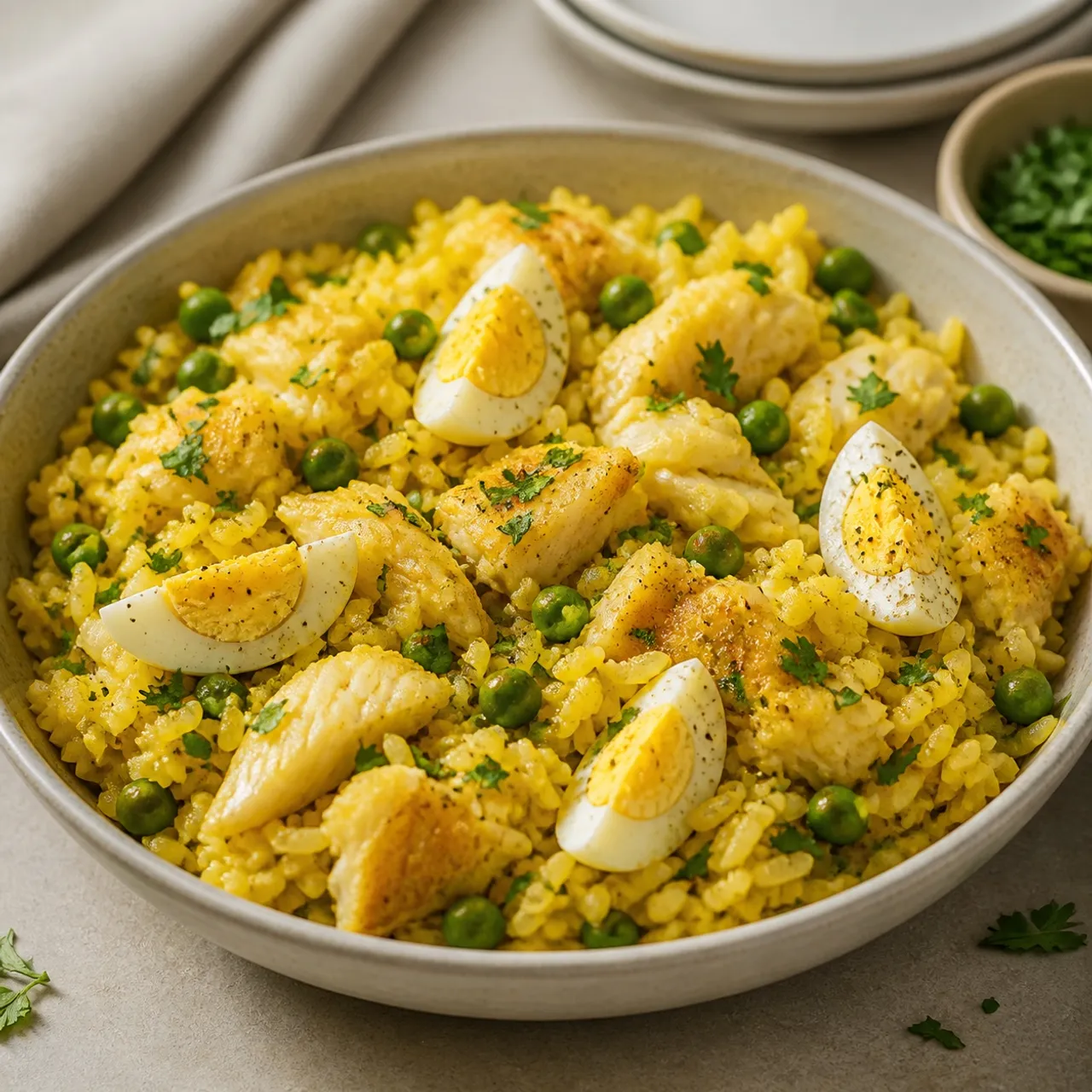
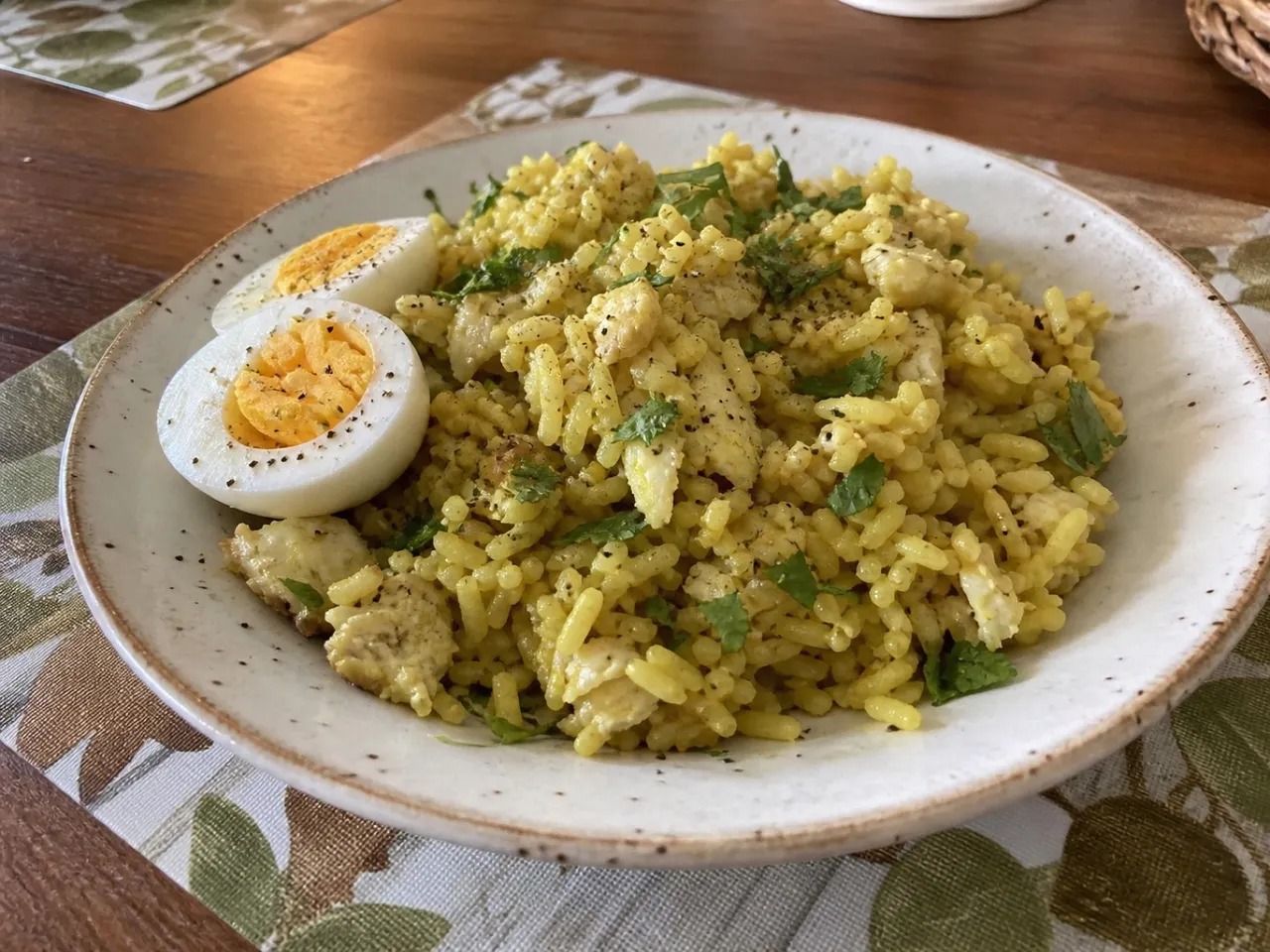
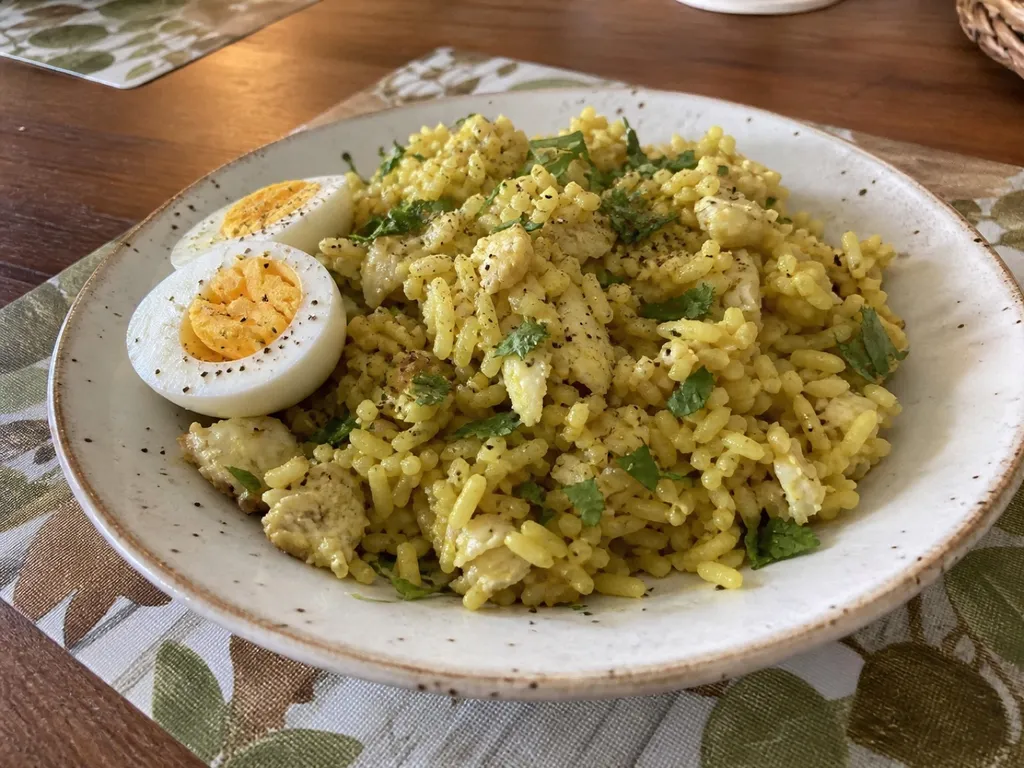
 Kedgeree
Flaked smoked haddock, basmati rice, soft-boiled eggs, and curry spice — a fragrant Anglo-Indian breakfast dish that's equally welcome for brunch or supper.
Contains common allergens
In the app, Listahan checks these against your household automatically.
Instructions
8 steps- 1
Place the smoked haddock in a shallow pan, cover with the milk, and poach gently for 8 to 10 minutes until the fish flakes easily.
- 2
Lift out the fish, reserving the poaching milk, and flake it into large pieces, discarding any skin and bones.
- 3
Boil the eggs for 7 minutes, then cool in cold water, peel, and roughly chop.
- 4
Cook the basmati rice in salted water until tender, then drain well.
- 5
Melt the butter in a large pan and cook the onion gently until soft, then stir in the curry powder and cook for 1 minute until fragrant.
- 6
Add the cooked rice and a splash of the reserved poaching milk, tossing to coat and heat through.
- 7
Gently fold in the flaked haddock, chopped egg, and parsley, being careful not to break up the fish too much.
- 8
Serve hot with lemon wedges on the side.
 Images are for illustrative purposes only, may be inaccurate, and do not guarantee the presence or absence of specific ingredients.
 Listahan Family Score™
63/100
Works for many families
Score reflects how well this recipe fits a typical busy household. In the app, your Family Score is personalized to your household's allergens, kids, and pantry.
Nutrition
per serving325
Calories
11 g
Protein
56 g
Carbs
5 g
Fat
Estimated per serving. Actual values depend on the brands and portions you use.
Listahan cooking guide
Chef notes & practical guide
Technique notes, ingredient swaps, serve-alongside ideas, storage guidance, and equipment for this recipe.
Cultural context
Kedgeree is one of the clearest examples of the culinary exchange between Britain and India during the colonial period. It descends directly from khichdi, a simple Indian dish of rice, lentils, and spices, which British officers and traders in the subcontinent adapted by substituting smoked or salted fish for the lentils and adding hard-boiled eggs. By the Victorian era it had become a standard feature of the British country house breakfast buffet, a dish wealthy households served alongside kidneys and kippers to fuel a morning of shooting or riding. The smoked haddock version, heavily perfumed with curry powder, is the British form that has endured.
Listahan note
This version poaches the smoked haddock gently in milk rather than water to keep the fish moist and to use the poaching milk as the liquid for cooking the rice, layering the flavor throughout.
Technique cues
- Poach the smoked haddock in milk over very low heat — just below a simmer — and remove it the moment the flesh flakes easily; overcooking turns smoked fish rubbery and releases excess salt that can make the whole dish too salty.
- Toast the curry powder in butter for 60 seconds before adding the rice; the fat-soluble spice compounds in the curry powder bloom and become aromatic in a way that adding them to liquid cannot achieve.
- Fold the flaked fish and eggs in gently at the end with a fork rather than stirring vigorously; the goal is to keep recognizable flakes of fish and quarters of egg visible rather than breaking everything into crumbles.
Kitchen flow
- Parallel prep
- Poach the haddock and hard-boil the eggs simultaneously in separate pans while the rice cooks in the spiced poaching milk.
- Make-ahead
- Cook the rice and poach the fish separately the night before; refrigerate both, then combine and warm gently with a knob of butter the next morning for a very fast kedgeree.
- Leftover move
- Leftover kedgeree reheated in a pan with a splash of milk and a fried egg on top is one of the most satisfying quick weekday lunches imaginable.
- Cleanup rhythm
- The milk used for poaching the fish leaves a strong smell if left in the pan; rinse the poaching pan with cold water immediately after emptying before the residue dries.
Ingredient brief
Role, handling, and swap guidance for each key ingredient.
smoked haddock
primary protein and signature flavor
Purpose: The mild, saline smoke of haddock is the defining flavor of British kedgeree; it provides a contrast to the warm spice of the curry powder that makes the dish distinctive rather than generic.
Handling: Check for pin bones by running fingers along the fillet against the grain; remove any bones before poaching.
Adaptation: Smoked cod is the closest substitute; for a non-smoked version, plain poached salmon with a splash of liquid smoke approximates the effect.
basmati rice
carbohydrate base
Purpose: Basmati's long grains remain distinct and fluffy rather than sticky or clumping, which is essential for a kedgeree where each grain should be separate.
Handling: Rinse under cold water until the water runs clear before cooking to remove surface starch that would make the grains stick together.
Adaptation: Long-grain white rice works if basmati is unavailable; short-grain or risotto rice will produce the wrong texture entirely.
mild curry powder
spice character
Purpose: The warm blend of turmeric, coriander, and cumin gives the rice its characteristic golden color and the gentle heat that makes kedgeree feel like more than just fish and rice.
Handling: Fry briefly in butter before adding any liquid to bloom the spices and deepen the flavor.
Adaptation: A combination of turmeric, cumin, and ground coriander approximates a curry powder; add a pinch of cardamom for a more complex result.
hard-boiled eggs
protein and visual garnish
Purpose: The eggs add a second protein layer and their neutral, creamy flavor balances the intensity of the smoked fish.
Handling: Cook to a firm yolk — exactly 10 minutes from boiling — then cool in ice water for clean peeling; a jammy yolk is too soft to quarter cleanly.
Adaptation: Soft-boiled eggs with a slightly jammy yolk are a modern restaurant variation that works particularly well if the kedgeree is served as a dinner dish rather than a breakfast.
flat-leaf parsley
freshness and color
Purpose: Fresh parsley provides the green visual contrast against the golden rice and a clean, bright finish that cuts through the richness of the butter and fish.
Handling: Stir half through the finished dish and scatter the rest over the top for a layered fresh herb presence.
Adaptation: Fresh coriander (cilantro) is more authentically connected to the dish's Indian origins and is an excellent substitute or addition.
Technique notes
- Using undyed smoked haddock produces a more elegant, creamy-pale result compared to the vivid yellow of the artificially dyed variety; seek it out at a good fishmonger if possible.
- Stirring a generous tablespoon of cold butter through the finished kedgeree off the heat ties all the components together and makes the dish feel cohesive rather than assembled.
- A small glass of double cream stirred in with the butter takes kedgeree from a breakfast dish to something appropriate for a dinner table and is a classic Edwardian enrichment worth trying.
Ingredient swaps
- Dairy-free direction
- Poach the fish in water with a bay leaf and a splash of white wine instead of milk; use olive oil instead of butter throughout for a lighter, dairy-free result.
- Lower-sodium direction
- Use fresh, unsmoked haddock or cod and add a quarter teaspoon of smoked paprika to hint at the smoky character; this dramatically reduces the salt load while keeping the spirit of the dish.
- Vegetarian direction
- Replace the smoked haddock with smoked tofu or smoked mackerel-style roasted cauliflower (cauliflower roasted at high heat with smoked paprika and liquid smoke), and increase the eggs to four.
Serve alongside
- Mango chutney on the side
- Sliced tomatoes with a pinch of sea salt
- Buttered brown toast
- Darjeeling tea with a slice of lemon
- Freshly squeezed orange juice
- A Bloody Mary for a brunch setting
Serving suggestions only — check pairings for your household's allergens.
Storage & reheating
- Kedgeree keeps in the refrigerator for up to two days but the rice begins to dry out quickly; press plastic wrap directly onto the surface before refrigerating to minimize moisture loss.
- Reheat gently in a pan with a splash of milk or water and a knob of butter, stirring frequently to redistribute the heat; avoid microwaving uncovered as the fish can become rubbery.
Equipment
- Wide, deep saucepan or saute pan large enough to hold and stir the rice, fish, and eggs without piling up
- Second saucepan for poaching the haddock in milk
- Small saucepan for the eggs
- Wide fork or rice paddle for folding the fish in without breaking the flakes
Make this household-aware
Listahan Pro checks this recipe against your household's allergens, finds pantry-aware swaps, builds the shopping list, and helps you plan the week around it.
Plan it in Listahan
Add Kedgeree to your week, check it against your household's allergens, and build the shopping list automatically.
More British & Irish recipes
 British & Irish Lens Verified Images are for illustrative purposes only, may be inaccurate, and do not guarantee the presence or absence of specific ingredients.
 Ulster Fry
Northern Ireland's legendary fry-up: bacon, sausages, eggs, black pudding, potato bread, and soda bread — fuller and heartier than its English cousin.
 British & Irish Lens Verified Images are for illustrative purposes only, may be inaccurate, and do not guarantee the presence or absence of specific ingredients.
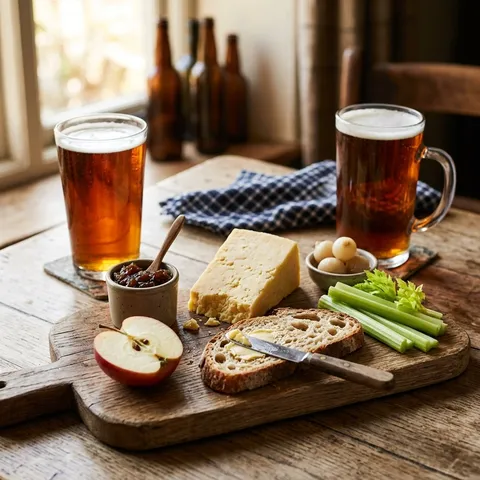
 Ploughman's Lunch
Sharp aged cheddar, crusty bread, tangy Branston pickle, and a boiled egg — a beloved no-cook British lunch that's greater than the sum of its parts.
 British & Irish Lens Verified Images are for illustrative purposes only, may be inaccurate, and do not guarantee the presence or absence of specific ingredients.
 Treacle Tart
A sweet, sticky tart filled with golden syrup and fresh breadcrumbs, with a gently caramelized top and a hint of lemon — Harry Potter's favorite dessert.