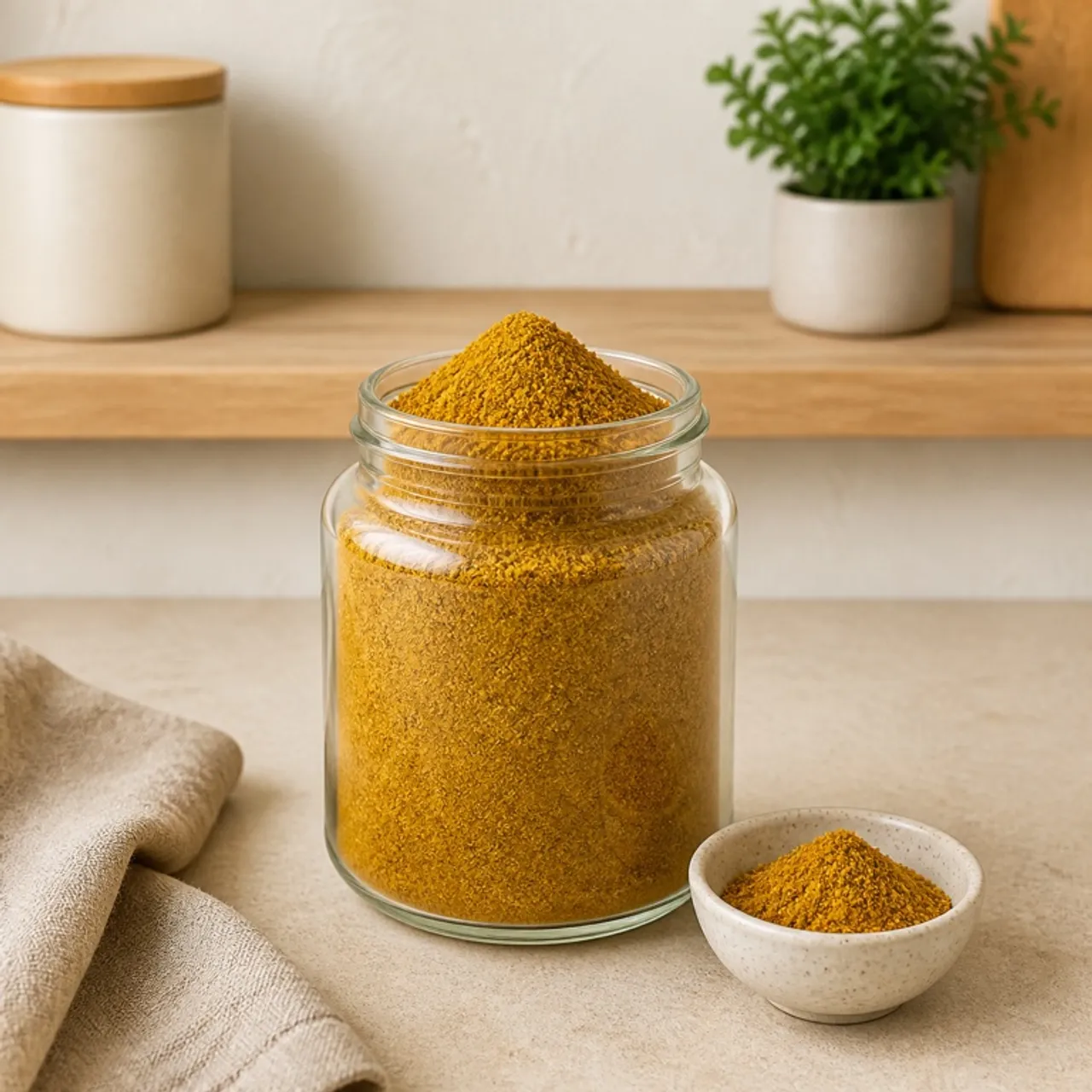
 Food Lens Images are for illustrative purposes only, may be inaccurate, and do not guarantee the presence or absence of specific ingredients.
 Food Lens · Pantry
Curry powder
Warm, earthy, aromatic, and lightly bitter — with turmeric's yellow hue and the rounded warmth of coriander, cumin, and fenugreek.
Lens VerifiedCurry powder is a pre-blended spice mix that typically includes turmeric, coriander, cumin, fenugreek, and chili. Blends vary by brand and region, from mild and warming to complex and fiery, and serve as a shortcut in curries, soups, rice dishes, and spice rubs.
Where it comes from
Curry powder is a commercial blend that emerged from British attempts to distill the spice combinations of South Asian cooking into a single pantry shortcut. While Indian and South Asian cooks typically build spice blends from scratch, curry powder became a staple in British and colonial kitchens and is now a versatile pantry ingredient in North American home cooking.
Varieties — Madras curry powder is sharper and hotter; mild blends are gentler; Sri Lankan, Trinidadian, and Japanese curry powder formulations all differ significantly in aromatics and heat.
Commercial curry powder is a British-Indian invention; cooks in South Asia often prefer to build spice blends from scratch rather than rely on a pre-made mix.
In a modern kitchen — Blooming curry powder in oil for 30–60 seconds before adding liquids is the single most important technique — it transforms raw spice smell into a rounded, cooked flavor.
Buying it
Check labels for salt content — some commercial curry powders include salt, which can over-season a dish. For more complexity, try Madras-style curry powder. Store airtight in a dark, cool pantry and replace when the aroma fades.
Storing it
Keep sealed in a cool, dark cupboard away from the stove; like most spice blends it fades in flavor well before it's unsafe to use. A flat, dusty smell means it's due for replacing.
Keeps about 2 years in the pantry.
Out of curry powder? Good swaps
- Garam masala — Deeper and more aromatic but without turmeric's color; use in equal amounts.
- Homemade blend — Combine ground turmeric, cumin, coriander, and a pinch of cayenne as a starting point.
- Thai curry paste — Wet, fresh, and very different — but creates similar warming depth in sauces.
General cooking guidance — always check the labels on the products you use. Listahan’s allergen checks run automatically when you plan a recipe in the app. Not medical advice.
Recipes that use curry powder
Common questions about curry powder
Is curry powder vegan?
Curry powder is generally plant-based and suitable for a vegan diet, but brands differ — confirm on the label.
What can I use instead of curry powder?
Good swaps include Garam masala, Homemade blend, Thai curry paste. Each behaves a little differently — see the swaps above for notes, and always check labels for allergens.
How do I store curry powder?
Keep sealed in a cool, dark cupboard away from the stove; like most spice blends it fades in flavor well before it's unsafe to use. A flat, dusty smell means it's due for replacing. It keeps about 2 years in the pantry.
More pantry
See all


Make curry powder about your kitchen — with Listahan Pro
Everything above is free, forever. Pro adds the Household Lens — the same food, seen for your family:
-
Checked for each member
Flags curry powder per person against your household's allergies and school rules — not just a generic "contains" tag.
-
Pantry-aware
Knows whether you already have it, what is running low, and the best swap from what is in your kitchen tonight.
-
What it costs near you
A real price from the Presyo community index, so you can plan the budget — not guess.
-
Your household memory
Who likes it, plus your own private notes — brand, where you keep it, who skips it.
Allergen safety is always free — Pro adds the automation, never the safety.
Cook with curry powder — safely
Plan a recipe in Listahan and the household allergen check runs automatically — every plan, every swap, every lunchbox. Safety is never paywalled.