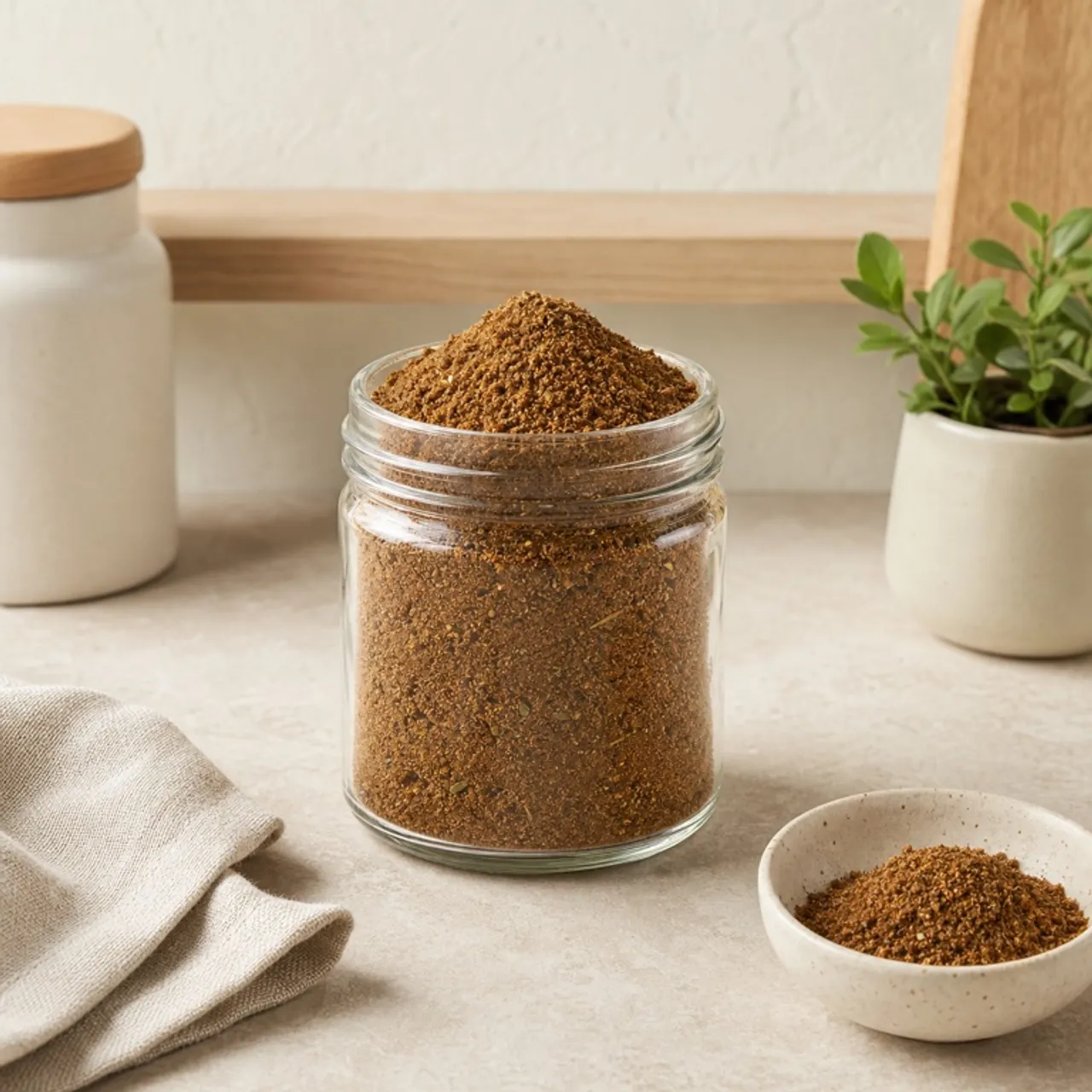
 Food Lens Images are for illustrative purposes only, may be inaccurate, and do not guarantee the presence or absence of specific ingredients.
 Food Lens · Pantry
Garam masala
Warmly complex and aromatic with floral cardamom, woody cinnamon, earthy cumin, and a gentle peppery warmth woven together.
Lens VerifiedGaram masala is a fragrant North Indian spice blend of warm whole spices — typically cardamom, cumin, coriander, cloves, cinnamon, black pepper, and nutmeg — ground together to create a complex, warming, aromatic seasoning used to finish curries, dals, and meat dishes rather than cook them from the start. The name means 'hot spice mixture' in Hindi, referring to warming the body rather than spicy heat.
Where it comes from
Garam masala's roots lie in the royal Mughal kitchens of the 16th century, where Persian and Central Asian spice traditions merged with Indian ingredients to create some of the world's most complex and aromatic cooking. As the Mughal Empire's culinary influence spread across the Indian subcontinent, garam masala became a regional and family treasure — every cook with a slightly different combination. South Asian immigrants brought those traditions to North America, and today commercial garam masala is found in the spice aisle of virtually every major grocery store.
Varieties — Commercial garam masala blends vary widely — some are lighter on cinnamon, others emphasize cardamom or mace. Kashmiri garam masala is distinct and more complex. South Indian spice blends (sambar powder, rasam powder) are different categories entirely. Pre-ground commercial blends are the most available in North America.
In Mughlai cooking, which shaped the restaurant Indian food familiar to North Americans, garam masala is the finishing flourish on dishes like butter chicken, rogan josh, and biryani — a final aromatic lift before serving. In Pakistani cooking, it similarly finishes slow-braised nihari and haleem.
In a modern kitchen — Unlike most spices, garam masala is almost always added near the end of cooking, not at the beginning — adding it too early causes the volatile aromatics to burn off and the warm notes become bitter. A half-teaspoon stirred in off the heat just before serving is a transformative finishing touch.
Buying it
Look for a blend that smells vibrantly warm, floral, and complex — not flat or musty. Shan and MDH are well-regarded South Asian brands. If possible, toast and grind whole spices yourself or source from a South Asian grocery store for dramatically fresher flavor. Commercial blends degrade quickly; buy small amounts and replace every 6 months.
Storing it
Keep in a sealed container away from heat and light to preserve its aroma. Ground spice blends fade with time — if it smells faint or dusty rather than warm, it's due for a refresh.
Keeps about 2 years in the pantry.
Out of garam masala? Good swaps
- Curry powder — Use 1:1 — a different but related blend; curry powder typically includes turmeric and is less warming-sweet in character, but works in most applications.
- DIY blend — Combine equal parts ground cumin, coriander, cardamom, and black pepper with half-parts cinnamon and cloves — a workable home approximation.
- Baharat — Use 1:1 — a Middle Eastern warm spice blend with overlapping ingredients including allspice and nutmeg; works well in slow-cooked meat dishes.
General cooking guidance — always check the labels on the products you use. Listahan’s allergen checks run automatically when you plan a recipe in the app. Not medical advice.
Recipes that use garam masala
Common questions about garam masala
Is garam masala vegan?
Garam masala is generally plant-based and suitable for a vegan diet, but brands differ — confirm on the label.
What can I use instead of garam masala?
Good swaps include Curry powder, DIY blend, Baharat. Each behaves a little differently — see the swaps above for notes, and always check labels for allergens.
How do I store garam masala?
Keep in a sealed container away from heat and light to preserve its aroma. Ground spice blends fade with time — if it smells faint or dusty rather than warm, it's due for a refresh. It keeps about 2 years in the pantry.
More pantry
See all


Make garam masala about your kitchen — with Listahan Pro
Everything above is free, forever. Pro adds the Household Lens — the same food, seen for your family:
-
Checked for each member
Flags garam masala per person against your household's allergies and school rules — not just a generic "contains" tag.
-
Pantry-aware
Knows whether you already have it, what is running low, and the best swap from what is in your kitchen tonight.
-
What it costs near you
A real price from the Presyo community index, so you can plan the budget — not guess.
-
Your household memory
Who likes it, plus your own private notes — brand, where you keep it, who skips it.
Allergen safety is always free — Pro adds the automation, never the safety.
Cook with garam masala — safely
Plan a recipe in Listahan and the household allergen check runs automatically — every plan, every swap, every lunchbox. Safety is never paywalled.