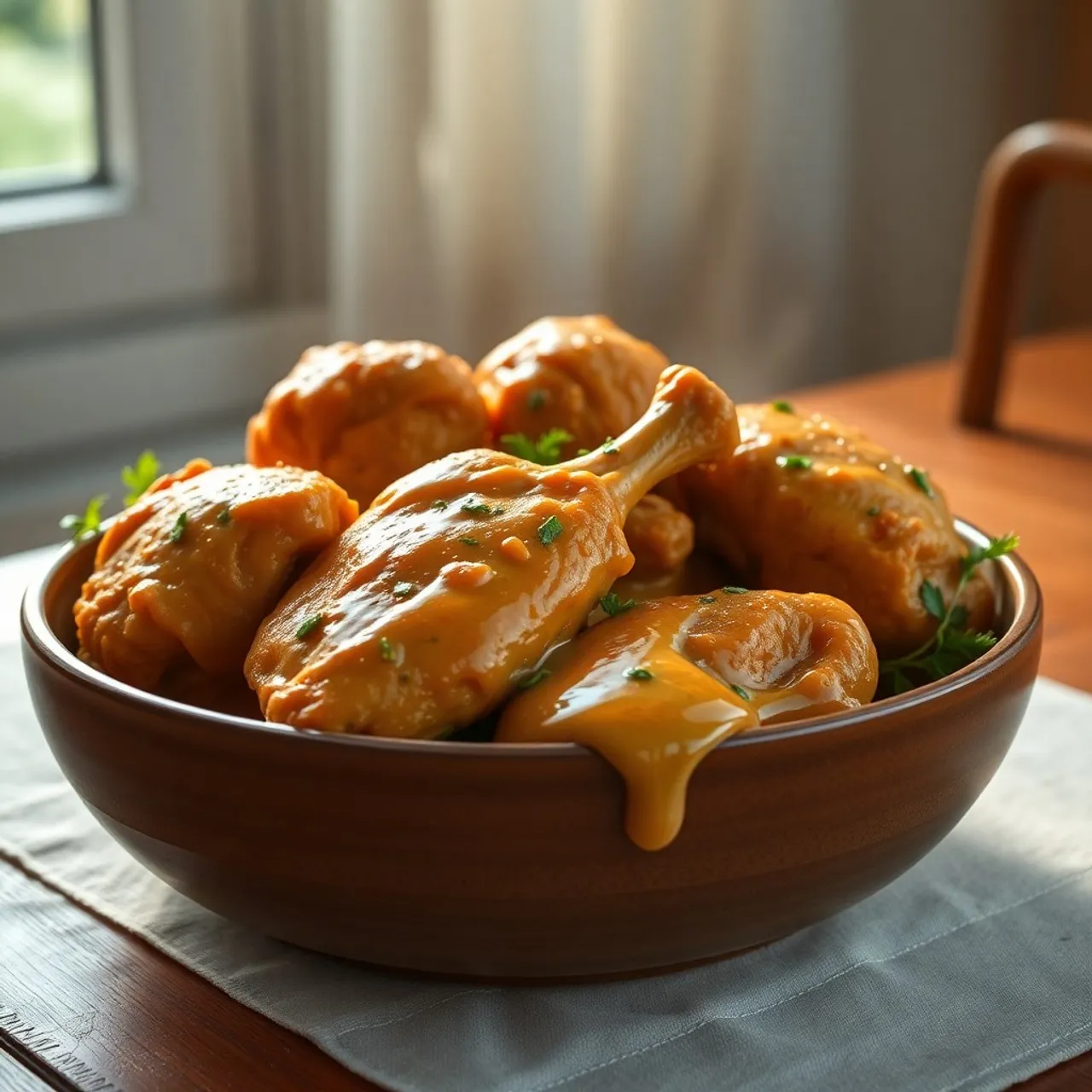
 East African Images are for illustrative purposes only, may be inaccurate, and do not guarantee the presence or absence of specific ingredients.
 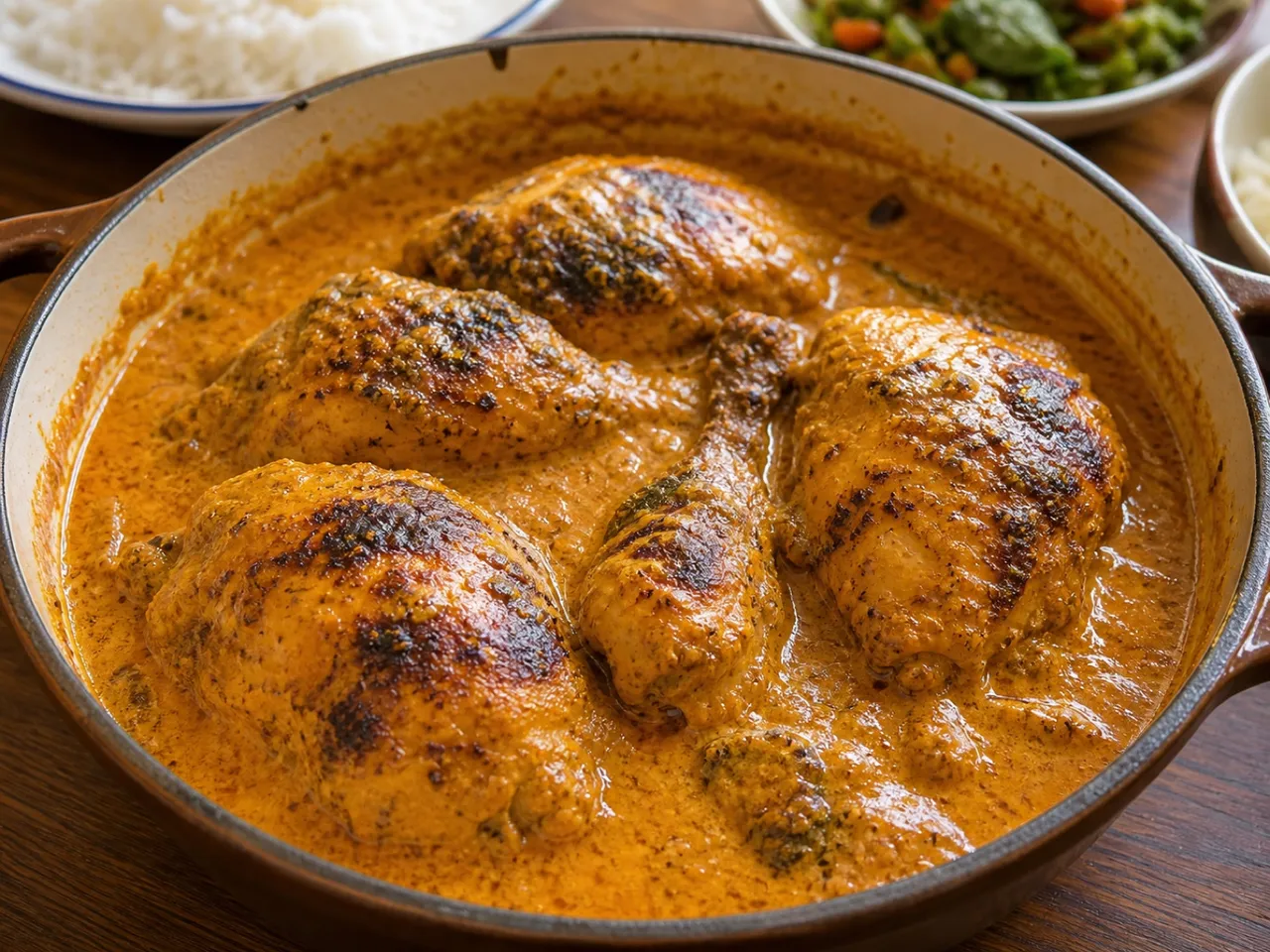 Serving Images are for illustrative purposes only, may be inaccurate, and do not guarantee the presence or absence of specific ingredients.
 Kuku Paka
East African coast classic — tender chicken pieces bathed in a lush, smoky coconut curry sauce, balanced with lime and chili. Serve over coconut rice.
No common allergens detected
Based on this recipe's ingredient list. Always verify with your own brands and labels.
Instructions
6 steps- 1
Marinate the chicken pieces with the lemon juice, minced garlic, ginger, and half of the turmeric. Let sit for 15 minutes.
- 2
Preheat a grill or a large skillet over high heat. Sear the chicken pieces until deeply browned and slightly charred on all sides (they don't need to be cooked through yet). Set aside.
- 3
In a large heavy pot, heat the oil over medium heat. Sauté the grated onion for 5 minutes until soft.
- 4
Stir in the curry powder and remaining turmeric, cooking for 1 minute until fragrant.
- 5
Pour in the thick coconut milk and bring to a gentle simmer.
- 6
Nestle the charred chicken pieces into the coconut sauce. Cover and simmer gently for 20-25 minutes until the chicken is cooked through and the sauce has thickened.
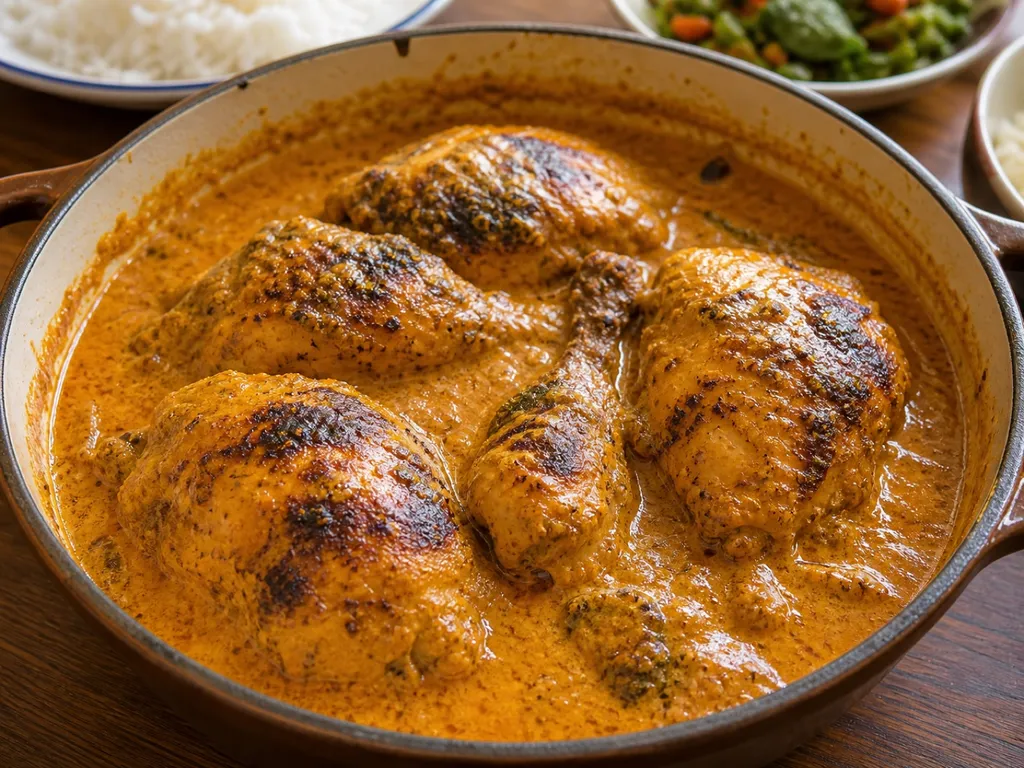 Images are for illustrative purposes only, may be inaccurate, and do not guarantee the presence or absence of specific ingredients.
 Listahan Family Score™
71/100
Good fit for most families
Score reflects how well this recipe fits a typical busy household. In the app, your Family Score is personalized to your household's allergens, kids, and pantry.
Nutrition
per serving85
Calories
1 g
Protein
6 g
Carbs
7 g
Fat
Estimated per serving. Actual values depend on the brands and portions you use.
Listahan cooking guide
Chef notes & practical guide
Technique notes, ingredient swaps, serve-alongside ideas, storage guidance, and equipment for this recipe.
Cultural context
Kuku Paka is a Swahili Coast dish from coastal Kenya and Tanzania, a chicken curry made with coconut milk that represents one of the most clear expressions of the Indian Ocean trade network — combining South Asian curry technique and spices with the East African coastal tradition of coconut milk cooking. 'Kuku' means chicken in Swahili and 'paka' refers to the coating technique of grilling or broiling the chicken before bathing it in the coconut curry sauce, which is what sets this dish apart from a standard coconut chicken curry. The two-stage cooking (grill then braise) is the signature technique and cannot be omitted without changing the fundamental character of the dish.
Listahan note
This version achieves the grill-then-braise technique under a broiler for easy home cooking — the charring from the broiler is what gives the coconut sauce its slightly smoky, complex depth that is the defining difference between kuku paka and a plain coconut chicken.
Technique cues
- Grating the onion rather than dicing it produces a puree that fully dissolves into the coconut sauce during cooking, building body and sweetness without visible onion pieces — this is a traditional technique from Indian Ocean coastal cuisines that produces a smoother, more integrated sauce.
- The broiling or grilling step before braising is not just for color — the Maillard browning on the chicken skin produces hundreds of flavor compounds that leach into the coconut milk during the braise, creating a complexity that raw chicken braised from the start cannot develop.
- Add the coconut milk at medium rather than high heat and maintain a low simmer throughout the braise — vigorous boiling causes the coconut fat to break out of emulsion, producing an oily sauce with a greasy sheen instead of the desired creamy, unified texture.
Kitchen flow
- Parallel prep
- Marinate the chicken the night before; on the day, broil while the Wali wa Nazi (coconut rice) soaks, then make the sauce while the rice steams.
- Make-ahead
- The completed kuku paka improves after a day in the refrigerator — make it up to 2 days ahead without the final lemon squeeze, which should be added at the time of reheating.
- Leftover move
- Shred leftover chicken from the bone and return it to the sauce; serve over fresh rice or use as a filling for chapati wraps with sliced tomato and onion.
- Cleanup rhythm
- Broiling the chicken on a foil-lined tray eliminates the most difficult cleanup; the braising pot needs only a soak in warm water while you eat.
Ingredient brief
Role, handling, and swap guidance for each key ingredient.
1 whole chicken (cut into 8 pieces)
primary protein
Purpose: A whole chicken cut into pieces provides variety of textures (breast versus thigh) and the bones contribute gelatin that thickens and enriches the coconut sauce.
Handling: Marinate in the ginger, garlic, lemon, turmeric, and a little oil for at least 1 hour (overnight is better) before broiling — the acid from the lemon helps the spices penetrate the meat.
Adaptation: Bone-in chicken thighs only can be used for a more uniform cook and more forgiving timing; avoid boneless, skinless pieces which produce a much thinner sauce.
1 can (400ml) thick coconut milk
braising liquid and primary sauce
Purpose: Thick (full-fat) coconut milk provides the fat and sweetness that make the sauce rich and clinging rather than thin and watery.
Handling: Shake the can thoroughly and add to the pan only after the aromatics are cooked through and the pan has been removed from high heat.
Adaptation: Light coconut milk will produce a noticeably thinner, less rich sauce; if using, reduce by simmering uncovered for 10 minutes before adding the chicken.
1 large onion (grated)
aromatic base and body
Purpose: Grated onion dissolves into the sauce during cooking, providing sweetness, body, and the foundation of the curry without visible onion pieces.
Handling: Grate on the large holes of a box grater over a bowl to catch the juice; use both the grated flesh and accumulated liquid in the pot.
Adaptation: Very finely minced onion will work but produce a slightly chunkier sauce; onion paste from a blender is the closest substitute for the fully smooth result.
1 tbsp curry powder
spice blend
Purpose: The South Asian-derived curry powder reflects the trade-route heritage of the dish and provides the warm, complex spice profile that defines coastal Swahili cooking.
Handling: Add to the grated onion and garlic-ginger mixture and cook over medium heat for 1-2 minutes to bloom before adding any liquid.
Adaptation: Equal parts ground turmeric, cumin, coriander, and a pinch of cayenne for a more customizable version.
1 lemon (juiced)
acid and brightness
Purpose: Lemon juice brightens the rich coconut sauce and balances the fat in the final dish; it is also part of the marinade that tenderizes the chicken.
Handling: Add half the lemon juice to the marinade and reserve the other half to stir into the finished sauce just before serving.
Adaptation: Lime juice is a traditional and delicious substitute — it adds a more tropical, floral brightness that suits the coastal character of the dish.
Technique notes
- Do not skip the resting period after the braise — let the chicken sit covered off heat for 10 minutes before serving; the meat reabsorbs some of the sauce and the texture relaxes from tight and fibrous to moist and yielding.
- For the most authentic version, grill the marinated chicken pieces over charcoal until charred and partially cooked (about 70% done), then finish in the coconut sauce — the smoke from charcoal produces a depth that a broiler cannot fully replicate.
- Taste the sauce before serving and consider adding a second squeeze of lemon or lime — the coconut milk's sweetness can mask the bright notes that make the dish feel balanced, and acidity added at the end lifts the entire flavor profile.
Ingredient swaps
- Dairy-free direction
- Already dairy-free with coconut milk as the cooking liquid.
- Gluten-free direction
- Already gluten-free; verify the curry powder brand contains no anti-caking agents with gluten.
- Nut-free direction
- Coconut is classified as a tree nut under FDA allergen labeling — for households with tree nut allergies, substitute full-fat oat cream or a blended cauliflower-and-broth sauce, though the character of the dish changes significantly.
Serve alongside
- Wali wa Nazi (coconut rice) to absorb the sauce
- kachumbari (Kenyan fresh tomato and onion relish with lime)
- chapati flatbread for scooping
- simple steamed green beans with garlic
- fresh passion fruit juice or passion fruit and coconut water
- cold ginger beer or ginger-lime sparkling water
Serving suggestions only — check pairings for your household's allergens.
Storage & reheating
- Refrigerate in an airtight container for up to 3 days; the coconut sauce thickens considerably when cold.
- Reheat gently over low heat, adding 2-3 tablespoons of water to loosen the sauce, stirring to prevent the coconut milk from separating.
- Freeze for up to 2 months; thaw overnight in the refrigerator and reheat very gently — aggressive heat when reheating from frozen causes the sauce to break.
Equipment
- Broiler pan or foil-lined baking sheet for the grilling step
- Large heavy-bottomed skillet or Dutch oven for the braise
- Box grater for the onion
- Tongs for handling the broiled chicken pieces
Make this household-aware
Listahan Pro checks this recipe against your household's allergens, finds pantry-aware swaps, builds the shopping list, and helps you plan the week around it.
Plan it in Listahan
Add Kuku Paka to your week, check it against your household's allergens, and build the shopping list automatically.
More East African recipes
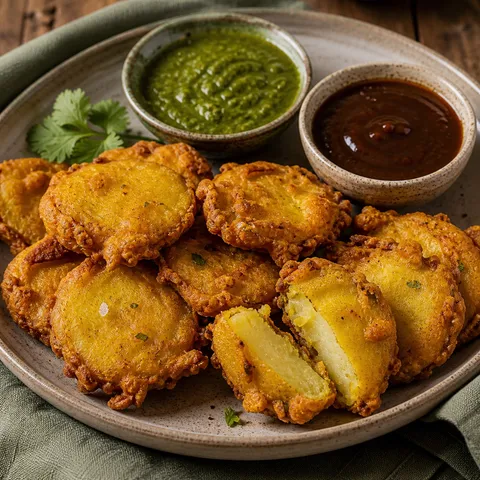 East African Lens Verified Images are for illustrative purposes only, may be inaccurate, and do not guarantee the presence or absence of specific ingredients.
 Viazi Karai
A Zanzibari street favorite of soft boiled potatoes coated in a turmeric-yellow batter and deep-fried until crackling, served with fiery tamarind sauce.
 East African Lens Verified Images are for illustrative purposes only, may be inaccurate, and do not guarantee the presence or absence of specific ingredients.
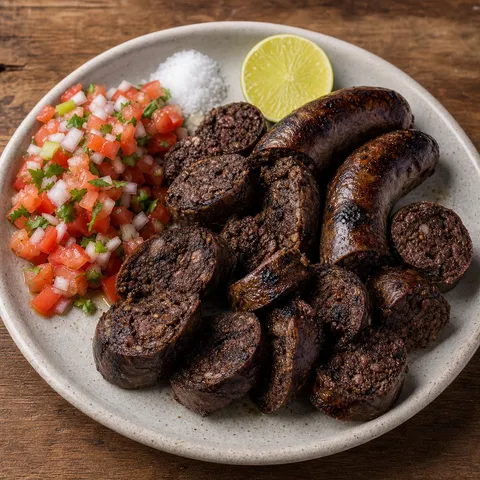
 Mutura
Kenyan spiced blood sausage stuffed with meat, onion, and herbs, then grilled until the casing crisps and snaps — a bold, smoky roadside delicacy.
 East African Lens Verified Images are for illustrative purposes only, may be inaccurate, and do not guarantee the presence or absence of specific ingredients.
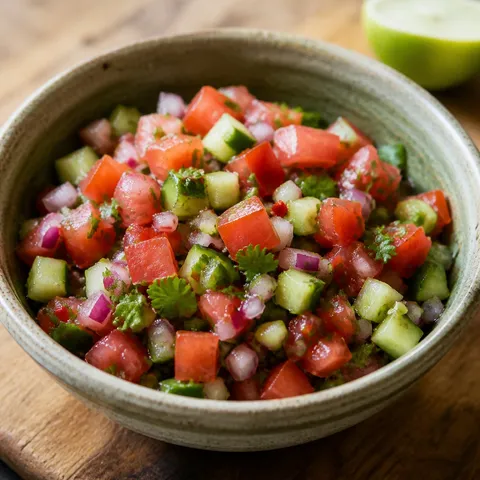
 Kachumbari
Bright, refreshing salad of ripe tomatoes and sharp raw onion, spiked with chili and lime — the cool, crisp counterpoint to rich East African grills.