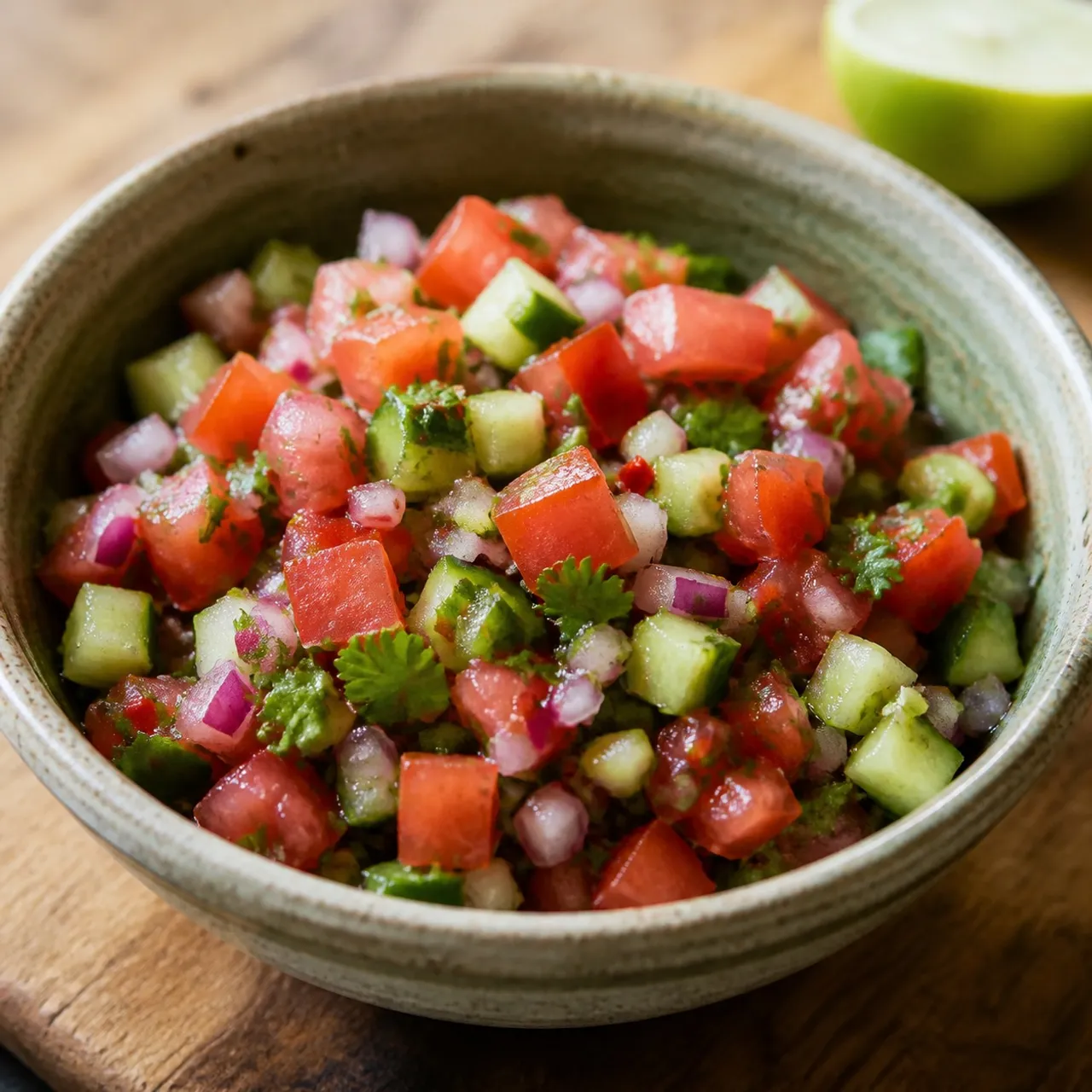
 East African Images are for illustrative purposes only, may be inaccurate, and do not guarantee the presence or absence of specific ingredients.
 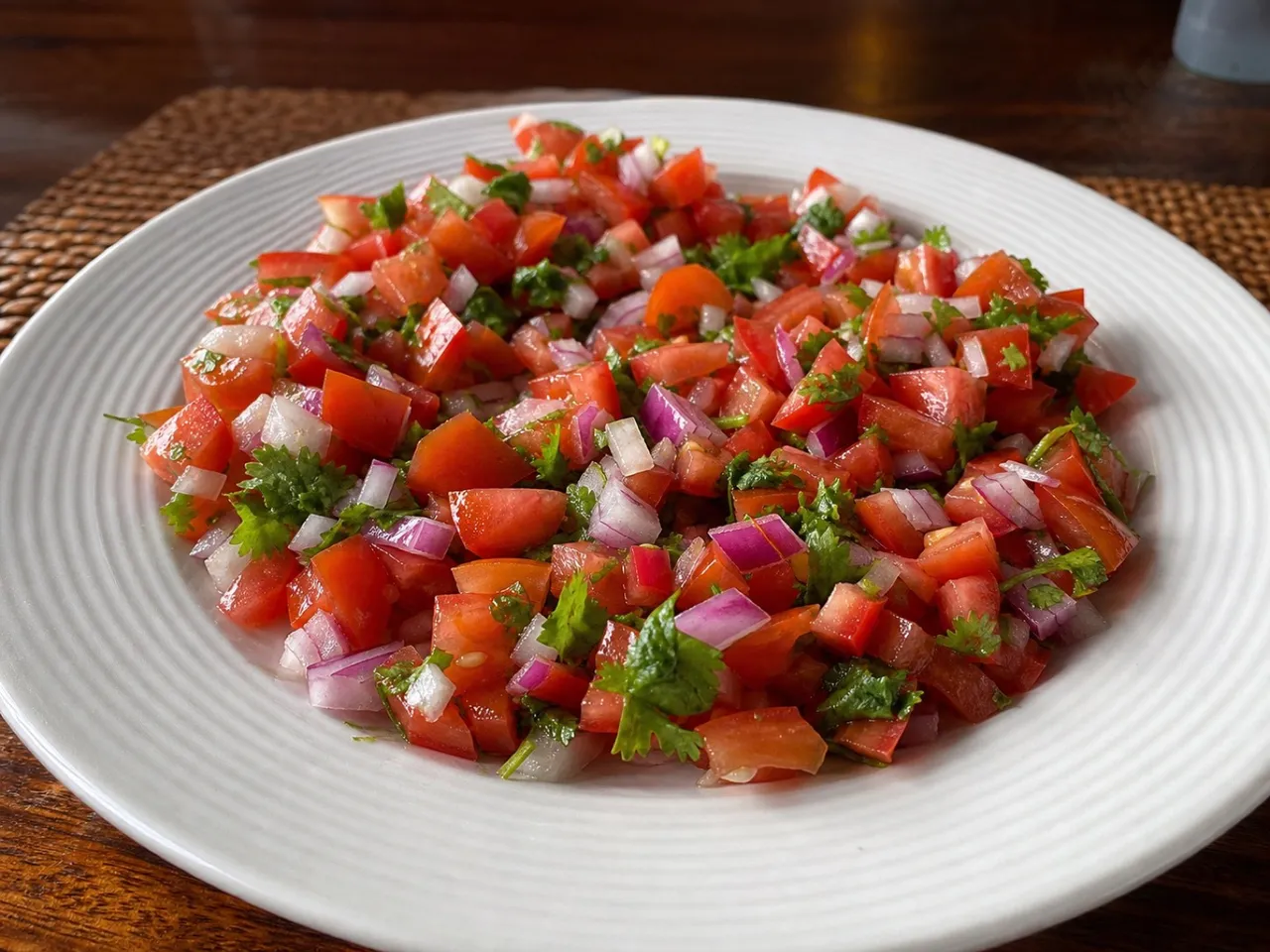 Serving Images are for illustrative purposes only, may be inaccurate, and do not guarantee the presence or absence of specific ingredients.
 Kachumbari
Bright, refreshing salad of ripe tomatoes and sharp raw onion, spiked with chili and lime — the cool, crisp counterpoint to rich East African grills.
No common allergens detected
Based on this recipe's ingredient list. Always verify with your own brands and labels.
Good to know
- Ready in under 30 minutes
Matched from this dish's own ingredients and timing. Browse more: 30-minute meals
Instructions
6 steps- 1
Place the thinly sliced red onions in a bowl of cold salted water and let them soak for 10 minutes to reduce their harsh bite, then drain well.
- 2
In a large serving bowl, combine the drained onions, sliced tomatoes, and minced chili.
- 3
Drizzle the fresh lemon juice over the vegetables.
- 4
Sprinkle with salt and gently toss the salad to combine without breaking the tomatoes.
- 5
Garnish with freshly chopped cilantro.
- 6
Let the salad rest for 5 minutes before serving to allow the flavors to meld.
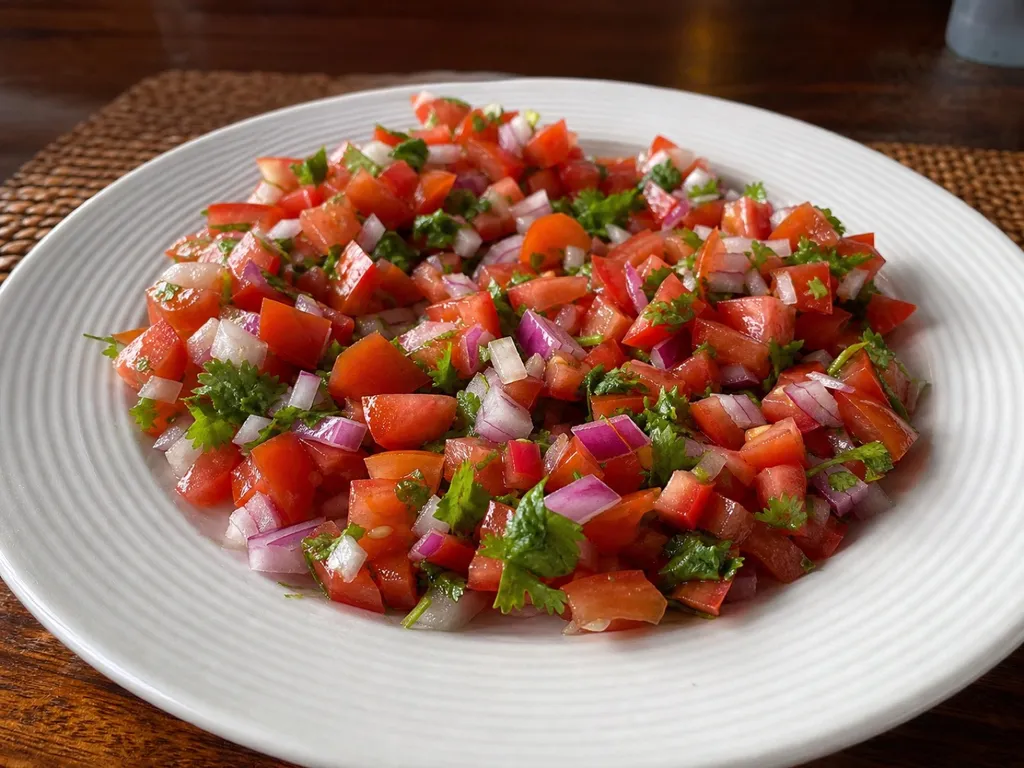 Images are for illustrative purposes only, may be inaccurate, and do not guarantee the presence or absence of specific ingredients.
 Listahan Family Score™
68/100
Works for many families
Score reflects how well this recipe fits a typical busy household. In the app, your Family Score is personalized to your household's allergens, kids, and pantry.
Nutrition
per serving30
Calories
1 g
Protein
7 g
Carbs
0 g
Fat
Estimated per serving. Actual values depend on the brands and portions you use.
Listahan cooking guide
Chef notes & practical guide
Technique notes, ingredient swaps, serve-alongside ideas, storage guidance, and equipment for this recipe.
Cultural context
Kachumbari is the standard fresh relish of East Africa, eaten across Kenya, Tanzania, and Uganda as the cool, acidic counterpoint to grilled meats and heavy starches. The name has Swahili roots and the salad itself resembles similar fresh tomato-onion relishes found across the Indian Ocean world — a legacy of centuries of Indian Ocean trade that brought South Asian and Arabic flavor sensibilities to the East African coast. It is always made fresh and never cooked.
Listahan note
This version slices rather than dices the vegetables for the traditional presentation and macerates the onion briefly in lemon juice to soften its sharpness before tossing everything together.
Technique cues
- Slice the onion paper-thin — not diced — and soak it in cold water for 5-10 minutes before draining and tossing with lemon juice; this removes the harsh sulfur compounds that make raw onion dominate the salad.
- Use tomatoes that are firm, not fully ripe — overripe tomatoes release too much liquid and make the salad watery within minutes of assembly.
- Kachumbari should be made no more than 15-20 minutes before serving; any earlier and the salt draws out moisture from the tomatoes, producing a diluted, soupy result rather than a fresh, bright salad.
Kitchen flow
- Parallel prep
- Slice the onion first and soak it in cold water while you prep the other ingredients; it will be ready by the time everything else is done.
- Make-ahead
- Prep all ingredients separately and refrigerate; assemble and season no more than 15 minutes before serving to keep the salad crisp.
- Leftover move
- Leftover kachumbari that has gotten watery works well blended into a quick salsa or stirred into rice as a fresh tomato pilaf base.
- Cleanup rhythm
- One cutting board and a bowl; rinse immediately after the soaking step to keep the work area clear.
Ingredient brief
Role, handling, and swap guidance for each key ingredient.
3 large firm tomatoes (thinly sliced)
primary vegetable and body
Purpose: Firm tomatoes hold their shape when sliced thin and provide the bright, slightly acidic base of the salad without releasing excess liquid.
Handling: Slice very thin (about 1/8 inch) and arrange in a single layer on the serving plate rather than tossing in a bowl, which bruises them.
Adaptation: Cherry tomatoes halved work well for a smaller-cut version that is easier to eat as a condiment alongside grilled meats.
1 large red onion (very thinly sliced)
sharp aromatic contrast
Purpose: Red onion provides pungency and color; slicing it very thin and soaking briefly in cold water makes it palatable raw without losing its flavor contribution.
Handling: Use a mandoline or very sharp knife for the thinnest possible slices; soak 5-10 minutes in cold water and drain well before using.
Adaptation: White onion can be substituted; it is sharper and benefits even more from soaking.
1 fresh bird's eye chili (minced)
heat and brightness
Purpose: Bird's eye chili adds the sharp, clean heat that is characteristic of East African kachumbari, different from the earthy heat of dried chili powders.
Handling: Remove seeds for moderate heat, leave them in for the traditional fiery version common in Kenya.
Adaptation: Half a serrano or a few pinches of red chili flakes work as substitutes; green jalapeno changes the flavor profile but delivers a milder, familiar heat.
2 tbsp fresh lemon juice
acid dressing
Purpose: Lemon juice is the only dressing in kachumbari; it brightens the tomatoes, mellows the onion, and ties the salad together.
Handling: Add just before serving to prevent the acid from breaking down the tomato texture during prep.
Adaptation: Lime juice is an acceptable substitute and is common in coastal Tanzania.
2 tbsp chopped fresh cilantro
herbal freshness
Purpose: Fresh cilantro adds a bright, herbaceous note that is traditional in Kenyan and coastal East African kachumbari.
Handling: Chop coarsely and add last so it stays fresh and does not wilt into the salad.
Adaptation: Fresh mint or flat-leaf parsley can replace cilantro for those who dislike it; both work well with the tomato-lemon combination.
Technique notes
- Season with salt only at the very end, right before serving — salt draws liquid from tomatoes almost immediately and a salted-too-early kachumbari becomes watery and limp.
- Arrange the salad on a flat plate rather than tossing in a deep bowl; this keeps the tomatoes intact and the presentation clean.
- If making kachumbari for a crowd, double the chili and lemon and taste again — the heat and acid need to punch through the richness of nyama choma or ugali that it accompanies.
Ingredient swaps
- Vegan direction
- This dish is already fully vegan as written.
- Nightshade-free option
- Replace tomatoes with thinly sliced cucumber and mango for a refreshing variation common in some coastal Kenyan restaurants.
- Mild heat version
- Omit the chili entirely and add extra lemon juice and a pinch of black pepper for family-friendly heat-free kachumbari.
Serve alongside
- nyama choma (grilled goat or beef)
- ugali (white maize porridge)
- pilau (spiced Kenyan rice with beef)
- chapati
- cold Stoney Tangawizi ginger soda
- iced passion fruit juice
Serving suggestions only — check pairings for your household's allergens.
Storage & reheating
- Kachumbari is best eaten within 30 minutes of assembly; it becomes watery and loses texture quickly.
- If you must store it, keep it refrigerated in a sealed container for up to 24 hours; drain the accumulated liquid before serving.
- Do not freeze.
Equipment
- sharp chef's knife or mandoline slicer
- flat serving plate
- small bowl for soaking onions
Make this household-aware
Listahan Pro checks this recipe against your household's allergens, finds pantry-aware swaps, builds the shopping list, and helps you plan the week around it.
Plan it in Listahan
Add Kachumbari to your week, check it against your household's allergens, and build the shopping list automatically.
More East African recipes
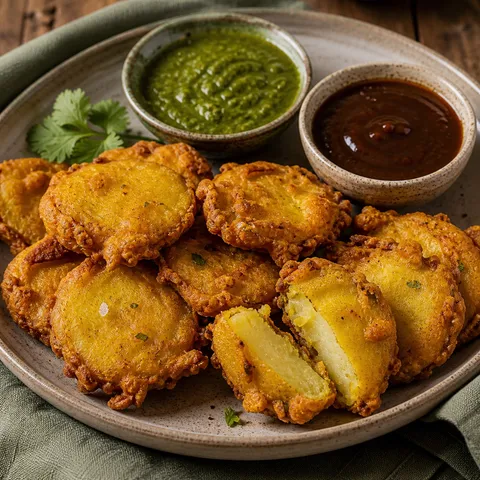 East African Lens Verified Images are for illustrative purposes only, may be inaccurate, and do not guarantee the presence or absence of specific ingredients.
 Viazi Karai
A Zanzibari street favorite of soft boiled potatoes coated in a turmeric-yellow batter and deep-fried until crackling, served with fiery tamarind sauce.
 East African Lens Verified Images are for illustrative purposes only, may be inaccurate, and do not guarantee the presence or absence of specific ingredients.
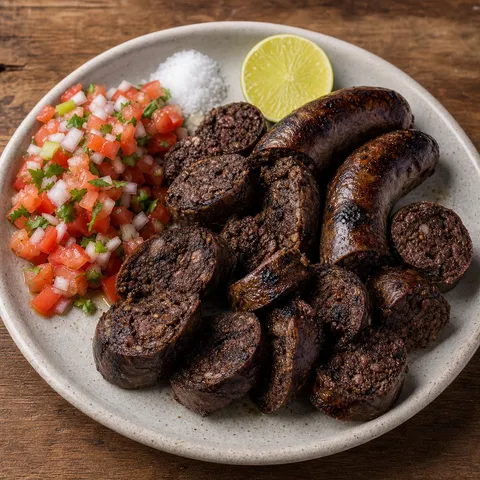
 Mutura
Kenyan spiced blood sausage stuffed with meat, onion, and herbs, then grilled until the casing crisps and snaps — a bold, smoky roadside delicacy.
 East African Lens Verified Images are for illustrative purposes only, may be inaccurate, and do not guarantee the presence or absence of specific ingredients.
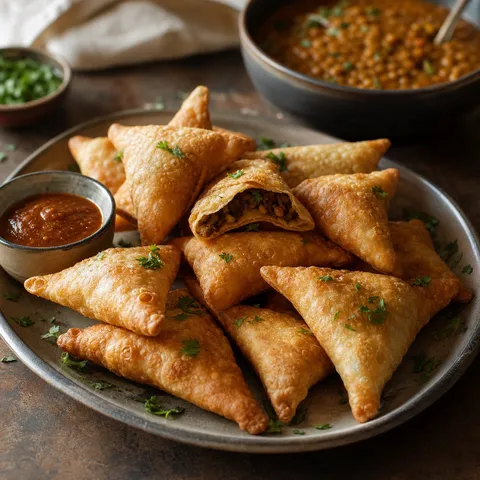
 Sambusa
Crispy fried pastry pockets stuffed with spiced lentils or minced meat, snapped open at the seam to release a cloud of warm cumin and cardamom.