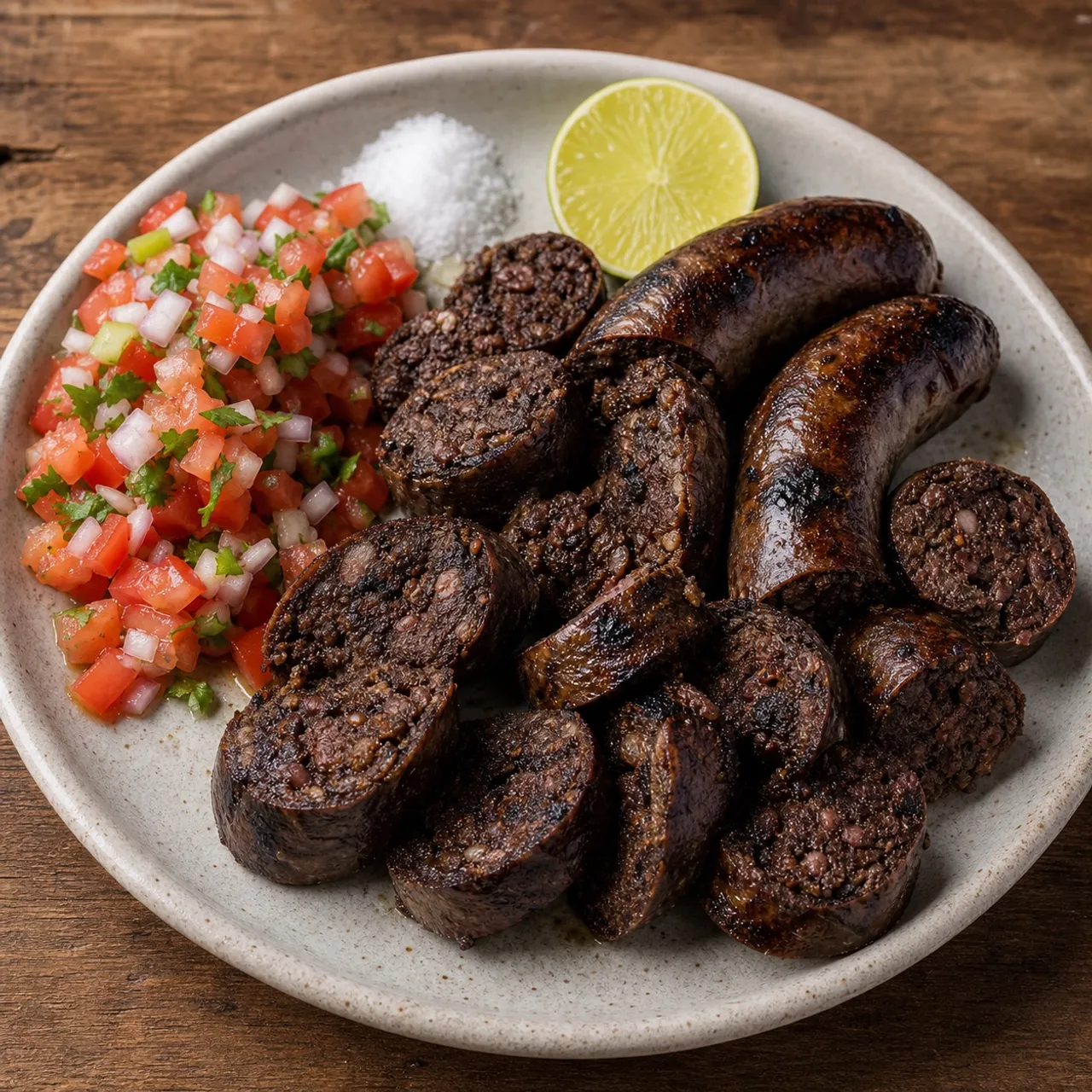
 East African Images are for illustrative purposes only, may be inaccurate, and do not guarantee the presence or absence of specific ingredients.
 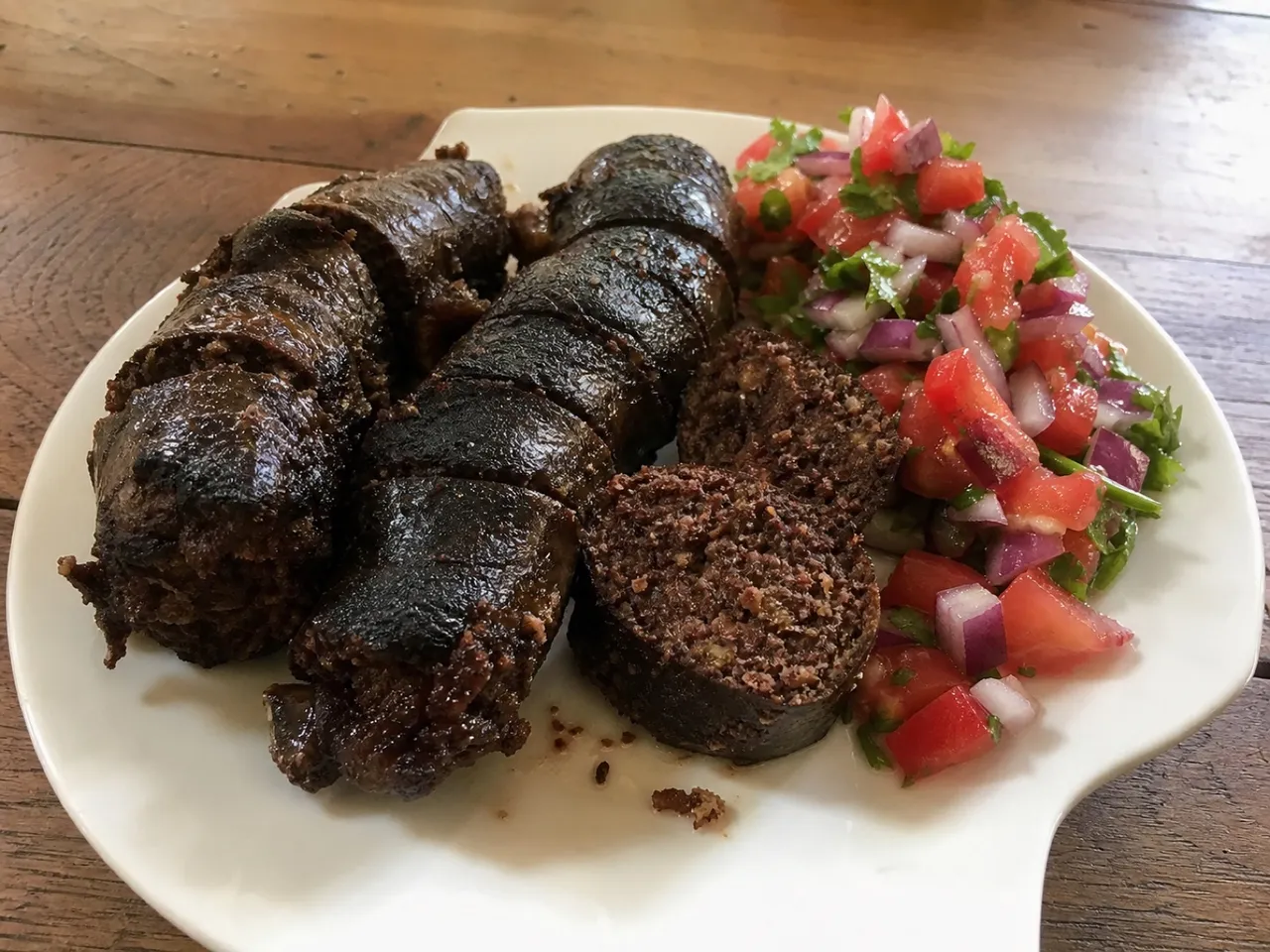 Serving Images are for illustrative purposes only, may be inaccurate, and do not guarantee the presence or absence of specific ingredients.
 Mutura
Kenyan spiced blood sausage stuffed with meat, onion, and herbs, then grilled until the casing crisps and snaps — a bold, smoky roadside delicacy.
No common allergens detected
Based on this recipe's ingredient list. Always verify with your own brands and labels.
Instructions
7 steps- 1
Clean the intestines thoroughly by turning them inside out, scraping off the inner lining, and rinsing repeatedly under cold running water until they run clear and odor-free; soak in salted water with a squeeze of lemon for 30 minutes.
- 2
In a large bowl, combine the minced beef, onion, garlic, ginger, chilies, coriander, cumin, and salt, mixing well by hand.
- 3
Stir the fresh blood into the meat mixture until evenly incorporated, forming a loose, wet filling.
- 4
Using a funnel or your hands, stuff the mixture into the cleaned casings, packing loosely to leave room for expansion, then tie off the ends securely with kitchen string.
- 5
Prick the sausages a few times with a needle to release trapped air, then poach gently in a large pot of simmering water for 30 to 40 minutes until firm and cooked through.
- 6
Remove the sausages and let them cool slightly, then grill over medium-hot charcoal, turning often, for 10 to 15 minutes until the casing crisps, blisters, and snaps when bitten.
- 7
Slice into rounds and serve hot straight off the grill, with kachumbari or a squeeze of lime on the side.
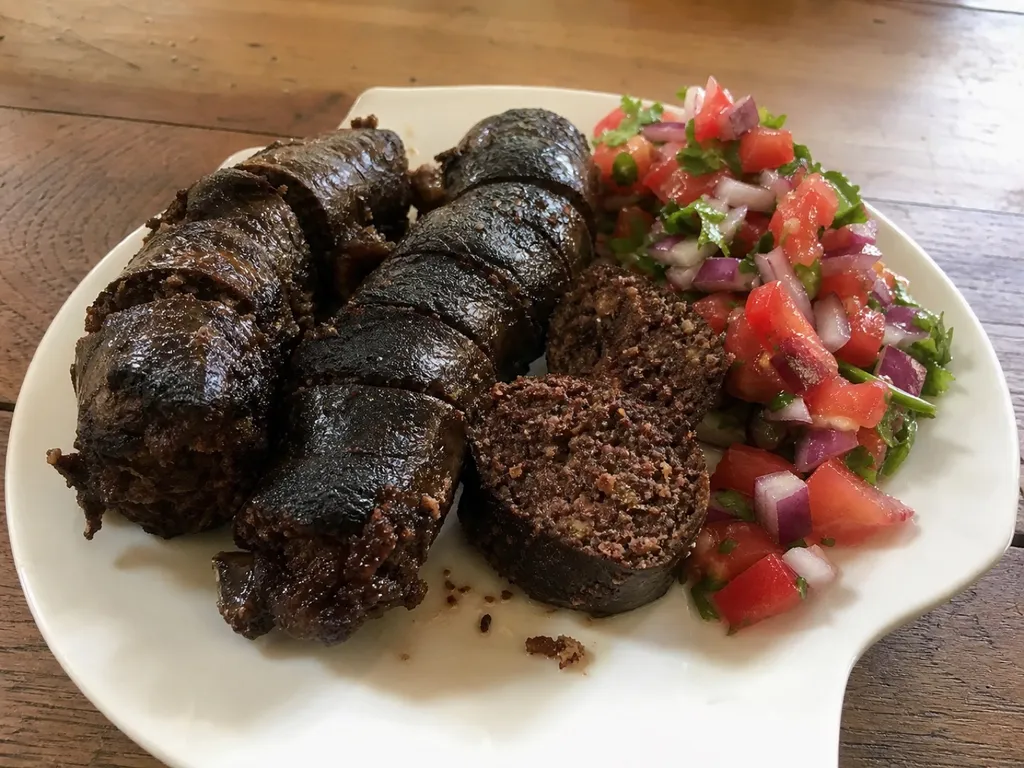 Images are for illustrative purposes only, may be inaccurate, and do not guarantee the presence or absence of specific ingredients.
 Listahan Family Score™
64/100
Works for many families
Score reflects how well this recipe fits a typical busy household. In the app, your Family Score is personalized to your household's allergens, kids, and pantry.
Nutrition
per serving285
Calories
29 g
Protein
0 g
Carbs
18 g
Fat
Estimated per serving. Actual values depend on the brands and portions you use.
Listahan cooking guide
Chef notes & practical guide
Technique notes, ingredient swaps, serve-alongside ideas, storage guidance, and equipment for this recipe.
Cultural context
Mutura is a Kenyan blood sausage of the Kikuyu people, made by filling cleaned intestine casing with spiced minced meat and, traditionally, fresh blood. It is a deeply communal food associated with celebrations, ceremonies, and the communal slaughter of livestock among the Agikuyu, where waste from the animal is minimized by using every part. Today mutura is grilled at roadside stands across Nairobi and Kikuyu country, sold in cross-sections as a street snack, and is experiencing renewed interest as part of Kenya's growing nose-to-tail food culture.
Listahan note
This version treats the blood as optional (with a note that it is traditional and contributes both richness and color), and focuses on getting the filling well-seasoned before stuffing since the casing limits seasoning adjustments after tying.
Technique cues
- Clean the intestine casing thoroughly by turning it inside out, rubbing with coarse salt, rinsing under cold running water, and repeating at least three times until the water runs clear and the casing is essentially odor-neutral.
- Do not overstuff the casing; fill to about two-thirds capacity and leave slack when tying off sections because the filling expands when it heats and a tightly stuffed mutura will burst its casing on the grill.
- Boil the stuffed sausage first for 20 to 25 minutes before grilling; this sets the filling, renders some of the fat out, and cooks the casing through, so that the subsequent grilling over charcoal is purely for the charred exterior flavor.
Kitchen flow
- Parallel prep
- Start cleaning the casing first since it takes the longest; mix the filling while the casing soaks in its final cold-water rinse.
- Make-ahead
- Stuff and boil the mutura up to 1 day in advance and refrigerate; grill directly from the refrigerator when ready to serve.
- Leftover move
- Slice cold mutura into rounds and pan-fry in a dry skillet until each side is browned and crispy for a quick snack or breakfast protein.
- Cleanup rhythm
- The most intensive cleanup is the casing preparation at the start; once stuffed, a boiling pot and a grill are the only items to clean.
Ingredient brief
Role, handling, and swap guidance for each key ingredient.
1 lb cleaned beef or goat intestine casing
natural casing and vessel
Purpose: The intestine casing holds the filling together during boiling and grilling and contributes a slightly chewy, gelatinous exterior texture that is characteristic of mutura.
Handling: Clean extensively with coarse salt and multiple cold-water rinses until all odor is removed; this step cannot be rushed or shortcuts taken.
Adaptation: Natural pork sausage casings (from a butcher) are a cleaner-tasting alternative that are easier to source and handle for home cooks unfamiliar with intestine preparation.
1 lb minced meat scraps (beef or goat)
filling and protein
Purpose: Minced scraps with varying fat content provide flavor and the binding fat that keeps the filling from drying out during the two-stage cook.
Handling: If buying pre-minced, choose a mixture with at least 20 percent fat; very lean mince produces a dry, crumbly filling after grilling.
Adaptation: Minced beef chuck (80/20 fat ratio) is a clean, widely available alternative to meat scraps.
1/2 cup fresh blood (optional; traditional)
binder, color, and iron-rich flavor
Purpose: Fresh blood binds the filling (similar to the role of egg in meatloaf), gives mutura its characteristically dark interior color, and contributes a rich, faintly metallic depth that is the defining flavor of traditional mutura.
Handling: If using, stir well before adding since blood separates quickly; add to the minced meat mixture before stuffing and incorporate thoroughly.
Adaptation: Omit entirely for a still-delicious but milder mutura; replace with one beaten egg to help bind the filling.
1 tbsp grated ginger
warmth and freshness
Purpose: Fresh ginger provides the dominant herbal warmth in the seasoning blend and keeps the filling from tasting flat or purely meaty.
Handling: Grate on a microplane for a fine paste that distributes evenly through the meat without leaving fibrous strands in the filling.
Adaptation: Ground ginger (1 teaspoon) is a weaker substitute; increase to 1.5 teaspoons for a comparable intensity.
1 tbsp chopped cilantro
herbal lift and freshness
Purpose: Cilantro provides a bright herbal note that counterbalances the richness of the fatty mince and the iron depth of the blood.
Handling: Chop finely and fold in just before stuffing so the herb stays bright green and does not discolor the filling.
Adaptation: Fresh flat-leaf parsley works well for those who find cilantro soapy; the flavor is slightly more neutral but still adds herbaceous freshness.
Technique notes
- Fry a small teaspoon of the filling in a pan before stuffing and taste for salt; the casing traps the filling and you cannot adjust seasoning after tying.
- Prick the casing 2 to 3 times with a skewer before grilling (not boiling) to release steam and prevent a pressure burst; grilling over direct charcoal can cause a sealed sausage to explode.
- Rest the grilled mutura for 5 minutes before slicing so the filling firms up and slices cleanly into rounds rather than falling apart at the cut.
Ingredient swaps
- Blood-free direction
- Omit the blood entirely and bind the filling with one beaten egg instead; the interior will be lighter in color and milder in flavor but the technique is identical.
- Pork casing option
- Natural pork sausage casings from a butcher are easier to source and handle than beef or goat intestine, and require less intensive cleaning.
- Gluten-free direction
- All ingredients are naturally gluten-free; verify any store-bought minced meat blends for added fillers or binders.
Serve alongside
- kachumbari (fresh tomato, onion, and chili salad) as a bright contrast
- ugali (firm maize porridge) for a traditional pairing
- mukimo (green-flecked potato mash) at a celebratory spread
- cold Tusker lager (Kenyan)
- fresh tamarind juice over ice
Serving suggestions only — check pairings for your household's allergens.
Storage & reheating
- Refrigerate boiled-but-ungrilled mutura for up to 2 days before grilling; grill to order for the best texture.
- Refrigerate fully cooked (boiled and grilled) mutura for up to 2 days; slice cold or reheat in a dry skillet over medium heat.
- Do not freeze after stuffing and boiling as the casing texture becomes tough and rubbery after thawing.
Equipment
- large pot for boiling the sausage
- charcoal grill or gas grill
- skewer or toothpick for pricking the casing
- tongs for handling on the grill
Make this household-aware
Listahan Pro checks this recipe against your household's allergens, finds pantry-aware swaps, builds the shopping list, and helps you plan the week around it.
Plan it in Listahan
Add Mutura to your week, check it against your household's allergens, and build the shopping list automatically.
More East African recipes
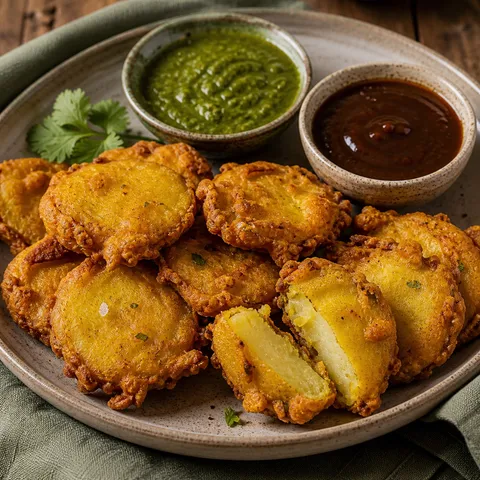 East African Lens Verified Images are for illustrative purposes only, may be inaccurate, and do not guarantee the presence or absence of specific ingredients.
 Viazi Karai
A Zanzibari street favorite of soft boiled potatoes coated in a turmeric-yellow batter and deep-fried until crackling, served with fiery tamarind sauce.
 East African Lens Verified Images are for illustrative purposes only, may be inaccurate, and do not guarantee the presence or absence of specific ingredients.
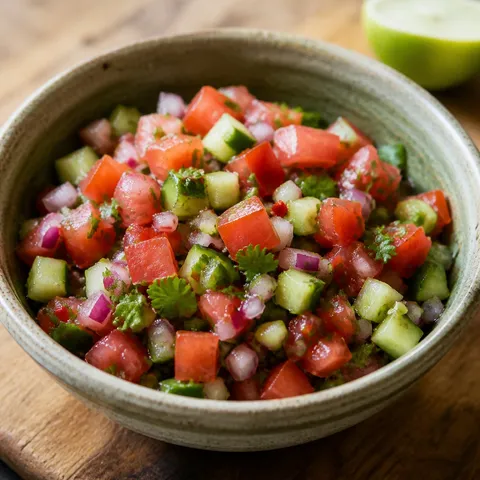
 Kachumbari
Bright, refreshing salad of ripe tomatoes and sharp raw onion, spiked with chili and lime — the cool, crisp counterpoint to rich East African grills.
 East African Lens Verified Images are for illustrative purposes only, may be inaccurate, and do not guarantee the presence or absence of specific ingredients.
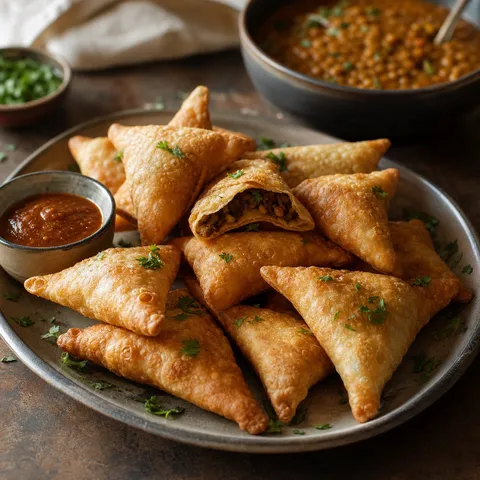
 Sambusa
Crispy fried pastry pockets stuffed with spiced lentils or minced meat, snapped open at the seam to release a cloud of warm cumin and cardamom.