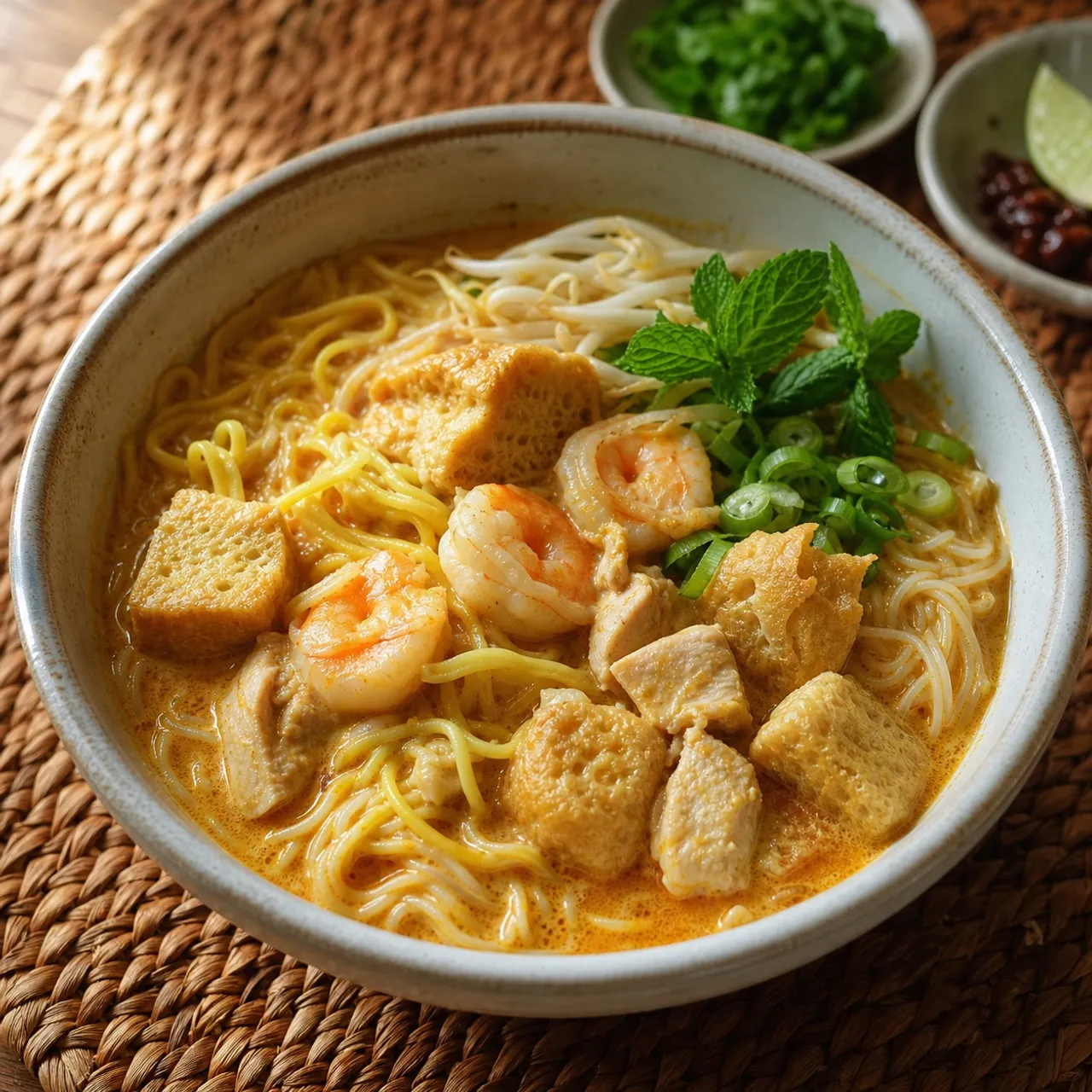
 Indonesian & Malaysian Images are for illustrative purposes only, may be inaccurate, and do not guarantee the presence or absence of specific ingredients.
 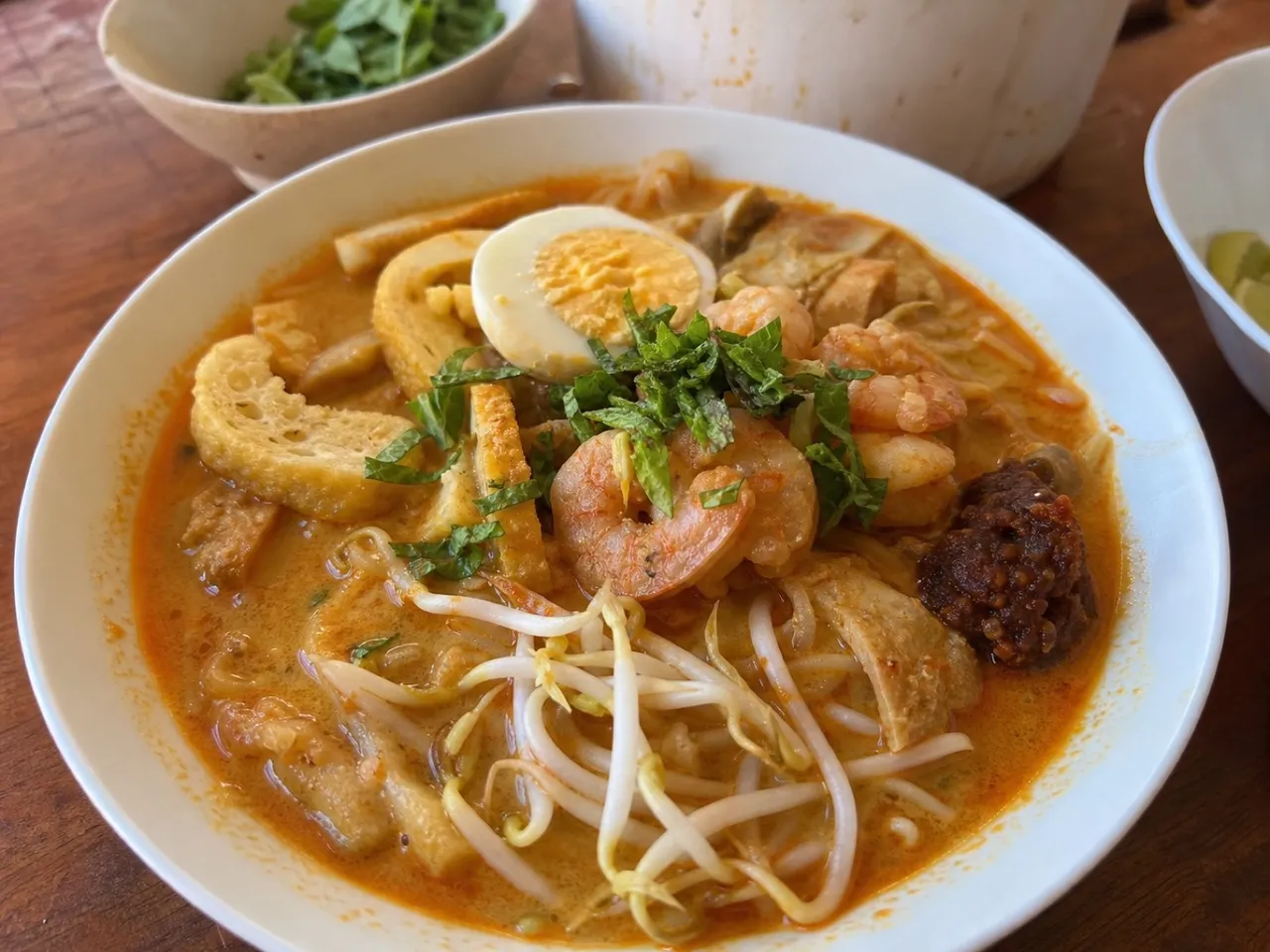 Serving Images are for illustrative purposes only, may be inaccurate, and do not guarantee the presence or absence of specific ingredients.
 Curry Laksa
Thick egg noodles in a rich, coconut-curry broth loaded with prawns, tofu puffs, and cockles — bold, creamy, and warmly spiced.
Contains common allergens
In the app, Listahan checks these against your household automatically.
Instructions
6 steps- 1
Blend shallots, garlic, ginger, fresh turmeric, and dried chilies into a paste.
- 2
Sauté the paste in a large pot until fragrant, then add the curry powder and cook for another minute.
- 3
Pour in chicken broth and bring to a simmer. Add the coconut milk and tofu puffs, letting them soak up the liquid like sponges.
- 4
Season the broth with salt, a pinch of sugar, and fish sauce to taste, simmering gently for 15 minutes.
- 5
Blanch the yellow noodles and rice vermicelli in boiling water, then divide them into serving bowls.
- 6
Top the noodles with sliced chicken or shrimp, ladle the rich, spicy coconut broth over the top, and garnish with fresh mint or cilantro.
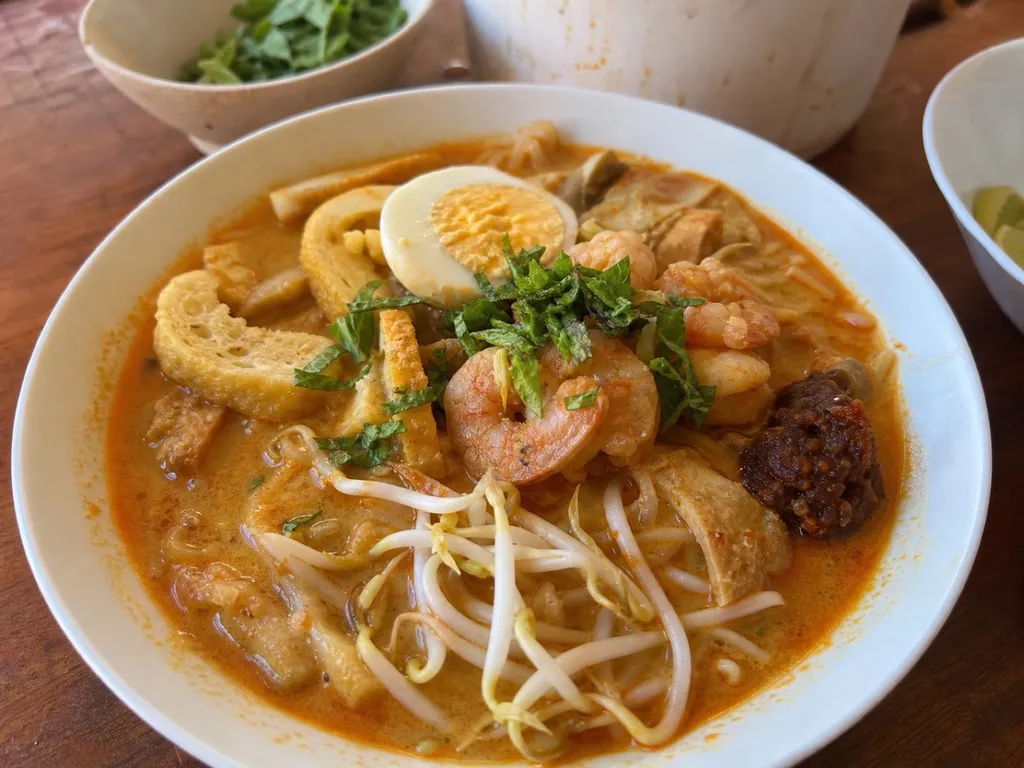 Images are for illustrative purposes only, may be inaccurate, and do not guarantee the presence or absence of specific ingredients.
 Listahan Family Score™
56/100
Works for many families
Score reflects how well this recipe fits a typical busy household. In the app, your Family Score is personalized to your household's allergens, kids, and pantry.
Nutrition
per serving680
Calories
21 g
Protein
86 g
Carbs
30 g
Fat
Estimated per serving. Actual values depend on the brands and portions you use.
Listahan cooking guide
Chef notes & practical guide
Technique notes, ingredient swaps, serve-alongside ideas, storage guidance, and equipment for this recipe.
Cultural context
Curry laksa is a Peranakan dish, born from the blending of Chinese and Malay cooking among the descendants of Chinese immigrants who settled across the Malay Peninsula and Indonesia. Chinese-style noodles meeting a Malay-style spiced coconut broth is the clearest marker of that fusion, and versions vary noticeably between Penang, Singapore, and other port cities with their own Peranakan communities.
Listahan note
This version blends a fresh aromatic paste of shallots, garlic, ginger, and chilies rather than relying on curry powder alone, using the powder only to round out a base the fresh paste already carries most of the flavor for.
Technique cues
- Blending shallots, garlic, ginger, turmeric, and dried chilies into a paste and frying it until fragrant builds a flavor base curry powder alone can't replicate.
- Tofu puffs simmered in the broth soak up the spiced coconut liquid like a sponge, so they carry flavor even though they start out fairly neutral.
- The broth needs a full fifteen minutes of gentle simmering after the coconut milk goes in to let the fresh paste's raw edge cook off.
- Blanching the yellow noodles and rice vermicelli separately from the broth, then combining them in the bowl, keeps their textures distinct instead of both turning uniformly soft.
Kitchen flow
- Parallel prep
- While Curry Laksa simmers, chop any garnish or side bread — the pot doesn't need active attention during the long simmer. This one leans on the cooked chicken or shrimp.
- Make-ahead
- Curry Laksa is a genuine make-ahead dish — it actually tastes better the next day once cooked chicken or shrimp have had time to meld; make it a day early and reheat gently. Plan around the simmer; that's the slow part.
- Leftover move
- Leftover Curry Laksa is often better the next day — refrigerate and reheat gently on the stove, thinning with a splash of water or broth if it's thickened. This one leans on the cooked chicken or shrimp. Plan around the simmer; that's the slow part.
- Cleanup rhythm
- Let the pot for Curry Laksa soak while you eat — a long simmer tends to leave a stuck layer on the bottom that's easier to lift once soaked. This one leans on the cooked chicken or shrimp.
Ingredient brief
Role, handling, and swap guidance for each key ingredient.
200g yellow noodles
Structural base
Purpose: g yellow noodles defines the shape and texture of the dish.
Handling: Rinse, soak, whisk, or separate as the recipe requires so the texture stays clean.
Adaptation: Use a certified gluten-free alternative when needed and expect a small texture change.
200g rice vermicelli
Structural base
Purpose: g rice vermicelli defines the shape and texture of the dish.
Handling: Rinse, soak, whisk, or separate as the recipe requires so the texture stays clean.
Adaptation: Use the closest fresh equivalent and expect a modest shift in flavor or texture.
400ml coconut milk
Richness and texture
Purpose: ml coconut milk rounds the texture and helps the dish feel complete.
Handling: Prep before heat is high so the cooking step can move without rushing.
Adaptation: Use unsweetened dairy-free alternatives only where they still provide enough fat and body.
2 tbsp curry powder
Seasoning backbone
Purpose: tbsp curry powder gives the dish its recognizable flavor direction.
Handling: Measure before heating and break up clumps so the mix distributes evenly.
Adaptation: Use the closest fresh equivalent and expect a modest shift in flavor or texture.
100g tofu puffs
Main protein or body
Purpose: g tofu puffs gives Curry Laksa its main substance and carries the seasoning.
Handling: Pat dry, cut evenly, and season before cooking so browning or sauce coverage is consistent.
Adaptation: Use the closest fresh equivalent and expect a modest shift in flavor or texture.
Technique notes
- Balance the broth with a pinch of sugar and a splash of fish sauce at the end — coconut milk alone can taste flat without that push toward savory-sweet.
- Use both yellow noodles and vermicelli rather than picking one, since the contrast between the chewy wheat noodle and the soft rice noodle is part of the dish's texture.
- Garnish with fresh mint or cilantro right before serving; stirred in early, the fresh herb wilts and loses its brightness in the hot broth.
Ingredient swaps
- Gluten-free direction
- Swap in a certified gluten-free 1:1 flour blend or gluten-free noodles/breadcrumbs wherever the recipe calls for a wheat product, and read packaged-item labels closely. This one leans on the rice vermicelli.
- Dairy-free direction
- Swap the coconut milk for full-fat coconut milk or a dairy-free cream alternative, added at the end rather than simmered long — the texture shifts slightly but the dish holds together. This one leans on the rice vermicelli.
- Seafood-aware direction
- Replace the cooked chicken or shrimp with a vegetarian fish-sauce alternative or extra soy sauce and a pinch of dried seaweed for umami to keep the savory depth without any fish or shellfish. This one leans on the rice vermicelli.
- Nut-aware direction
- Leave off any nut topping — toasted seeds give a similar crunch without the risk. This one leans on the rice vermicelli.
Serve alongside
- Steamed rice
- Cucumber salad
- Roasted vegetables
- Pickled vegetables
- Iced tea
- Sparkling water with citrus
Serving suggestions only — check pairings for your household's allergens.
Storage & reheating
- Refrigerate in a sealed container for up to 4 days.
- Reheat gently with a splash of water, broth, milk, or sauce as appropriate.
- Freeze up to 2 months when the texture is braised, baked, or stew-like.
Equipment
- Dutch oven or soup pot
- Wooden spoon
- Ladle
Make this household-aware
Listahan Pro checks this recipe against your household's allergens, finds pantry-aware swaps, builds the shopping list, and helps you plan the week around it.
Plan it in Listahan
Add Curry Laksa to your week, check it against your household's allergens, and build the shopping list automatically.
More Indonesian & Malaysian recipes
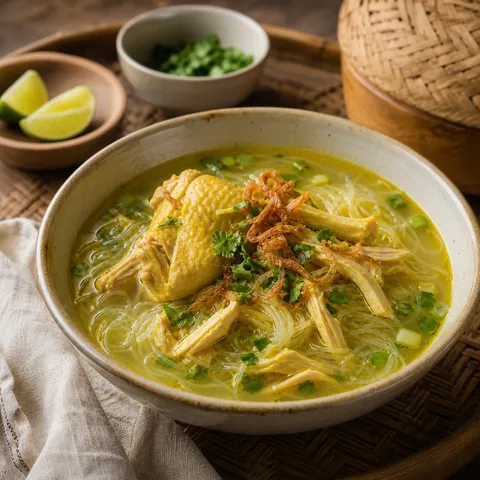 Indonesian & Malaysian Lens Verified Images are for illustrative purposes only, may be inaccurate, and do not guarantee the presence or absence of specific ingredients.
 Soto Ayam
A golden, turmeric-spiced Indonesian chicken soup with glass noodles, crispy shallots, and lime — light, herbal, and deeply comforting.
 Indonesian & Malaysian Lens Verified Images are for illustrative purposes only, may be inaccurate, and do not guarantee the presence or absence of specific ingredients.
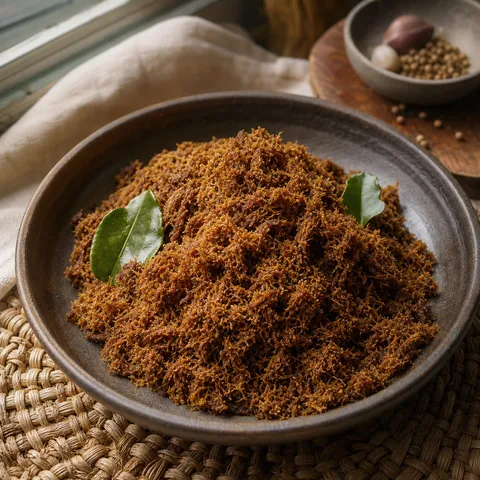
 Beef Serunding
Dry-fried spiced beef floss toasted with coconut and lemongrass until golden and fragrant — a rich, crumbly condiment that transforms plain rice.
 Indonesian & Malaysian Lens Verified Images are for illustrative purposes only, may be inaccurate, and do not guarantee the presence or absence of specific ingredients.
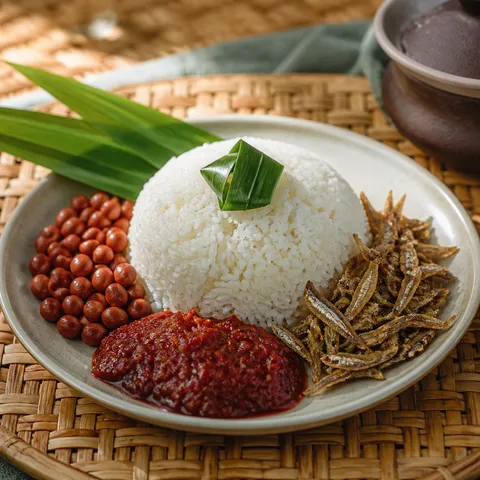
 Nasi Lemak
Malaysia's national comfort dish — fragrant coconut rice paired with sambal, crispy anchovies, roasted peanuts, and a soft-boiled egg.