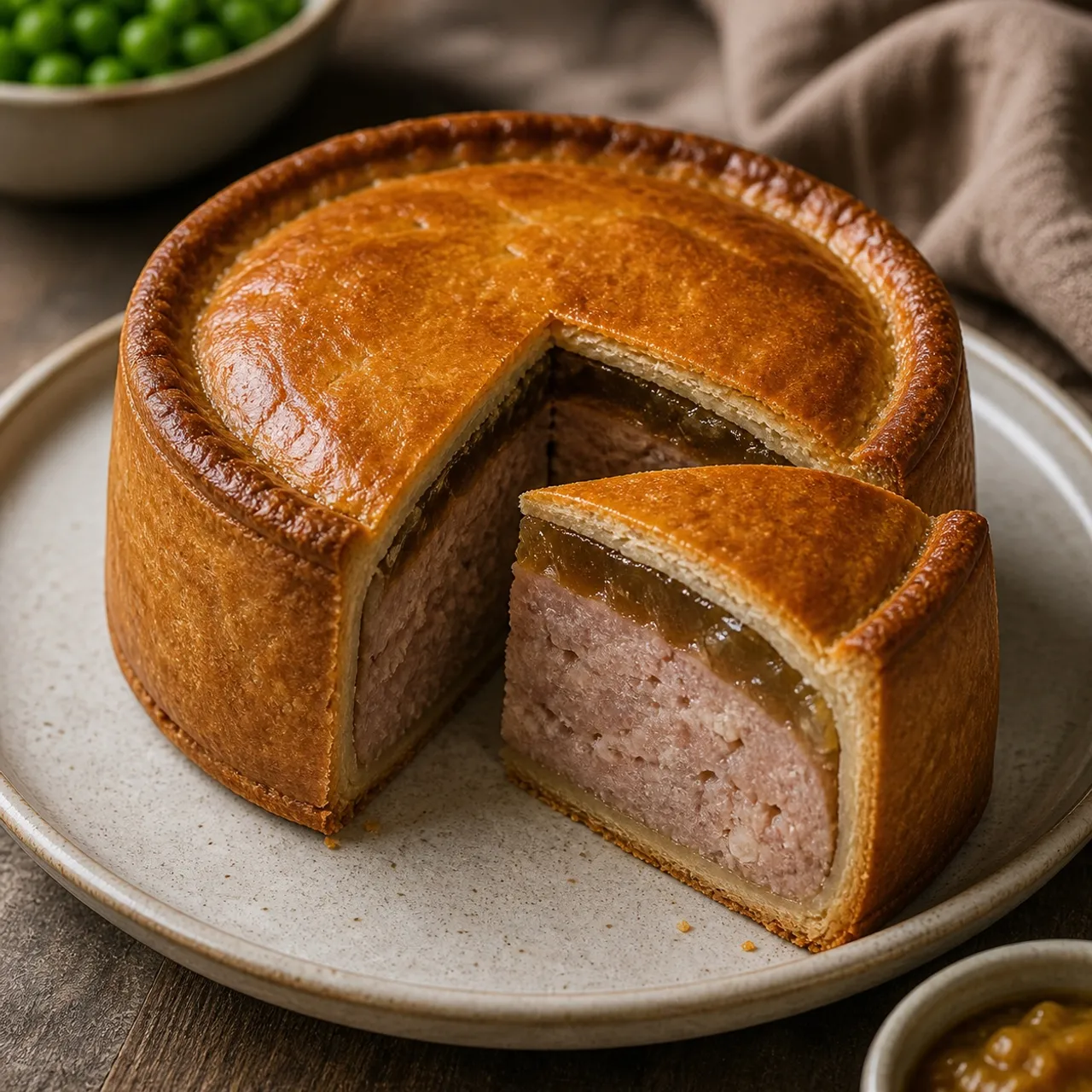
 British & Irish Images are for illustrative purposes only, may be inaccurate, and do not guarantee the presence or absence of specific ingredients.
 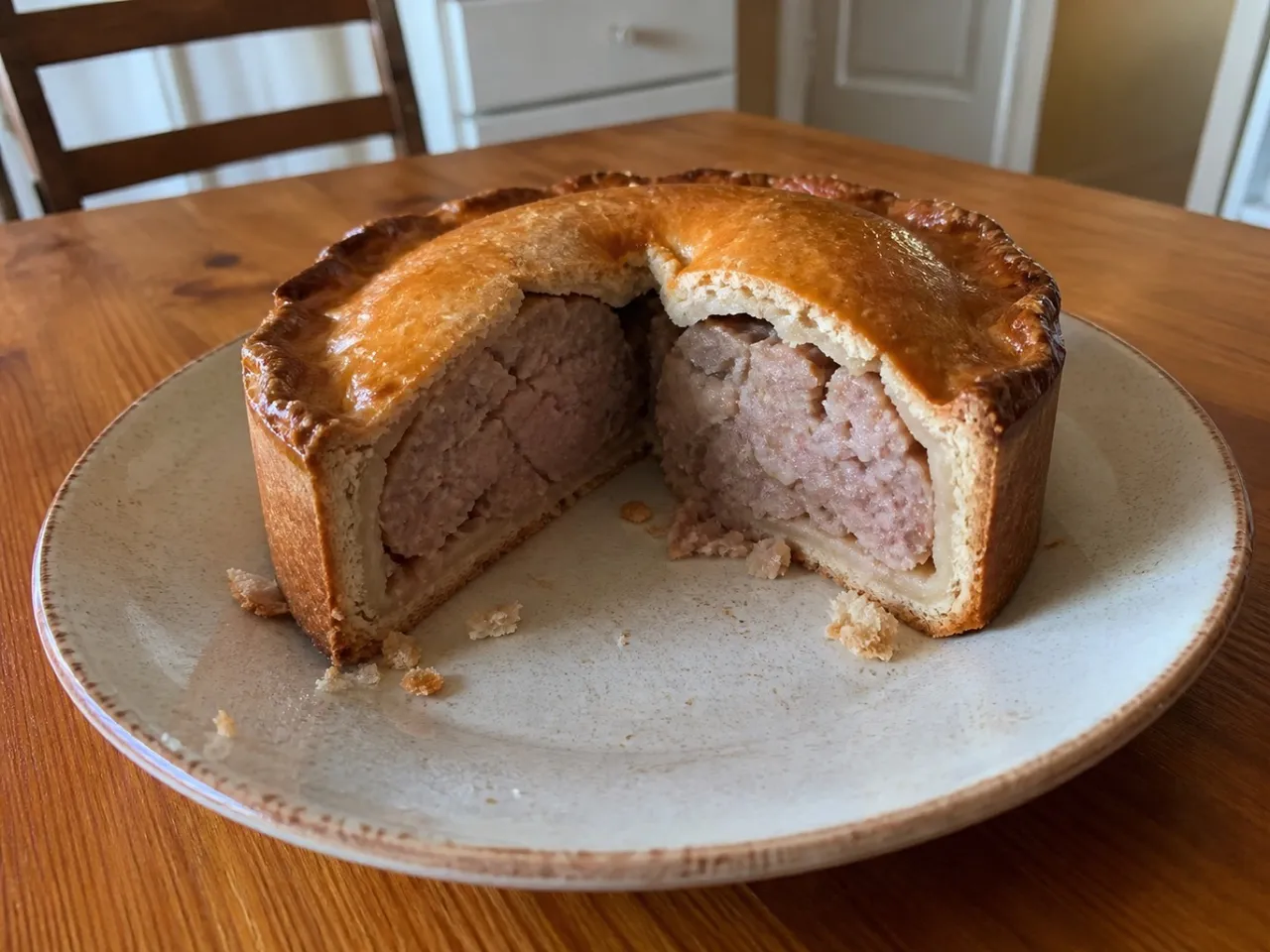 Serving Images are for illustrative purposes only, may be inaccurate, and do not guarantee the presence or absence of specific ingredients.
 Pork Pie
Sturdy hot-water-crust pastry packed with seasoned pork and a savory jelly — Britain's iconic picnic pie, best eaten at room temperature with mustard.
Contains common allergens
In the app, Listahan checks these against your household automatically.
Instructions
8 steps- 1
Melt the lard in the water in a saucepan and bring to the boil, then pour it into the flour and salt, mixing quickly with a wooden spoon to form a warm, pliable dough.
- 2
While still warm, use three-quarters of the dough to line a greased pie tin or mould it around the outside of a jam jar, keeping the remainder for the lid.
- 3
Mix the diced pork shoulder and belly with the mace, sage, salt, and plenty of black pepper, and pack the mixture firmly into the pastry case.
- 4
Roll out the reserved pastry for the lid, place it on top, and crimp the edges to seal, cutting a small hole in the center to let steam escape.
- 5
Brush with beaten egg and bake at 220C (425F) for 20 minutes, then reduce the heat to 160C (325F) and bake for a further 1 to 1 1/4 hours, until the pastry is deep golden and the filling is cooked through.
- 6
Let the pie cool completely, then soften the gelatine leaves in cold water, dissolve them in the warm stock, and pour the liquid slowly through the hole in the lid using a funnel.
- 7
Chill overnight so the jelly sets firm.
- 8
Serve at room temperature with mustard and pickles.
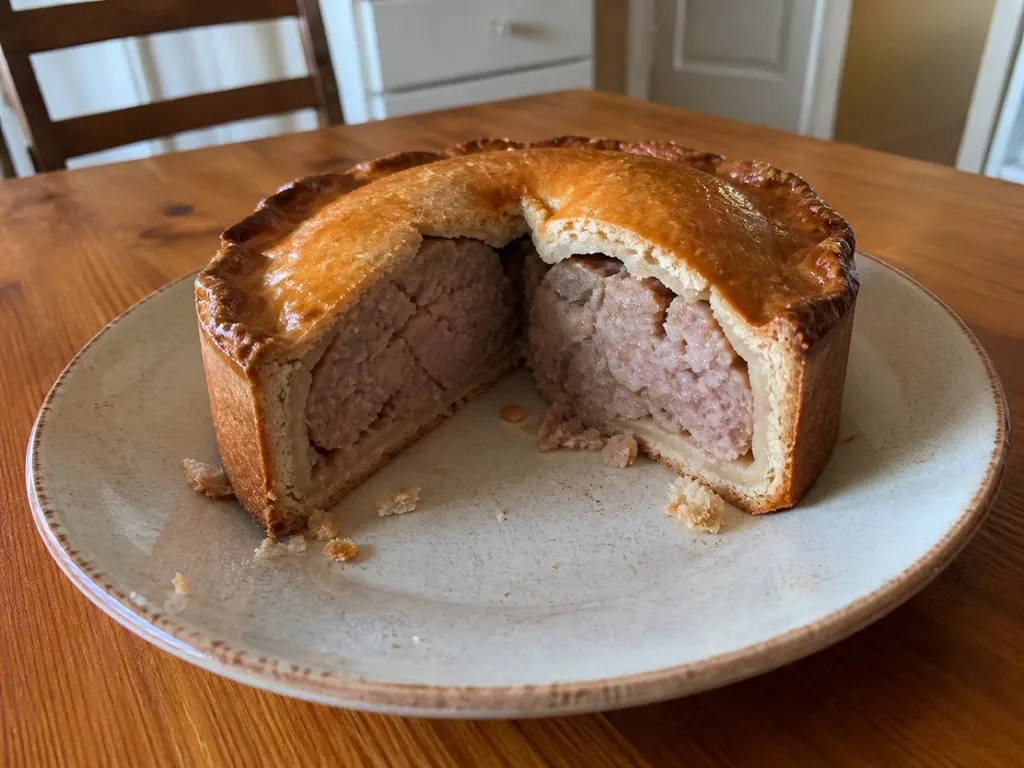 Images are for illustrative purposes only, may be inaccurate, and do not guarantee the presence or absence of specific ingredients.
 Listahan Family Score™
62/100
Works for many families
Score reflects how well this recipe fits a typical busy household. In the app, your Family Score is personalized to your household's allergens, kids, and pantry.
Nutrition
per serving1315
Calories
43 g
Protein
105 g
Carbs
81 g
Fat
Estimated per serving. Actual values depend on the brands and portions you use.
Listahan cooking guide
Chef notes & practical guide
Technique notes, ingredient swaps, serve-alongside ideas, storage guidance, and equipment for this recipe.
Cultural context
The pork pie is a British picnic and pub staple built on hot-water-crust pastry, a dough that has to be shaped while still warm and pliable because it stiffens fast as it cools, unlike a standard shortcrust. Melton Mowbray in Leicestershire is the town most associated with the style, though hand-raised pork pies spread well beyond that one region.
Listahan note
This version pours a separately-set gelatine stock through the pie's steam hole after baking rather than baking any liquid inside the crust, which is how the jelly ends up as a distinct set layer around the meat instead of a soggy filling.
Technique cues
- The hot-water crust has to be shaped while the melted lard, butter, and water mixture is still warm; it firms up and cracks if you wait too long to press it into the mold.
- Packing the pork filling tightly into the pastry case, with no air pockets, keeps the pie from collapsing once the jelly is poured in later.
- The filling needs to reach 75°C (165°F) internally during baking, which the long two-stage bake at a lower second temperature is built to reach without burning the crust.
- Pouring the gelatine stock through the steam hole only works once the baked pie has cooled completely — hot filling would just absorb the liquid instead of setting it as a separate layer.
Kitchen flow
- Parallel prep
- Prep dips or garnishes for Pork Pie while the main component cooks or chills, so everything lands on the platter at once. This one leans on the pork or chicken stock. Everything else is quick — the bake is the one step that takes real time.
- Make-ahead
- Pork Pie can be assembled a few hours ahead and held, covered, until serving. This one leans on the pork or chicken stock. Everything else is quick — the bake is the one step that takes real time.
- Leftover move
- Leftover Pork Pie reheats best in an oven or air fryer rather than a microwave, which keeps it from turning soft. This one leans on the pork or chicken stock. Plan around the bake; that's the slow part.
- Cleanup rhythm
- Wash serving dishes for Pork Pie promptly if they held dips or sauces, which dry into a harder film than most other foods. This one leans on the pork or chicken stock. Plan around the bake; that's the slow part.
Ingredient brief
Role, handling, and swap guidance for each key ingredient.
600g pork shoulder
Main protein or body
Purpose: g pork shoulder gives Pork Pie its main substance and carries the seasoning.
Handling: Pat dry, cut evenly, and season before cooking so browning or sauce coverage is consistent.
Adaptation: Use the closest fresh equivalent and expect a modest shift in flavor or texture.
100g smoked bacon
Main protein or body
Purpose: g smoked bacon gives Pork Pie its main substance and carries the seasoning.
Handling: Prep before heat is high so the cooking step can move without rushing.
Adaptation: Use the closest fresh equivalent and expect a modest shift in flavor or texture.
1 tsp ground white pepper
Aromatic base
Purpose: tsp ground white pepper creates the savory foundation before stronger ingredients are added.
Handling: Wash, trim, and cut evenly so the pieces cook at the same pace.
Adaptation: Use the closest fresh equivalent and expect a modest shift in flavor or texture.
1/2 tsp ground mace
Flavor support
Purpose: tsp ground mace supports the balance of Pork Pie and should taste integrated.
Handling: Prep before heat is high so the cooking step can move without rushing.
Adaptation: Use the closest fresh equivalent and expect a modest shift in flavor or texture.
1 tsp salt
Flavor support
Purpose: tsp salt supports the balance of Pork Pie and should taste integrated.
Handling: Prep before heat is high so the cooking step can move without rushing.
Adaptation: Use the closest fresh equivalent and expect a modest shift in flavor or texture.
Technique notes
- Chill the pie overnight after adding the jelly so it sets fully; cutting into it the same day risks the stock still being loose.
- Serve at room temperature, not straight from the fridge — cold hot-water-crust pastry tastes noticeably tougher than pastry that's had time to soften slightly.
- English mustard on the side cuts through the richness of the pork and jelly more directly than a milder mustard would.
Ingredient swaps
- pork shoulder
- a mix of pork shoulder and minced chicken thigh - leaner; keep some fat in for moisture
- smoked bacon
- smoked turkey rashers - lower-fat smoky note
- gelatine-set stock jelly
- an agar-set vegetable stock - agar gives a firmer, vegetarian-friendly set
Serve alongside
- Fresh berries
- Citrus fruit salad
- Mint leaves
- Black coffee
- Hot tea
- Sparkling water with lemon
Serving suggestions only — check pairings for your household's allergens.
Storage & reheating
- Keep refrigerated and eat within 3 days; bring to room temperature before serving for the best flavour.
- Reheat gently with a splash of water, broth, milk, or sauce as appropriate.
- Freeze only when the texture is sturdy enough to thaw and reheat cleanly.
Equipment
- Deep springform tin or pie mould
- Small saucepan
Make this household-aware
Listahan Pro checks this recipe against your household's allergens, finds pantry-aware swaps, builds the shopping list, and helps you plan the week around it.
Plan it in Listahan
Add Pork Pie to your week, check it against your household's allergens, and build the shopping list automatically.
More British & Irish recipes
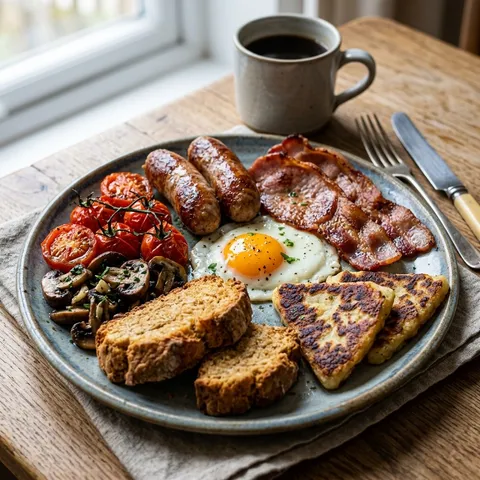 British & Irish Lens Verified Images are for illustrative purposes only, may be inaccurate, and do not guarantee the presence or absence of specific ingredients.
 Ulster Fry
Northern Ireland's legendary fry-up: bacon, sausages, eggs, black pudding, potato bread, and soda bread — fuller and heartier than its English cousin.
 British & Irish Lens Verified Images are for illustrative purposes only, may be inaccurate, and do not guarantee the presence or absence of specific ingredients.
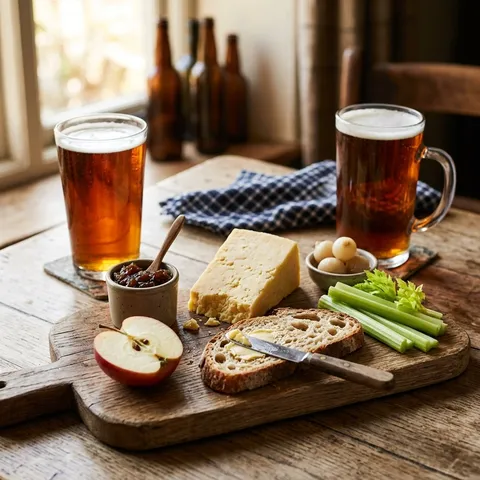
 Ploughman's Lunch
Sharp aged cheddar, crusty bread, tangy Branston pickle, and a boiled egg — a beloved no-cook British lunch that's greater than the sum of its parts.
 British & Irish Lens Verified Images are for illustrative purposes only, may be inaccurate, and do not guarantee the presence or absence of specific ingredients.
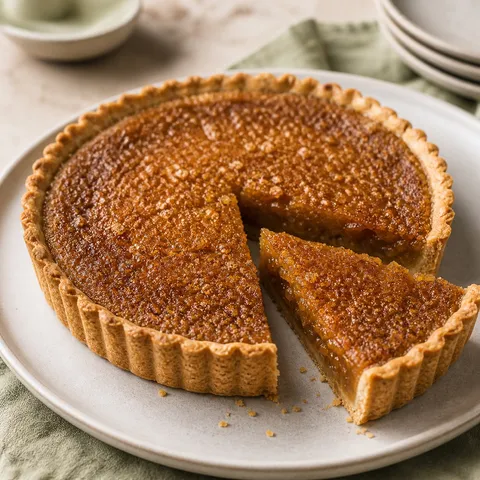
 Treacle Tart
A sweet, sticky tart filled with golden syrup and fresh breadcrumbs, with a gently caramelized top and a hint of lemon — Harry Potter's favorite dessert.