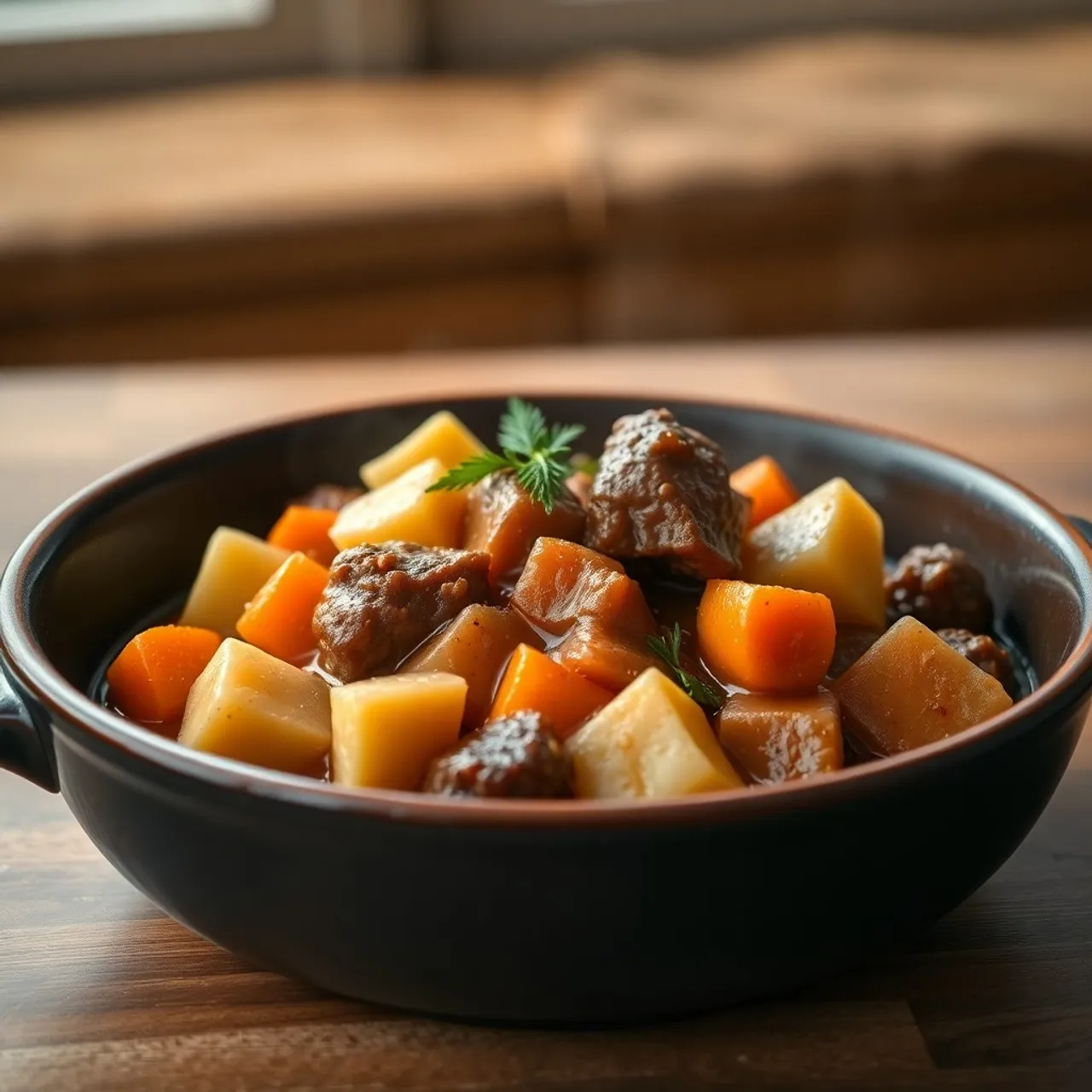
 British & Irish Images are for illustrative purposes only, may be inaccurate, and do not guarantee the presence or absence of specific ingredients.
 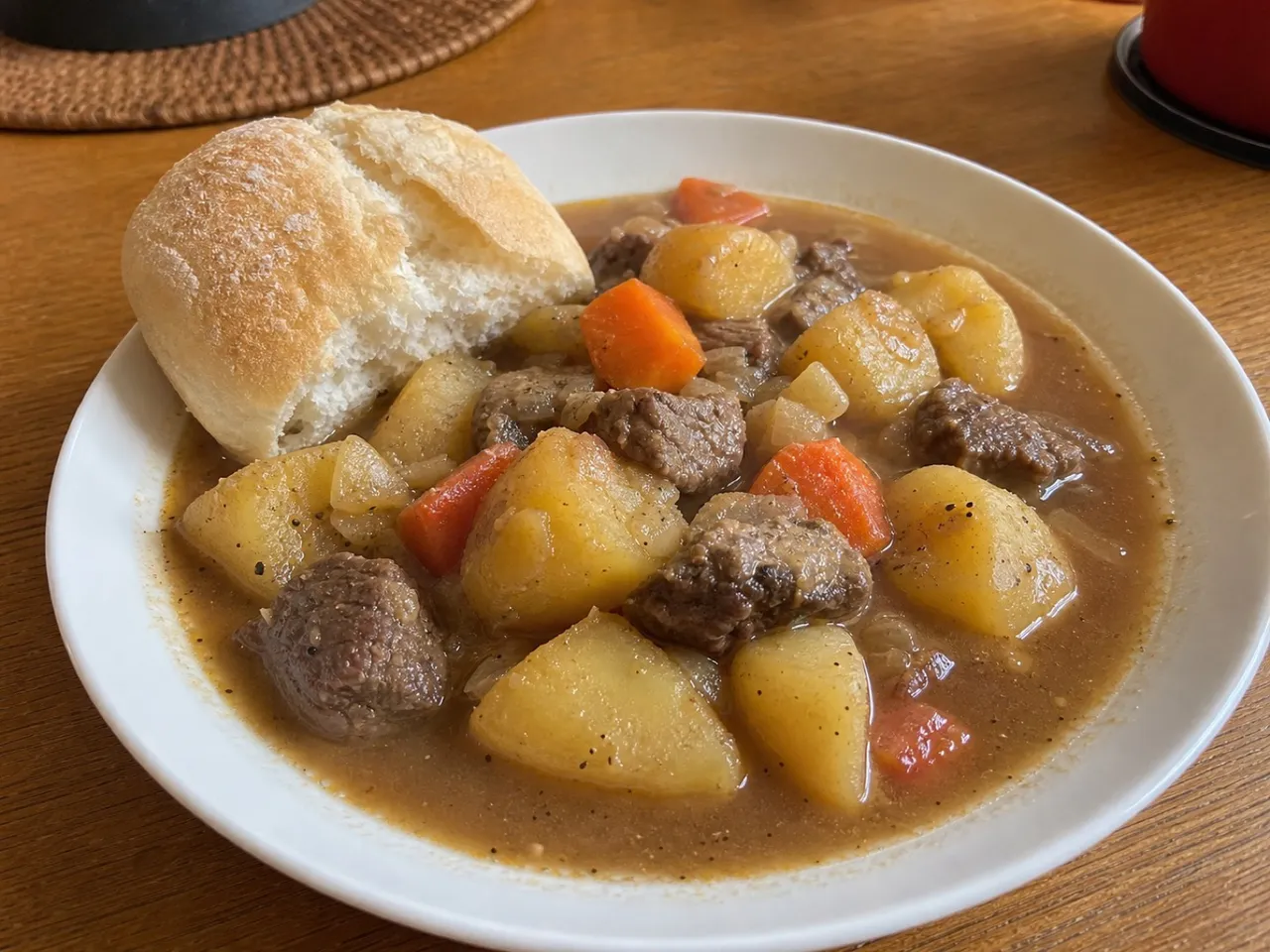 Serving Images are for illustrative purposes only, may be inaccurate, and do not guarantee the presence or absence of specific ingredients.
 Scouse
Liverpool's beloved slow-cooked stew of beef or lamb, potato, carrot, and onion — a thick, hearty, working-class comfort dish that warms you from the inside.
Contains common allergens
In the app, Listahan checks these against your household automatically.
Good to know
- One-pot
Matched from this dish's own ingredients and timing. Browse more: one-pot dinners
Instructions
7 steps- 1
Toss the meat in the seasoned flour, then brown it in batches in a large pot with a little oil, setting each batch aside.
- 2
Add the onions and carrots to the pot and cook for 5 minutes until starting to soften.
- 3
Return the meat to the pot, add the diced potatoes, stock, bay leaves, and Worcestershire sauce, and bring to a simmer.
- 4
Cover and cook on low heat for 2 to 2 1/2 hours, stirring occasionally, until the meat is fork-tender.
- 5
Add the sliced potatoes for the final 30 minutes of cooking so they break down and thicken the stew.
- 6
Mash some of the potato against the side of the pot to thicken the sauce, then season to taste with salt and pepper.
- 7
Discard the bay leaves and serve hot with crusty bread and pickled red cabbage.
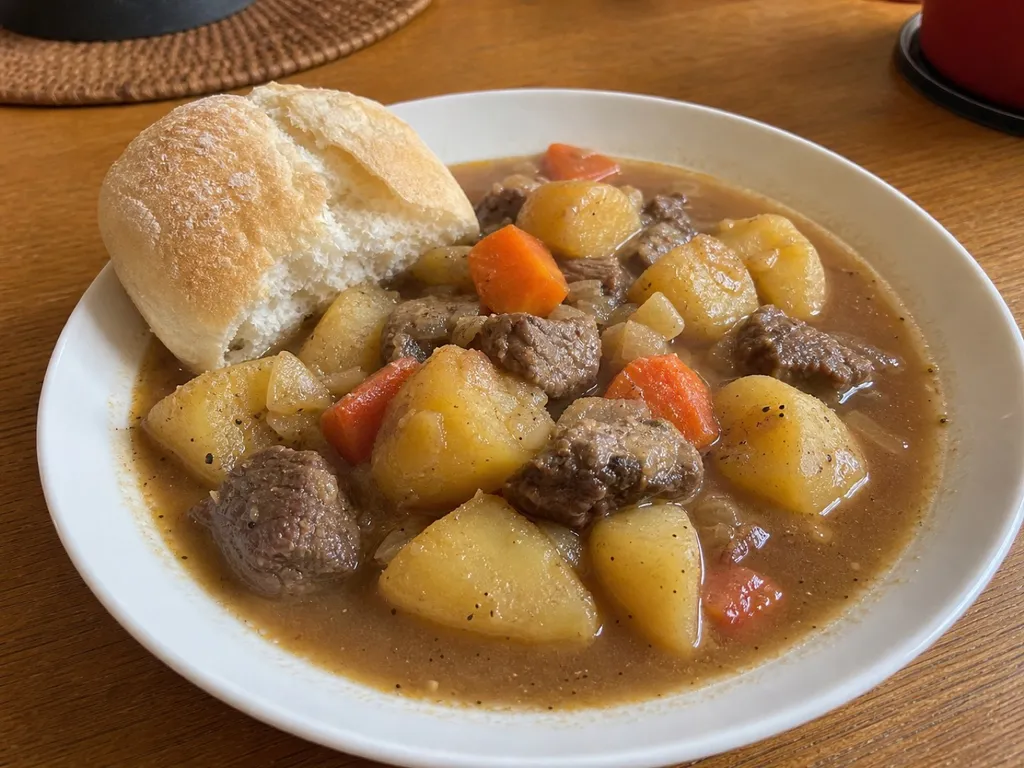 Images are for illustrative purposes only, may be inaccurate, and do not guarantee the presence or absence of specific ingredients.
 Listahan Family Score™
62/100
Works for many families
Score reflects how well this recipe fits a typical busy household. In the app, your Family Score is personalized to your household's allergens, kids, and pantry.
Nutrition
per serving575
Calories
48 g
Protein
34 g
Carbs
26 g
Fat
Estimated per serving. Actual values depend on the brands and portions you use.
Listahan cooking guide
Chef notes & practical guide
Technique notes, ingredient swaps, serve-alongside ideas, storage guidance, and equipment for this recipe.
Cultural context
Scouse is a thick, slow-cooked lamb or beef stew that gave the people of Liverpool their famous nickname — 'Scousers' — and is so embedded in the city's identity that it is still eaten weekly in thousands of Liverpool households. The dish is a direct descendant of 'lobscouse,' a simple sailor's stew of salt meat, hardtack biscuit, and root vegetables that was common across northern European seafaring cultures from Norway to the Netherlands; the name likely came from the Scandinavian 'lapskaus.' Liverpool's role as a major port city in the 18th and 19th centuries explains how the dish arrived and stayed.
Listahan note
This version cooks low and slow until the lamb or beef practically dissolves into the vegetables, creating a stew so thick it can barely be called a liquid — which is how Liverpool families eat it.
Technique cues
- Brown the meat in small batches in a very hot pan before braising; crowding the pan steams rather than sears and produces a grey, bland stew instead of one with deep flavor from the caramelized meat juices.
- Add the potatoes in two stages: half at the beginning so they break down and thicken the stew, and half toward the end so some remain as identifiable chunks with texture.
- Do not rush the cooking; three to four hours at a gentle simmer is the minimum for the collagen in tougher cuts to melt into the liquid and produce the characteristic thick, glossy consistency that makes Scouse feel warming rather than watery.
Kitchen flow
- Parallel prep
- While the meat browns in batches, chop all the vegetables so they are ready to add in sequence; the most efficient way is to prep while the pot rests between batches.
- Make-ahead
- Scouse is always better the next day when the flavors have had time to meld; make it the day before, refrigerate, and lift the solidified fat from the surface before reheating.
- Leftover move
- Cold leftover Scouse reheats beautifully in a low oven covered with foil; add a splash of stock if it has become very thick and stir once halfway through to redistribute the heat.
- Cleanup rhythm
- Use a single heavy Dutch oven or casserole for browning and braising to minimize washing up; deglaze the pot with stock after browning the meat to lift the fond before adding vegetables.
Ingredient brief
Role, handling, and swap guidance for each key ingredient.
lamb neck or beef shin
primary protein and collagen source
Purpose: These cuts contain the connective tissue and collagen that melt during long, slow cooking and thicken the braising liquid naturally without added starch.
Handling: Cut into large chunks and dry thoroughly before browning; wet meat steams and does not form a proper sear.
Adaptation: Beef cheek produces an extraordinarily rich result; lamb shoulder is a milder alternative to neck that many modern recipes favor.
potatoes
starch thickener and body
Purpose: Potatoes added early break down and dissolve into the braising liquid, making Scouse thick and velvety without any flour or cornstarch; those added late retain their shape and provide textural contrast.
Handling: Peel and cut into large cubes; smaller pieces will dissolve entirely.
Adaptation: A combination of regular and sweet potato adds a slight sweetness that balances the richness of the meat.
carrots and turnip
sweetness and body
Purpose: Root vegetables provide the natural sweetness that balances the richness of the slowly cooked meat and prevents the stew from tasting one-dimensionally savory.
Handling: Cut in large pieces so they survive hours of cooking without disintegrating.
Adaptation: Parsnips add a slightly peppery sweetness that works well in the stew; swede (rutabaga) is a traditional alternative to turnip.
onions
aromatic base and sweetness
Purpose: A large quantity of onion softened at the beginning of cooking forms the aromatic base of the stew and adds the sweetness that comes from slowly cooked alliums.
Handling: Slice thickly rather than finely so they retain some texture after hours of cooking.
Adaptation: Leeks can replace part of the onion for a milder, more delicate flavor.
Technique notes
- Deglaze the browning pan with a splash of Worcestershire sauce before adding stock; the fermented condiment adds a savory depth that ties together the meat juices and creates a foundation the long braise builds on.
- For the version Liverpool dockworkers actually ate — 'blind scouse' — omit the meat entirely and use extra vegetables and a good vegetable stock; it is surprisingly satisfying and was historically eaten on days when meat was unaffordable.
- A tablespoon of pearl barley added with the stock thickens the stew even further and adds a gentle chew that is particularly good in the lamb version.
Ingredient swaps
- Vegetarian direction (Blind Scouse)
- Use large chunks of root vegetables — carrot, parsnip, swede, celery root — and a rich vegetable stock with a splash of soy sauce for umami; this is the historical version and is genuinely delicious.
- Gluten-free direction
- The dish is naturally gluten-free when made without Worcestershire sauce; substitute tamari or a gluten-free Worcestershire alternative and confirm the stock used is gluten-free.
- Weeknight shortcut
- Use a pressure cooker or Instant Pot at high pressure for 45 minutes with a natural release to achieve a similar tender, thick result in a fraction of the stovetop time.
Serve alongside
- Crusty white bread or a thick-sliced bloomer for mopping
- Pickled red cabbage
- Beetroot pickle
- Strong tea with milk
- Session bitter or Guinness
- Brown ale
Serving suggestions only — check pairings for your household's allergens.
Storage & reheating
- Scouse keeps in the refrigerator for up to five days in a sealed container; the fat will solidify on the surface and can be removed for a leaner result before reheating.
- It freezes exceptionally well for up to three months; the starch from the dissolved potatoes acts as a stabilizer that prevents the sauce from breaking upon thawing.
Equipment
- Large Dutch oven or heavy braising pot with a tight-fitting lid for long, unattended simmering
- Cast iron or stainless steel skillet for browning the meat in batches before transferring to the pot
- Ladle for skimming excess fat from the surface during cooking
- Instant-read thermometer to confirm the braising liquid temperature is a gentle simmer, not a rolling boil
Make this household-aware
Listahan Pro checks this recipe against your household's allergens, finds pantry-aware swaps, builds the shopping list, and helps you plan the week around it.
Plan it in Listahan
Add Scouse to your week, check it against your household's allergens, and build the shopping list automatically.
More British & Irish recipes
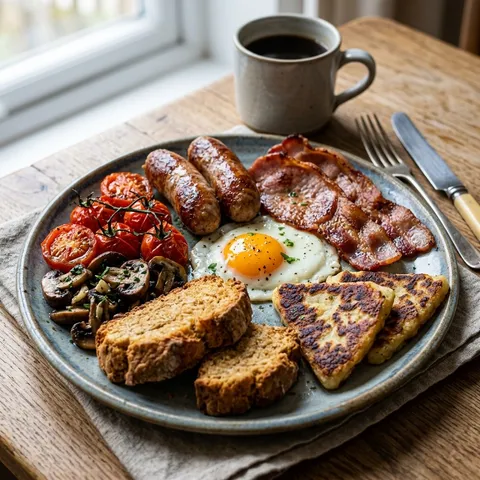 British & Irish Lens Verified Images are for illustrative purposes only, may be inaccurate, and do not guarantee the presence or absence of specific ingredients.
 Ulster Fry
Northern Ireland's legendary fry-up: bacon, sausages, eggs, black pudding, potato bread, and soda bread — fuller and heartier than its English cousin.
 British & Irish Lens Verified Images are for illustrative purposes only, may be inaccurate, and do not guarantee the presence or absence of specific ingredients.
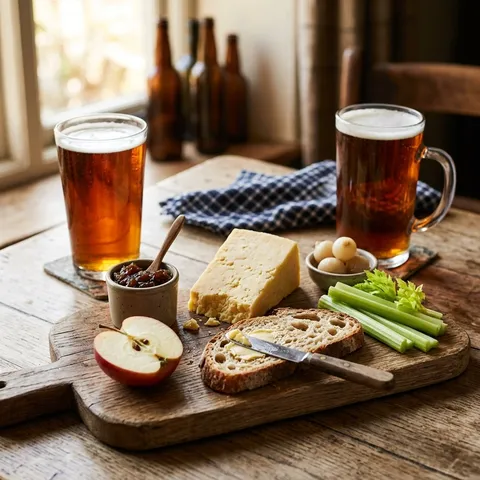
 Ploughman's Lunch
Sharp aged cheddar, crusty bread, tangy Branston pickle, and a boiled egg — a beloved no-cook British lunch that's greater than the sum of its parts.
 British & Irish Lens Verified Images are for illustrative purposes only, may be inaccurate, and do not guarantee the presence or absence of specific ingredients.
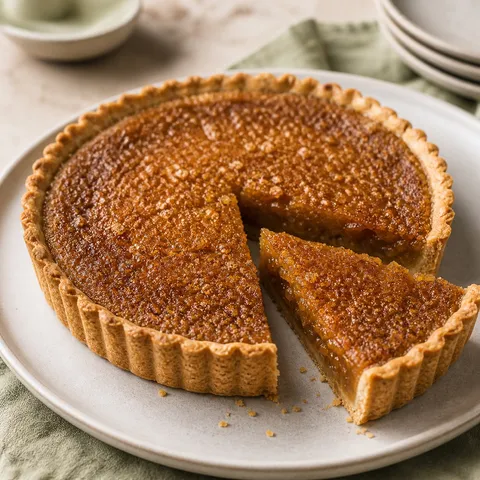
 Treacle Tart
A sweet, sticky tart filled with golden syrup and fresh breadcrumbs, with a gently caramelized top and a hint of lemon — Harry Potter's favorite dessert.