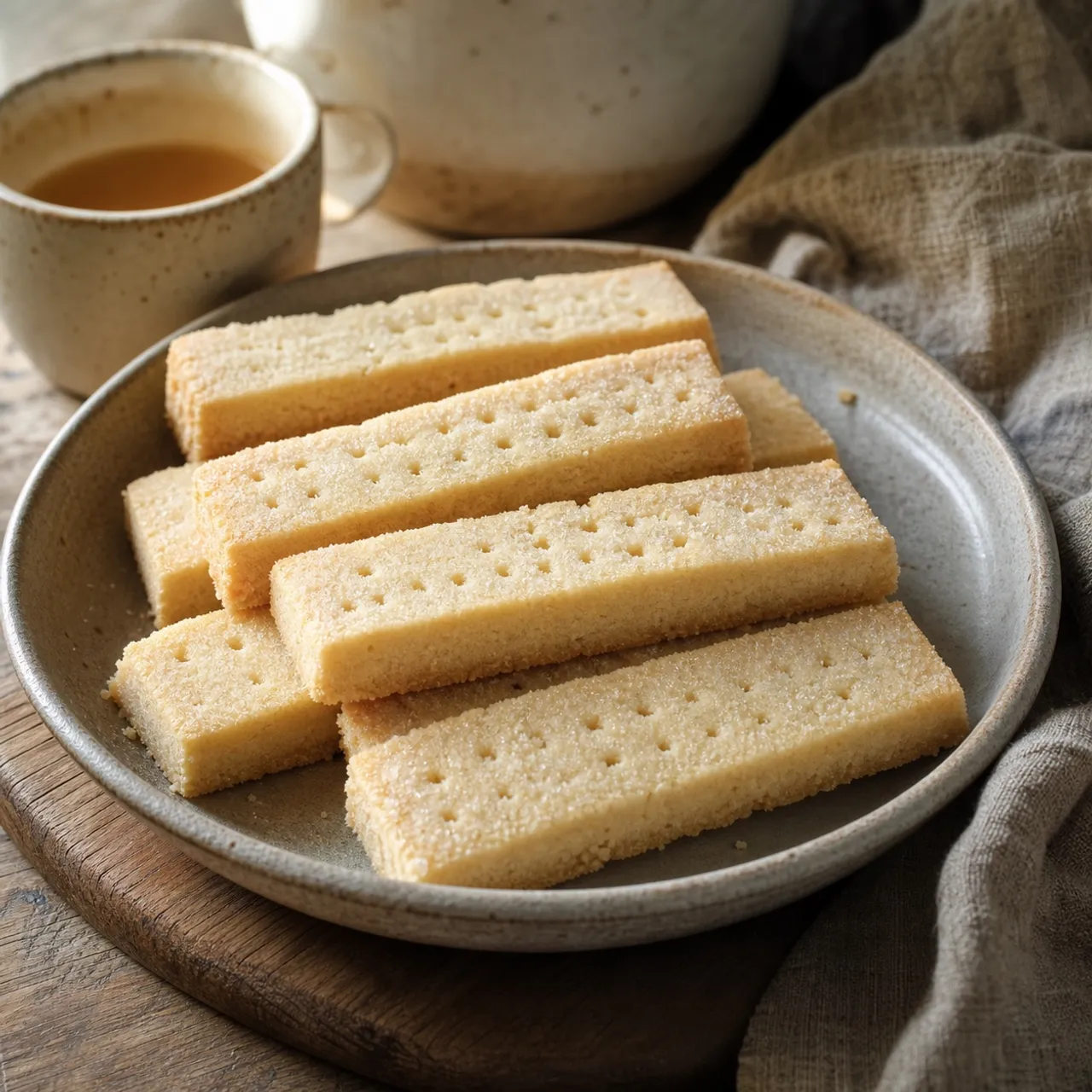
 British & Irish Images are for illustrative purposes only, may be inaccurate, and do not guarantee the presence or absence of specific ingredients.
 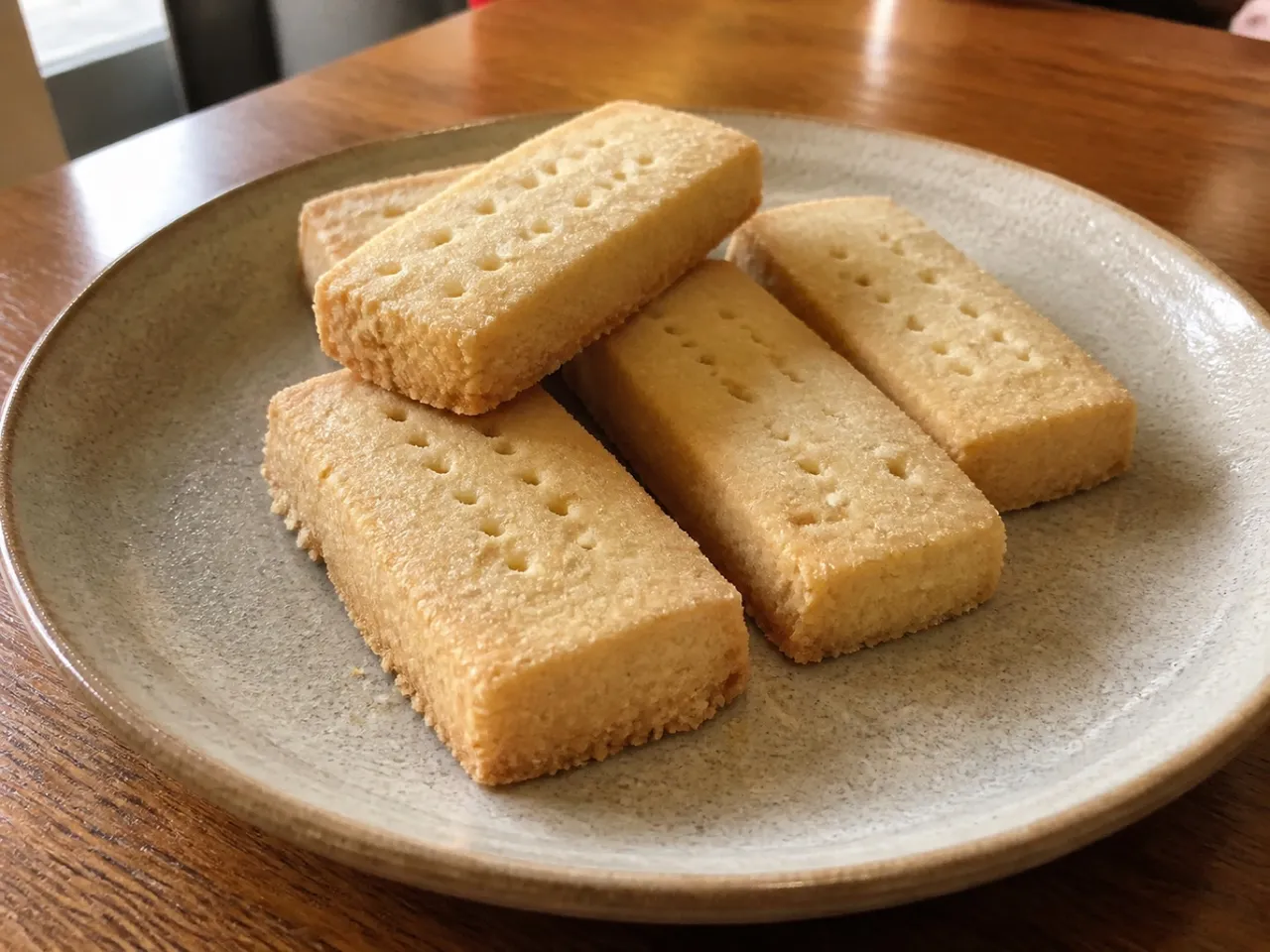 Serving Images are for illustrative purposes only, may be inaccurate, and do not guarantee the presence or absence of specific ingredients.
 Shortbread
Scotland's legendary three-ingredient biscuit — pure butter, flour, and sugar pressed together and baked until pale golden, sandy, and gloriously rich.
Contains common allergens
In the app, Listahan checks these against your household automatically.
Instructions
8 steps- 1
Cream the butter and sugar together until pale and light, but not overly fluffy.
- 2
Sift in the plain flour, rice flour, and salt, and work them in with your hands until the mixture comes together into a smooth dough; avoid overworking it.
- 3
Press the dough evenly into a greased 20cm square tin or shape into a round on a lined baking tray.
- 4
Prick all over with a fork and, if making a round, crimp the edges decoratively.
- 5
Chill for 20 minutes to firm up.
- 6
Bake at 150C (300F) for 35 to 40 minutes, until pale gold and just firm to the touch; it should not brown.
- 7
While still warm, mark into fingers or wedges with a sharp knife and sprinkle with a little extra caster sugar.
- 8
Let cool completely in the tin before breaking along the scored lines.
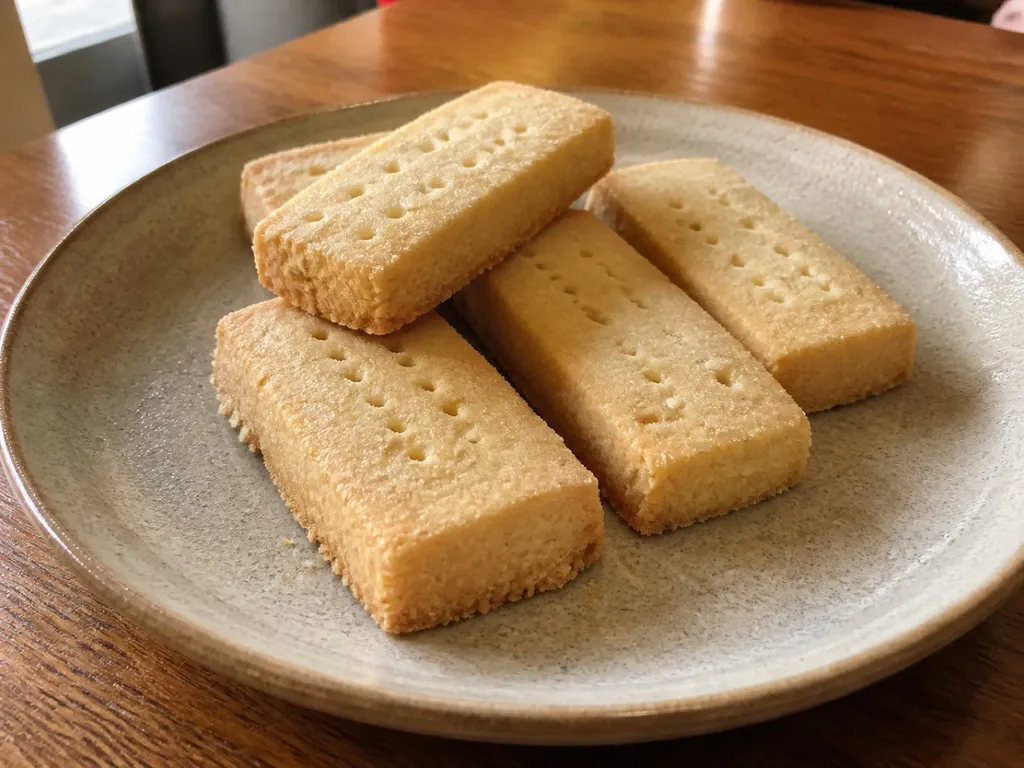 Images are for illustrative purposes only, may be inaccurate, and do not guarantee the presence or absence of specific ingredients.
 Listahan Family Score™
72/100
Good fit for most families
Score reflects how well this recipe fits a typical busy household. In the app, your Family Score is personalized to your household's allergens, kids, and pantry.
Nutrition
per serving415
Calories
5 g
Protein
46 g
Carbs
24 g
Fat
Estimated per serving. Actual values depend on the brands and portions you use.
Listahan cooking guide
Chef notes & practical guide
Technique notes, ingredient swaps, serve-alongside ideas, storage guidance, and equipment for this recipe.
Cultural context
Scottish shortbread traces its origins to medieval biscuit bread — twice-baked leftover bread dough enriched with butter — and by the 16th century had evolved into the rich, crumbly shortbread associated with Scotland today. Mary Queen of Scots is said to have been particularly fond of it. The word 'short' in baking refers to a high fat-to-flour ratio that inhibits gluten formation and produces a tender, crumbling texture rather than a chewy one — shortbread is perhaps the purest expression of that principle, containing nothing but butter, flour, and sugar.
Listahan note
This version uses a higher ratio of butter than many recipes to lean into the sandy, melt-in-the-mouth texture that makes shortbread impossible to eat just one piece of.
Technique cues
- Beat the butter and sugar together until genuinely pale and fluffy before adding the flour; this step aerates the fat slightly and is the difference between a dense, hard biscuit and one with a delicate, crumbling snap.
- Bake at a low temperature — 325 degrees at most — to dry the shortbread out gently without browning it; a golden edge is the maximum, and any darker color turns the flavor bitter and the texture hard.
- Score the shortbread into fingers or rounds before baking rather than after; warm shortbread is too fragile to cut cleanly and crumbles at the slightest pressure.
Kitchen flow
- Parallel prep
- Line the baking tin and pre-score the shortbread while the oven comes up to temperature so it goes in promptly and holds its shape from the cold butter.
- Make-ahead
- Raw shortbread dough can be wrapped and refrigerated for up to three days, or frozen for two months; slice and bake straight from frozen, adding five minutes to the baking time.
- Leftover move
- Crumbled leftover shortbread makes an excellent base for a cheesecake or trifle in place of graham crackers, adding a richer, butterier flavor.
- Cleanup rhythm
- Shortbread dough is pure butter and flour — the mixing bowl wipes clean with a paper towel before washing, and the baking tin needs only a light wipe if lined with parchment.
Ingredient brief
Role, handling, and swap guidance for each key ingredient.
unsalted butter
fat base and primary flavor
Purpose: Butter is the defining flavor of shortbread; it must be high quality because there are no other ingredients to hide behind — the butterscotch richness is the whole point.
Handling: Soften to room temperature until it is pliable but still cool to the touch; overly soft butter produces a greasy, spreading dough.
Adaptation: European-style butter with a higher fat content produces a slightly richer result; do not substitute with margarine or the texture will not be correct.
plain flour
structure without toughness
Purpose: All-purpose flour provides enough structure to hold the shortbread together while the high butter content inhibits enough gluten formation to keep it crumbly rather than biscuit-tough.
Handling: Weigh it for accuracy; volume measurements vary too much for a recipe where proportions are everything.
Adaptation: Replacing one-quarter of the flour with rice flour or cornstarch adds extra crunch and a slightly sandier texture — a classic Scottish variation.
caster sugar
sweetness and texture
Purpose: Fine caster sugar dissolves more completely into the butter than granulated, producing a smoother, less gritty finish in the baked biscuit.
Handling: Cream thoroughly with the butter until no grittiness is felt between the fingers.
Adaptation: Powdered sugar creates an even finer, more delicate crumb; granulated sugar works but leaves a slightly sandy finish.
fine salt
flavor enhancer
Purpose: A small pinch of salt is essential in shortbread despite its sweetness; it sharpens the butterscotch flavor of the butter and prevents the biscuit from tasting flat and one-dimensional.
Handling: Add directly to the flour before combining so it distributes evenly through the dough.
Adaptation: Flaky sea salt scattered over the top just before baking gives a modern salted-butter shortbread effect with a pleasant mineral crunch.
Technique notes
- Chilling the formed shortbread in the tin for 30 minutes before baking is the single best step to improve the result: the butter firms back up, the dough holds its shape, and the finished biscuit has sharper edges and a more delicate interior.
- Pricking the surface all over with a fork before baking is not just decorative — it allows steam to escape and prevents the shortbread from puffing up or developing large bubbles.
- Let the shortbread cool completely in the tin before moving it; shortbread is extremely fragile when warm and will shatter along score lines if handled too soon.
Ingredient swaps
- Gluten-free direction
- Replace plain flour with a 1:1 gluten-free flour blend and add a tablespoon of cornstarch; the result is slightly more crumbly than the original but very close in texture and flavor.
- Flavor variation
- Add the finely grated zest of one lemon or orange to the butter and sugar mixture for a citrus shortbread; or press a small piece of candied ginger into each scored finger before baking.
- Dairy-free direction
- Use a high-quality vegan butter stick that is at least 80 percent fat; lower-fat spreads contain too much water and produce a dense, tough result instead of a crumble.
Serve alongside
- Lemon curd for dipping
- Fresh raspberry coulis
- Scottish cheese board with chutney
- Scotch whisky — a light Speyside malt
- Afternoon tea, particularly Darjeeling
- Hot chocolate
Serving suggestions only — check pairings for your household's allergens.
Storage & reheating
- Shortbread keeps in an airtight tin at room temperature for up to two weeks and actually improves in texture after the first day as the butter firms fully.
- Do not refrigerate — cold air draws moisture into the biscuit and softens the characteristic crunch; freeze instead for longer storage up to three months.
Equipment
- Stand mixer or hand mixer for thoroughly creaming the butter without overheating it
- 8-inch square baking tin for a standard slab that scores neatly into fingers
- Fork for docking the surface before baking
- Parchment paper for clean release from the tin
Make this household-aware
Listahan Pro checks this recipe against your household's allergens, finds pantry-aware swaps, builds the shopping list, and helps you plan the week around it.
Plan it in Listahan
Add Shortbread to your week, check it against your household's allergens, and build the shopping list automatically.
More British & Irish recipes
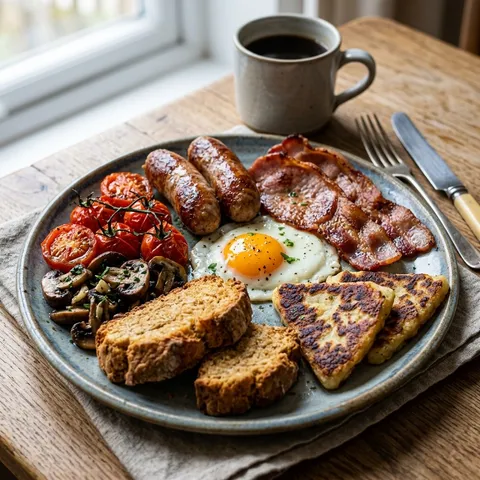 British & Irish Lens Verified Images are for illustrative purposes only, may be inaccurate, and do not guarantee the presence or absence of specific ingredients.
 Ulster Fry
Northern Ireland's legendary fry-up: bacon, sausages, eggs, black pudding, potato bread, and soda bread — fuller and heartier than its English cousin.
 British & Irish Lens Verified Images are for illustrative purposes only, may be inaccurate, and do not guarantee the presence or absence of specific ingredients.
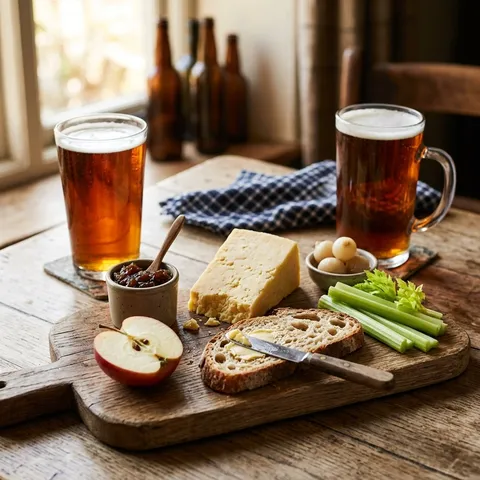
 Ploughman's Lunch
Sharp aged cheddar, crusty bread, tangy Branston pickle, and a boiled egg — a beloved no-cook British lunch that's greater than the sum of its parts.
 British & Irish Lens Verified Images are for illustrative purposes only, may be inaccurate, and do not guarantee the presence or absence of specific ingredients.
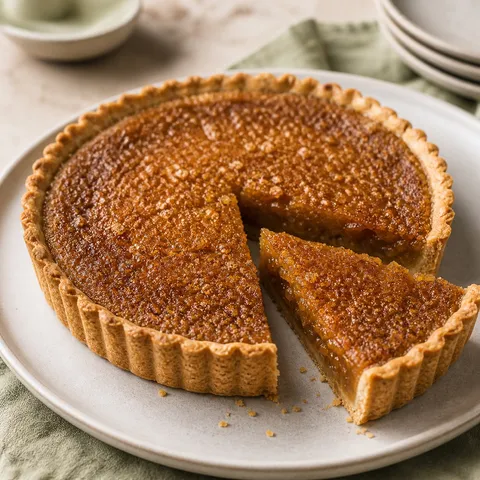
 Treacle Tart
A sweet, sticky tart filled with golden syrup and fresh breadcrumbs, with a gently caramelized top and a hint of lemon — Harry Potter's favorite dessert.