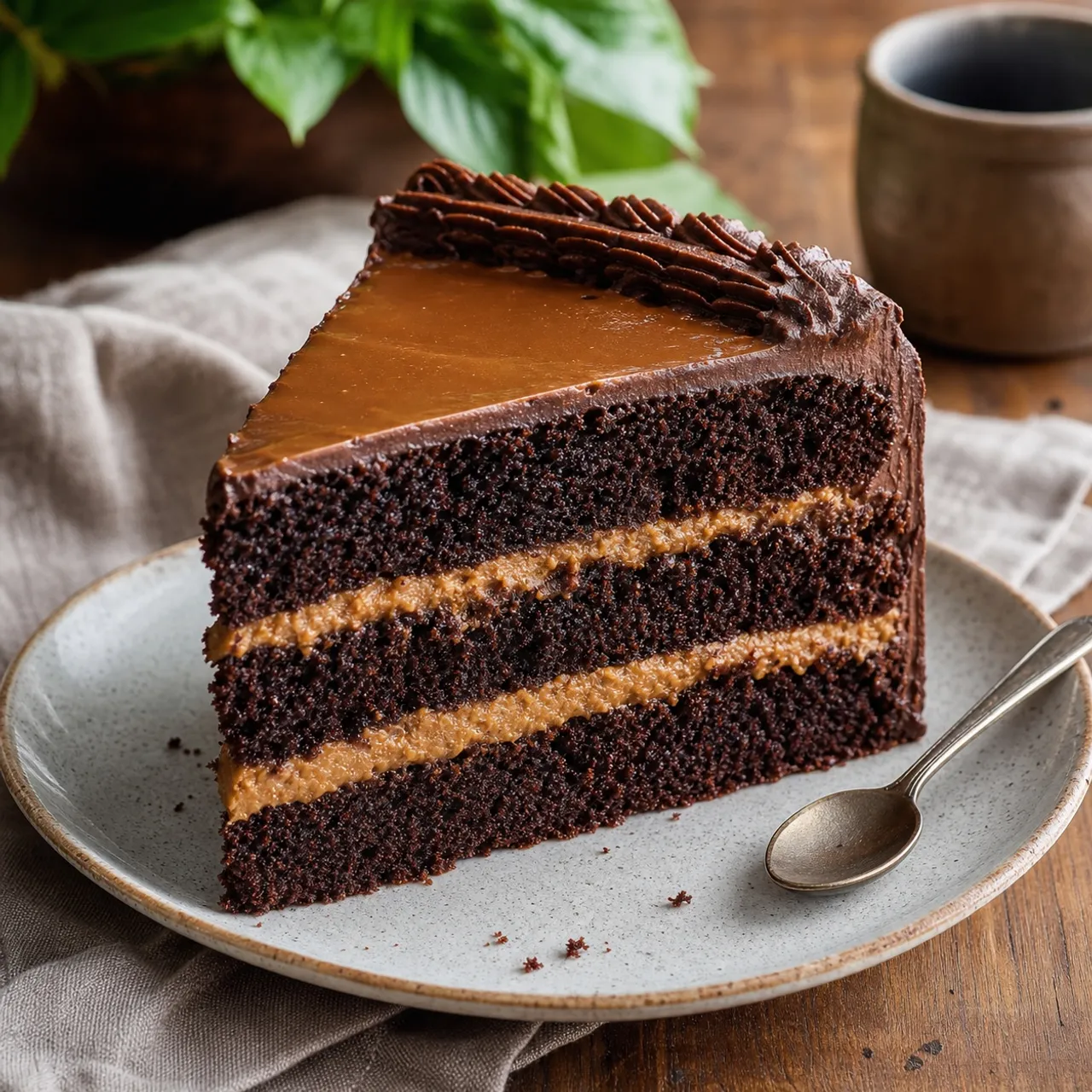
 Desserts Images are for illustrative purposes only, may be inaccurate, and do not guarantee the presence or absence of specific ingredients.
 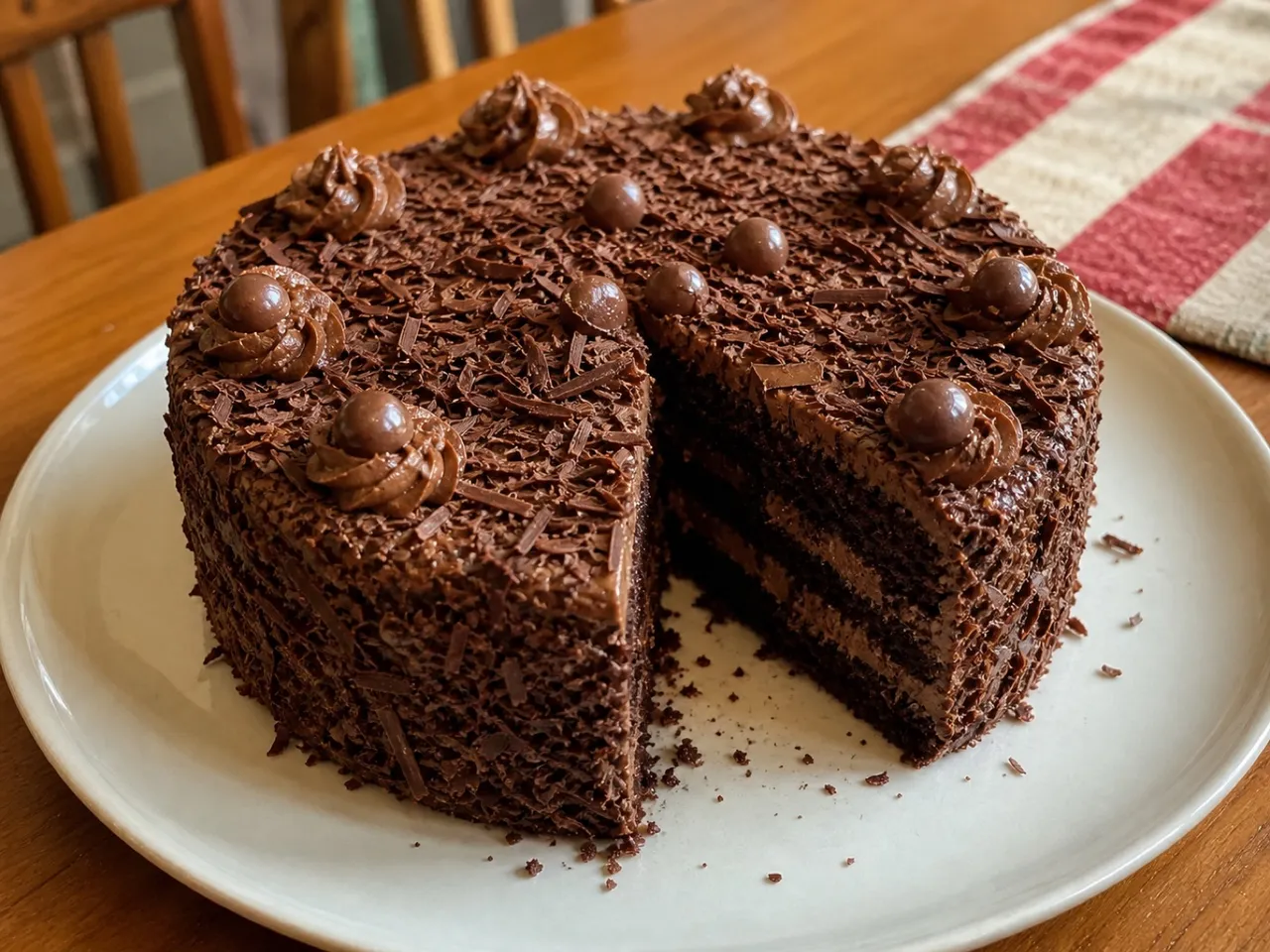 Serving Images are for illustrative purposes only, may be inaccurate, and do not guarantee the presence or absence of specific ingredients.
 Chocolatetown Special Cake
A rich, tender chocolate layer cake made extra moist with buttermilk and a deep cocoa flavor.
Contains common allergens
In the app, Listahan checks these against your household automatically.
Instructions
5 steps- 1
In a small bowl, combine the cocoa powder and boiling water, stir until smooth, and set aside. Preheat the oven to 350°F (175°C).
- 2
Grease and flour two 9-inch round cake pans. (Avoid 8-inch pans, as the batter will overflow.)
- 3
In a large bowl, cream the shortening, sugar, and vanilla until light and fluffy. Add the eggs and beat well.
- 4
In a separate bowl, combine the flour, baking soda, and salt. Add this alternately with the buttermilk to the creamed mixture, mixing until smooth. Blend in the reserved cocoa mixture, then divide the batter between the prepared pans.
- 5
Bake for 35 to 40 minutes, until a toothpick inserted in the center comes out clean. Cool the layers completely, then frost with the icing of your choice.
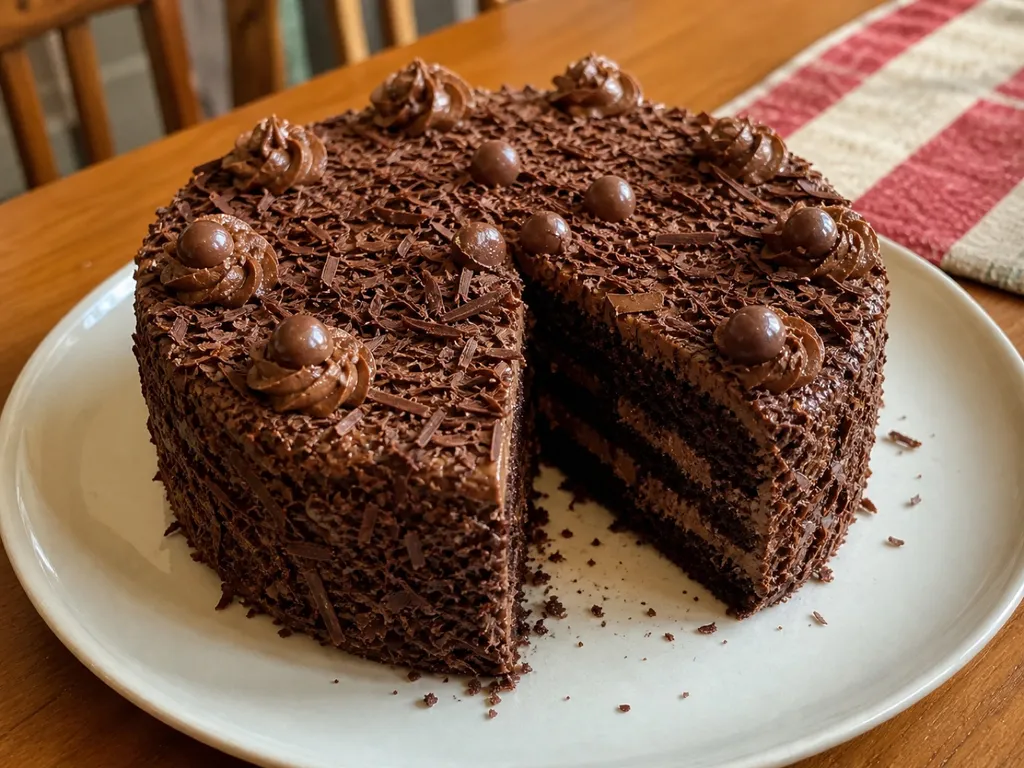 Images are for illustrative purposes only, may be inaccurate, and do not guarantee the presence or absence of specific ingredients.
 Listahan Family Score™
75/100
Good fit for most families
Score reflects how well this recipe fits a typical busy household. In the app, your Family Score is personalized to your household's allergens, kids, and pantry.
Nutrition
per serving220
Calories
5 g
Protein
29 g
Carbs
10 g
Fat
Estimated per serving. Actual values depend on the brands and portions you use.
Listahan cooking guide
Chef notes & practical guide
Technique notes, ingredient swaps, serve-alongside ideas, storage guidance, and equipment for this recipe.
Cultural context
This cake belongs to a family of American cocoa cakes that were developed in partnership with chocolate manufacturers in the early-to-mid 20th century. The Hershey Company, headquartered in Hershey, Pennsylvania -- nicknamed Chocolatetown -- produced this style of recipe as part of its promotional cookbook campaign, which began in earnest in the 1930s. Hershey cocoa-based cake recipes became embedded in American home baking culture precisely because cocoa powder (rather than melted chocolate) was shelf-stable, affordable, and produced a consistently moist, deeply chocolate crumb when combined with buttermilk.
Listahan note
This version uses the bloom technique -- dissolving cocoa in boiling water before combining with other ingredients -- which deepens the chocolate flavor significantly without adding more cocoa.
Technique cues
- Blooming the cocoa in boiling water before adding it to the batter dissolves the cocoa solids fully and activates flavor compounds that do not develop when cocoa powder is incorporated dry; the resulting flavor is noticeably deeper and less raw.
- Buttermilk reacts with the baking soda to produce carbon dioxide for lift, but it also keeps the crumb tender by inhibiting gluten formation through its acidity; do not substitute regular milk without also adding a tablespoon of lemon juice or white vinegar per cup.
- Shortening (rather than butter) was the original fat choice because it produces a uniformly tender crumb that stays soft at room temperature for days; butter-based versions are richer but stale faster -- choose based on whether the cake is for same-day serving or a multi-day event.
Kitchen flow
- Parallel prep
- While the cocoa blooms in boiling water and cools, cream the shortening and sugar and prepare the pans; the batter comes together quickly once the cocoa is ready.
- Make-ahead
- The unfrosted cake layers can be baked 1-2 days ahead, wrapped tightly in plastic wrap, and stored at room temperature; frost the day of serving.
- Leftover move
- Leftover slices keep well at room temperature under a cake dome for 2-3 days; a square of bread placed cut-side-down against the exposed crumb keeps it from drying out.
- Cleanup rhythm
- Wipe out the bowl used to bloom the cocoa with a dry paper towel before washing -- dried cocoa paste cleans off a dry surface more easily than when wet water is added first.
Ingredient brief
Role, handling, and swap guidance for each key ingredient.
1/2 cup unsweetened cocoa powder
primary flavor and color
Purpose: Cocoa powder gives the cake its dark color and intense chocolate note; the bloom step is what converts a pleasant chocolate cake into a deeply flavored one.
Handling: Add to a heatproof bowl and pour the boiling water directly over it; stir immediately to form a smooth paste, then cool slightly before adding to the batter.
Adaptation: Dutch-process cocoa produces a darker, milder cake (not as acidic); if using it, reduce baking soda by a quarter teaspoon.
1 1/2 cups buttermilk
tenderizer and leavening activator
Purpose: Buttermilk's acidity reacts with baking soda, creating lift, and its fat and acid together inhibit gluten development for a soft, moist crumb.
Handling: Use cold from the refrigerator; add alternately with the flour for more even incorporation.
Adaptation: Mix 1 tablespoon of white vinegar or lemon juice into 1 1/2 cups of whole milk and let stand for 5 minutes for an effective buttermilk substitute.
1/2 cup shortening
fat and crumb tenderness
Purpose: Shortening has no water content (unlike butter, which is about 16-20% water), so it produces a consistently soft, shelf-stable crumb.
Handling: Cream at room temperature with the sugar until the mixture lightens in color and appears fluffy, about 3-4 minutes.
Adaptation: Room-temperature unsalted butter replaces shortening in equal measure for a richer, butterier flavor at the cost of a slightly denser crumb.
1 1/4 tsp baking soda
chemical leavening
Purpose: Baking soda reacts with the acidity from the buttermilk and the cocoa to generate the carbon dioxide bubbles that give the cake its rise.
Handling: Add with the dry ingredients; stir or sift briefly to ensure even distribution before alternating with the buttermilk.
Adaptation: No reliable direct substitute for baking soda in a buttermilk cake; if only baking powder is available, use 3 times the quantity and replace buttermilk with whole milk.
2 large eggs
structure and emulsification
Purpose: Eggs bind the fat and liquid components into a stable emulsion and provide the protein structure that prevents the cake from collapsing as it cools.
Handling: Add one at a time to the creamed shortening-sugar mixture, beating well after each addition for a smooth, evenly emulsified batter.
Adaptation: A commercial egg replacer or 3 tablespoons of aquafaba per egg can be used for an egg-free version, though the crumb will be slightly denser.
Technique notes
- Alternate adding the dry ingredients and buttermilk in three flour additions and two liquid additions (flour-buttermilk-flour-buttermilk-flour), starting and ending with flour; this method maintains the emulsion without overworking the batter.
- The batter will appear quite thin after all ingredients are combined -- this is correct; the high buttermilk content produces a pourable batter that bakes into a moist cake, not a stiff one.
- Test doneness at the earliest suggested time; cocoa cakes can look done on the surface while still being underbaked in the center -- a clean toothpick inserted at the center is the most reliable indicator.
Ingredient swaps
- Dairy-free direction
- Replace buttermilk with a plant-based milk (oat or almond) plus 1 tablespoon of apple cider vinegar per cup; replace shortening with refined coconut oil at the same quantity.
- Gluten-free direction
- Replace all-purpose flour with a 1-to-1 gluten-free baking blend; add an extra egg to compensate for the reduced structural support from gluten.
- Butter instead of shortening
- Substitute unsalted butter at the same quantity for richer flavor; the crumb will be slightly denser and the cake is best eaten within 2 days.
Serve alongside
- vanilla buttercream or chocolate ganache frosting
- fresh whipped cream and sliced strawberries
- a scoop of coffee ice cream
- powdered sugar and a few raspberries for a simpler presentation
- cold whole milk
- black coffee or Americano
- a glass of tawny port
Serving suggestions only — check pairings for your household's allergens.
Storage & reheating
- Store frosted cake covered at room temperature for up to 3 days; a cake dome or overturned bowl works better than plastic wrap for preserving the frosting.
- Refrigerate if the frosting is cream-based; bring to room temperature for 30 minutes before serving as cold cake loses its moisture perception.
- Freeze unfrosted cake layers individually, wrapped in plastic wrap then foil, for up to 2 months; thaw at room temperature overnight.
Equipment
- two 9-inch round cake pans or one 9x13-inch pan
- stand mixer or hand mixer
- heatproof bowl for blooming the cocoa
- cooling rack
Make this household-aware
Listahan Pro checks this recipe against your household's allergens, finds pantry-aware swaps, builds the shopping list, and helps you plan the week around it.
Plan it in Listahan
Add Chocolatetown Special Cake to your week, check it against your household's allergens, and build the shopping list automatically.
More Desserts recipes
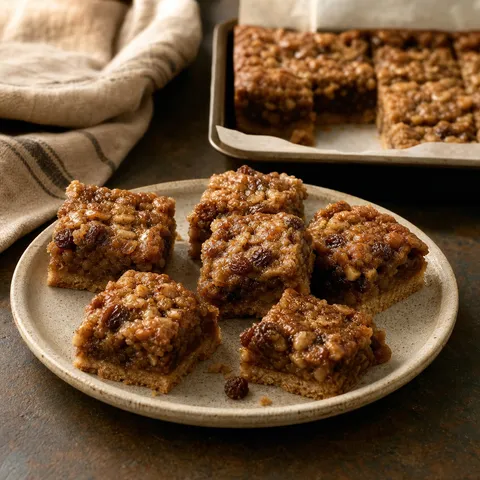 Desserts Lens Verified Images are for illustrative purposes only, may be inaccurate, and do not guarantee the presence or absence of specific ingredients.
 Buttertart Squares
Chewy butter tart squares with a shortbread base and a gooey brown sugar, raisin, and walnut topping.
 Desserts Lens Verified Images are for illustrative purposes only, may be inaccurate, and do not guarantee the presence or absence of specific ingredients.
 Amber and Zach's Kisses
Light, crisp meringue kisses that melt in your mouth and make a pretty edible decoration.
 Desserts Lens Verified Images are for illustrative purposes only, may be inaccurate, and do not guarantee the presence or absence of specific ingredients.
 Passover Flourless Chocolate Cake
A rich, dense flourless chocolate cake with no flour, matzo meal, or leavening — a naturally kosher-for-Passover dessert perfect for the seder table.