 Desserts Images are for illustrative purposes only, may be inaccurate, and do not guarantee the presence or absence of specific ingredients.
  Serving Images are for illustrative purposes only, may be inaccurate, and do not guarantee the presence or absence of specific ingredients.
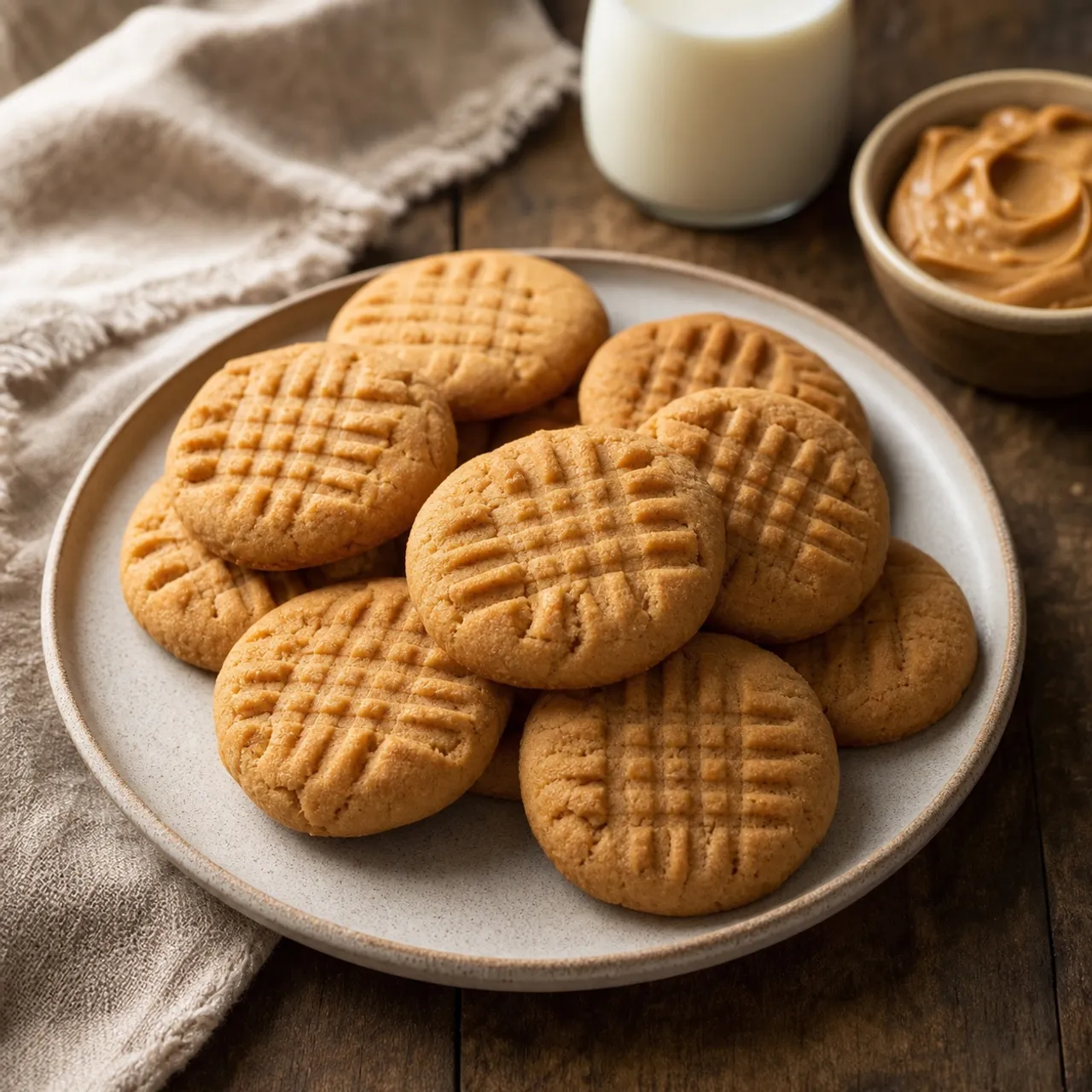
 Irresistible Peanut Butter Cookies
Soft, crisscross-topped peanut butter cookies that are rich and tender.
Contains common allergens
In the app, Listahan checks these against your household automatically.
Good to know
- Ready in under 30 minutes
Matched from this dish's own ingredients and timing. Browse more: 30-minute meals
Instructions
6 steps- 1
Preheat the oven to 375°F (190°C).
- 2
In a large bowl, combine the peanut butter, shortening, brown sugar, milk, vanilla, and egg. Beat at medium speed with an electric mixer until well blended and creamy.
- 3
In a separate bowl, whisk together the flour, salt, and baking soda, then add to the creamed mixture at low speed and mix just until blended.
- 4
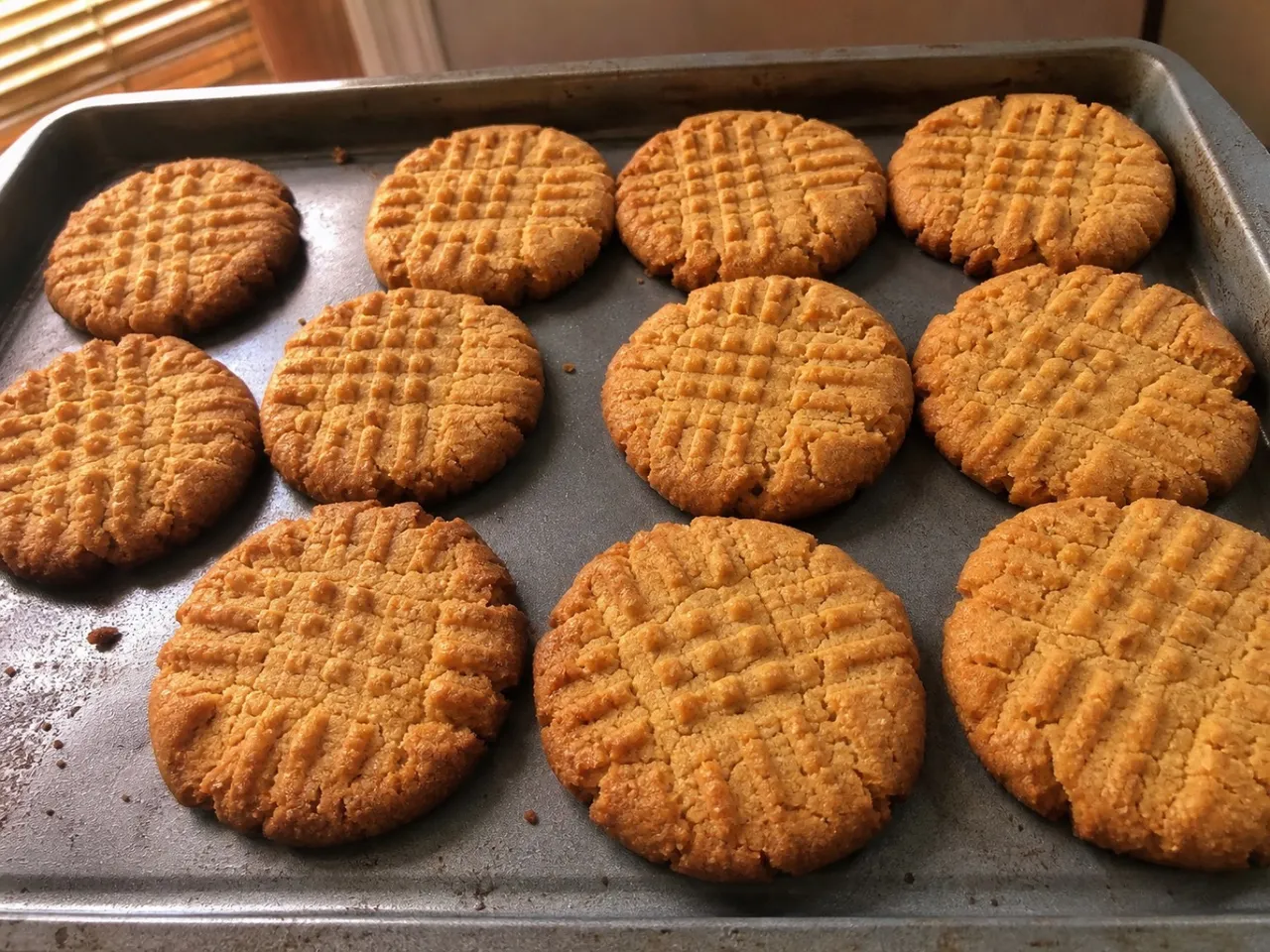
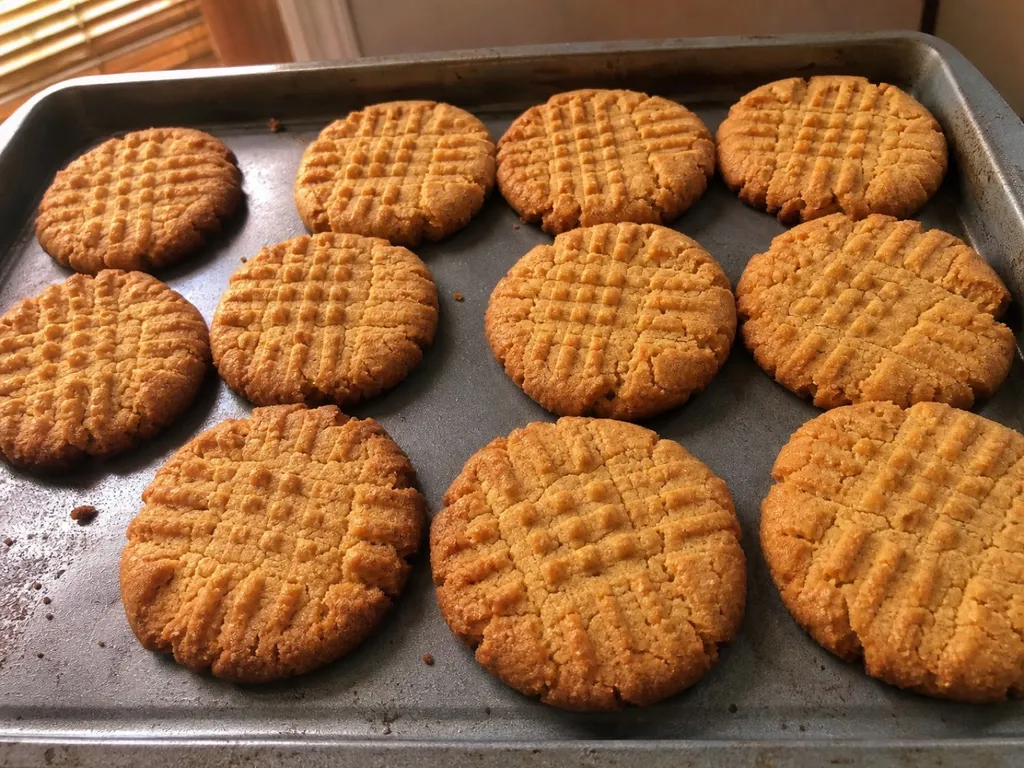
Drop the dough by heaping teaspoonfuls 2 inches apart onto an ungreased baking sheet, then flatten each slightly in a crisscross pattern with the tines of a fork.
- 5
Bake for 7 to 8 minutes, until set and just beginning to brown at the edges.
- 6
Cool the cookies on the baking sheet for 2 minutes before transferring to a wire rack to cool completely.
 Images are for illustrative purposes only, may be inaccurate, and do not guarantee the presence or absence of specific ingredients.
 Listahan Family Score™
75/100
Good fit for most families
Score reflects how well this recipe fits a typical busy household. In the app, your Family Score is personalized to your household's allergens, kids, and pantry.
Nutrition
per serving110
Calories
2 g
Protein
13 g
Carbs
6 g
Fat
Estimated per serving. Actual values depend on the brands and portions you use.
Listahan cooking guide
Chef notes & practical guide
Technique notes, ingredient swaps, serve-alongside ideas, storage guidance, and equipment for this recipe.
Cultural context
Peanut butter cookies appeared in American baking shortly after the commercial production of peanut butter was standardized in the 1920s. The cross-hatch fork pattern pressed into the top of each cookie became a standard visual identifier in American cookbooks of the 1930s and is not merely decorative; it flattens the naturally dense dough so the center bakes through without overbrowning the edges. Brown sugar replaced granulated sugar in many mid-century recipes because it softens the cookie and complements the roasted peanut flavor.
Listahan note
This version uses shortening alongside peanut butter to produce a crispier, more stable cookie that holds its shape and fork-press pattern without spreading too thin or turning cakey.
Technique cues
- Brown sugar absorbs more moisture than white sugar, which keeps peanut butter cookies chewy at the center even after they cool; using all white sugar produces a crisper, more crumbly result.
- Shortening creates a firmer dough than butter because it has no water content to generate steam; this is why peanut butter cookies made with shortening hold the fork-press marks sharply while butter-based versions can spread flat.
- Chilling the portioned balls for 15 minutes before baking is optional but slows spread in the oven, yielding a thicker cookie with a better texture gradient between a set edge and a slightly chewy center.
Kitchen flow
- Parallel prep
- Preheat the oven and line baking sheets with parchment while creaming the fat and sugar, so the first batch can go in as soon as the dough is ready.
- Make-ahead
- Roll dough into balls, place on a sheet pan, freeze until solid, then transfer to a zip-lock bag; bake from frozen adding 2-3 minutes to the bake time.
- Leftover move
- Sandwich two cooled cookies around a scoop of vanilla or chocolate ice cream for a quick ice cream sandwich, or crumble over banana pudding.
- Cleanup rhythm
- Wipe the fork with a damp cloth between presses if dough sticks to the tines; a tiny dab of vegetable oil on the fork tines prevents most sticking.
Ingredient brief
Role, handling, and swap guidance for each key ingredient.
3/4 cup creamy peanut butter
primary flavor and fat source
Purpose: Peanut butter provides the dominant flavor, adds fat that tenderizes the crumb, and contributes protein that helps set the cookie's structure.
Handling: Stir natural peanut butter thoroughly before measuring to redistribute separated oil; commercial stabilized peanut butter can be measured straight from the jar.
Adaptation: Almond butter or sunflower seed butter (same volume) works for nut-free or peanut-free versions; the flavor profile changes but the texture remains similar.
1 1/4 cups packed brown sugar
sweetener and moisture retention
Purpose: Packed brown sugar's molasses content keeps the cookies from drying out and enhances the roasted-nut flavor of the peanut butter.
Handling: Pack firmly into the measuring cup to avoid undercounting, which would produce a less moist, less flavorful cookie.
Adaptation: Light or dark brown sugar both work; dark brown sugar adds a deeper molasses note.
1/2 cup shortening
fat and structure stabilizer
Purpose: All-fat shortening keeps the dough firm enough to roll into balls and hold the fork pattern without softening from heat before the cookies fully set.
Handling: Use at room temperature for smooth incorporation; measure by the spoon-and-level method, not by scooping from the can.
Adaptation: Unsalted butter (same volume, softened) replaces shortening for a richer flavor but produces a flatter, more spread-out cookie.
1 egg
binder and structure
Purpose: One egg provides just enough protein to bind the dough and give the cookies structural integrity without making them cakey.
Handling: Use a room-temperature egg for better incorporation into the creamed fat and sugar.
Adaptation: One flax egg (1 Tbsp ground flaxseed plus 3 Tbsp water) can bind the dough in a vegan version, though the cookie will be more crumbly.
3/4 tsp baking soda
leavening
Purpose: Baking soda reacts with the small amount of acidity in the peanut butter and brown sugar to give the cookies a slight lift without making them puffy.
Handling: Sift with the flour and salt so it distributes evenly and does not leave bitter spots.
Adaptation: No direct substitute; without baking soda the cookies will be denser and will not brown as evenly.
Technique notes
- Press the fork in two perpendicular directions to create the classic crosshatch pattern, applying gentle, even pressure so the ball flattens uniformly rather than cracking on one side.
- Pull cookies from the oven when the edges are just set but the center still looks slightly underdone; they firm up to a perfect chewy-crisp balance as they cool on the pan.
- Space balls at least 2 inches apart on the baking sheet; even with shortening, the dough spreads a moderate amount and needs room.
Ingredient swaps
- Peanut-free direction
- Use sunflower seed butter (same volume) for a peanut-free version; the cookies may take on a slightly greenish tint when baked due to the chlorogenic acid in sunflower seeds, which is harmless.
- Gluten-free direction
- Replace all-purpose flour with a 1:1 gluten-free baking flour blend; alternatively, the flourless peanut butter cookie method (1 cup peanut butter, 1 cup sugar, 1 egg) produces a naturally gluten-free cookie with a fudgier texture.
- Vegan direction
- Use a vegan butter stick or shortening and replace the egg with a flax egg; the cookies will spread a bit more and be slightly more fragile when warm.
Serve alongside
- cold whole milk or oat milk for dunking
- vanilla ice cream sandwiched between two cookies
- dark chocolate squares for a peanut butter cup pairing
- cold whole milk or chocolate milk
- hot black coffee or espresso
Serving suggestions only — check pairings for your household's allergens.
Storage & reheating
- Store in an airtight container at room temperature for up to 5 days; a slice of bread in the container keeps cookies soft.
- Refrigerating makes these cookies firmer and crunchier, which some people prefer.
- Freeze baked cookies in a zip-lock bag for up to 3 months; thaw at room temperature for 20 minutes.
Equipment
- stand mixer or hand mixer for creaming
- baking sheets lined with parchment
- cookie scoop for uniform portions
- fork for the crosshatch press
Make this household-aware
Listahan Pro checks this recipe against your household's allergens, finds pantry-aware swaps, builds the shopping list, and helps you plan the week around it.
Plan it in Listahan
Add Irresistible Peanut Butter Cookies to your week, check it against your household's allergens, and build the shopping list automatically.
More Desserts recipes
 Desserts Lens Verified Images are for illustrative purposes only, may be inaccurate, and do not guarantee the presence or absence of specific ingredients.
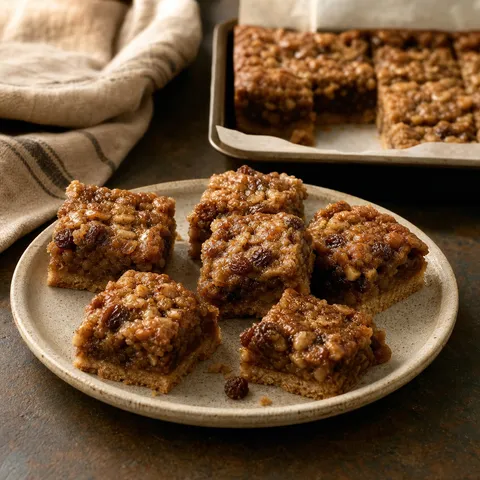
 Buttertart Squares
Chewy butter tart squares with a shortbread base and a gooey brown sugar, raisin, and walnut topping.
 Desserts Lens Verified Images are for illustrative purposes only, may be inaccurate, and do not guarantee the presence or absence of specific ingredients.
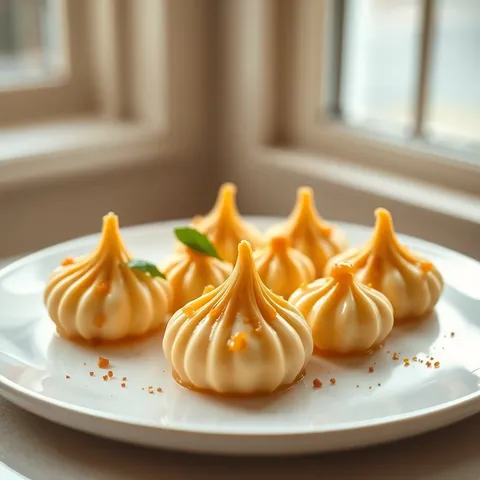
 Amber and Zach's Kisses
Light, crisp meringue kisses that melt in your mouth and make a pretty edible decoration.
 Desserts Lens Verified Images are for illustrative purposes only, may be inaccurate, and do not guarantee the presence or absence of specific ingredients.
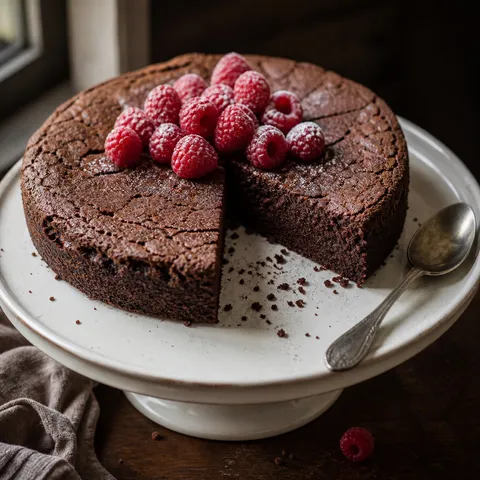
 Passover Flourless Chocolate Cake
A rich, dense flourless chocolate cake with no flour, matzo meal, or leavening — a naturally kosher-for-Passover dessert perfect for the seder table.