 Desserts Images are for illustrative purposes only, may be inaccurate, and do not guarantee the presence or absence of specific ingredients.
  Serving Images are for illustrative purposes only, may be inaccurate, and do not guarantee the presence or absence of specific ingredients.
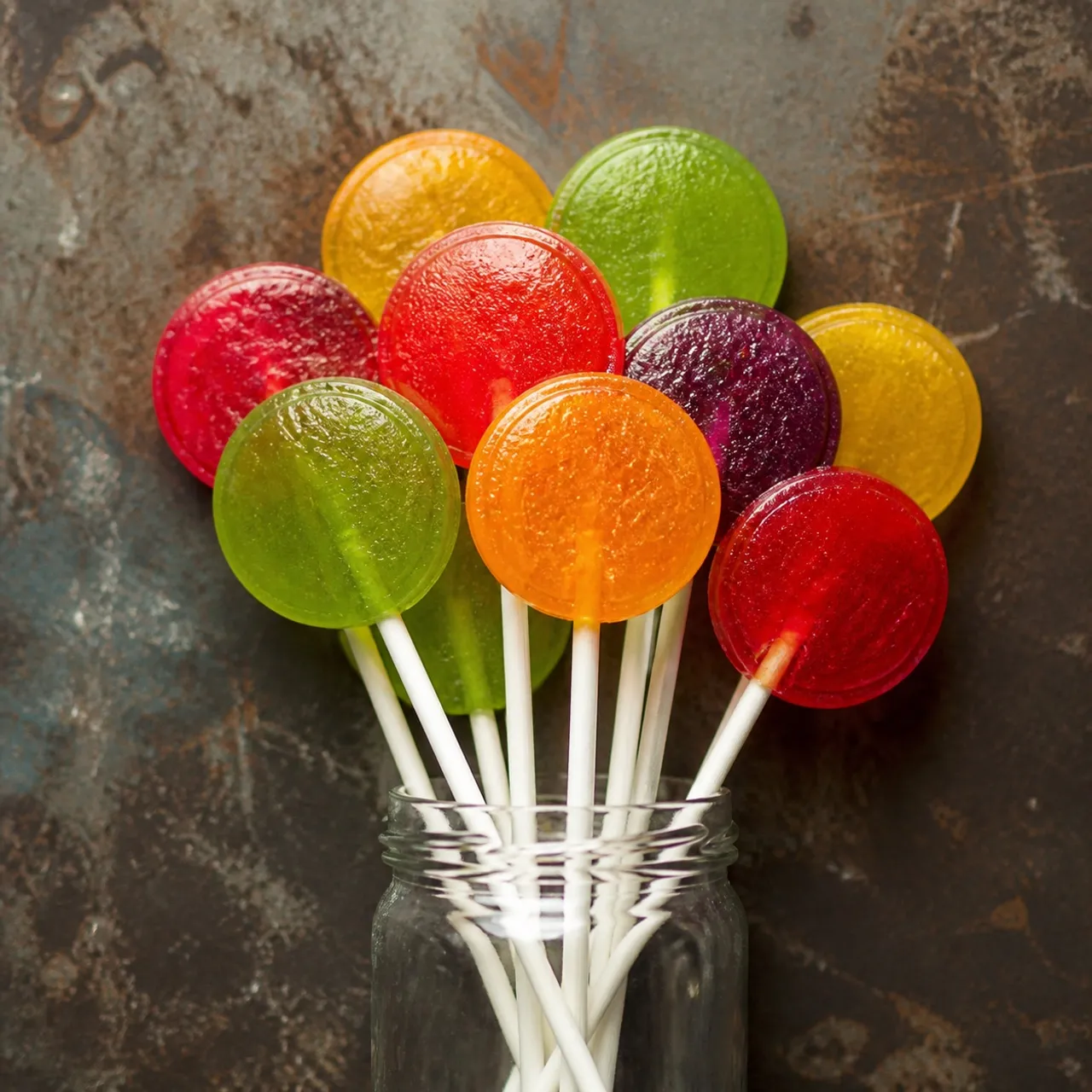
 Lollipops
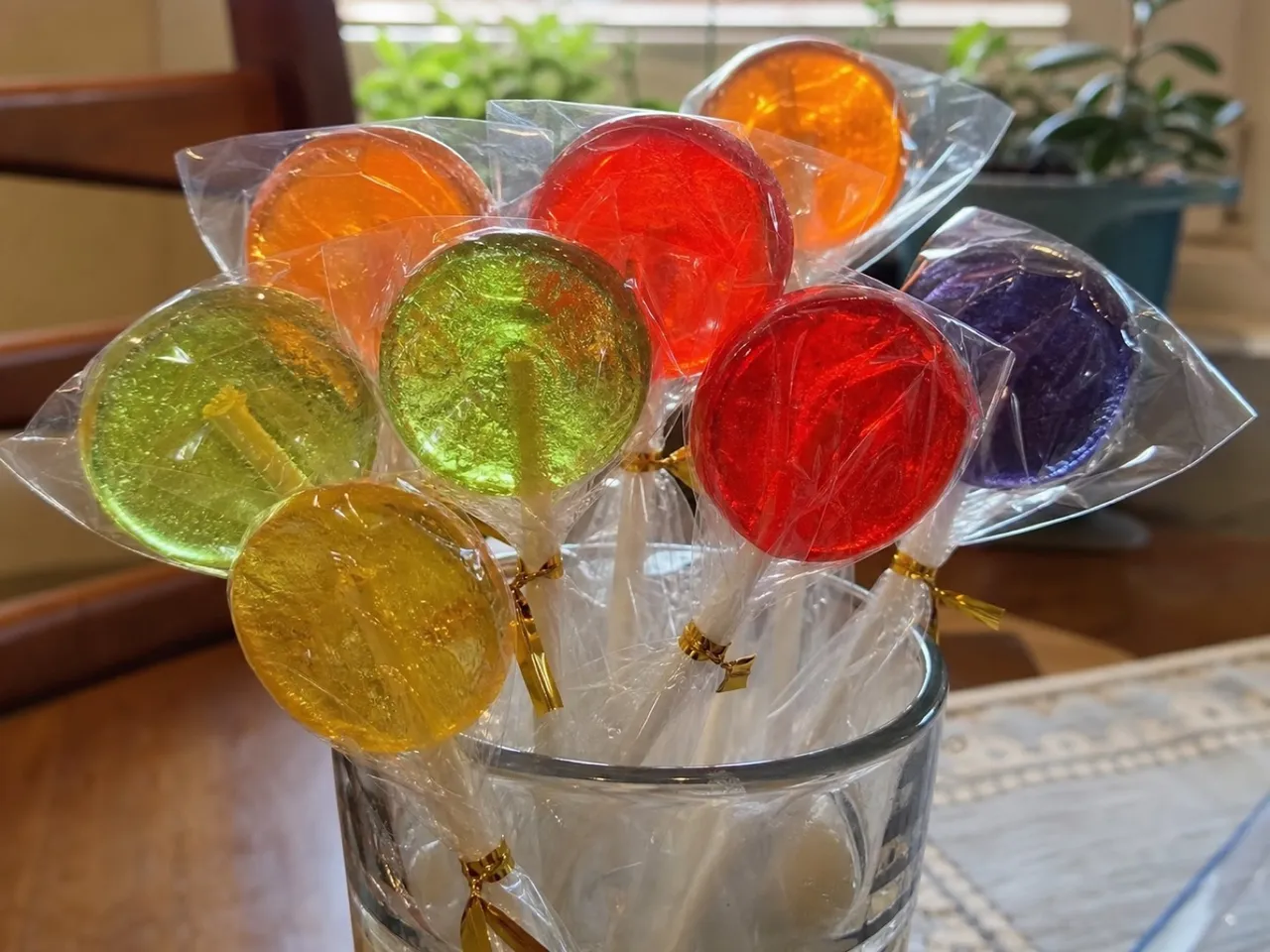
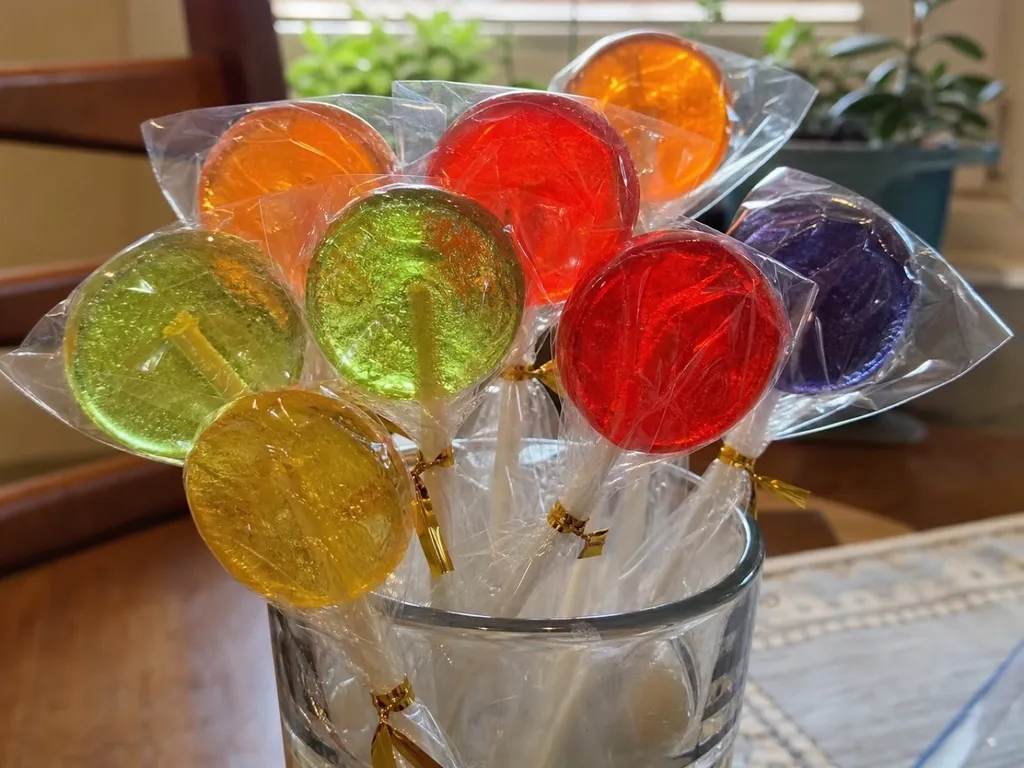
Old-fashioned hard candy lollipops you can flavor and color any way you like.
Contains common allergens
In the app, Listahan checks these against your household automatically.
Good to know
- One-pot
Matched from this dish's own ingredients and timing. Browse more: one-pot dinners
Instructions
5 steps- 1
In a heavy saucepan, combine the sugar, cream of tartar, and water. Stir over medium heat until the sugar is completely dissolved.
- 2
Bring the mixture to a boil and continue cooking, without stirring, until it reaches 290°F (143°C) on a candy thermometer, the soft-crack stage. To test without a thermometer, drop a small amount into cold water; it is ready when it forms hard threads immediately.
- 3
Remove from the heat and quickly stir in the flavoring and food coloring to taste.
- 4
Carefully pour the hot candy into greased lollipop molds. When partially cooled, press a wooden stick into the center of each.
- 5
Let the lollipops cool completely and harden before unmolding.
 Images are for illustrative purposes only, may be inaccurate, and do not guarantee the presence or absence of specific ingredients.
 Listahan Family Score™
69/100
Works for many families
Score reflects how well this recipe fits a typical busy household. In the app, your Family Score is personalized to your household's allergens, kids, and pantry.
Nutrition
per serving130
Calories
0 g
Protein
33 g
Carbs
0 g
Fat
Estimated per serving. Actual values depend on the brands and portions you use.
Listahan cooking guide
Chef notes & practical guide
Technique notes, ingredient swaps, serve-alongside ideas, storage guidance, and equipment for this recipe.
Cultural context
Hard candy on a stick has existed in various forms for centuries, from medieval honey-dipped reeds to Victorian-era sugar sticks sold at fairs. The modern commercial lollipop was mass-produced in the United States starting in the early 20th century, with machines making them cheap enough to become a childhood staple. Home candy making experienced a revival in the mid-20th century as candy thermometers became household tools, and the technique has remained essentially unchanged since.
Listahan note
This lollipop recipe uses cream of tartar to invert enough sugar during cooking so the candy stays clear rather than turning cloudy. The hot syrup goes into molds and gets a stick pressed into each one while it is still warm enough to hold it in place.
Technique cues
- Cook the sugar syrup to the hard crack stage, 300 to 310 degrees Fahrenheit, before pouring it into the lollipop molds, since anything cooler leaves the finished lollipops sticky and chewy instead of brittle.
- Set out the lollipop molds or silicone mat with sticks already in place before you start cooking, since you only have about a minute to pour once the syrup hits temperature.
- Press each stick into its lollipop while the poured candy is still warm enough to accept it but no longer so hot that it runs, usually just a few seconds after pouring.
Kitchen flow
- Parallel prep
- Set out lollipop molds or a silicone mat with sticks positioned before you start cooking; once the sugar hits hard-crack temperature you have only about 60 seconds to pour cleanly before it thickens.
- Make-ahead
- Lollipops can be made days to weeks in advance; wrap each one individually in cellophane immediately after they set to protect them from humidity.
- Leftover move
- Broken or imperfect lollipops can be crushed and used as a candy rim on hot cocoa mugs, folded into cookie dough as a crunchy mix-in, or dissolved in warm water for flavored simple syrups.
- Cleanup rhythm
- The easiest way to clean a sugar-coated pan is to fill it with water and bring it to a boil on the stove; the boiling water dissolves every trace of hardened candy in minutes without scrubbing.
Ingredient brief
Role, handling, and swap guidance for each key ingredient.
2 cups granulated sugar
candy base
Purpose: Sugar is the sole structural component; at hard-crack temperature it sets into a rigid, clear glass when cooled.
Handling: Combine with water and cream of tartar in a heavy-bottomed pan before heat is applied so everything dissolves evenly from the start.
Adaptation: No direct substitute; sugar is the recipe.
1/8 tsp cream of tartar
inversion agent
Purpose: Cream of tartar converts a small portion of sucrose into invert sugar, lowering the likelihood of recrystallization and keeping the finished candy smooth and clear.
Handling: Stir into the sugar-water mixture before heating so it dissolves completely in the initial liquid.
Adaptation: One teaspoon of light corn syrup per cup of sugar can perform a similar anti-crystallization function if cream of tartar is unavailable.
1/2 tsp flavoring extract (optional)
flavor
Purpose: Flavor extract is the only seasoning in a candy made from pure sugar; without it the lollipops taste only of sweet.
Handling: Stir in after removing from heat and allowing the boiling to subside for 30 seconds; adding to actively boiling sugar can cause it to spatter dangerously.
Adaptation: Citrus zest-infused sugar syrup (strain out the zest before pouring) produces a fresh, natural flavor without extract.
Food coloring (optional)
visual identity
Purpose: Color distinguishes different flavors and creates the jewel-like appearance associated with finished lollipops.
Handling: Use gel food coloring rather than liquid; gel does not add enough water to affect the candy structure, while liquid drops can interfere with setting at this low volume.
Adaptation: Natural powdered colorings (beet powder for red, spirulina for green) work but produce more muted tones and can slightly alter flavor.
Technique notes
- Brush down the inside walls of the pan with a wet pastry brush while the syrup cooks, since stray sugar crystals there can seed the whole batch and ruin the clear lollipop finish.
- Pour each lollipop starting from the center of the mold and let the candy spread outward on its own, rather than pushing it with a tool, which can introduce bubbles.
- If the syrup turns grainy before you can pour the lollipops, melt it back down with a splash of water and bring it back to hard crack temperature rather than starting over.
Ingredient swaps
- Natural flavor direction
- Replace extract with a teaspoon of finely grated citrus zest stirred in off-heat; strain it out through a fine-mesh strainer if you want a clear candy.
- Corn syrup alternative
- If avoiding corn syrup, the cream of tartar in this recipe already performs the same function; you do not need to add corn syrup as some older recipes suggest.
- Honey lollipops
- Replace 1/2 cup of the sugar with an equal weight of honey for a mild floral note; honey lollipops are slightly less transparent but have a more complex sweetness.
Serve alongside
- served alongside a cup of hot cocoa or warm apple cider for dunking
- displayed on a cupcake foam stand as an edible party centerpiece
- packaged with homemade caramels in a gift box
- hot cocoa for children
- sparkling lemonade for an adult candy bar table
Serving suggestions only — check pairings for your household's allergens.
Storage & reheating
- Wrap individually in cellophane or waxed paper as soon as cool; humidity is the primary enemy and will make unwrapped lollipops sticky within hours.
- Store in a cool, dry place (not the refrigerator, where condensation forms) for up to 3 weeks.
- Do not freeze; temperature cycling causes sugar candy to weep moisture and become irreversibly sticky.
Equipment
- heavy-bottomed saucepan (at least 2-quart)
- accurate candy thermometer (digital preferred)
- lollipop molds or a silicone baking mat with lollipop sticks
- wet pastry brush for washing down the sides
Make this household-aware
Listahan Pro checks this recipe against your household's allergens, finds pantry-aware swaps, builds the shopping list, and helps you plan the week around it.
Plan it in Listahan
Add Lollipops to your week, check it against your household's allergens, and build the shopping list automatically.
More Desserts recipes
 Desserts Lens Verified Images are for illustrative purposes only, may be inaccurate, and do not guarantee the presence or absence of specific ingredients.
 Buttertart Squares
Chewy butter tart squares with a shortbread base and a gooey brown sugar, raisin, and walnut topping.
 Desserts Lens Verified Images are for illustrative purposes only, may be inaccurate, and do not guarantee the presence or absence of specific ingredients.
 Amber and Zach's Kisses
Light, crisp meringue kisses that melt in your mouth and make a pretty edible decoration.
 Desserts Lens Verified Images are for illustrative purposes only, may be inaccurate, and do not guarantee the presence or absence of specific ingredients.
 Passover Flourless Chocolate Cake
A rich, dense flourless chocolate cake with no flour, matzo meal, or leavening — a naturally kosher-for-Passover dessert perfect for the seder table.