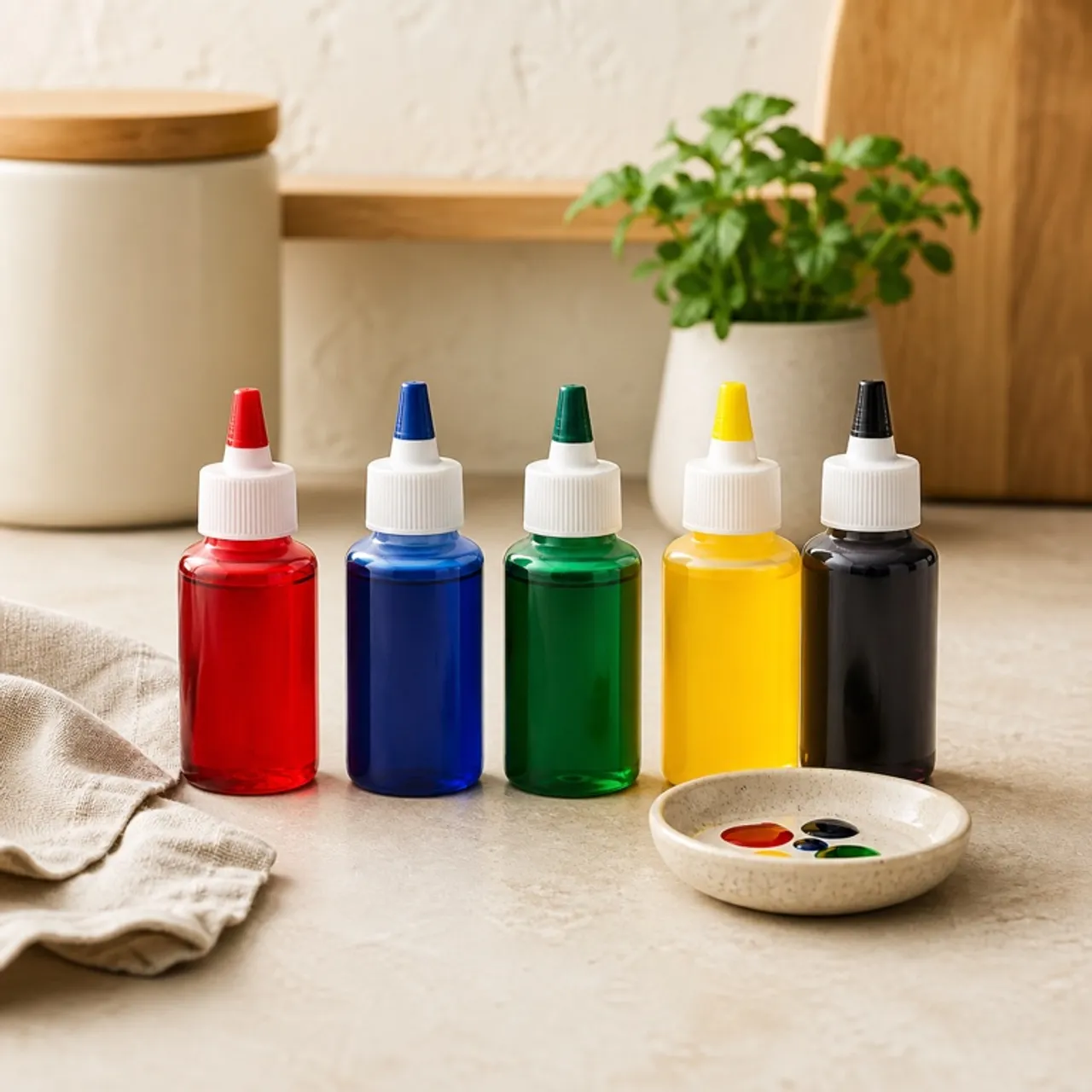
 Food Lens Images are for illustrative purposes only, may be inaccurate, and do not guarantee the presence or absence of specific ingredients.
 Food Lens · Baking
Food coloring
Flavorless and odorless; contributes only visual color to finished dishes.
Lens VerifiedFood coloring is a liquid, gel, or powder dye used to add or intensify color in baked goods, candy, frosting, and drinks. It has no perceptible flavor or aroma and is used purely for visual effect. Gel food coloring is more concentrated than liquid and is preferred by bakers for achieving vivid hues without adding excess liquid to a batter or dough.
Where it comes from
Color before flavor — food dye has been making celebrations brighter since the first baker decided a cake should be as beautiful as it is delicious.
Varieties — Liquid food coloring is widely available and easy to find; gel (also called gel paste) is more concentrated and preferred for buttercream and fondant. Powder forms work well in chocolate and dry mixes where added liquid would cause problems.
Vivid food coloring is central to celebration baking traditions worldwide, from rainbow birthday cakes in the US to brightly colored mithai (Indian sweets) and ube-purple Filipino desserts.
In a modern kitchen — For the deepest, truest colors in buttercream or fondant, use gel or paste coloring — a small amount goes a long way compared to liquid drops.
Buying it
For baking, choose gel food coloring over liquid for better color saturation with minimal impact on batter consistency. Look for sets with primary colors plus black and white for mixing full palettes.
Storing it
Keep tightly capped in a cool, dry cabinet away from direct light, which can fade the color over time. It doesn't spoil, but older bottles may separate — just shake well before using.
Keeps about 2 years in the pantry.
Out of food coloring? Good swaps
- beet powder — Natural pink-to-red; adds very faint earthiness in large amounts
- matcha powder — Natural green with a mild grassy flavor; doubles as flavor and color
- butterfly pea flower tea — Natural blue-purple that shifts pink with acid; dramatic color effect
General cooking guidance — always check the labels on the products you use. Listahan’s allergen checks run automatically when you plan a recipe in the app. Not medical advice.
Recipes that use food coloring
Common questions about food coloring
Is food coloring vegan?
Food coloring is generally plant-based and suitable for a vegan diet, but brands differ — confirm on the label.
What can I use instead of food coloring?
Good swaps include beet powder, matcha powder, butterfly pea flower tea. Each behaves a little differently — see the swaps above for notes, and always check labels for allergens.
How do I store food coloring?
Keep tightly capped in a cool, dry cabinet away from direct light, which can fade the color over time. It doesn't spoil, but older bottles may separate — just shake well before using. It keeps about 2 years in the pantry.
More baking
See all


Make food coloring about your kitchen — with Listahan Pro
Everything above is free, forever. Pro adds the Household Lens — the same food, seen for your family:
-
Checked for each member
Flags food coloring per person against your household's allergies and school rules — not just a generic "contains" tag.
-
Pantry-aware
Knows whether you already have it, what is running low, and the best swap from what is in your kitchen tonight.
-
What it costs near you
A real price from the Presyo community index, so you can plan the budget — not guess.
-
Your household memory
Who likes it, plus your own private notes — brand, where you keep it, who skips it.
Allergen safety is always free — Pro adds the automation, never the safety.
Cook with food coloring — safely
Plan a recipe in Listahan and the household allergen check runs automatically — every plan, every swap, every lunchbox. Safety is never paywalled.