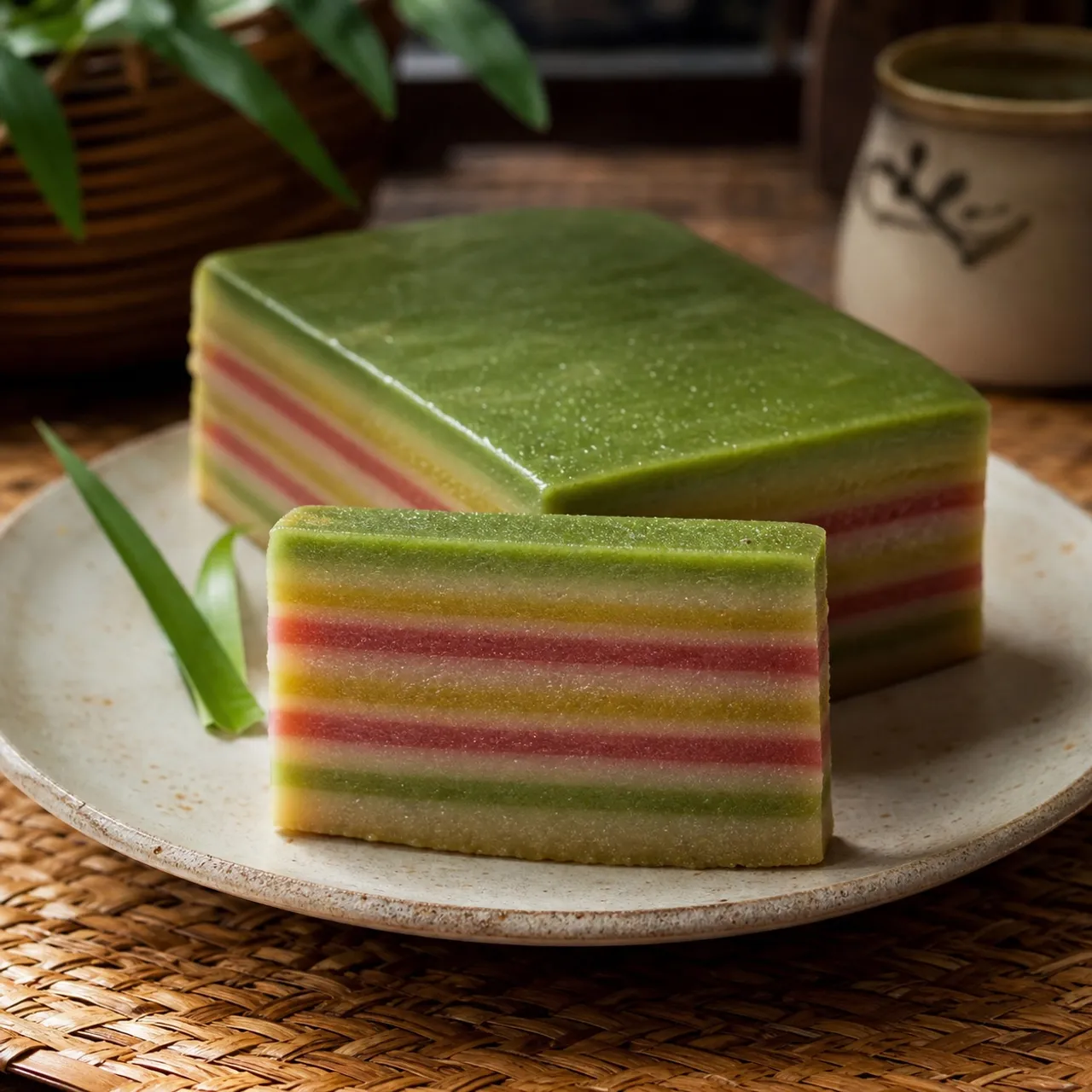
 Indonesian & Malaysian Images are for illustrative purposes only, may be inaccurate, and do not guarantee the presence or absence of specific ingredients.
 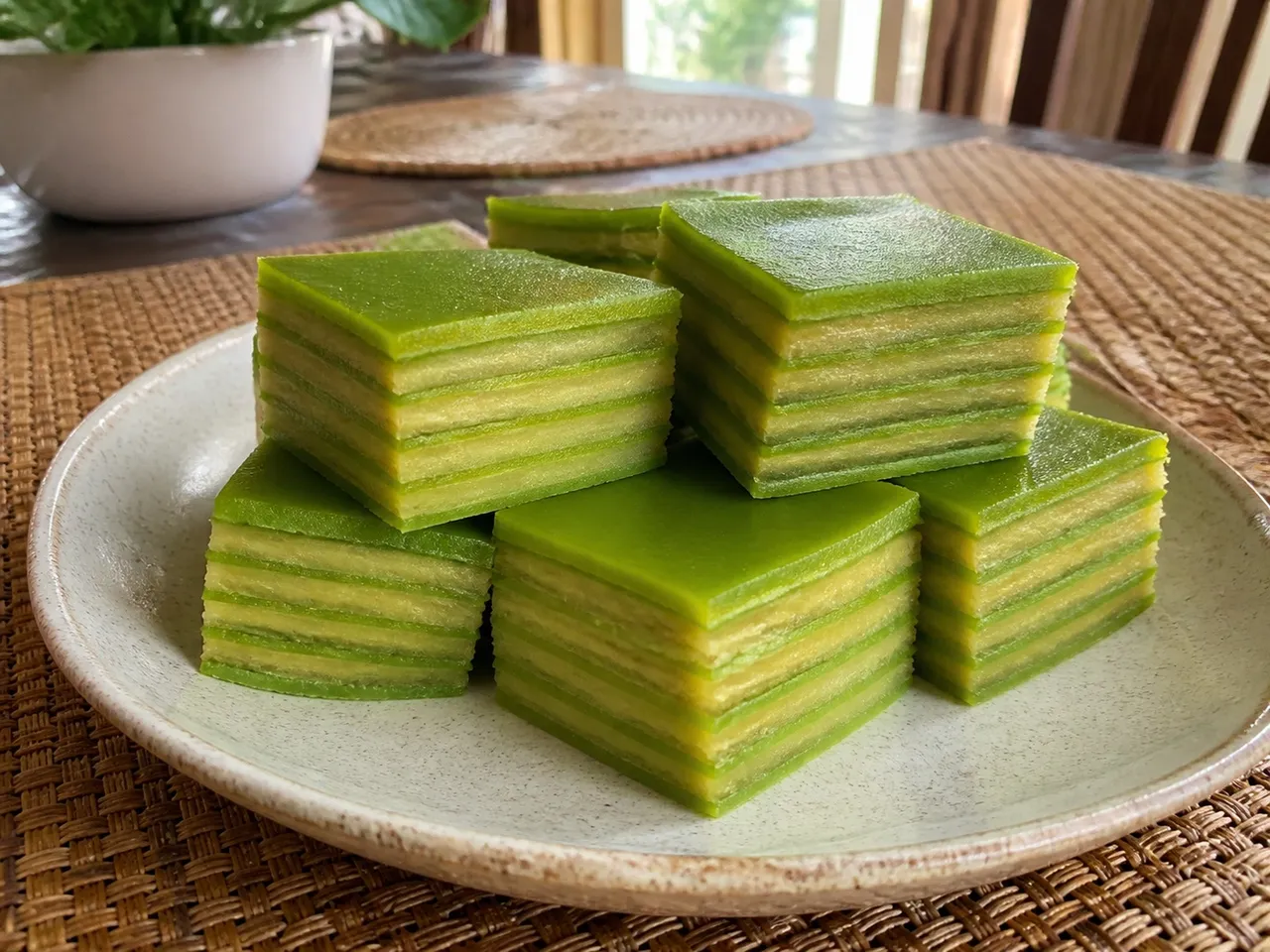 Serving Images are for illustrative purposes only, may be inaccurate, and do not guarantee the presence or absence of specific ingredients.
 Kue Lapis
Steamed Indonesian layer cake built one color at a time — coconut-milk-sweet, gently spiced with pandan, and satisfyingly chewy.
No common allergens detected
Based on this recipe's ingredient list. Always verify with your own brands and labels.
Instructions
6 steps- 1
Boil the coconut milk with sugar and knotted pandan leaves until the sugar dissolves. Let it cool completely.
- 2
Whisk the cooled coconut milk gradually into the tapioca and rice flours until smooth.
- 3
Divide the batter equally into separate bowls and add a few drops of different food coloring to each (leaving one white).
- 4
Heat a steamer and lightly grease a square cake pan.
- 5
Pour a thin layer (about 1/4 cup) of one color into the pan and steam for 5 minutes until set.
- 6
Alternate colors, pouring a new layer over the set layer and steaming for 5 minutes each, then steam the entire cake for a final 15 minutes. Cool completely before slicing.
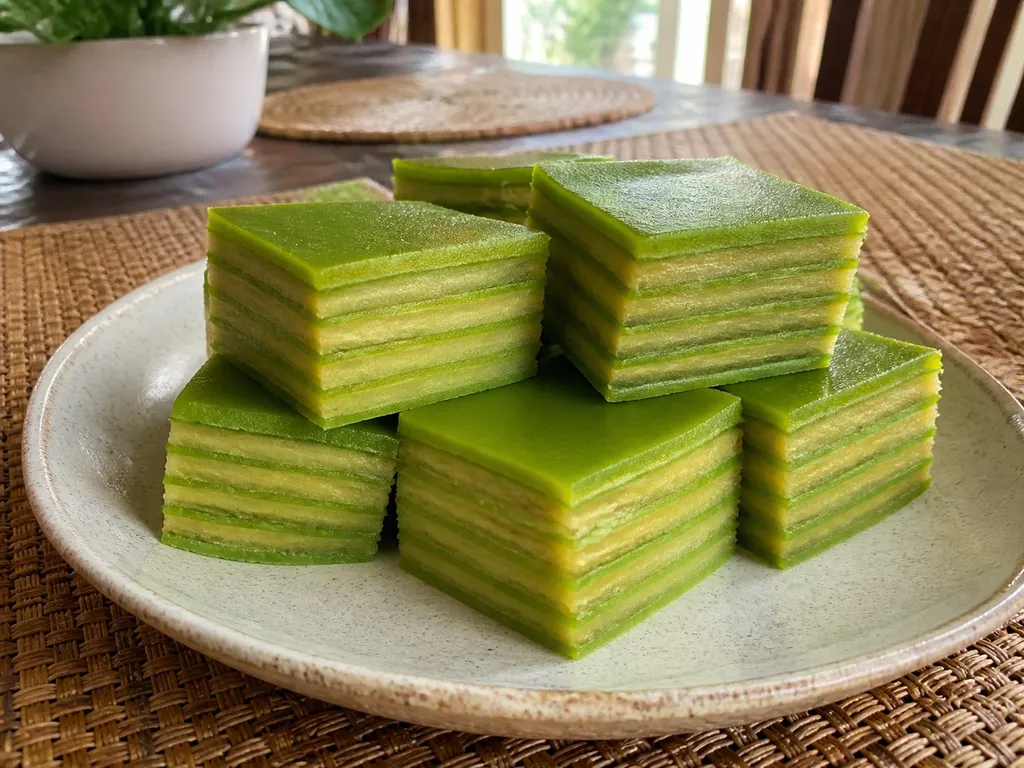 Images are for illustrative purposes only, may be inaccurate, and do not guarantee the presence or absence of specific ingredients.
 Listahan Family Score™
75/100
Good fit for most families
Score reflects how well this recipe fits a typical busy household. In the app, your Family Score is personalized to your household's allergens, kids, and pantry.
Nutrition
per serving535
Calories
6 g
Protein
68 g
Carbs
29 g
Fat
Estimated per serving. Actual values depend on the brands and portions you use.
Listahan cooking guide
Chef notes & practical guide
Technique notes, ingredient swaps, serve-alongside ideas, storage guidance, and equipment for this recipe.
Cultural context
Kue lapis is an Indonesian layered steamed cake, built by pouring and setting one thin colored layer at a time until dozens of stripes stack into a single dense, chewy cake. It's distinct from lapis legit, a related but separately baked layer cake made with many egg yolks and warm spices rather than steamed rice or tapioca-based batter.
Listahan note
This version steams each layer just until set before adding the next, since pouring a new layer too soon lets the colors bleed together instead of staying distinct.
Technique cues
- Steaming each thin layer for only a few minutes at a time, checking that it's just set before adding the next, keeps the stripes sharp rather than blurred.
- Using a rice flour or tapioca-based batter, rather than a wheat flour one, gives the cake its dense, slightly chewy bite once fully steamed.
- Keeping the steamer at a steady, gentle heat throughout avoids condensation dripping onto the layers and disturbing their surface.
- Brushing a thin layer of oil on the pan between colors, if needed, helps each new layer release cleanly once the cake is unmolded.
Kitchen flow
- Parallel prep
- While Kue Lapis is in the oven, measure out any garnish or topping — like the food coloring — so it's ready the moment the bake finishes cooling. Plan around the boil; that's the slow part.
- Make-ahead
- Kue Lapis's dough or batter (built around food coloring) can usually be made a day ahead and refrigerated, then baked fresh — many doughs actually improve with an overnight rest. The boil step is what sets the pace here.
- Leftover move
- Leftover Kue Lapis freezes well — wrap individual portions tightly and thaw at room temperature, or crumble it over ice cream for a quick second life. This one leans on the food coloring. Plan around the boil; that's the slow part.
- Cleanup rhythm
- Soak the mixing bowl and beaters for Kue Lapis right away — sugar and butter residue hardens fast once it cools. This one leans on the food coloring. Everything else is quick — the boil is the one step that takes real time.
Ingredient brief
Role, handling, and swap guidance for each key ingredient.
1.5 cups tapioca flour
Structural base
Purpose: cups tapioca flour defines the shape and texture of the dish.
Handling: Measure before heating and break up clumps so the mix distributes evenly.
Adaptation: Use a certified gluten-free alternative when needed and expect a small texture change.
1/2 cup rice flour
Structural base
Purpose: cup rice flour defines the shape and texture of the dish.
Handling: Rinse, soak, whisk, or separate as the recipe requires so the texture stays clean.
Adaptation: Use a certified gluten-free alternative when needed and expect a small texture change.
1.5 cups sugar
Sweetness and aroma
Purpose: cups sugar adds aroma, sweetness, or warmth without needing extra garnish.
Handling: Measure before heating and break up clumps so the mix distributes evenly.
Adaptation: Use the closest fresh equivalent and expect a modest shift in flavor or texture.
4 cups coconut milk
Richness and texture
Purpose: cups coconut milk rounds the texture and helps the dish feel complete.
Handling: Prep before heat is high so the cooking step can move without rushing.
Adaptation: Use unsweetened dairy-free alternatives only where they still provide enough fat and body.
food coloring
Flavor support
Purpose: food coloring supports the balance of Kue Lapis and should taste integrated.
Handling: Prep before heat is high so the cooking step can move without rushing.
Adaptation: Use the closest fresh equivalent and expect a modest shift in flavor or texture.
Technique notes
- Let the finished cake cool and set fully, ideally overnight, before slicing so the many thin layers hold together cleanly.
- A sharp, thin-bladed knife wiped clean between cuts gives the neatest cross-section of the layered stripes.
- Kue lapis keeps well at room temperature for a day or two, longer than many other steamed cakes.
Ingredient swaps
- Gluten-free direction
- Replace the tapioca flour with a certified gluten-free 1:1 flour blend or gluten-free noodles/breadcrumbs — check that any other packaged ingredients here are labeled gluten-free too. This one leans on the food coloring.
- Dairy-free direction
- Swap the coconut milk for a neutral dairy-free butter and a full-fat plant milk (oat or coconut give the closest richness) — the texture shifts slightly but the dish holds together. This one leans on the food coloring.
- Nut-aware direction
- Omit the nuts here; a seed garnish keeps the texture without the tree-nut or peanut concern. This one leans on the food coloring.
- Lower-sodium direction
- Season lighter on salt than the recipe calls for, then adjust right before serving — it's easier to add more than to fix an oversalted batch. This one leans on the food coloring.
Serve alongside
- Fresh berries
- Citrus fruit salad
- Mint leaves
- Black coffee
- Hot tea
- Sparkling water with lemon
Serving suggestions only — check pairings for your household's allergens.
Storage & reheating
- Store covered for 3 to 4 days, refrigerated when dairy, eggs, custard, or fresh fruit are involved.
- Reheat gently only when warmth improves the texture.
- Freeze sturdy baked portions up to 2 months; avoid freezing delicate fresh toppings.
Equipment
- Mixing bowls
- Baking dish or pan
- Cooling rack
Make this household-aware
Listahan Pro checks this recipe against your household's allergens, finds pantry-aware swaps, builds the shopping list, and helps you plan the week around it.
Plan it in Listahan
Add Kue Lapis to your week, check it against your household's allergens, and build the shopping list automatically.
More Indonesian & Malaysian recipes
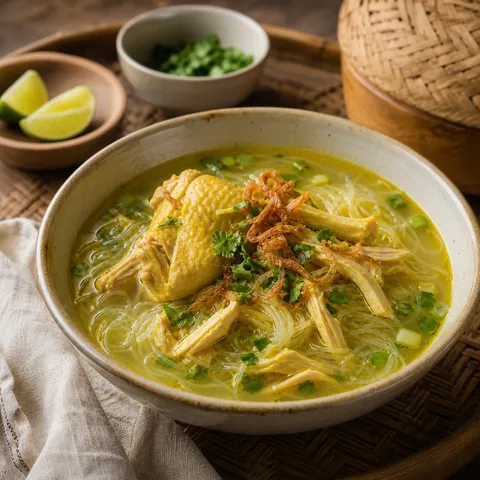 Indonesian & Malaysian Lens Verified Images are for illustrative purposes only, may be inaccurate, and do not guarantee the presence or absence of specific ingredients.
 Soto Ayam
A golden, turmeric-spiced Indonesian chicken soup with glass noodles, crispy shallots, and lime — light, herbal, and deeply comforting.
 Indonesian & Malaysian Lens Verified Images are for illustrative purposes only, may be inaccurate, and do not guarantee the presence or absence of specific ingredients.
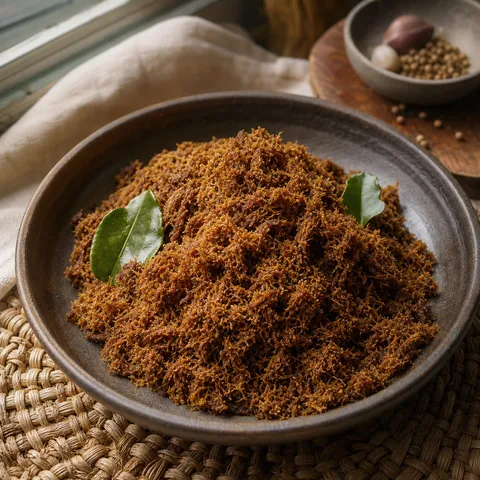
 Beef Serunding
Dry-fried spiced beef floss toasted with coconut and lemongrass until golden and fragrant — a rich, crumbly condiment that transforms plain rice.
 Indonesian & Malaysian Lens Verified Images are for illustrative purposes only, may be inaccurate, and do not guarantee the presence or absence of specific ingredients.
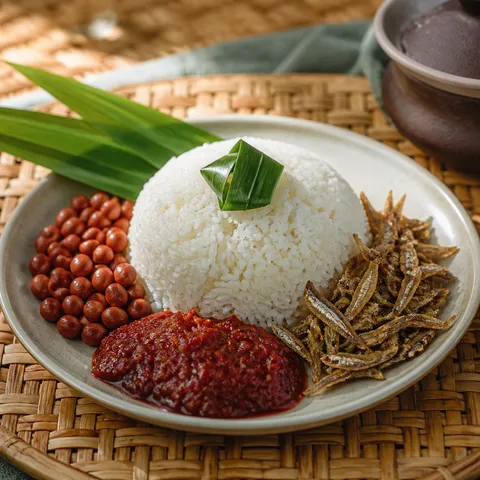
 Nasi Lemak
Malaysia's national comfort dish — fragrant coconut rice paired with sambal, crispy anchovies, roasted peanuts, and a soft-boiled egg.