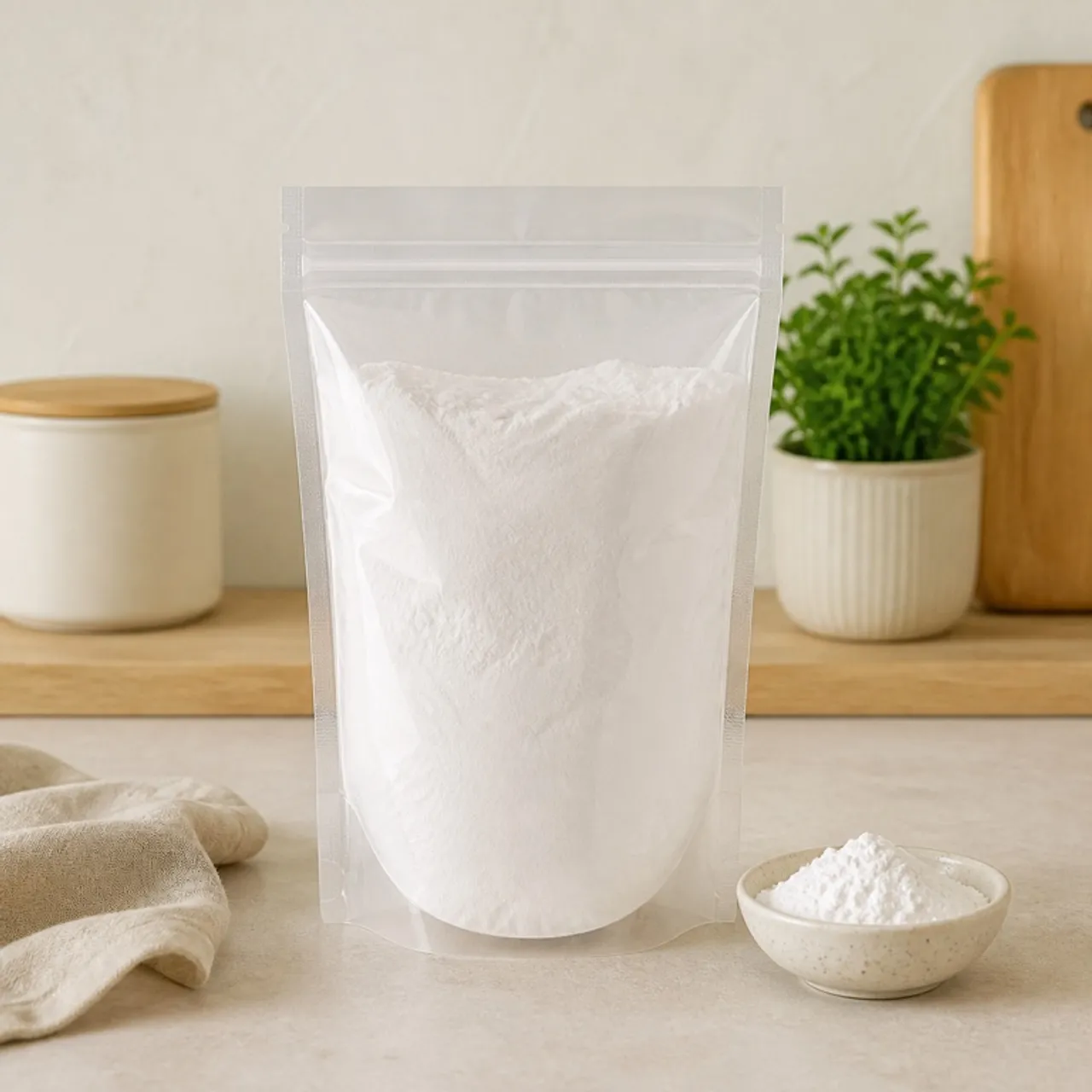
 Food Lens Images are for illustrative purposes only, may be inaccurate, and do not guarantee the presence or absence of specific ingredients.
 Food Lens · Recipe ingredients
Tapioca Flour
Completely neutral, flavorless, and odorless; adds glossy clarity and a springy, slightly chewy texture when used in cooked applications.
Lens VerifiedTapioca flour (also called tapioca starch) is a fine white starch extracted from cassava root, used to thicken sauces with a clear, glossy gel and to create pleasantly chewy textures in desserts and breads.
Where it comes from
Cassava was domesticated in South America and spread to Africa and Asia through Portuguese and Spanish trade routes beginning in the 16th century. The starch extracted from cassava root — tapioca — became a culinary staple across tropical cuisines as a thickener and flour substitute. In North America, tapioca found its first mainstream use in tapioca pudding, and more recently it has gained widespread use in bubble tea culture and among bakers seeking wheat alternatives.
Varieties — Tapioca flour and tapioca starch are typically the same product; pearl tapioca (the large or small balls used in bubble tea) is a different physical form of the same starch.
Essential in Brazilian pão de queijo, Taiwanese bubble tea, Thai tapioca pudding, and many Southeast Asian and Filipino sweet preparations.
In a modern kitchen — Tapioca thickens at a lower temperature than cornstarch and stays clear when cool, making it ideal for fruit pie fillings — use about 3 tablespoons per cup of fruit for a medium-thick set.
Buying it
Look for fine white tapioca flour or starch — labeled either 'tapioca flour' or 'tapioca starch' (these are the same product). Available at Asian grocery stores, Latin grocery stores, and most natural foods stores. The 1 lb and 2 lb bags are standard. Distinct from large or small pearl tapioca, which is for pudding.
Storing it
Store tapioca flour in an airtight container in a cool, dry spot, away from humidity that can cause clumping or a musty smell.
Keeps about 1 year in the pantry.
Out of tapioca flour? Good swaps
- Cornstarch — 1:1 ratio for thickening; produces a more opaque gel, slightly different texture in chilled fillings
- Arrowroot powder — 1:1 ratio; clear and neutral like tapioca; does not reheat as well
General cooking guidance — always check the labels on the products you use. Listahan’s allergen checks run automatically when you plan a recipe in the app. Not medical advice.
Recipes that use tapioca flour
Common questions about tapioca flour
Is tapioca flour vegan?
Tapioca Flour is generally plant-based and suitable for a vegan diet, but brands differ — confirm on the label.
What can I use instead of tapioca flour?
Good swaps include Cornstarch, Arrowroot powder. Each behaves a little differently — see the swaps above for notes, and always check labels for allergens.
How do I store tapioca flour?
Store tapioca flour in an airtight container in a cool, dry spot, away from humidity that can cause clumping or a musty smell. It keeps about 1 year in the pantry.
More recipe ingredients
See all


Make tapioca flour about your kitchen — with Listahan Pro
Everything above is free, forever. Pro adds the Household Lens — the same food, seen for your family:
-
Checked for each member
Flags tapioca flour per person against your household's allergies and school rules — not just a generic "contains" tag.
-
Pantry-aware
Knows whether you already have it, what is running low, and the best swap from what is in your kitchen tonight.
-
What it costs near you
A real price from the Presyo community index, so you can plan the budget — not guess.
-
Your household memory
Who likes it, plus your own private notes — brand, where you keep it, who skips it.
Allergen safety is always free — Pro adds the automation, never the safety.
Cook with tapioca flour — safely
Plan a recipe in Listahan and the household allergen check runs automatically — every plan, every swap, every lunchbox. Safety is never paywalled.