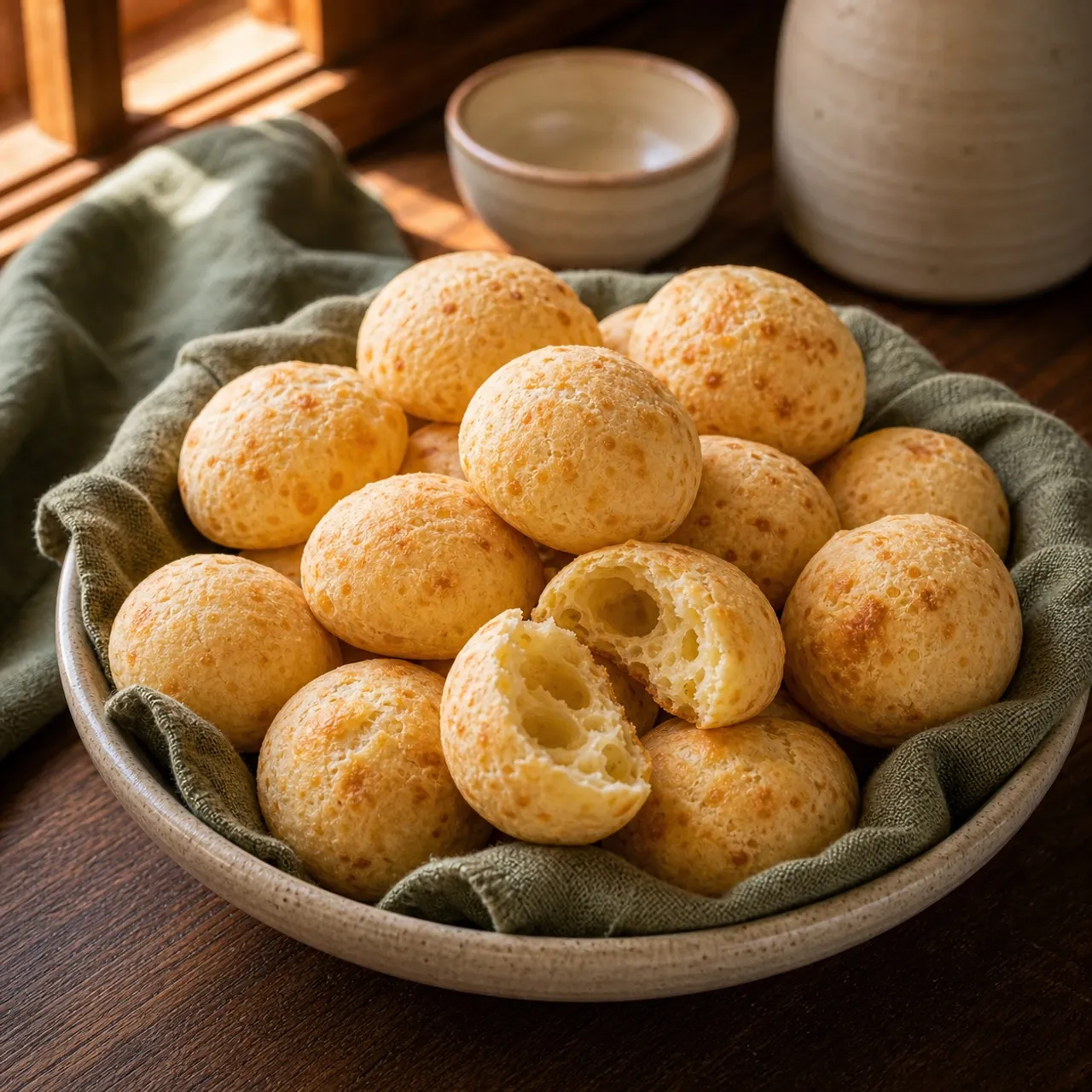
 Brazilian Images are for illustrative purposes only, may be inaccurate, and do not guarantee the presence or absence of specific ingredients.
 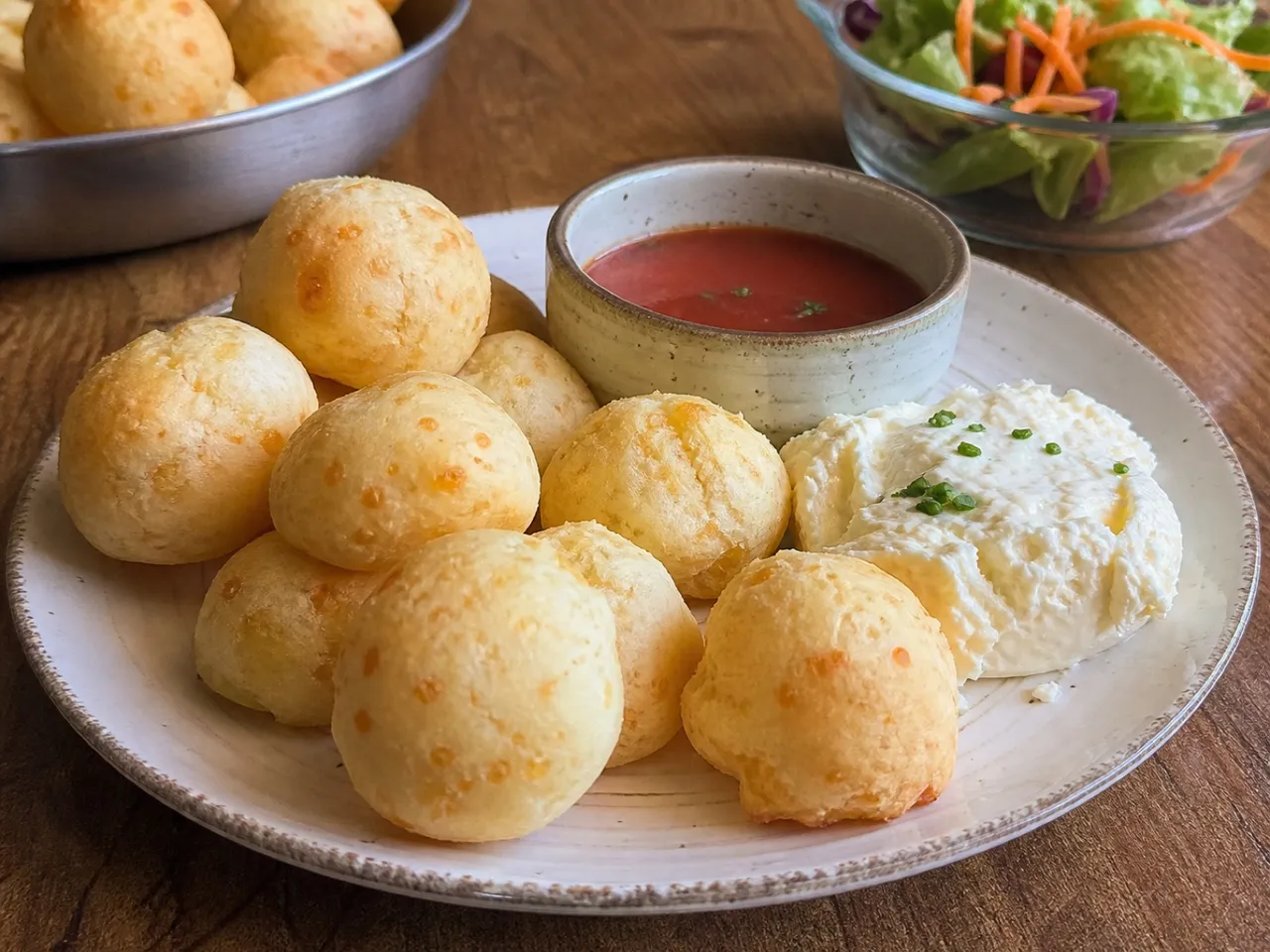 Serving Images are for illustrative purposes only, may be inaccurate, and do not guarantee the presence or absence of specific ingredients.
 Pão de Queijo (Brazilian Cheese Bread)
Addictively chewy, light, and puffy little cheese buns made from naturally gluten-free tapioca flour.
Contains common allergens
In the app, Listahan checks these against your household automatically.
Good to know
- Ready in under 30 minutes
Matched from this dish's own ingredients and timing. Browse more: 30-minute meals
Instructions
5 steps- 1
Boil Liquids: Preheat the oven to 400°F (200°C). In a saucepan, bring the milk, vegetable oil, and salt to a boil.
- 2
Mix Dough: Place the tapioca flour in a large bowl. Immediately pour the boiling liquid over the flour and stir vigorously. The mixture will be clumpy and sticky. Let it cool for 10 minutes.
- 3
Add Eggs and Cheese: Beat in the eggs one at a time until fully incorporated (it might look separated at first, keep mixing). Fold in the grated cheese until you have a sticky, stretchy dough.
- 4
Shape: Lightly oil your hands and roll the dough into golf-ball-sized rounds. Place them on a parchment-lined baking sheet, spacing them apart.
- 5
Bake: Bake for 15-20 minutes until puffed, hollow-sounding when tapped, and lightly golden. Serve warm!
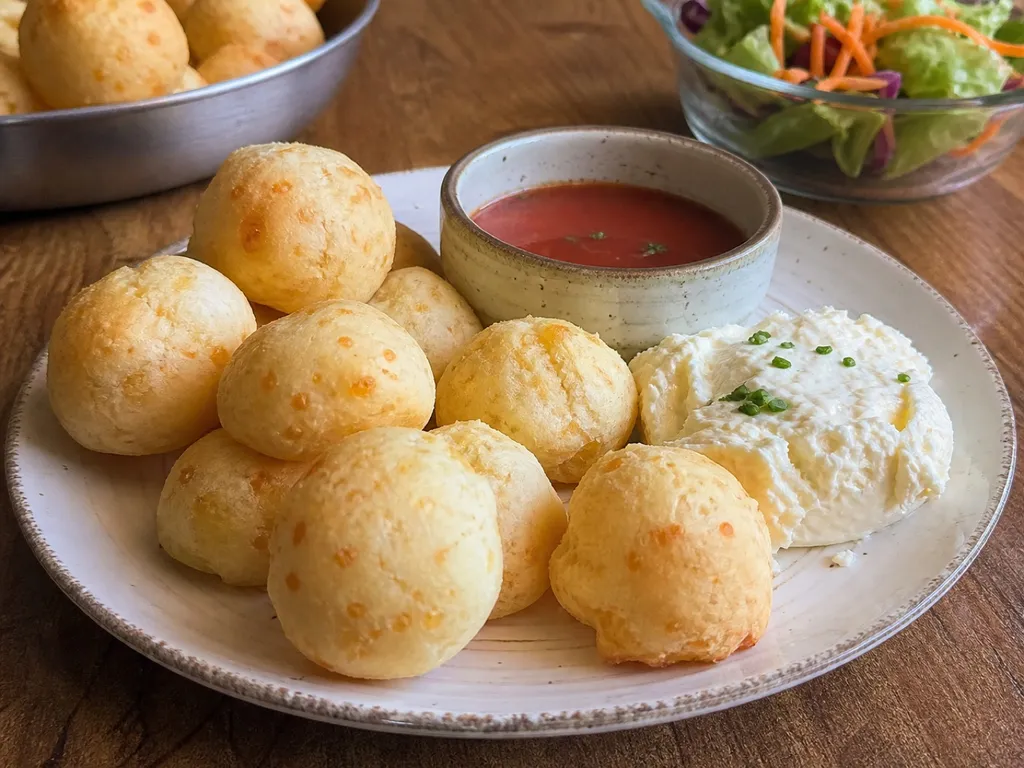 Images are for illustrative purposes only, may be inaccurate, and do not guarantee the presence or absence of specific ingredients.
 Listahan Family Score™
79/100
Good fit for most families
Score reflects how well this recipe fits a typical busy household. In the app, your Family Score is personalized to your household's allergens, kids, and pantry.
Nutrition
per serving705
Calories
26 g
Protein
52 g
Carbs
43 g
Fat
Estimated per serving. Actual values depend on the brands and portions you use.
Listahan cooking guide
Chef notes & practical guide
Technique notes, ingredient swaps, serve-alongside ideas, storage guidance, and equipment for this recipe.
Cultural context
Pao de queijo grew out of Minas Gerais, the inland mining state where cassava (manioc) was abundant and wheat was not, so cooks built their daily bread around tapioca starch instead. The chewy, hollow little rolls are naturally gluten-free because there is no wheat in them at all, and they have become a nationwide breakfast staple sold from bakery counters and roadside stands across Brazil. What makes them distinct is the texture: a crisp shell giving way to a stretchy, almost custardy interior that comes entirely from the starch, not from any leavening.
Listahan note
This version keeps to the classic Minas method of scalding the tapioca starch with hot milk and oil before working in egg and cheese, which is what gives the rolls their signature chew. It leans on a sharp aged cheese so the flavor reads clearly even in a small bite.
Technique cues
- Pour the milk-and-oil mixture in while it is genuinely steaming hot so it partly gelatinizes the tapioca starch; that scald is what makes the inside stretchy rather than crumbly.
- Let the scalded starch cool until just warm before adding the eggs, otherwise the heat will start to cook them and you lose the smooth, elastic dough.
- The dough stays sticky and looser than wheat dough, so oil your hands or use a small scoop to portion it rather than expecting it to firm up like a roll dough.
Kitchen flow
- Parallel prep
- Grate the cheese and measure the starch while the milk and oil come up to a boil so the scald can happen the moment the liquid is ready.
- Make-ahead
- Scoop the dough into balls and freeze them raw on a tray; bake straight from frozen, adding a few minutes to the time.
- Leftover move
- Split day-old rolls and toast the cut sides in a dry pan to bring back the crisp shell, then fill with cheese or jam.
- Cleanup rhythm
- The starch dough is sticky, so soak the bowl and beaters in cold water right away rather than letting it dry to a glue.
Ingredient brief
Role, handling, and swap guidance for each key ingredient.
Tapioca starch (sweet manioc starch)
Structure and chew
Purpose: Tapioca starch is the whole point of the bread, gelatinizing when scalded to give the rolls their stretchy, hollow interior with no wheat needed.
Handling: Measure it into a bowl ready to receive the hot liquid, breaking up any clumps first.
Adaptation: Sour manioc starch (polvilho azedo) gives a tangier, even chewier result if you can find it at a Brazilian or Latin grocer.
Aged cheese (Parmesan or a sharp white cheese)
Flavor backbone
Purpose: A firm, salty aged cheese carries the savory flavor through the neutral starch and is closest to the Minas cheese used traditionally.
Handling: Grate it finely so it melts evenly into the dough rather than leaving pockets.
Adaptation: A mix of Parmesan and a meltier cheese like aged Gouda or a queijo Minas if you can source it.
Milk
Scalding liquid
Purpose: Hot milk both gelatinizes the starch and adds richness and a faint sweetness that balances the salty cheese.
Handling: Heat it with the oil and salt until it just comes to a boil before pouring over the starch.
Adaptation: Unsweetened oat or soy milk works for a dairy-lighter version, though you will lose a little richness.
Eggs
Binder and lift
Purpose: Eggs bind the gelatinized starch into a workable dough and give the rolls a slight puff as they bake.
Handling: Beat them lightly and add only once the scalded starch has cooled to warm.
Adaptation: For a sturdier crumb you can use one whole egg plus an extra yolk in place of two whole eggs.
Neutral oil
Tenderness and shell
Purpose: Oil in the scalding liquid keeps the interior soft and helps the outside crisp into a thin shell.
Handling: Add it to the milk so it heats together and disperses evenly.
Adaptation: Melted butter gives a richer flavor if you are not keeping the recipe dairy-light.
Technique notes
- If the dough is too loose to scoop, chill it for fifteen minutes; the starch firms up enough to portion without changing the baked texture.
- Bake until the rolls are puffed and just barely golden, not deeply browned, or the inside dries out past that ideal chew.
- A blender or stand mixer handles the sticky dough far better than a wooden spoon and pulls the cheese through evenly.
Ingredient swaps
- Dairy-free option
- Use oat milk, olive oil instead of butter, and a firm dairy-free aged-style cheese; the starch still delivers the chew.
- Gluten-free direction
- No change needed since tapioca starch contains no wheat, but check that any cheese blend lists no added wheat starch.
- Weeknight shortcut
- Blend all ingredients in a blender and pour into a greased mini-muffin tin for a no-shaping batter version.
Serve alongside
- Brazilian-style scrambled eggs with scallions
- Sliced papaya and mango
- A bowl of black bean and bacon caldo
- Strong Brazilian coffee (cafezinho)
- Fresh-squeezed orange juice
- Hot chocolate
Serving suggestions only — check pairings for your household's allergens.
Storage & reheating
- Keep baked rolls in an airtight container at room temperature for up to two days; they firm up but revive with a short reheat. Warm in a 350F oven for five minutes to bring back the crisp shell. Raw scooped dough freezes well for up to two months and bakes straight from frozen.
Equipment
- Stand mixer or blender for the sticky dough
- Microplane or fine grater for the cheese
- Small cookie scoop for even portioning
- Heavy baking sheet for even browning
Make this household-aware
Listahan Pro checks this recipe against your household's allergens, finds pantry-aware swaps, builds the shopping list, and helps you plan the week around it.
Plan it in Listahan
Add Pão de Queijo (Brazilian Cheese Bread) to your week, check it against your household's allergens, and build the shopping list automatically.
More Brazilian recipes
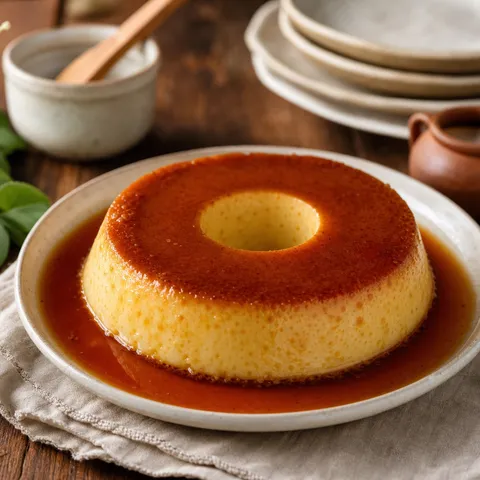 Brazilian Lens Verified Images are for illustrative purposes only, may be inaccurate, and do not guarantee the presence or absence of specific ingredients.
 Pudim de Leite (Brazilian Flan)
A silky caramel-topped milk pudding made with sweetened condensed milk, the most requested dessert at any Brazilian family gathering.
 Brazilian Lens Verified Images are for illustrative purposes only, may be inaccurate, and do not guarantee the presence or absence of specific ingredients.
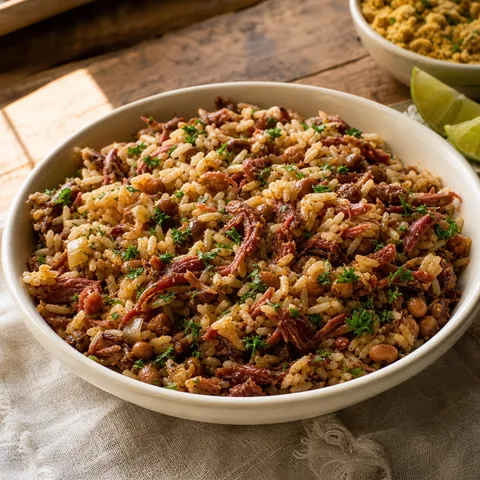
 Arroz Carreteiro (Brazilian Rice with Dried Beef)
A smoky one-pot rice from the gaúcho cattle-drivers of southern Brazil, cooked with shredded dried beef, tomato, and peppers.
 Brazilian Lens Verified Images are for illustrative purposes only, may be inaccurate, and do not guarantee the presence or absence of specific ingredients.
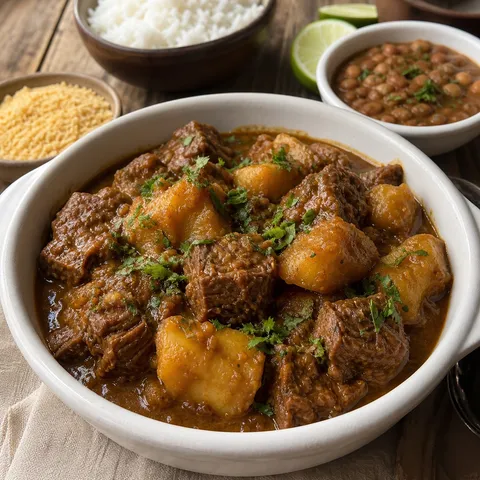
 Vaca Atolada (Beef and Cassava Stew)
"Stuck cow" stew: fall-apart beef short ribs braised with cassava until the pot turns thick and glossy, a Minas Gerais farmhouse classic.