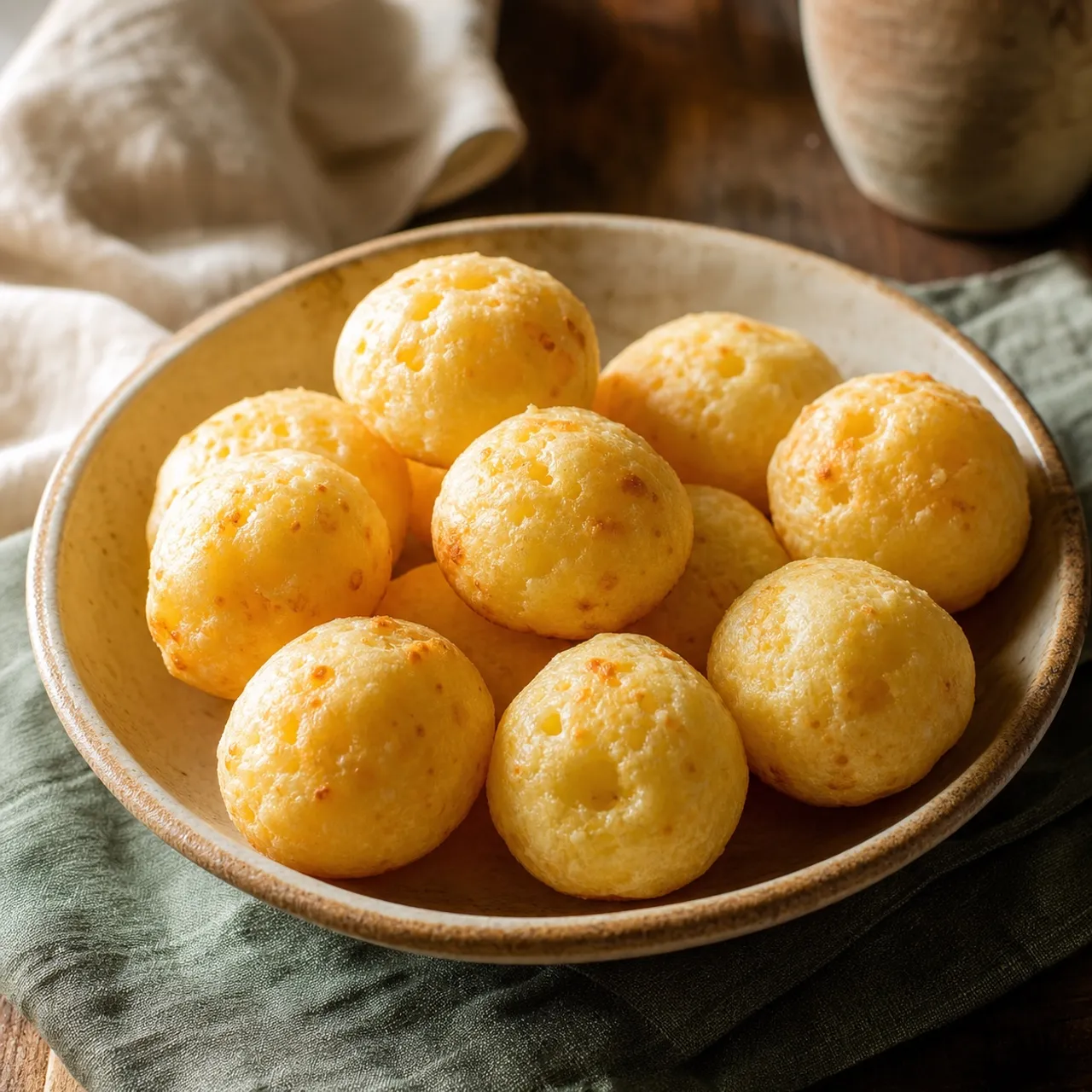
 South American Images are for illustrative purposes only, may be inaccurate, and do not guarantee the presence or absence of specific ingredients.
 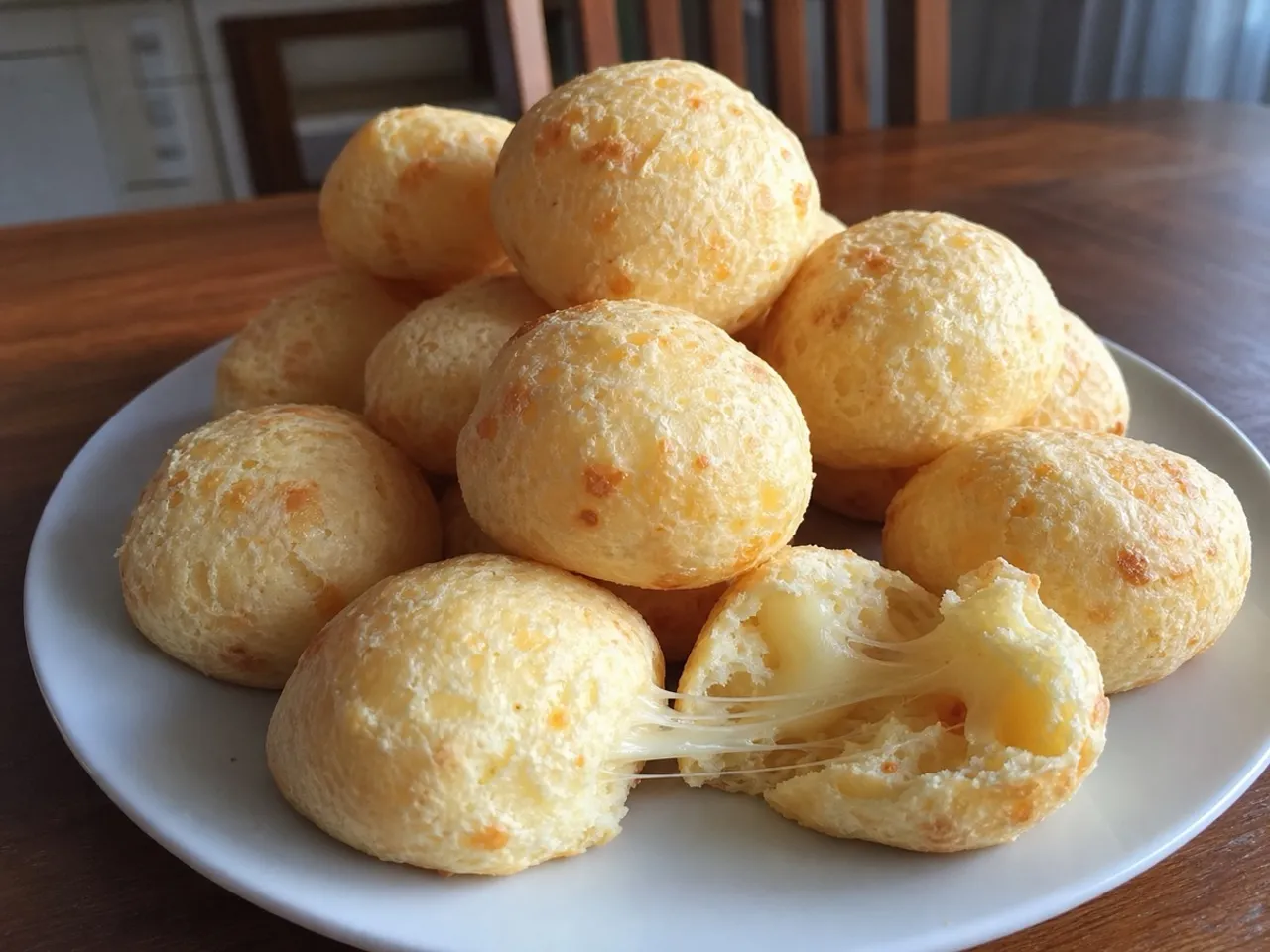 Serving Images are for illustrative purposes only, may be inaccurate, and do not guarantee the presence or absence of specific ingredients.
 Pão de Queijo
Brazil's irresistible cheese rolls — chewy, golden, and cloud-light, made with tapioca flour and melted cheese that pull apart in warm, stretchy strings.
Contains common allergens
In the app, Listahan checks these against your household automatically.
Instructions
6 steps- 1
Heat the liquids: In a medium saucepan, combine the milk, vegetable oil, and salt. Bring the mixture to a gentle boil over medium heat, then immediately remove from the stove.
- 2
Hydrate the flour: Place the tapioca flour in a heat-proof bowl. Pour the boiling liquid over the flour and stir vigorously with a wooden spoon until it forms a sticky, clumpy dough. Let it cool for 5-10 minutes.
- 3
Incorporate eggs: Once the dough is cool enough to touch, beat in the eggs one at a time, mixing thoroughly after each addition until a smooth, gummy paste forms.
- 4
Add the cheese: Fold in the grated cheese, kneading the dough gently with your hands to evenly distribute it.
- 5
Shape the bread: Preheat your oven to 400°F (200°C). Lightly grease your hands with oil and roll the dough into golf-ball-sized spheres. Place them 2 inches apart on a parchment-lined baking sheet.
- 6
Bake: Bake for 15-20 minutes until puffed, cracked on top, and lightly golden. Serve warm for the best chewy texture.
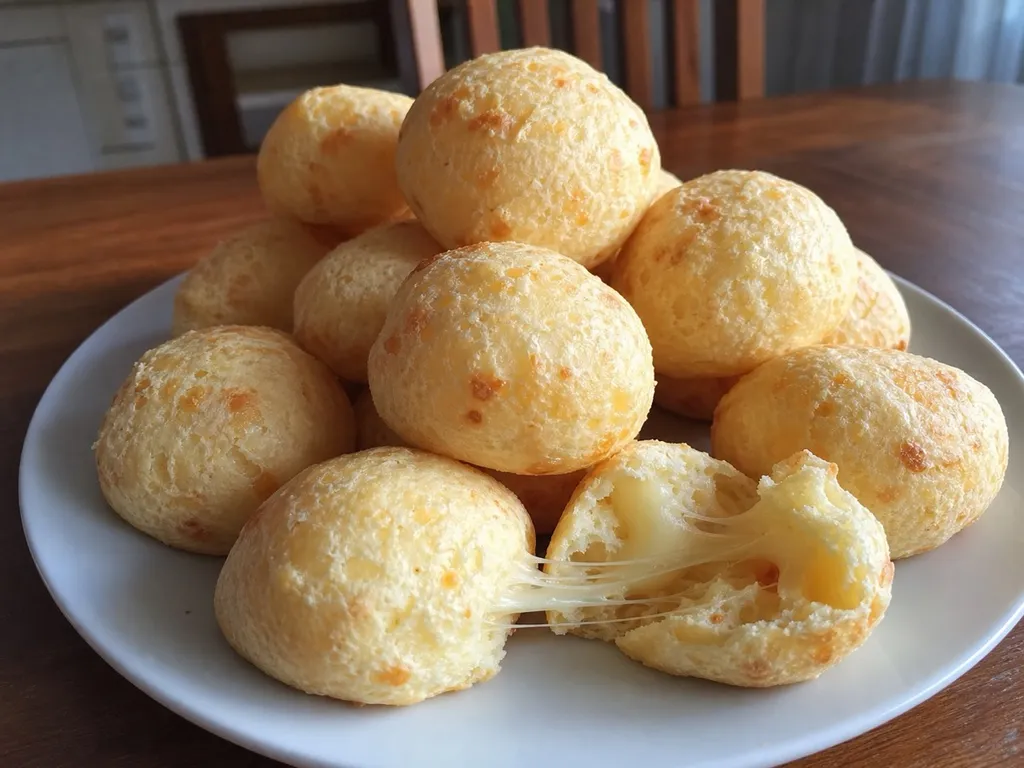 Images are for illustrative purposes only, may be inaccurate, and do not guarantee the presence or absence of specific ingredients.
 Listahan Family Score™
74/100
Good fit for most families
Score reflects how well this recipe fits a typical busy household. In the app, your Family Score is personalized to your household's allergens, kids, and pantry.
Nutrition
per serving565
Calories
25 g
Protein
51 g
Carbs
29 g
Fat
Estimated per serving. Actual values depend on the brands and portions you use.
Listahan cooking guide
Chef notes & practical guide
Technique notes, ingredient swaps, serve-alongside ideas, storage guidance, and equipment for this recipe.
Cultural context
Pao de queijo is a beloved Brazilian cheese bread from the state of Minas Gerais, made with tapioca starch rather than wheat flour. Its roots reach back to colonial-era cooks who relied on cassava starch when wheat was scarce, later enriched with cheese as dairy farming spread. The result is a naturally gluten-free roll that is crisp outside and irresistibly chewy within.
Listahan note
This version leans into the signature chew by using tapioca starch and a generous hit of cheese, and scalds the starch with hot liquid so the dough comes together smooth and stretchy.
Technique cues
- Scald the tapioca starch with the hot oil-and-milk mixture; this gelatinizes the starch and is the secret to the stretchy, chewy interior.
- Let the dough cool before adding the eggs so the heat does not scramble them, then beat until smooth and glossy.
- Bake until puffed and pale gold rather than deeply browned; over-baking dries out the prized chewy center.
Kitchen flow
- Parallel prep
- Grate the cheese and measure the starch while the milk and oil heat, so you can scald and mix without scrambling.
- Make-ahead
- Scoop the dough into balls and freeze on a tray; bake straight from frozen with a couple extra minutes for fresh rolls anytime.
- Leftover move
- Re-crisp day-old rolls in a hot oven for a few minutes; split and fill warm ones with ham or jam for a quick snack.
- Cleanup rhythm
- Soak the sticky mixing bowl right away, since tapioca dough cements as it dries; wipe the scoop between batches.
Ingredient brief
Role, handling, and swap guidance for each key ingredient.
tapioca starch (sour or sweet)
the gluten-free structure
Purpose: Tapioca starch is what gives pao de queijo its uniquely chewy, stretchy crumb that wheat cannot replicate.
Handling: Scald it with the hot liquid to gelatinize before mixing in the rest.
Adaptation: There is no real substitute; sweet (doce) and sour (azedo) tapioca starch give slightly different chew, and a blend works well.
Parmesan or aged cheese
the savory flavor and structure
Purpose: A firm aged cheese delivers the salty, nutty flavor and helps the rolls hold shape.
Handling: Grate finely so it distributes evenly through the sticky dough.
Adaptation: Traditional queijo Minas is ideal; aged Asiago or a sharp cheddar both work.
eggs
the binder and leavener
Purpose: Eggs bind the starch and help the rolls puff and set in the oven.
Handling: Beat in one at a time after the dough has cooled to lukewarm.
Adaptation: Stick close to the eggs here; they are central to the rise and texture.
milk
the scalding liquid and richness
Purpose: Hot milk gelatinizes the starch and adds richness to the dough.
Handling: Heat with the oil until just below a boil, then pour over the starch.
Adaptation: Unsweetened plant milk works for a dairy-light version, though some cheese is still needed for flavor.
neutral oil
the fat in the scald
Purpose: Oil enriches the dough and contributes to the crisp shell.
Handling: Heat together with the milk before pouring over the starch.
Adaptation: Melted butter adds extra flavor in place of some of the oil.
Technique notes
- Use a small cookie scoop or wet hands to portion the sticky dough into even balls so they bake uniformly.
- Bake a single test roll first to check seasoning and chew, then adjust salt or cheese before committing the tray.
- Serve them warm; the chew is at its best within the first hour out of the oven.
Ingredient swaps
- Dairy-light direction
- Use plant milk and a smaller amount of a sharp cheese to keep flavor while cutting dairy.
- Naturally gluten-free
- This recipe is already gluten-free thanks to tapioca starch; just confirm your cheese and add-ins are too.
- Herb-and-garlic option
- Fold in a little roasted garlic and chopped herbs for a savory variation on the classic.
Serve alongside
- Brazilian coffee
- Guava paste (goiabada)
- Soft scrambled eggs
- Fresh fruit
- Cafe com leite
- Fresh orange juice
- Hot chocolate
Serving suggestions only — check pairings for your household's allergens.
Storage & reheating
- Pao de queijo is best the day it is baked; store leftovers airtight at room temperature for a day and re-crisp in a hot oven. Freeze unbaked dough balls for up to three months and bake from frozen, which gives the freshest result. Avoid the microwave, which makes them tough.
Equipment
- Stand mixer or sturdy spoon
- Small cookie scoop
- Sheet pan
- Saucepan for scalding
Make this household-aware
Listahan Pro checks this recipe against your household's allergens, finds pantry-aware swaps, builds the shopping list, and helps you plan the week around it.
Plan it in Listahan
Add Pão de Queijo to your week, check it against your household's allergens, and build the shopping list automatically.
More South American recipes
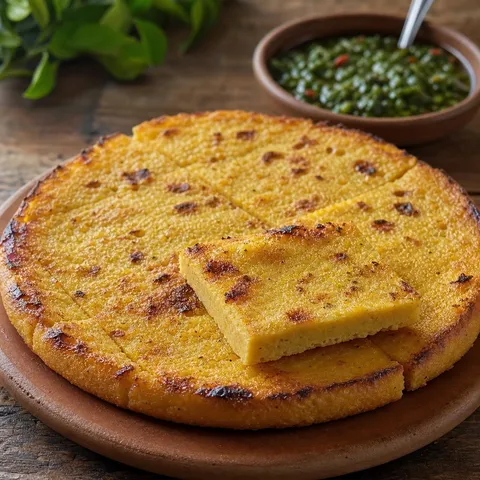 South American Lens Verified Images are for illustrative purposes only, may be inaccurate, and do not guarantee the presence or absence of specific ingredients.
 Fainá
Buenos Aires's thin chickpea flatbread, baked until golden and fragrant — simple, crispy-edged, and traditionally eaten layered right on top of a pizza slice.
 South American Lens Verified Images are for illustrative purposes only, may be inaccurate, and do not guarantee the presence or absence of specific ingredients.
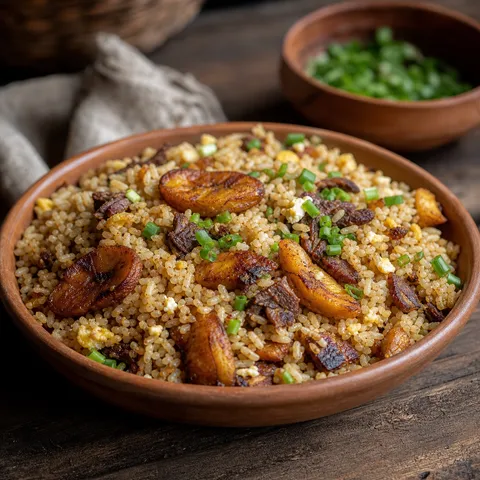
 Majadito
Bolivia's rustic one-pot comfort — dried charque beef simmered down with rice, tomato, and spices into a savory, fragrant dish topped with a fried egg.
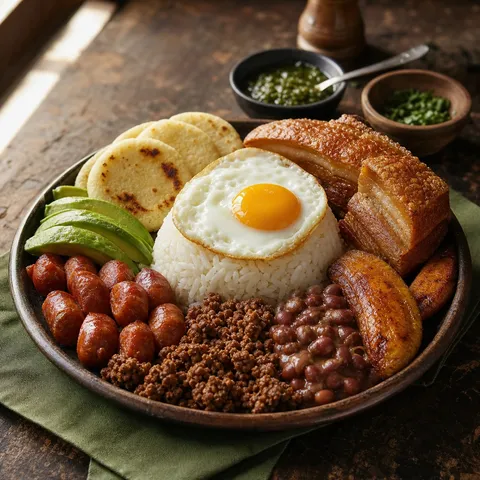 South American Lens Verified Images are for illustrative purposes only, may be inaccurate, and do not guarantee the presence or absence of specific ingredients.
 Bandeja Paisa
Colombia's legendary tray of abundance — red beans, white rice, chicharrón, chorizo, fried egg, plantains, and avocado all piled high for a satisfying feast.