 East African Images are for illustrative purposes only, may be inaccurate, and do not guarantee the presence or absence of specific ingredients.
  Serving Images are for illustrative purposes only, may be inaccurate, and do not guarantee the presence or absence of specific ingredients.
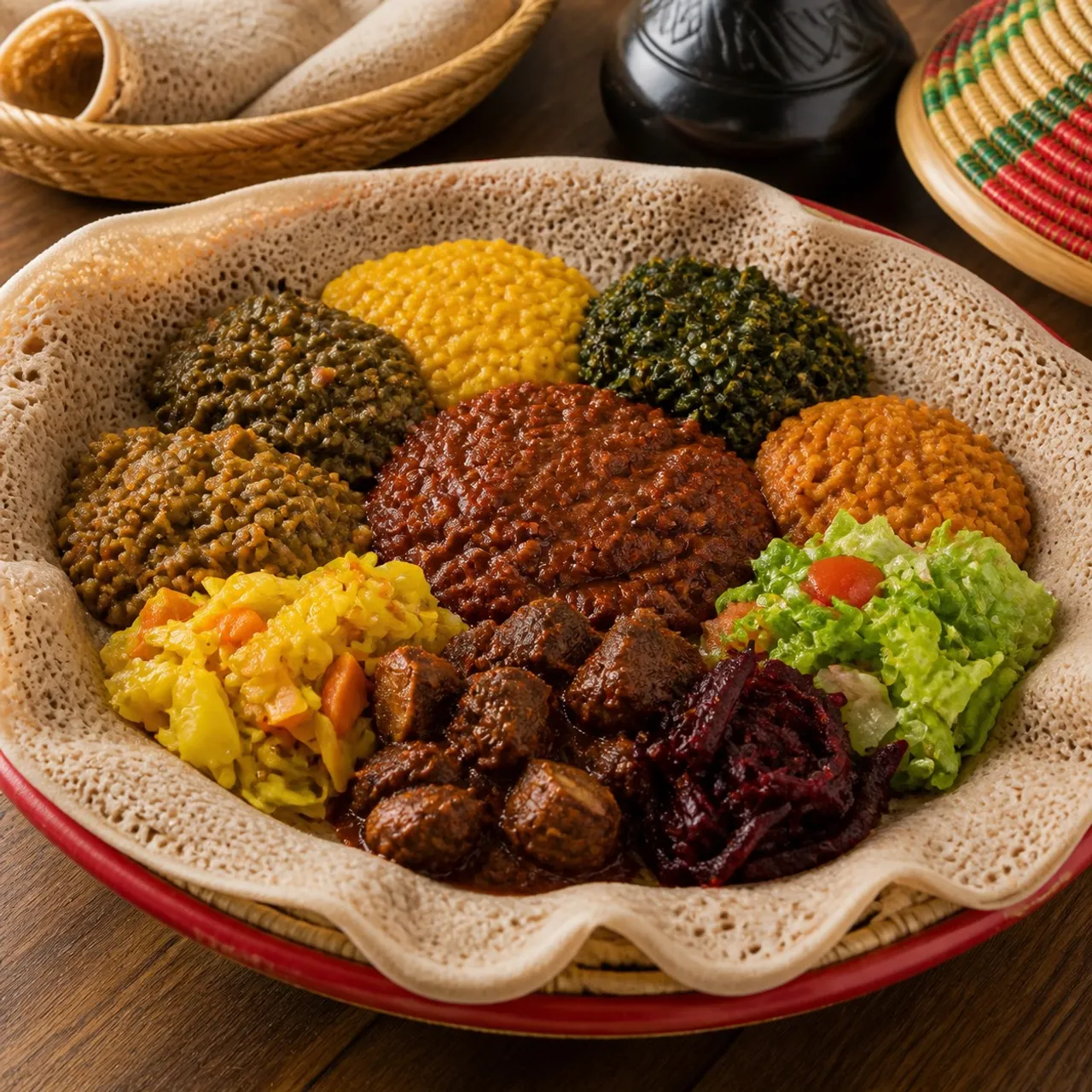
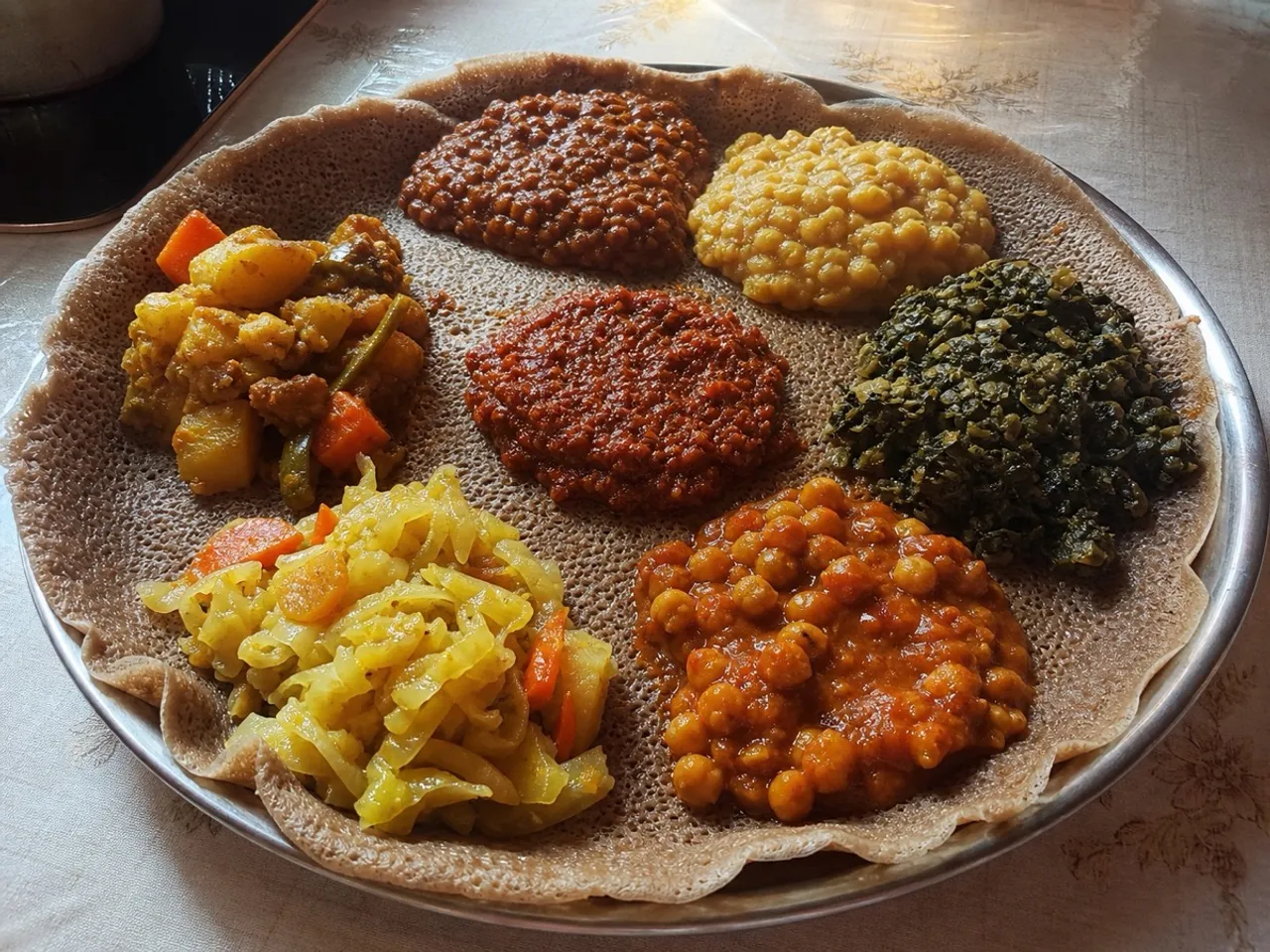
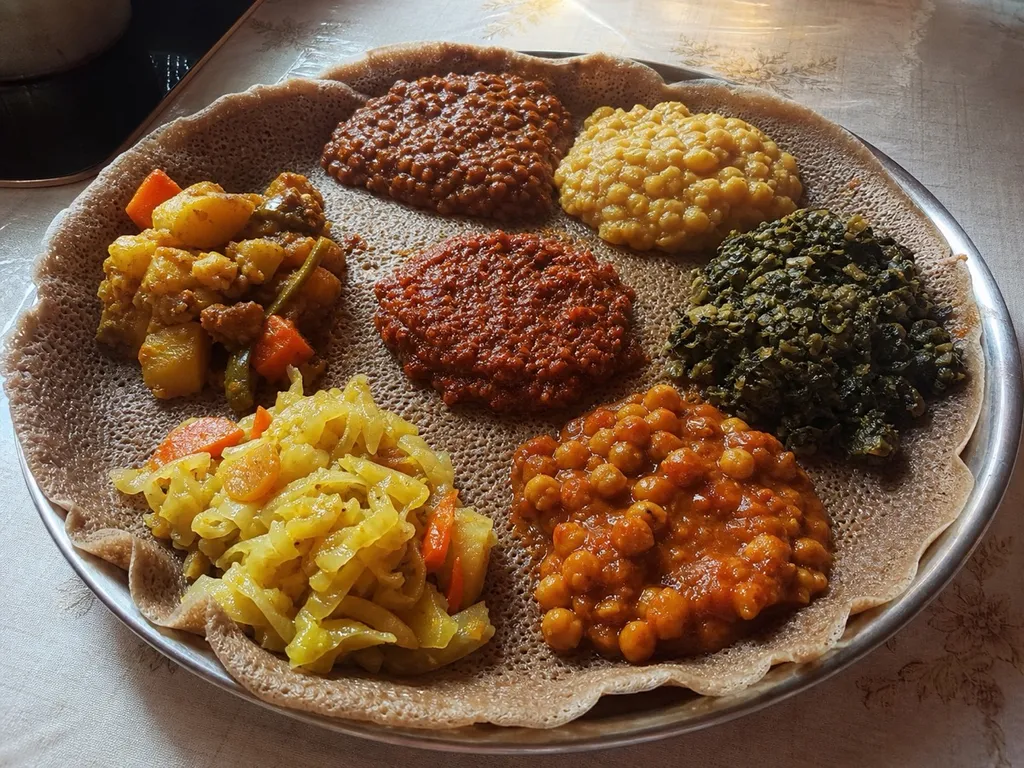
 Beyaynetu
Ethiopia's colorful vegetarian feast — a mosaic of lentil, split pea, greens, and chickpea stews arranged on tangy injera, perfect for sharing and exploring.
Contains common allergens
In the app, Listahan checks these against your household automatically.
Instructions
8 steps- 1
Lay one large injera flat on a big serving platter or tray to form the base of the beyaynetu.
- 2
Prepare the misir wat: saute half the chopped onion in niter kibbeh until golden, stir in half the garlic, ginger, and berbere, then add the lentils with water and simmer 20 to 25 minutes until thick and deep red.
- 3
Prepare the kik alicha: simmer the split peas with the remaining onion, garlic, turmeric, and a little oil for 30 minutes until soft and golden, keeping it mild and turmeric-bright in contrast to the spiced dishes.
- 4
Prepare the gomen by sauteing the collard greens with niter kibbeh, garlic, and ginger, then simmering with a splash of water for 25 minutes until silky and tender.
- 5
Prepare a simple chickpea stew by simmering the cooked chickpeas with a spoonful of berbere, garlic, and tomato until thickened, about 15 minutes.
- 6
Spoon each finished stew in its own mound around the injera base, arranging the colors so the deep red misir wat, golden kik alicha, dark green gomen, and pale chickpea stew each have their own space without touching.
- 7
Roll or fold the remaining injera and tuck pieces around the edge of the platter for scooping.
- 8
Serve at once, tearing off pieces of injera to scoop each stew directly from its section of the platter.
 Images are for illustrative purposes only, may be inaccurate, and do not guarantee the presence or absence of specific ingredients.
 Listahan Family Score™
68/100
Works for many families
Score reflects how well this recipe fits a typical busy household. In the app, your Family Score is personalized to your household's allergens, kids, and pantry.
Listahan cooking guide
Chef notes & practical guide
Technique notes, ingredient swaps, serve-alongside ideas, storage guidance, and equipment for this recipe.
Cultural context
Beyaynetu — sometimes spelled beyaynet — is the Ethiopian Orthodox fasting platter, a communal arrangement of multiple vegetarian stews and salads served on a round of injera. The word refers to the practice of serving many things together rather than a single dish. During the roughly 180 fasting days observed annually by many Ethiopian Orthodox Christians, meat and dairy are prohibited, and beyaynetu becomes the daily meal structure: misir wat, kik alicha, gomen, tikel gomen, and sometimes azifa or ful arranged on a single large piece of injera that everyone tears and uses as the utensil. Restaurants in Ethiopian communities across North America serve it as a fixed sampler platter.
Listahan note
This version focuses on the assembly and proportion logic — which stews to make, how much of each, and how to arrange them on the injera so flavors stay distinct while the bread beneath absorbs the combined drippings.
Technique cues
- The injera base should be room temperature, not cold from the refrigerator — cold injera does not absorb the stew juices as readily and is less pliable for tearing, which disrupts the communal eating rhythm.
- Arrange bold, spicy stews like misir wat on the outer rim and mild stews like kik alicha and gomen toward the center; this way each bite can be calibrated by how much injera surrounds the scoop, with outer bites being the spiciest.
- The platter is ready to serve when the injera beneath each stew has darkened slightly from absorbed liquid — this bottom layer of injera is considered a delicacy, having soaked up the concentrated flavors of every stew above it.
Kitchen flow
- Parallel prep
- Cook the longest-simmering stew first (any split pea or chickpea dish), then start the lentil and collard green preparations in parallel using two burners.
- Make-ahead
- All component stews can be made 1-2 days ahead and refrigerated separately; the platter improves in flavor when the stews are made ahead and gently reheated before assembly.
- Leftover move
- Leftover stews from a beyaynetu keep separately in the refrigerator for up to 4 days and can be served again with fresh injera or used as a filling for wraps with flatbread.
- Cleanup rhythm
- Transfer each stew to its storage container as soon as guests finish eating — stews left in pots overnight are harder to clean and the injera beneath will have turned to mush.
Ingredient brief
Role, handling, and swap guidance for each key ingredient.
Various stews
component dishes of the platter
Purpose: Each stew provides a distinct flavor, protein source, and texture that together create a nutritionally complete and gastronomically balanced meal without any animal products.
Handling: Cook each stew separately and allow them to rest at least 10 minutes so they thicken to a scoopable consistency before plating.
Adaptation: A minimum beyaynetu has three stews; even two well-made ones plus ayib or a simple salad constitutes a valid platter.
injera
edible platter and utensil
Purpose: Injera serves simultaneously as the serving vessel, the eating utensil (torn pieces scoop the stews), and part of the meal itself — particularly the section beneath the stews that absorbs the juices.
Handling: Use injera at room temperature; lay a large round on the serving platter and add rolled pieces around the edge for tearing and scooping.
Adaptation: A thin crepe or large flour tortilla can approximate the function for non-injera households, though the fermented sour flavor is absent.
Berbere spice blend
Heat and depth for the wots
Purpose: Berbere is the defining spice blend of Ethiopian red stews — without it the component dishes on the platter lack the characteristic earthy, chili-forward warmth that makes beyaynetu identifiably Ethiopian.
Handling: Toast and bloom the berbere in nit kibbeh (spiced clarified butter) for 2-3 minutes before adding liquids to develop its full complexity.
Adaptation: A blend of smoked paprika, cayenne, fenugreek, coriander, and allspice approximates berbere's flavor profile when the premixed blend is unavailable.
Technique notes
- Plan for roughly half a cup of each stew per person per dish — a typical beyaynetu for four people includes 4-6 different stews, meaning each stew needs to serve as a side rather than a main.
- Ayib (Ethiopian fresh cheese) is the one dairy element sometimes included in a beyaynetu even during fasting; clarify with guests about dietary observance before adding it.
- Serve the platter on the largest round available — a 16-inch platter lined with a full injera round is the traditional format; smaller individual plates miss the communal tearing-and-sharing dynamic that defines the meal.
Ingredient swaps
- Gluten-free direction
- Teff-only injera is naturally gluten-free; most commercial injera in North America contains wheat flour, so seek out 100% teff injera from Ethiopian grocers for guests with celiac disease.
- Simplified version
- A minimum-effort beyaynetu can be assembled from two store-bought Ethiopian stews (available canned or fresh at Ethiopian restaurants) and homemade or purchased injera.
- Protein boost for non-fasting version
- Add a portion of kitfo (seasoned raw beef), tibs (sauteed meat), or a hard-boiled egg section for guests not observing fasting rules.
Serve alongside
- azifa (Ethiopian lentil salad with mustard and lemon)
- tikel gomen (mild cabbage and carrot stew)
- ful medames (stewed fava beans)
- Ethiopian tej (honey wine)
- tej-style mead or a dry white wine
- sparkling water with fresh lemon
Serving suggestions only — check pairings for your household's allergens.
Storage & reheating
- Store each component stew separately in airtight containers in the refrigerator for up to 4 days.
- Do not store assembled beyaynetu — the injera turns soggy within an hour; assemble fresh each time.
- Individual stews freeze well for up to 2 months; thaw in the refrigerator overnight and reheat before assembling.
Equipment
- large round platter (16 inches or wider)
- multiple small bowls for serving individual stews buffet-style if platter is unavailable
- several medium pots for cooking multiple stews simultaneously
- slotted spoon or ladle for portioning stews onto injera
Make this household-aware
Listahan Pro checks this recipe against your household's allergens, finds pantry-aware swaps, builds the shopping list, and helps you plan the week around it.
Plan it in Listahan
Add Beyaynetu to your week, check it against your household's allergens, and build the shopping list automatically.
More East African recipes
 East African Lens Verified Images are for illustrative purposes only, may be inaccurate, and do not guarantee the presence or absence of specific ingredients.
 Viazi Karai
A Zanzibari street favorite of soft boiled potatoes coated in a turmeric-yellow batter and deep-fried until crackling, served with fiery tamarind sauce.
 East African Lens Verified Images are for illustrative purposes only, may be inaccurate, and do not guarantee the presence or absence of specific ingredients.
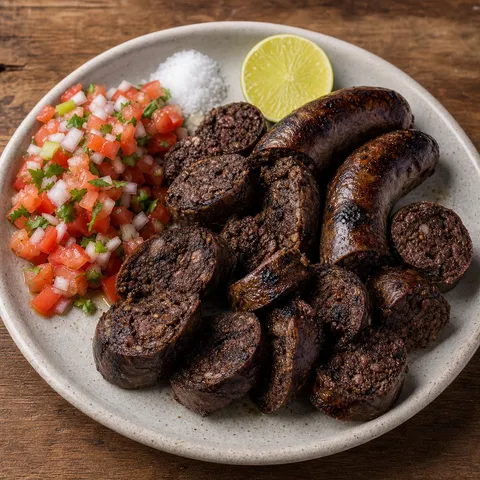
 Mutura
Kenyan spiced blood sausage stuffed with meat, onion, and herbs, then grilled until the casing crisps and snaps — a bold, smoky roadside delicacy.
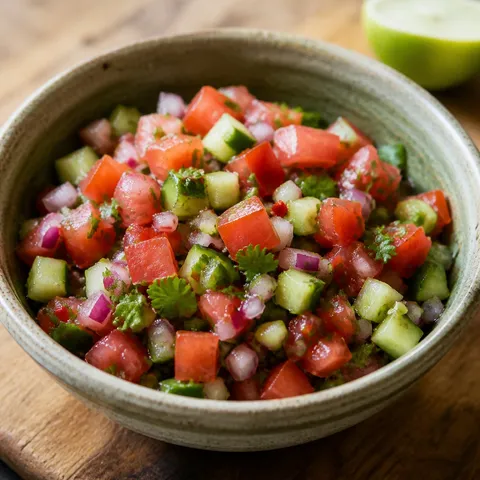 East African Lens Verified Images are for illustrative purposes only, may be inaccurate, and do not guarantee the presence or absence of specific ingredients.
 Kachumbari
Bright, refreshing salad of ripe tomatoes and sharp raw onion, spiked with chili and lime — the cool, crisp counterpoint to rich East African grills.