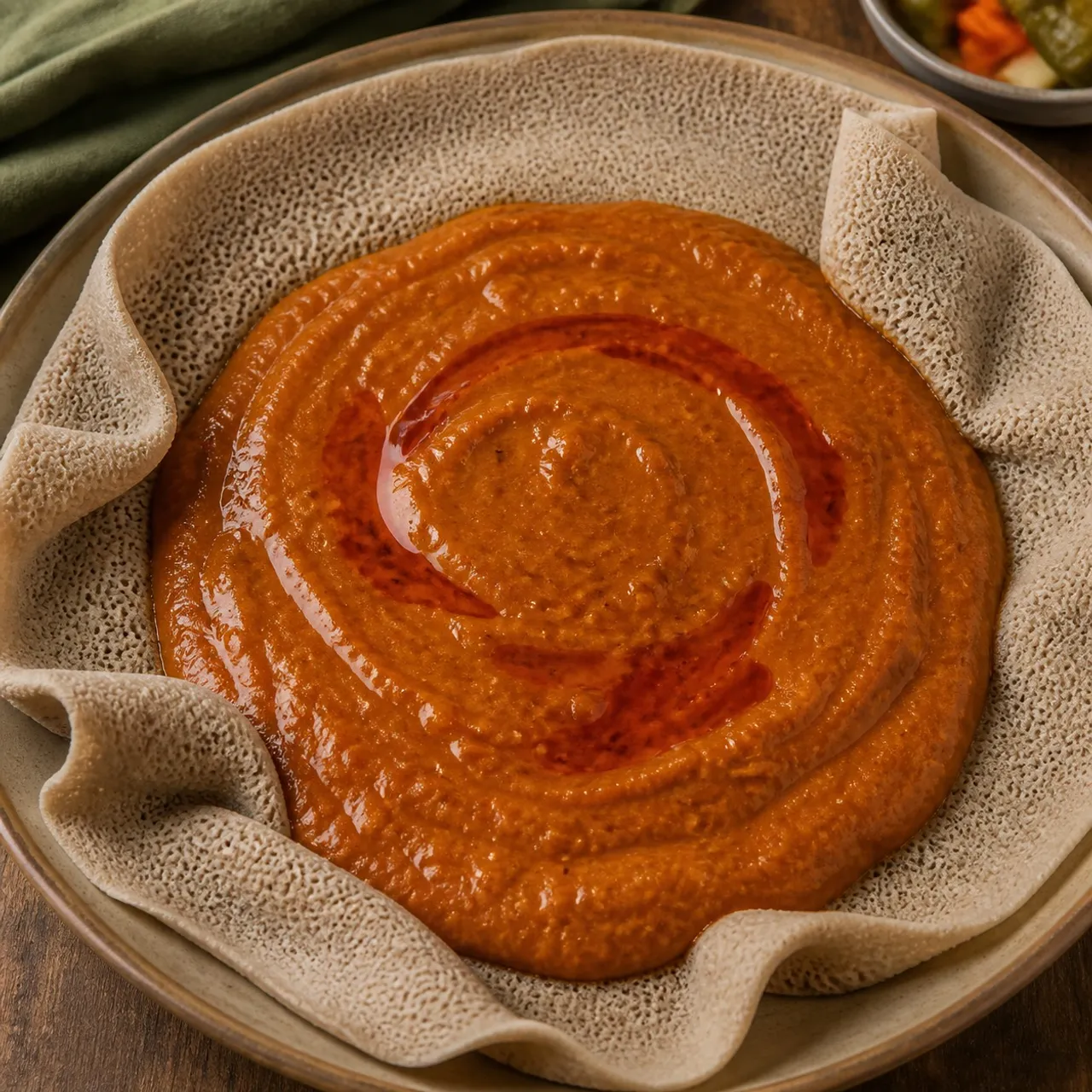
 East African Images are for illustrative purposes only, may be inaccurate, and do not guarantee the presence or absence of specific ingredients.
 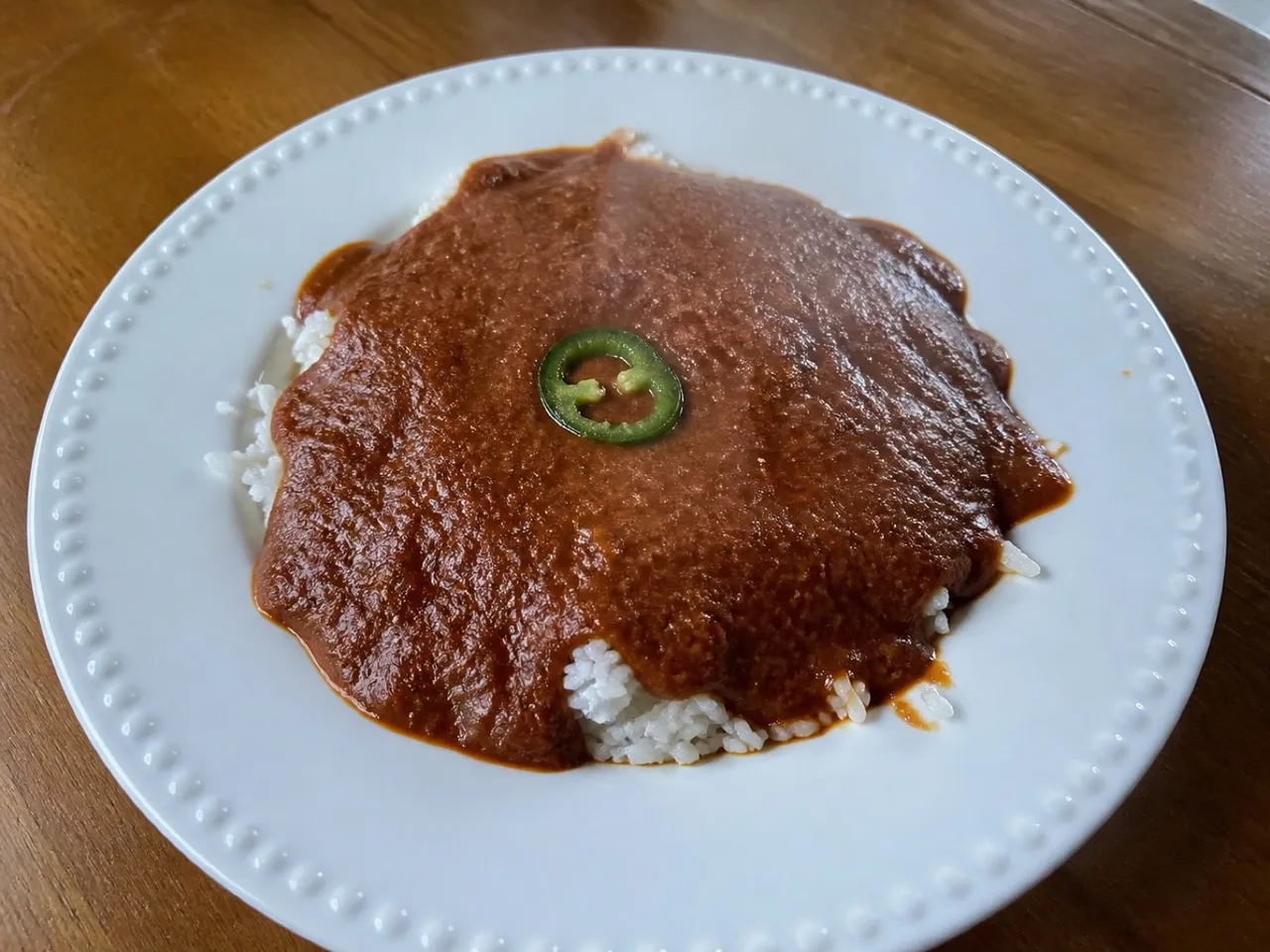 Serving Images are for illustrative purposes only, may be inaccurate, and do not guarantee the presence or absence of specific ingredients.
 Shiro Wat
Velvety Ethiopian chickpea stew enriched with berbere and niter kibbeh, smooth and warmly spiced — a fasting-day favorite that's deeply comforting and satisfying.
Contains common allergens
In the app, Listahan checks these against your household automatically.
Good to know
- One-pot
- Ready in under 30 minutes
Matched from this dish's own ingredients and timing. Browse more: one-pot dinners30-minute meals
Instructions
6 steps- 1
In a medium saucepan, heat the niter kibbeh or oil over medium heat.
- 2
Add the finely minced onion and sauté for 5-7 minutes until very soft and translucent. Add the minced garlic and cook for 1 more minute.
- 3
Gradually whisk in the shiro powder, toasting it slightly with the onions for 1-2 minutes.
- 4
Slowly pour in 2 cups of water while whisking continuously and vigorously to prevent any lumps from forming.
- 5
Reduce the heat to medium-low and simmer the mixture. It will start to pop and sputter. Let it cook for 10-15 minutes until it reaches a smooth, pudding-like consistency.
- 6
Garnish with sliced jalapeño and an extra dollop of spiced butter before serving.
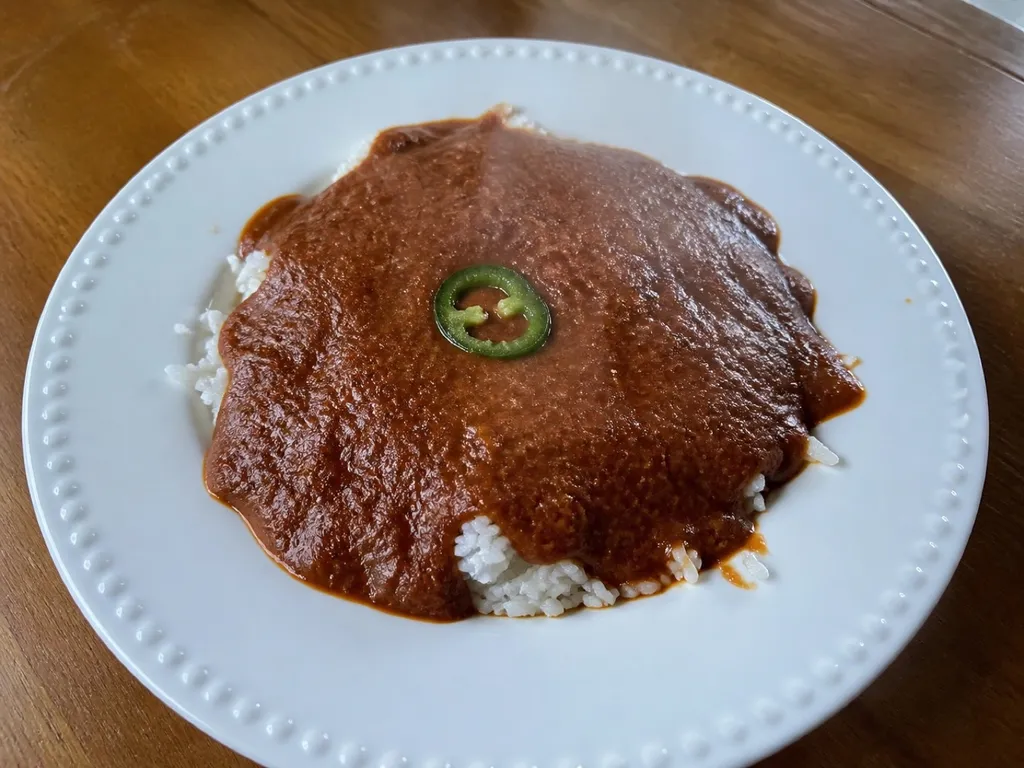 Images are for illustrative purposes only, may be inaccurate, and do not guarantee the presence or absence of specific ingredients.
 Listahan Family Score™
69/100
Works for many families
Score reflects how well this recipe fits a typical busy household. In the app, your Family Score is personalized to your household's allergens, kids, and pantry.
Nutrition
per serving105
Calories
2 g
Protein
10 g
Carbs
8 g
Fat
Estimated per serving. Actual values depend on the brands and portions you use.
Listahan cooking guide
Chef notes & practical guide
Technique notes, ingredient swaps, serve-alongside ideas, storage guidance, and equipment for this recipe.
Cultural context
Shiro Wat is a foundational stew of Ethiopian and Eritrean cuisine made from shiro powder — a pre-seasoned flour ground from dried chickpeas, horse beans, or a blend of legumes with berbere and other spices worked in. It is one of the most widely eaten dishes across Ethiopia, prized as an everyday staple that is fast, inexpensive, deeply nutritious, and inherently plant-based, making it the default fasting food during the many Ethiopian Orthodox Christian fasting days when meat and dairy are prohibited. Despite its humble ingredients, shiro wat demands real technique to achieve the correct smooth, glossy consistency.
Listahan note
This version builds on slowly sweated onion and niter kibbeh before whisking in the shiro powder gradually — the key to a perfectly smooth, lump-free stew is adding the powder off-heat or in a thin stream while stirring constantly.
Technique cues
- Shiro powder is pre-seasoned, so the final dish can easily become over-salted or over-spiced if you add additional berbere without tasting first; the correct technique is to build a neutral base with onion and kibbeh, then let the powder carry the spice.
- Whisk the shiro powder into the water in a thin stream rather than adding it all at once — it absorbs liquid unevenly and forms hard lumps if dumped in without constant stirring; a balloon whisk is the right tool here, not a wooden spoon.
- The stew thickens significantly as it cooks and even more as it cools — cook to a consistency slightly thinner than you want at the table, because it will tighten further in the 3-4 minutes between pot and plate.
Kitchen flow
- Parallel prep
- Shiro Wat takes only 15-20 minutes from start to finish, so prepare it last while the injera rests or the main stew (doro wat or tibs) finishes its last simmer.
- Make-ahead
- The stew can be made up to 3 days ahead and refrigerated; it thickens considerably when cold and needs water or broth and gentle reheating to restore the correct consistency.
- Leftover move
- Thin leftover shiro wat with water and warm it as a breakfast porridge served with injera, a common Ethiopian morning meal in its own right.
- Cleanup rhythm
- The pot cleans easily with warm water immediately after service — shiro starch releases readily when not given time to harden; soak the whisk immediately as well.
Ingredient brief
Role, handling, and swap guidance for each key ingredient.
1/2 cup shiro powder (seasoned chickpea flour)
primary thickener, protein, and spice carrier
Purpose: Shiro powder is the defining ingredient — it is not plain chickpea flour but a pre-blended spice-and-legume mixture that carries the flavor of the stew; the quality of the shiro powder determines the quality of the dish.
Handling: Measure before starting and keep dry until you are ready to add it to the liquid; shiro powder clumps on contact with moisture.
Adaptation: Plain chickpea flour (besan) is a partial substitute — add 1 tsp berbere, 1/2 tsp cumin, and 1/4 tsp fenugreek to approximate the seasoning, but the result will be less complex than commercial shiro powder.
1 small onion (finely minced)
aromatic base
Purpose: The minced onion provides sweetness and body to the sauce base before the shiro powder is introduced.
Handling: Mince as finely as possible so the onion fully dissolves into the sauce during cooking; large pieces will remain as visible chunks in the smooth stew.
Adaptation: Shallots provide a more delicate flavor and work well in the same quantity.
2 tbsp niter kibbeh or vegetable oil
cooking fat and flavor
Purpose: Niter kibbeh contributes the spiced-butter complexity that is the background note of most Ethiopian stews; oil produces a plant-based version with a cleaner but less complex flavor.
Handling: Use niter kibbeh if available and heat it in the pot before adding onion; if using vegetable oil, the dish is suitable for fasting days.
Adaptation: Plain ghee plus a pinch each of cardamom and turmeric is closer to niter kibbeh than vegetable oil.
1 jalapeño (sliced; optional)
fresh heat accent
Purpose: A sliced jalapeño adds fresh, bright heat on top of the deeper background spice of the shiro powder.
Handling: Add with the onion if you want it to soften fully into the stew, or as a garnish at the end for more fresh heat.
Adaptation: A serrano pepper for more heat, or simply omit entirely — the shiro powder already carries warmth.
Technique notes
- For an extra smooth result, pass the finished stew through a fine-mesh strainer — the onion and garlic will be trapped but all the flavor will come through, and the texture will resemble a silky bisque.
- Do not rush the onion-cooking stage: the onion needs to be fully translucent and beginning to turn golden before you add the water and shiro, otherwise the raw onion flavor will dominate the finished stew.
- Shiro wat benefits from a few drops of high-quality extra-virgin olive oil drizzled on top just before serving — it adds richness and a visual sheen that elevates a simple everyday stew.
Ingredient swaps
- Vegan direction
- Use vegetable oil instead of niter kibbeh — this is the traditional preparation for Ethiopian Orthodox fasting days and is entirely plant-based.
- Gluten-free direction
- Already gluten-free when made with shiro powder from chickpeas; confirm the shiro brand is processed in a GF facility.
- Lower-sodium
- Shiro powder is pre-seasoned with salt; taste before adding any additional salt and add only at the very end if needed.
Serve alongside
- Injera (Ethiopian sourdough flatbread)
- Doro Wat as a meat component on the same communal platter
- gomen (braised collard greens with garlic)
- fresh sliced tomato and green onion salad
- Ethiopian black tea (shai) with cardamom and sugar
- cold barley water or unsweetened hibiscus tea
Serving suggestions only — check pairings for your household's allergens.
Storage & reheating
- Refrigerate in an airtight container for up to 3 days; the stew will firm to a very thick paste when cold.
- Reheat over low heat with 3-4 tablespoons of water per cup of stew, whisking to restore the smooth consistency.
- Shiro wat does not freeze well — the starch granules break down on freezing and the texture becomes grainy on thawing.
Equipment
- Medium heavy-bottomed saucepan (2-quart)
- Balloon whisk for adding the shiro powder lump-free
- Fine-mesh strainer (optional, for extra-smooth texture)
- Measuring cups for the liquid and powder
Make this household-aware
Listahan Pro checks this recipe against your household's allergens, finds pantry-aware swaps, builds the shopping list, and helps you plan the week around it.
Plan it in Listahan
Add Shiro Wat to your week, check it against your household's allergens, and build the shopping list automatically.
More East African recipes
 East African Lens Verified Images are for illustrative purposes only, may be inaccurate, and do not guarantee the presence or absence of specific ingredients.
 Viazi Karai
A Zanzibari street favorite of soft boiled potatoes coated in a turmeric-yellow batter and deep-fried until crackling, served with fiery tamarind sauce.
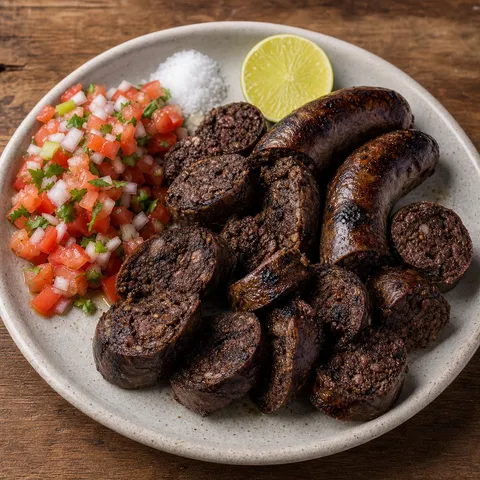 East African Lens Verified Images are for illustrative purposes only, may be inaccurate, and do not guarantee the presence or absence of specific ingredients.
 Mutura
Kenyan spiced blood sausage stuffed with meat, onion, and herbs, then grilled until the casing crisps and snaps — a bold, smoky roadside delicacy.
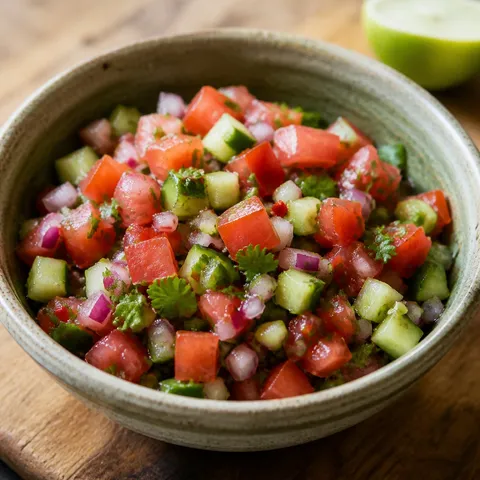 East African Lens Verified Images are for illustrative purposes only, may be inaccurate, and do not guarantee the presence or absence of specific ingredients.
 Kachumbari
Bright, refreshing salad of ripe tomatoes and sharp raw onion, spiked with chili and lime — the cool, crisp counterpoint to rich East African grills.