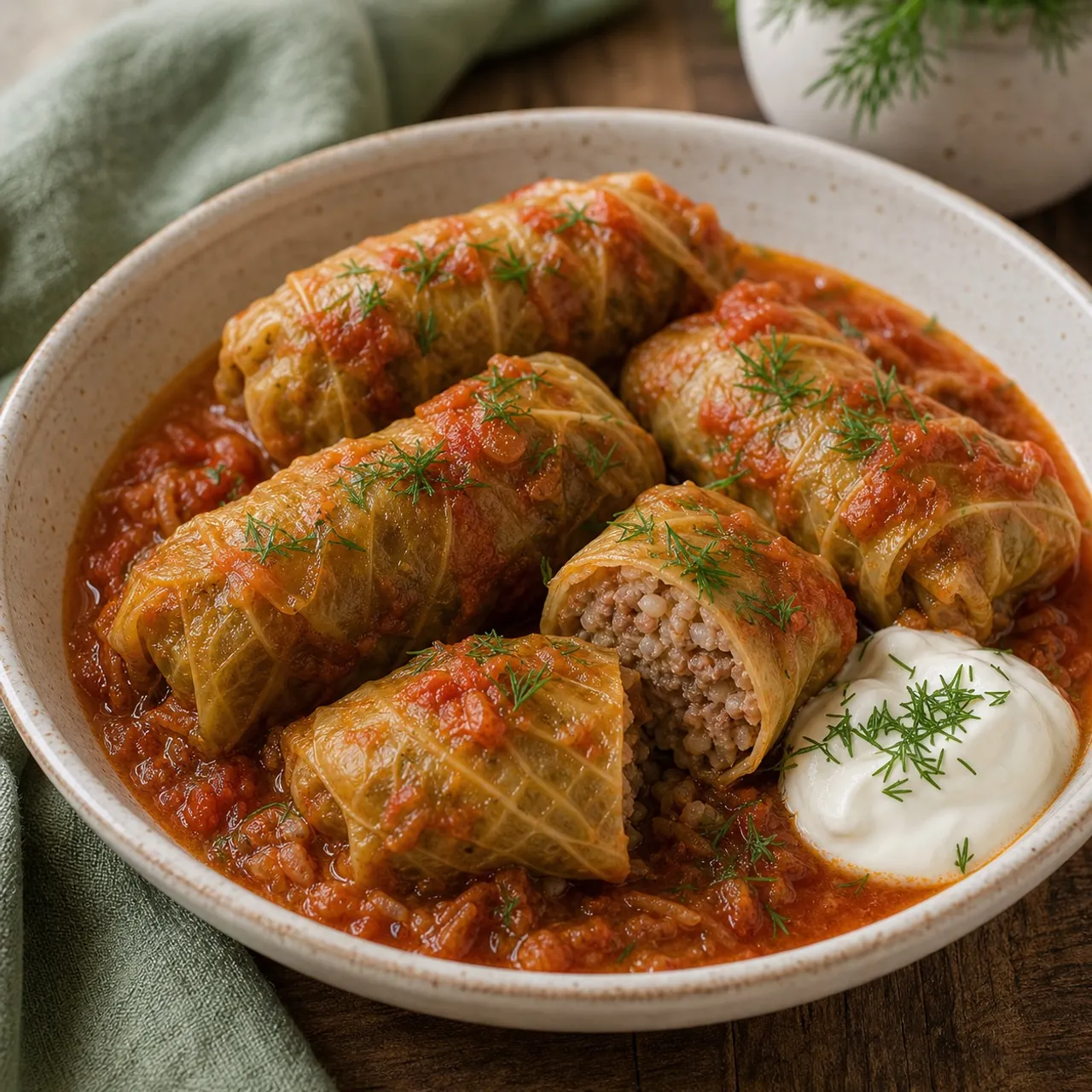
 Eastern European Images are for illustrative purposes only, may be inaccurate, and do not guarantee the presence or absence of specific ingredients.
 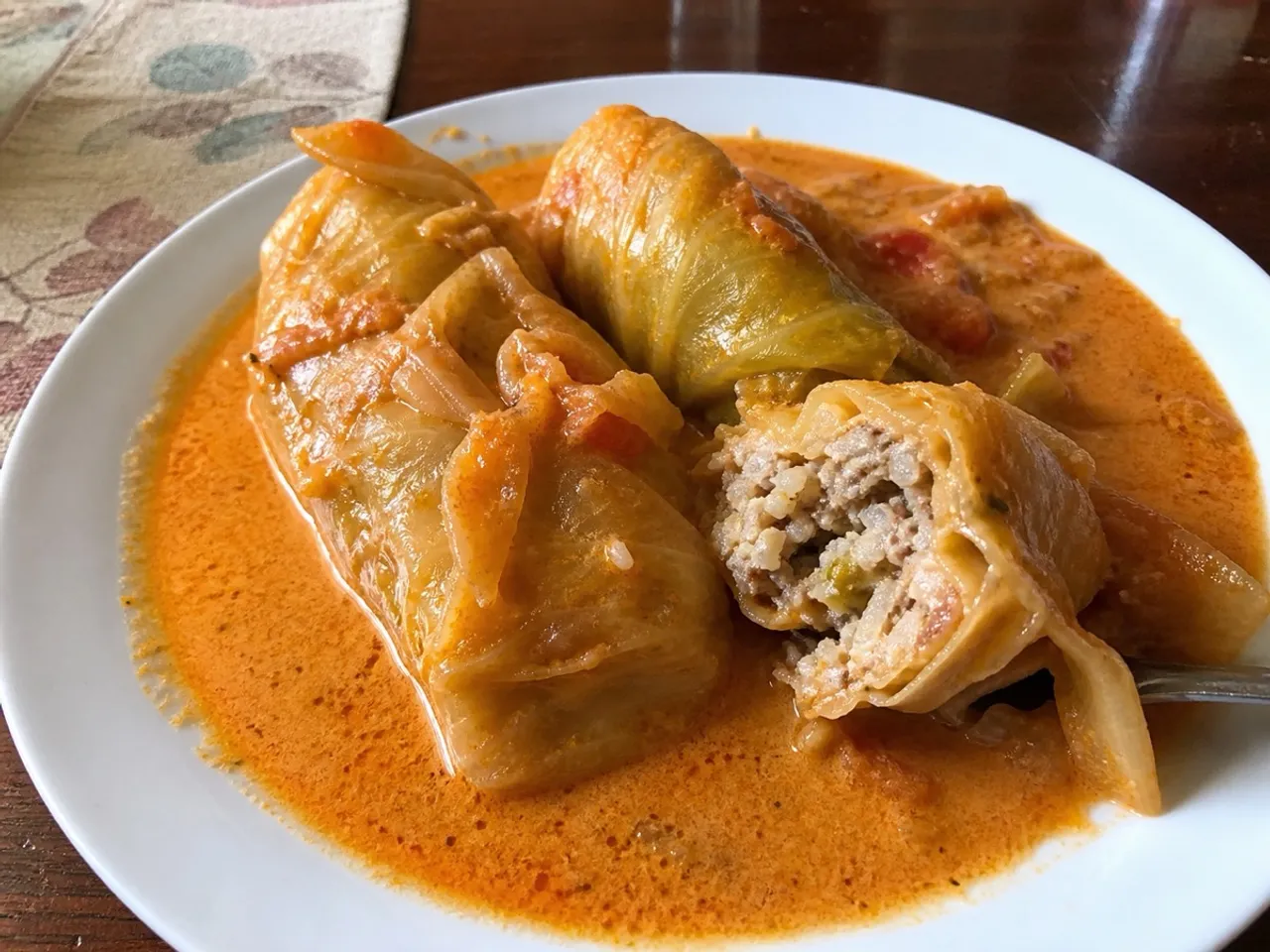 Serving Images are for illustrative purposes only, may be inaccurate, and do not guarantee the presence or absence of specific ingredients.
 Holubtsi
Ukrainian stuffed cabbage rolls filled with herbed rice and pork, braised low and slow in a tomato-sour cream sauce until meltingly tender and fragrant.
Contains common allergens
In the app, Listahan checks these against your household automatically.
Instructions
8 steps- 1
Core the cabbage and simmer it whole in a large pot of salted water for about 10 minutes, peeling away leaves as they soften until you have 12 pliable leaves; shave down the thick ribs.
- 2
In a bowl, mix the ground pork, cooked rice, onion, garlic, dill, egg, salt, and pepper until well combined.
- 3
Spoon filling onto the base of each leaf, fold in the sides, and roll into a tight bundle.
- 4
Arrange the rolls seam-side down in a large pot or Dutch oven, layering a few shredded cabbage leaves between rows.
- 5
Whisk the sour cream into the tomato sauce and pour it over the rolls, adding water if needed so the liquid reaches about two-thirds up the sides.
- 6
Cover and simmer gently on the stovetop, or braise in a 325 F oven, for about 1.5 to 2 hours, until the cabbage is meltingly tender.
- 7
Baste the rolls with the sauce halfway through cooking to keep them moist.
- 8
Serve hot, spooning the tomato-sour cream braising liquid generously over each roll.
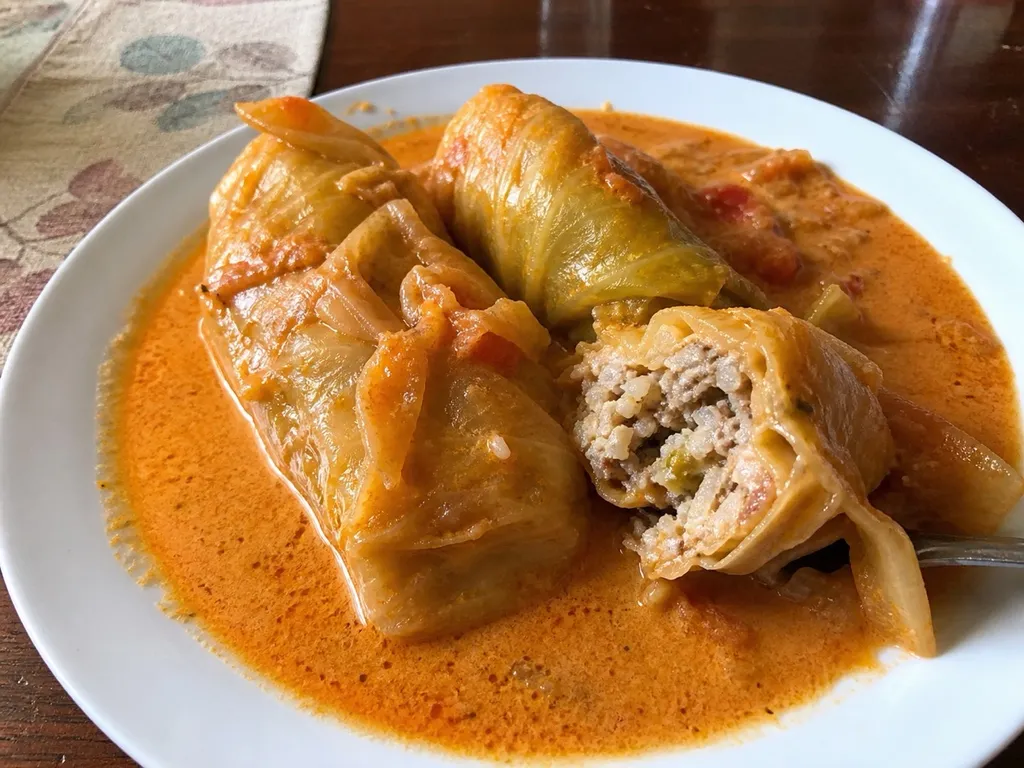 Images are for illustrative purposes only, may be inaccurate, and do not guarantee the presence or absence of specific ingredients.
 Listahan Family Score™
67/100
Works for many families
Score reflects how well this recipe fits a typical busy household. In the app, your Family Score is personalized to your household's allergens, kids, and pantry.
Nutrition
per serving455
Calories
34 g
Protein
38 g
Carbs
19 g
Fat
Estimated per serving. Actual values depend on the brands and portions you use.
Listahan cooking guide
Chef notes & practical guide
Technique notes, ingredient swaps, serve-alongside ideas, storage guidance, and equipment for this recipe.
Cultural context
Holubtsi are Ukrainian stuffed cabbage rolls — close cousins to Romanian sarmale and Polish golabki — that occupy a central place in Ukrainian home cooking across generations. The word means 'little pigeons' and the dish appears at Ukrainian weddings, Orthodox holidays, and winter celebrations from the Carpathians to the Black Sea coast. What distinguishes holubtsi from their neighbors is the braising liquid: Ukrainians typically use a combination of tomato and sour cream that creates a blush-colored, slightly tangy sauce that is distinctive and deeply comforting.
Listahan note
This version braises the rolls in a tomato-sour cream sauce rather than plain tomato juice, which gives the sauce a rounded, creamy richness that is specific to the Ukrainian tradition.
Technique cues
- Blanch the cabbage leaves for exactly 2 to 3 minutes — enough to make them pliable for rolling without becoming so soft they tear when you apply pressure to close the roll.
- Roll firmly but not so tight that the rice has no room to expand during braising — tight rolls can burst as the rice absorbs liquid and swells inside the cabbage.
- Add the sour cream to the braising liquid only after removing the pot from the heat or lowering to a very gentle simmer — boiling sour cream can cause it to curdle into grainy white specks.
Kitchen flow
- Parallel prep
- Blanch cabbage leaves in batches while you mix the filling — by the time filling is ready, leaves are cool enough to handle.
- Make-ahead
- Holubtsi are a classic make-ahead dish — cook fully the day before and the sauce develops overnight into something richer and more complex.
- Leftover move
- Chop leftover holubtsi roughly and stir into the remaining sauce with a cup of broth for a hearty stuffed cabbage soup.
- Cleanup rhythm
- Use a single large Dutch oven for the entire process — blanching the cabbage, building the sauce, and braising all happen in or beside the same vessel.
Ingredient brief
Role, handling, and swap guidance for each key ingredient.
green cabbage
outer wrapper
Purpose: Fresh green cabbage leaves become tender and slightly sweet after braising, wrapping the filling in a soft, edible parcel.
Handling: Core the whole head and submerge in boiling water for 3 to 4 minutes, peeling leaves off as they soften — work in batches as the outer leaves release.
Adaptation: Savoy cabbage leaves are more tender and roll more easily, making them a better choice for first-time makers.
ground beef and pork mix
filling base
Purpose: A mix of beef and pork provides both flavor depth and the fat needed to keep the filling moist through a long braise.
Handling: Combine raw with cooked rice and seasonings — the mixture cooks inside the roll.
Adaptation: Ground turkey or chicken makes a leaner filling but requires an extra tablespoon of oil to prevent dryness.
cooked white rice
filling stretcher and binder
Purpose: Partially cooked rice absorbs the remaining moisture from the meat as the rolls braise, swelling to fill the roll completely and creating a cohesive slice.
Handling: Cook to about 70 percent done (slightly undercooked) before mixing into the filling — it will finish in the braising liquid.
Adaptation: Buckwheat kasha in the filling is a traditional Ukrainian alternative that adds nuttiness.
sour cream
sauce enricher
Purpose: Sour cream whisked into the tomato braising liquid at the end of cooking creates the characteristic blush-colored, tangy sauce that defines Ukrainian-style holubtsi.
Handling: Temper by whisking a spoonful of hot braising liquid into the sour cream before adding it to the pot, to prevent curdling.
Adaptation: Plain full-fat Greek yogurt is an acceptable substitute with a similar tang and protein structure.
canned crushed tomatoes
braising liquid base
Purpose: Tomatoes provide the acid, sweetness, and color base for the sauce that the rolls braise in for the full cooking time.
Handling: Thin slightly with water or broth before pouring over the rolls so there is enough liquid to braise without burning.
Adaptation: Tomato puree gives a smoother, less chunky sauce texture in the finished dish.
Technique notes
- Cut out the thick central vein of each cabbage leaf with a V-cut before rolling — it makes the leaf far more flexible and the roll tighter and more compact.
- Pack the rolls snugly in the pot in a single layer with seam-side down so they hold each other closed during the braise without needing toothpicks.
- Taste the braising sauce before it goes in the oven and season it generously — a under-seasoned sauce will produce under-seasoned rolls that cannot be corrected after cooking.
Ingredient swaps
- Gluten-free direction
- Holubtsi is naturally gluten-free when made with rice filling — verify that any smoked pork or seasoning mixes used are free of wheat starch.
- Dairy-free option
- Replace sour cream with full-fat coconut cream whisked into the tomato sauce off the heat — the coconut note is mild enough not to dominate the dish.
- Vegetarian direction
- Fill with a mix of cooked rice, sauteed mushrooms, and finely diced carrots and onion; the braising sauce remains the same.
Serve alongside
- Sour cream for spooning over
- Boiled or mashed potatoes
- Dark rye bread
- Ukrainian varenyky wine (Transcarpathian white)
- Cold beet kvass
Serving suggestions only — check pairings for your household's allergens.
Storage & reheating
- Holubtsi keep refrigerated in their sauce for up to 5 days and improve with time; reheat gently on the stovetop over low heat.
- Freeze in their sauce for up to 3 months; thaw overnight in the refrigerator and reheat covered in a low oven.
Equipment
- Large Dutch oven or deep braising pot with a lid
- Sharp paring knife for scoring the cabbage rib
- Tongs for handling hot cabbage leaves safely
- Deep baking dish as an alternative to stovetop braising
Make this household-aware
Listahan Pro checks this recipe against your household's allergens, finds pantry-aware swaps, builds the shopping list, and helps you plan the week around it.
Plan it in Listahan
Add Holubtsi to your week, check it against your household's allergens, and build the shopping list automatically.
More Eastern European recipes
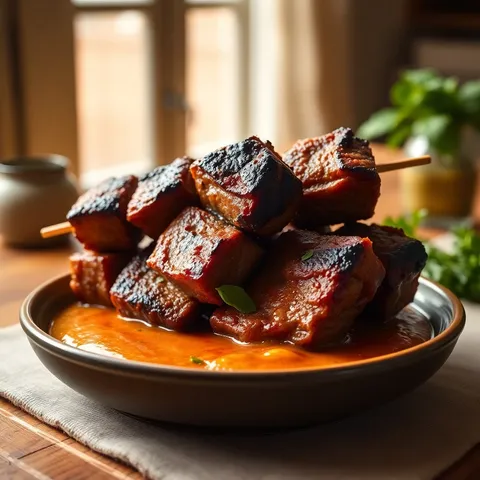 Eastern European Lens Verified Images are for illustrative purposes only, may be inaccurate, and do not guarantee the presence or absence of specific ingredients.
 Shashlik
Smoky, charred cubes of marinated lamb or pork threaded on skewers and grilled over embers — Central Asia's festive open-fire classic, fragrant with onion and spice.
 Eastern European Lens Verified Images are for illustrative purposes only, may be inaccurate, and do not guarantee the presence or absence of specific ingredients.
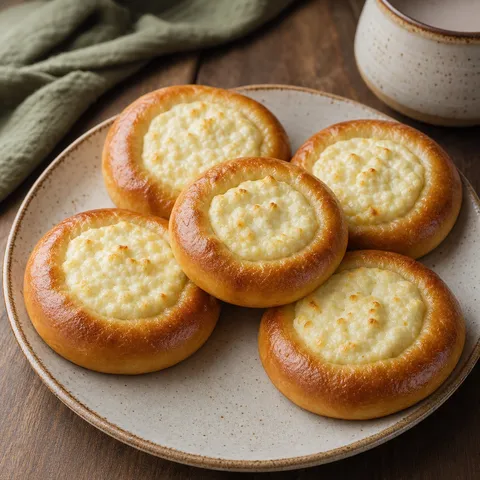
 Vatrushka
Soft, pillowy Russian buns filled with a sweetened quark or farmer's cheese center — lightly golden and gently sweet, perfect alongside tea or coffee.
 Eastern European Lens Verified Images are for illustrative purposes only, may be inaccurate, and do not guarantee the presence or absence of specific ingredients.
 Kurtosh Kalach
Hungary's iconic chimney cake — sweet yeast dough spiraled around a spit, rolled in cinnamon sugar, and roasted until the outside caramelizes into a crackly, warm shell.