 Eastern European Images are for illustrative purposes only, may be inaccurate, and do not guarantee the presence or absence of specific ingredients.
 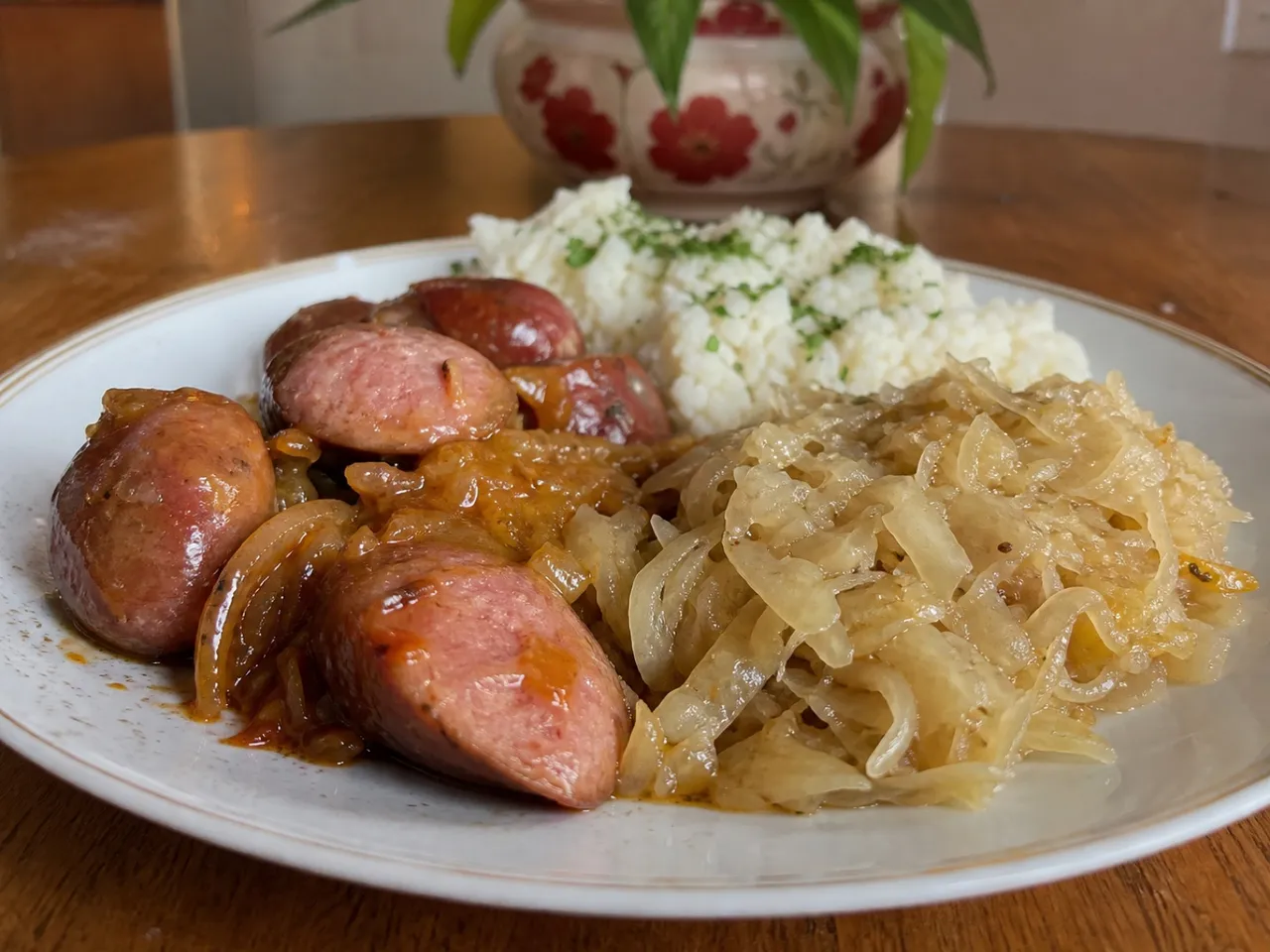 Serving Images are for illustrative purposes only, may be inaccurate, and do not guarantee the presence or absence of specific ingredients.
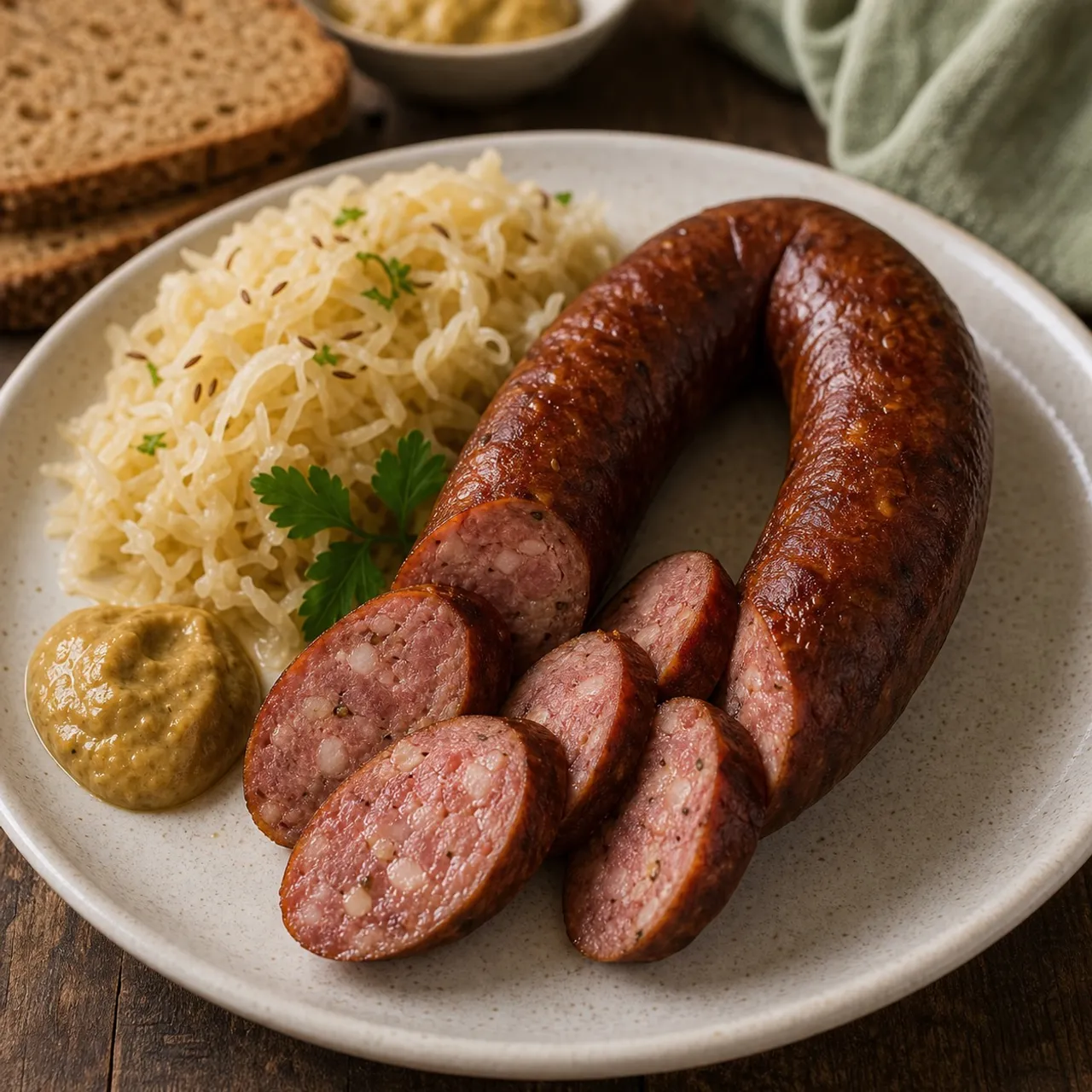
 Kielbasa
Poland's famous smoked pork sausage — garlicky, smoky, and snappy-skinned — grilled, pan-fried, or slow-cooked with sauerkraut into a deeply satisfying meal.
Contains common allergens
In the app, Listahan checks these against your household automatically.
Instructions
7 steps- 1
Score the kielbasa casing lightly in a crosshatch pattern to help it render and stay juicy while cooking.
- 2
Heat the oil in a large skillet over medium heat and saute the sliced onion until soft and beginning to caramelize, about 8 minutes.
- 3
Push the onions to the side, add the kielbasa, and brown it on all sides, about 8 to 10 minutes total.
- 4
Stir in the sauerkraut, caraway seeds, and brown sugar, then pour in the broth or beer.
- 5
Cover and simmer over low heat for 20 to 25 minutes, letting the kielbasa finish cooking through and the sauerkraut soften and absorb the flavors.
- 6
Alternatively, grill the kielbasa whole over medium-high heat, turning often, until the skin is snappy and charred in spots, about 12 to 15 minutes.
- 7
Slice the kielbasa on a diagonal and serve over the braised sauerkraut with whole grain mustard on the side.
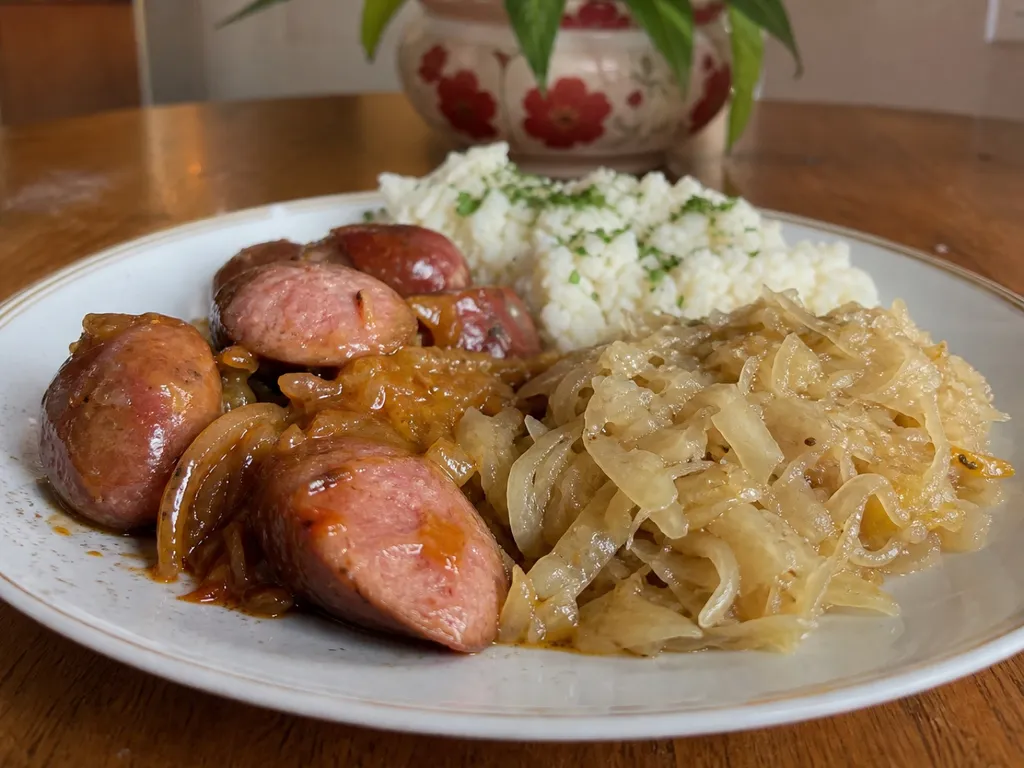 Images are for illustrative purposes only, may be inaccurate, and do not guarantee the presence or absence of specific ingredients.
 Listahan Family Score™
67/100
Works for many families
Score reflects how well this recipe fits a typical busy household. In the app, your Family Score is personalized to your household's allergens, kids, and pantry.
Nutrition
per serving555
Calories
61 g
Protein
1 g
Carbs
32 g
Fat
Estimated per serving. Actual values depend on the brands and portions you use.
Listahan cooking guide
Chef notes & practical guide
Technique notes, ingredient swaps, serve-alongside ideas, storage guidance, and equipment for this recipe.
Cultural context
Kielbasa is the Polish word simply meaning 'sausage,' but outside Poland it has come to refer specifically to the thick, garlic-forward smoked pork sausage that Polish immigrants introduced across North America and that found its way into diners, delis, and tailgate coolers far from its origins. Traditional Polish kielbasa is made in dozens of regional varieties — wiejska (country-style), kabanos (thin and dried), biala (fresh and unsmoked) — but what most North Americans call kielbasa is closest to kielbasa starowiejska, coarsely ground, heavily smoked, and eaten grilled or pan-fried.
Listahan note
This version focuses on cooking pre-made kielbasa well rather than making it from scratch, because the craft of the sausage itself is where the dish lives — choosing a quality product and applying the right heat.
Technique cues
- Score the casing diagonally before grilling or pan-frying; the cuts let the casing grip the heat surface and prevent it from splitting and curling in a single direction.
- Cook kielbasa over medium rather than high heat — too hot and the casing bursts and the fat spits out, leaving you with a dry, shrunken sausage instead of a juicy one.
- Slicing kielbasa on the bias after cooking rather than straight across gives each piece more surface area for browning and makes for a more appealing presentation on a platter.
Kitchen flow
- Parallel prep
- Start the onions caramelizing in one pan while you score and heat the kielbasa in another; both finish at roughly the same time for a cohesive plate.
- Make-ahead
- Kielbasa is a pre-cooked, smoked sausage that stores well; buy ahead and keep refrigerated for up to 2 weeks or frozen for 3 months, making it one of the most pantry-friendly proteins.
- Leftover move
- Slice leftover kielbasa into a hash with diced potatoes and peppers, or add to a lentil or split pea soup where it contributes smoke and body to the whole pot.
- Cleanup rhythm
- The rendered fat in the pan after cooking kielbasa is excellent for browning sauerkraut or onions — use it rather than discarding, then deglaze the pan with a splash of beer or water to clean.
Ingredient brief
Role, handling, and swap guidance for each key ingredient.
kielbasa
main protein
Purpose: The sausage itself carries all the seasoning — garlic, marjoram, and smoke — so cooking method and accompaniments are the only variables left to control.
Handling: Slice into half-inch coins on the diagonal or cut into 4-inch sections for grilling; score sections that will be grilled whole so the interior heats evenly.
Adaptation: Andouille sausage offers a Cajun smoky alternative with more heat; bratwurst works well with the same cooking method but has a different flavor profile.
sauerkraut
classic accompaniment
Purpose: The acidity of sauerkraut cuts through the fat and richness of the smoked pork and is the most traditional pairing in Polish cuisine.
Handling: Drain well and briefly rinse if very sour; warm in the same pan as the sausage to pick up the caramelized fond and fat for extra flavor.
Adaptation: Braised red cabbage with caraway offers a sweeter, softer contrast; dill pickles served alongside perform a similar acid-cut function cold.
onion
sweetened braising aromatic
Purpose: Caramelized onions cooked alongside or beneath the kielbasa add a natural sweetness that balances the sausage's saltiness and smokiness.
Handling: Cut into half rings and cook in the sausage fat over medium-low heat for 10 to 12 minutes before adding the sausage to finish together.
Adaptation: Leeks cooked the same way have a milder, more delicate flavor if you find onions too assertive alongside the smoky sausage.
mustard
condiment
Purpose: Polish mustard or a coarse-grain variety is the standard accompaniment, providing the sharpness and pungency that cuts through the rich fat of the sausage.
Handling: Serve on the side rather than cooked in — heat destroys the mustard's volatile compounds and you lose the sharp bite that makes it such an effective counterpoint.
Adaptation: German stone-ground mustard or American yellow mustard both work well; horseradish cream is a traditional Polish alternative.
Technique notes
- Pan-frying in a dry cast-iron skillet with no added oil produces the best crust — kielbasa has enough internal fat to self-baste and the iron holds heat evenly at the medium setting that prevents bursting.
- Add a quarter cup of beer or apple cider to the pan when the kielbasa is almost done and let it reduce to a glaze; the sugars in the liquid create a sticky, lacquered coating on the sausage.
- Resting kielbasa on a rack for 2 minutes after cooking keeps the bottom from steaming in its own juices and helps the casing stay crisp rather than softening on a plate.
Ingredient swaps
- Gluten-free direction
- Most commercially produced kielbasa is gluten-free, but verify the label as some brands use wheat-based fillers or flavorings in the casing preparation.
- Lower-sodium direction
- Serve smaller portions alongside a larger accompaniment of sauerkraut or braised cabbage, which dilutes the overall sodium per serving without altering the dish's character.
- Weeknight shortcut
- Score and microwave kielbasa on high for 90 seconds per piece if you genuinely have no time, then finish in a hot dry pan for 1 minute per side to restore casing crispiness.
Serve alongside
- pierogi with caramelized onions
- braised sauerkraut with caraway and bacon
- boiled new potatoes with dill butter
- cold Polish lager (Zywiec or Tyskie)
- dark beer or porter
Serving suggestions only — check pairings for your household's allergens.
Storage & reheating
- Pre-cooked, smoked kielbasa keeps in the refrigerator for 1 to 2 weeks unopened or 7 days after opening. Once cooked, leftovers keep refrigerated for up to 4 days. Reheat in a dry skillet over medium heat for best texture; the microwave works but leaves the casing soft. Uncooked fresh kielbasa (biala) should be used within 3 days.
Equipment
- cast-iron skillet or heavy stainless pan for even browning
- tongs for turning without piercing
- sharp knife for diagonal scoring
Make this household-aware
Listahan Pro checks this recipe against your household's allergens, finds pantry-aware swaps, builds the shopping list, and helps you plan the week around it.
Plan it in Listahan
Add Kielbasa to your week, check it against your household's allergens, and build the shopping list automatically.
More Eastern European recipes
 Eastern European Lens Verified Images are for illustrative purposes only, may be inaccurate, and do not guarantee the presence or absence of specific ingredients.
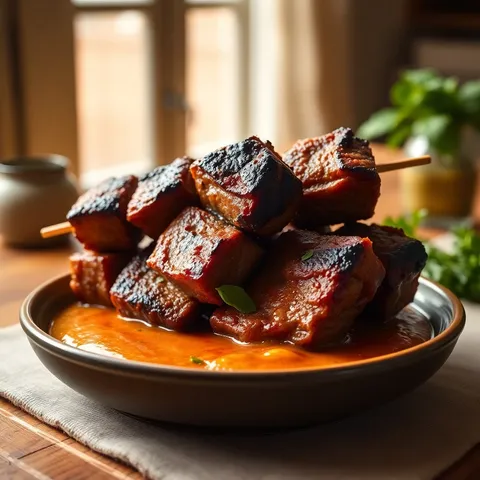
 Shashlik
Smoky, charred cubes of marinated lamb or pork threaded on skewers and grilled over embers — Central Asia's festive open-fire classic, fragrant with onion and spice.
 Eastern European Lens Verified Images are for illustrative purposes only, may be inaccurate, and do not guarantee the presence or absence of specific ingredients.
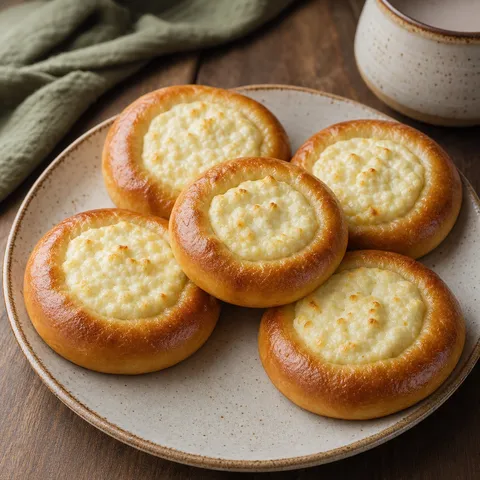
 Vatrushka
Soft, pillowy Russian buns filled with a sweetened quark or farmer's cheese center — lightly golden and gently sweet, perfect alongside tea or coffee.
 Eastern European Lens Verified Images are for illustrative purposes only, may be inaccurate, and do not guarantee the presence or absence of specific ingredients.
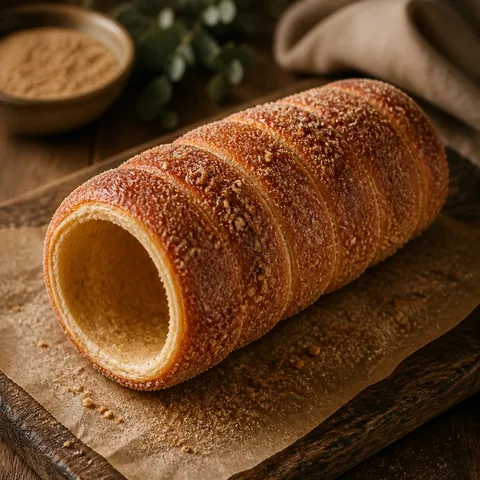
 Kurtosh Kalach
Hungary's iconic chimney cake — sweet yeast dough spiraled around a spit, rolled in cinnamon sugar, and roasted until the outside caramelizes into a crackly, warm shell.