 Food Lens Images are for illustrative purposes only, may be inaccurate, and do not guarantee the presence or absence of specific ingredients.
 Food Lens · Recipe ingredients
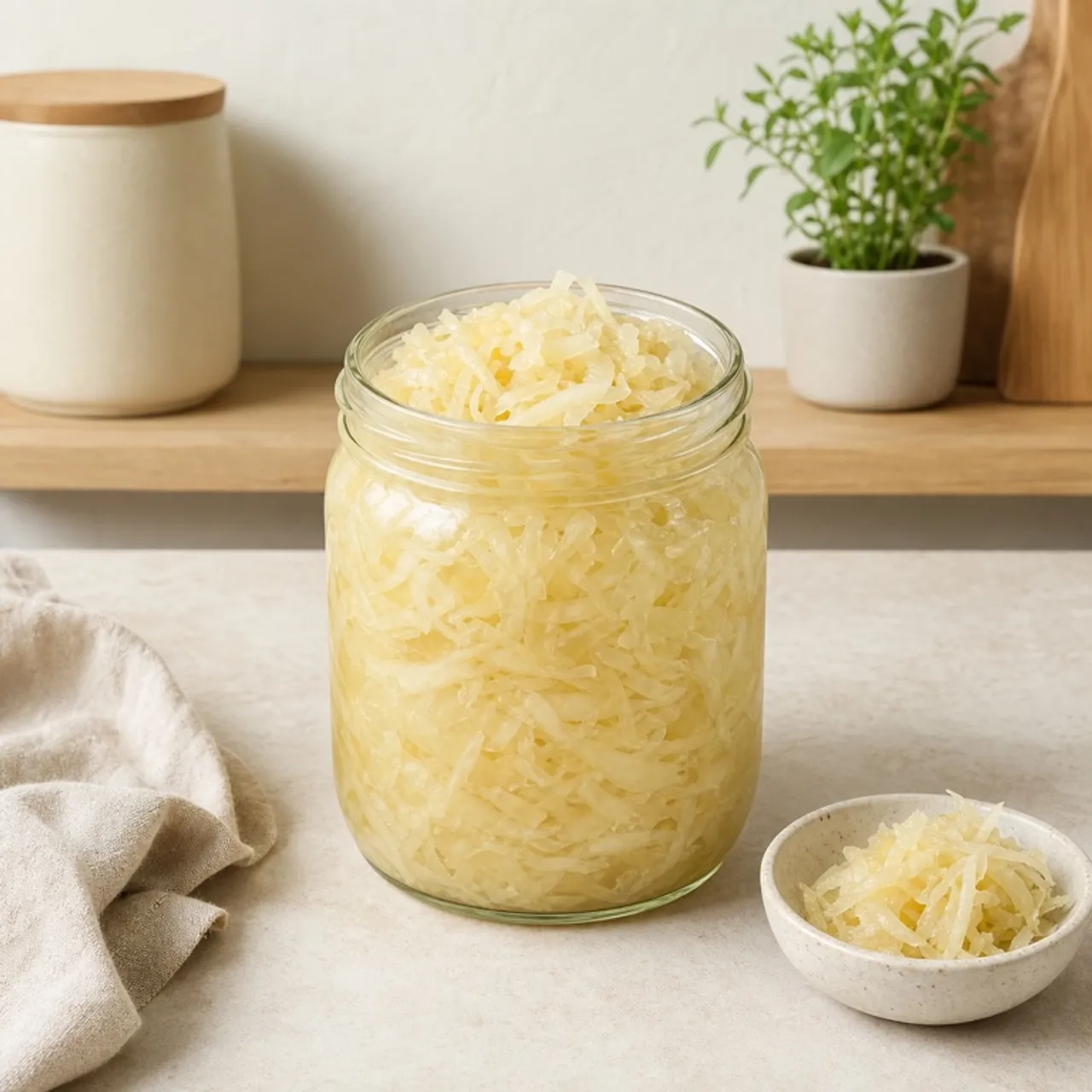
Sauerkraut
Sharp, tangy, and pleasantly sour with a satisfying crunch; the brine carries a briny depth, and caraway-spiced versions add an earthy, anise-like note.
Lens VerifiedSauerkraut is finely shredded cabbage that has been fermented by lactic acid bacteria, producing a tangy, sour condiment with a distinctive crunch. It is a cornerstone of Central and Eastern European cuisines and prized for its bold acidity and long shelf life. Its sharp flavor makes it an essential counterpoint to rich, fatty meats and hearty dishes.
Where it comes from
Sauerkraut traces its roots to ancient China, where salted, fermented vegetables were preserved for laborers before the technique traveled westward into Europe via the Mongol Empire.
Varieties — Classic white cabbage sauerkraut is most common; red cabbage versions offer a milder tang and vivid color. Some regional preparations include caraway seeds, juniper berries, or apples.
In Germany, sauerkraut is practically a national symbol, served with bratwurst and schnitzel. In Poland, bigos (hunter's stew) relies on it as a foundational ingredient. Alsatian choucroute garnie elevates it to a celebratory feast centerpiece.
In a modern kitchen — Live-culture, unpasteurized sauerkraut sold in the refrigerated section retains its probiotic activity and is favored by health-conscious cooks. It has gained traction as a topping for grain bowls, tacos, and grain-based salads.
Buying it
Look for sauerkraut sold in refrigerated pouches or glass jars rather than shelf-stable cans for the best texture and live cultures. The brine should be cloudy and the cabbage pale gold, never mushy or discolored.
Storing it
Unopened sauerkraut can be kept in a cool pantry, but once opened it should be refrigerated and kept submerged in its brine to stay crisp. It keeps fermenting slowly in the fridge — extra tang over time is normal, but mould means it's gone.
Keeps about 1 year in the pantry.
Out of sauerkraut? Good swaps
General cooking guidance — always check the labels on the products you use. Listahan’s allergen checks run automatically when you plan a recipe in the app. Not medical advice.
Recipes that use sauerkraut
Common questions about sauerkraut
Is sauerkraut vegan?
Sauerkraut is generally plant-based and suitable for a vegan diet, but brands differ — confirm on the label.
What can I use instead of sauerkraut?
Good swaps include , , . Each behaves a little differently — see the swaps above for notes, and always check labels for allergens.
How do I store sauerkraut?
Unopened sauerkraut can be kept in a cool pantry, but once opened it should be refrigerated and kept submerged in its brine to stay crisp. It keeps fermenting slowly in the fridge — extra tang over time is normal, but mould means it's gone. It keeps about 1 year in the pantry.
More recipe ingredients
See all


Make sauerkraut about your kitchen — with Listahan Pro
Everything above is free, forever. Pro adds the Household Lens — the same food, seen for your family:
-
Checked for each member
Flags sauerkraut per person against your household's allergies and school rules — not just a generic "contains" tag.
-
Pantry-aware
Knows whether you already have it, what is running low, and the best swap from what is in your kitchen tonight.
-
What it costs near you
A real price from the Presyo community index, so you can plan the budget — not guess.
-
Your household memory
Who likes it, plus your own private notes — brand, where you keep it, who skips it.
Allergen safety is always free — Pro adds the automation, never the safety.
Cook with sauerkraut — safely
Plan a recipe in Listahan and the household allergen check runs automatically — every plan, every swap, every lunchbox. Safety is never paywalled.