 German Images are for illustrative purposes only, may be inaccurate, and do not guarantee the presence or absence of specific ingredients.
  Serving Images are for illustrative purposes only, may be inaccurate, and do not guarantee the presence or absence of specific ingredients.
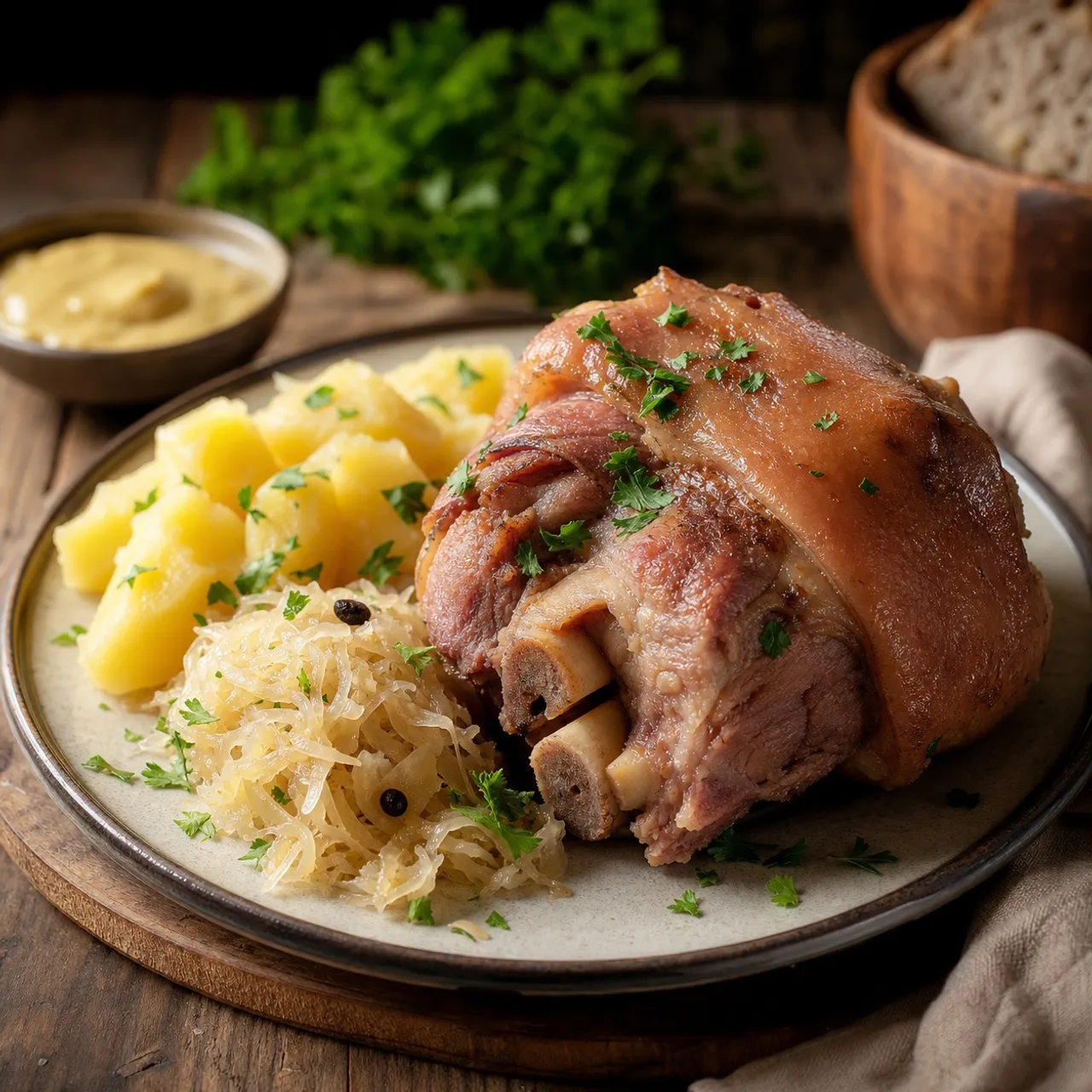
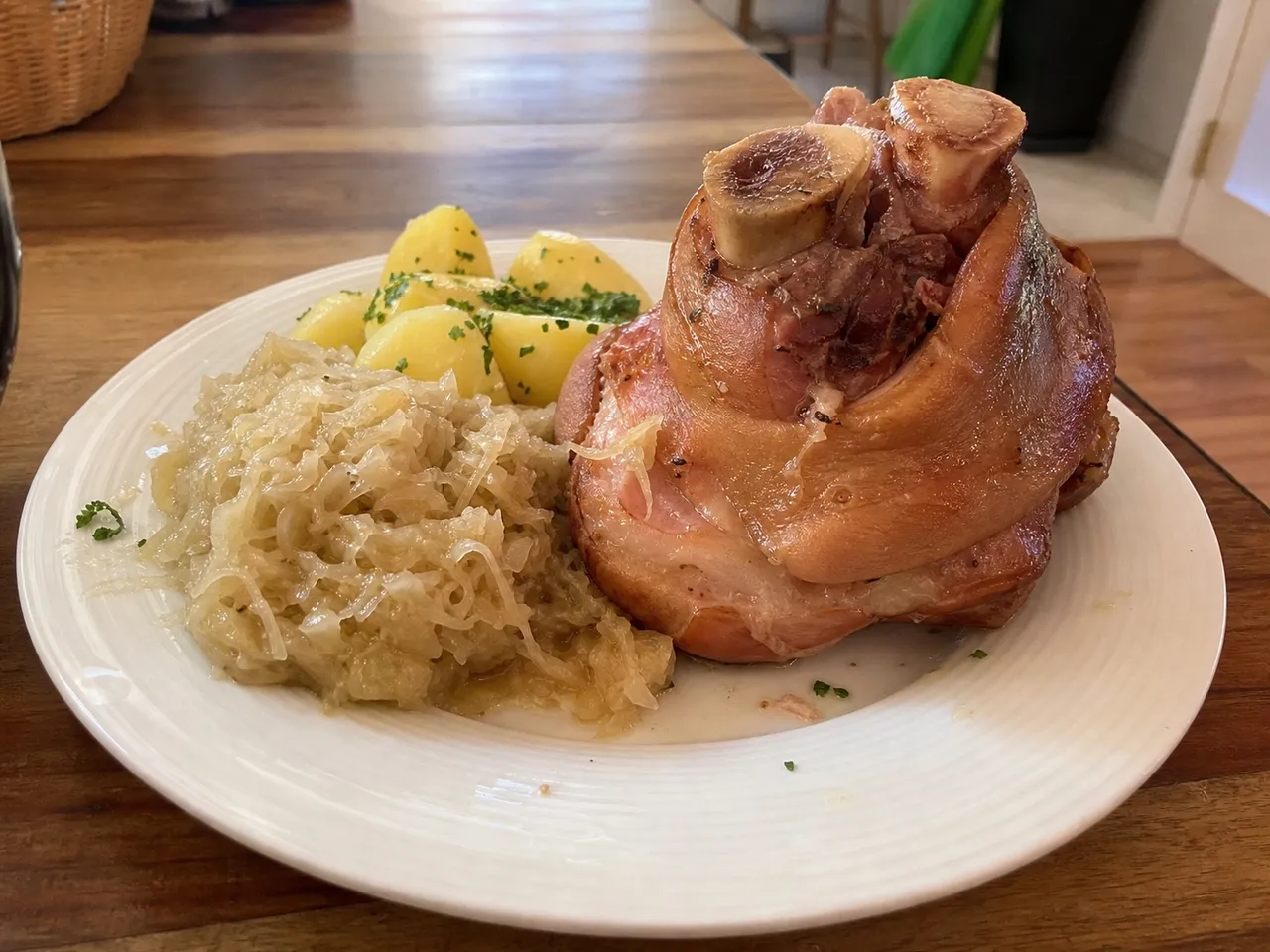
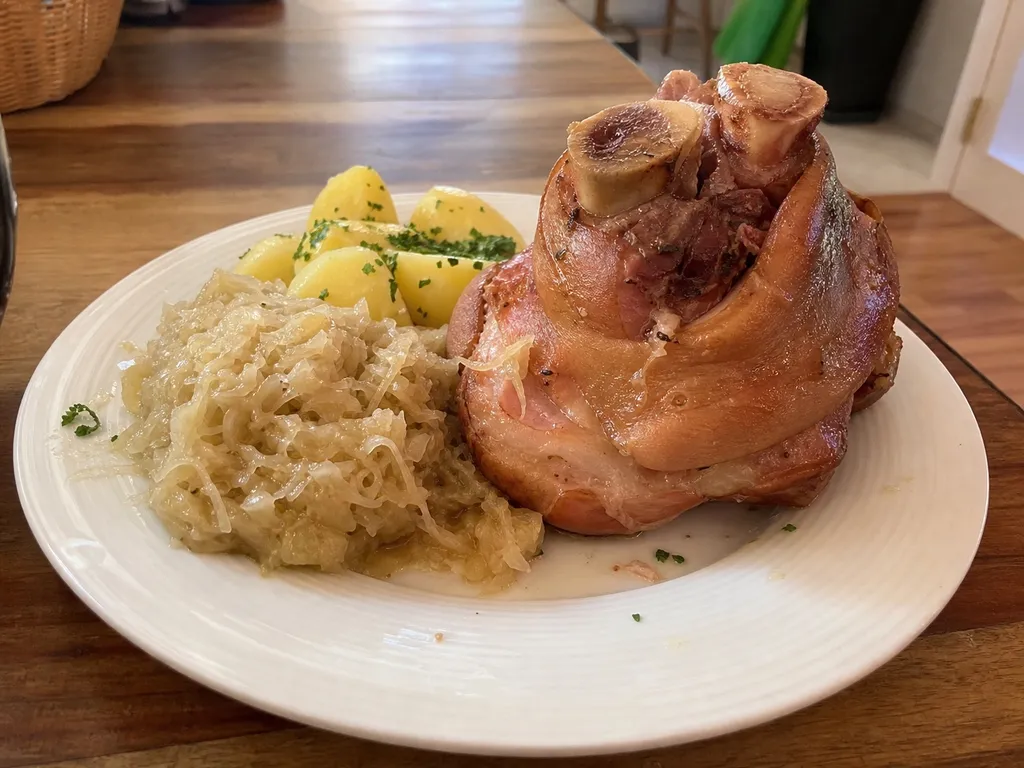
 Eisbein (Boiled Pork Knuckle with Sauerkraut)
Tender boiled pork knuckle simmered with aromatics until the meat slides off the bone, served with sauerkraut and boiled potatoes in the Berlin tradition.
No common allergens detected
Based on this recipe's ingredient list. Always verify with your own brands and labels.
Instructions
6 steps- 1
Place pork knuckles in a large pot and cover with water.
- 2
Add onions, carrots, bay leaves, peppercorns, juniper berries, and salt.
- 3
Bring to a boil, then reduce heat and simmer gently for 2.5-3 hours until the meat is very tender.
- 4
Warm the sauerkraut in a saucepan with caraway seeds over medium heat.
- 5
Remove the knuckles from the broth and drain well.
- 6
Serve the knuckles whole alongside the warmed sauerkraut and boiled potatoes, with a ladle of the cooking broth if desired.
 Images are for illustrative purposes only, may be inaccurate, and do not guarantee the presence or absence of specific ingredients.
 Listahan Family Score™
72/100
Good fit for most families
Score reflects how well this recipe fits a typical busy household. In the app, your Family Score is personalized to your household's allergens, kids, and pantry.
Nutrition
per serving45
Calories
1 g
Protein
10 g
Carbs
0 g
Fat
Estimated per serving. Actual values depend on the brands and portions you use.
Listahan cooking guide
Chef notes & practical guide
Technique notes, ingredient swaps, serve-alongside ideas, storage guidance, and equipment for this recipe.
Cultural context
Eisbein is a Berlin and northern German specialty of pork knuckle simmered until the skin turns soft and the meat pulls easily from the bone, traditionally served with sauerkraut, pea puree, or boiled potatoes. The name literally translates to ice leg, referring either to the shape of the bone once cleaned or to the old practice of using leg bones to make ice skate blades. It's a hearty, communal dish associated with beer halls and cold-weather eating, not an everyday meal.
Listahan note
This version leans on a long, unhurried simmer with aromatics and juniper to build a knuckle that's fall-apart tender, and treats the sauerkraut as an active partner rewarmed with caraway rather than a cold side dumped on the plate.
Technique cues
- Start the knuckles in cold water rather than adding them to an already-boiling pot; this lets the connective tissue break down gradually instead of seizing the meat.
- Skim the foam that rises in the first 15-20 minutes of simmering; leaving it in clouds the broth and dulls the final flavor.
- The meat is ready when it yields easily to a fork at the thickest part of the knuckle, not just when the total time has elapsed, since knuckle size varies.
Kitchen flow
- Parallel prep
- Put the potatoes on to boil during the last 30-40 minutes of the knuckle simmer so everything finishes together.
- Make-ahead
- The knuckles can be simmered a day ahead and reheated in their broth; the flavor actually improves overnight.
- Leftover move
- Shred any leftover meat off the bone and fold it into a soup or hash with the leftover sauerkraut for a quick next-day lunch.
- Cleanup rhythm
- One large pot does the simmering; strain and save the broth before washing so it's ready for a future soup base.
Ingredient brief
Role, handling, and swap guidance for each key ingredient.
Pork knuckles
Main cut
Purpose: The knuckle is mostly skin, fat, and connective tissue, which is exactly what a multi-hour simmer is built to turn tender and gelatinous.
Handling: Rinse well and trim any stray bristle before adding to the pot.
Adaptation: Pork shanks or hocks work similarly, though true Eisbein calls for the whole knuckle with skin on.
Sauerkraut
Traditional side and acid counterpoint
Purpose: Its tang cuts through the richness of the slow-cooked pork and skin.
Handling: Warm it gently rather than boiling it hard, so it keeps some bite.
Adaptation: A quick braised cabbage with a splash of vinegar can stand in if sauerkraut isn't available.
Juniper berries
Aromatic seasoning
Purpose: Juniper's piney, slightly bitter edge is a classic pairing with pork in German and Alsatian cooking and keeps the dish from tasting flat.
Handling: Add them whole to the simmering liquid so they release flavor slowly.
Adaptation: A few crushed allspice berries can approximate the effect in a pinch, though the flavor will be sweeter and less piney.
Caraway seeds
Warming spice for the sauerkraut
Purpose: Caraway is the classic partner to sauerkraut in German cooking, adding an anise-like warmth that balances the cabbage's sourness.
Handling: Toast briefly in the pan with the sauerkraut so the seeds bloom.
Adaptation: Fennel seed is a reasonable substitute with a slightly sweeter, more licorice-forward note.
Bay leaves and black peppercorns
Background broth seasoning
Purpose: They round out the simmering liquid so the broth itself is worth spooning over the meat at serving.
Handling: Add whole at the start of the simmer and leave them in the whole cooking time.
Adaptation: A bouquet garni with thyme can substitute if bay leaves aren't on hand.
Technique notes
- Resist the urge to boil hard to save time; a rolling boil toughens the meat fibers before the connective tissue has a chance to melt.
- If serving the broth, strain it through a fine sieve to remove the spent aromatics and any stray fat, then taste it separately for salt.
- The skin should look glossy and slightly gelatinous when done, not tough or rubbery; if it's still tough, it needs more time, not more heat.
Ingredient swaps
- Dairy-free direction
- This dish is naturally dairy-free as written; just make sure any butter used to finish the sauerkraut is swapped for oil or bacon fat.
- Lower-sodium direction
- Cut the added salt in the simmering liquid roughly in half and season the finished broth to taste at the end instead.
- Faster weeknight path
- A pressure cooker can bring the knuckles to fork-tender in about 45-50 minutes at high pressure, though the broth will be less deeply flavored than a long stovetop simmer.
Serve alongside
- Boiled potatoes
- Warmed sauerkraut
- Split pea puree
- Rye bread
- Pilsner
- Dry Riesling
- Sparkling water with lemon
Serving suggestions only — check pairings for your household's allergens.
Storage & reheating
- Refrigerate in the broth for up to 3 days.
- Reheat gently in the broth on the stovetop until warmed through.
- Freeze the meat and broth together for up to 2 months; thaw overnight before reheating.
Equipment
- Large stockpot
- Fine mesh skimmer
- Tongs for lifting the knuckles
Make this household-aware
Listahan Pro checks this recipe against your household's allergens, finds pantry-aware swaps, builds the shopping list, and helps you plan the week around it.
Plan it in Listahan
Add Eisbein (Boiled Pork Knuckle with Sauerkraut) to your week, check it against your household's allergens, and build the shopping list automatically.
More German recipes
 German Lens Verified Images are for illustrative purposes only, may be inaccurate, and do not guarantee the presence or absence of specific ingredients.
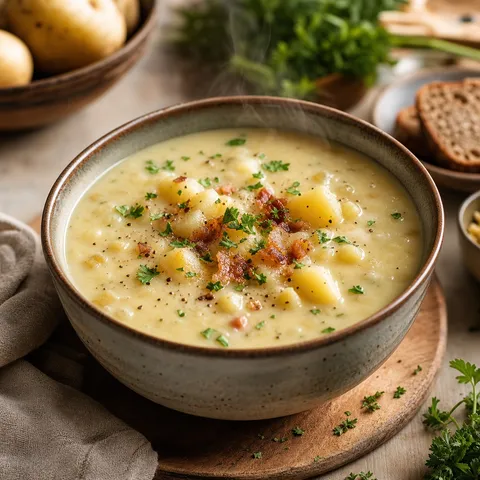
 Kartoffelsuppe (Creamy German Potato Soup)
A creamy, comforting German potato soup with leeks, carrots, and a smoky finish of fried sausage or bacon.
 German Lens Verified Images are for illustrative purposes only, may be inaccurate, and do not guarantee the presence or absence of specific ingredients.
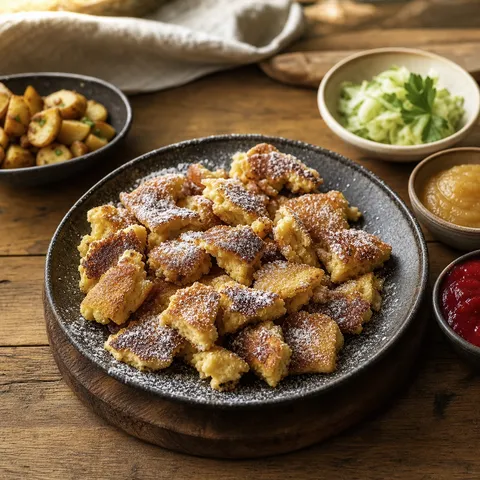
 Kaiserschmarrn (Shredded Sugared Pancake)
A fluffy shredded pancake dusted with powdered sugar and studded with golden raisins, torn into rustic pieces and served with stewed fruit compote.
 German Lens Verified Images are for illustrative purposes only, may be inaccurate, and do not guarantee the presence or absence of specific ingredients.
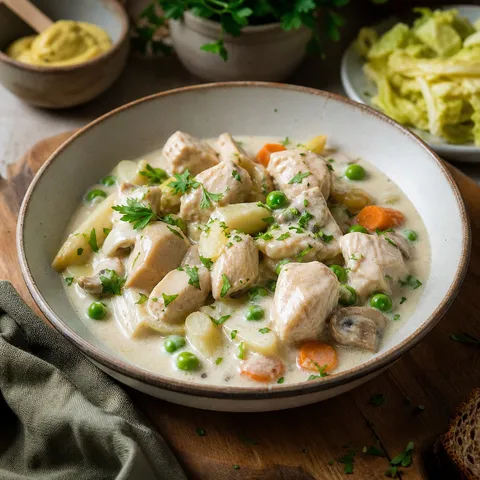
 Hühnerfrikassee (German Chicken Fricassee)
A comforting German chicken fricassee in a silky lemon-cream sauce studded with mushrooms, peas, and capers.