 German Images are for illustrative purposes only, may be inaccurate, and do not guarantee the presence or absence of specific ingredients.
  Serving Images are for illustrative purposes only, may be inaccurate, and do not guarantee the presence or absence of specific ingredients.
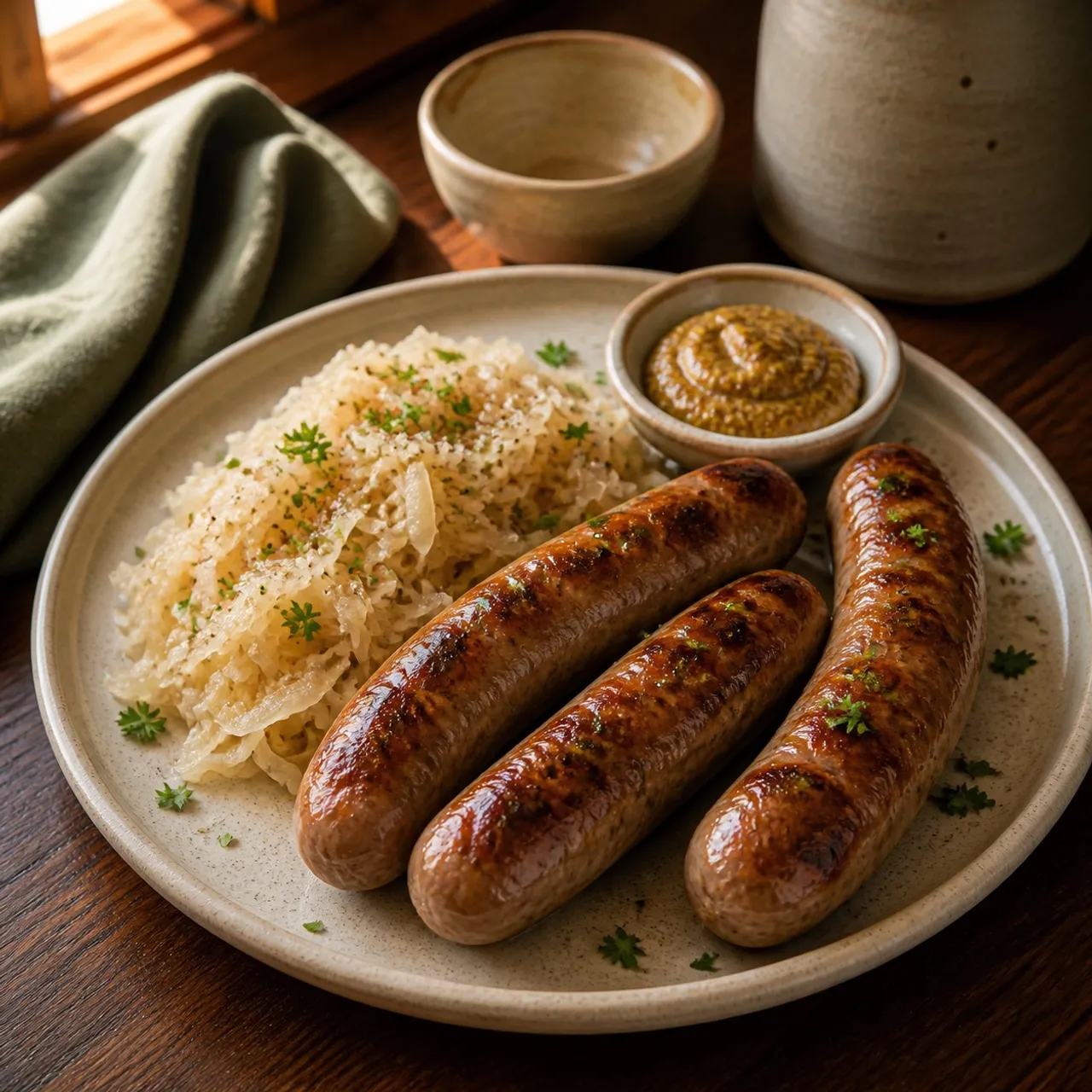
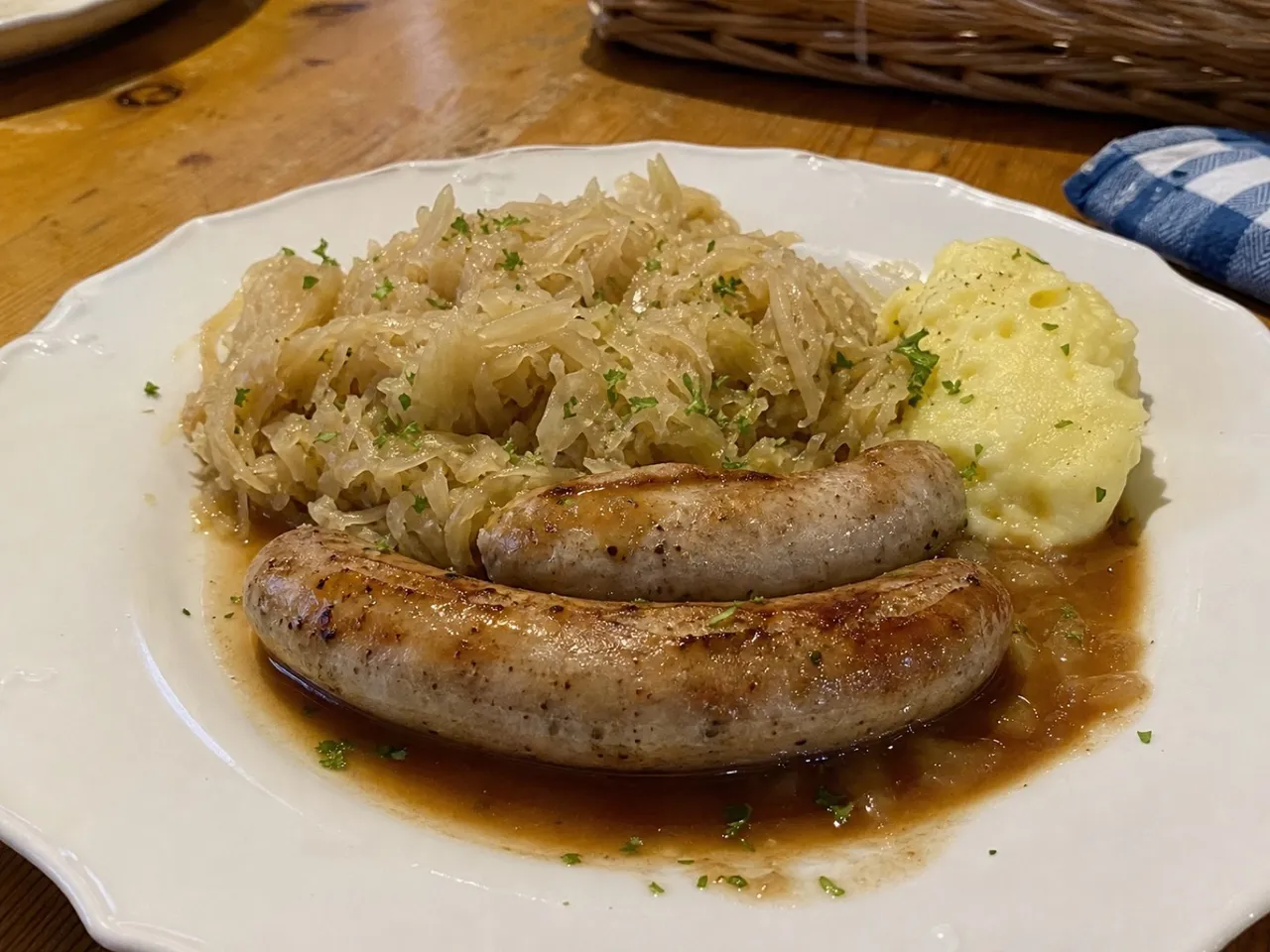
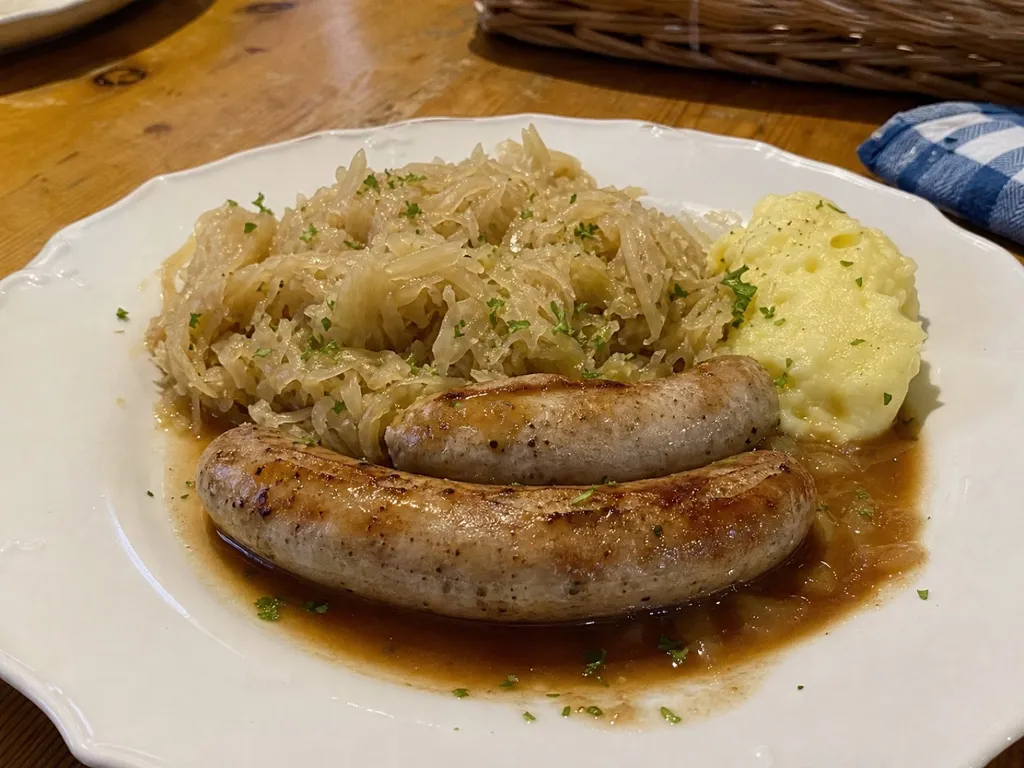
 Authentic Bratwurst with Sauerkraut
A comforting, hearty classic pairing juicy, savory sausages with tangy, slow-cooked sauerkraut and sweet apples.
Contains common allergens
In the app, Listahan checks these against your household automatically.
Good to know
- Ready in under 30 minutes
Matched from this dish's own ingredients and timing. Browse more: 30-minute meals
Instructions
5 steps- 1
Brown Sausages: Heat a large skillet over medium-high heat with a little oil. Prick the bratwurst lightly with a fork, then brown them on all sides (about 5-7 minutes). Remove and set aside.
- 2
Cook Aromatics: In the same skillet, melt the butter. Add the sliced onion and diced apple, cooking for 5 minutes until soft.
- 3
Simmer Kraut: Stir in the drained sauerkraut, caraway seeds, and beer (or broth). Scrape up any browned bits from the bottom of the pan.
- 4
Finish: Nest the browned sausages back into the sauerkraut. Reduce the heat to low, cover, and simmer for 15-20 minutes until the sausages are fully cooked and the flavors meld.
- 5
Serve: Serve hot with a generous dollop of spicy brown mustard and boiled potatoes.
 Images are for illustrative purposes only, may be inaccurate, and do not guarantee the presence or absence of specific ingredients.
 Listahan Family Score™
64/100
Works for many families
Score reflects how well this recipe fits a typical busy household. In the app, your Family Score is personalized to your household's allergens, kids, and pantry.
Nutrition
per serving65
Calories
1 g
Protein
9 g
Carbs
3 g
Fat
Estimated per serving. Actual values depend on the brands and portions you use.
Listahan cooking guide
Chef notes & practical guide
Technique notes, ingredient swaps, serve-alongside ideas, storage guidance, and equipment for this recipe.
Cultural context
Bratwurst takes its name from the Old High German 'brat' (finely chopped meat) and 'wurst' (sausage), with regional recipes documented as far back as the 14th century in Nuremberg. Different German cities developed fiercely distinct versions — Nuremberg's pinky-sized links flavored with marjoram, Thuringia's long grilled variety with caraway and garlic, Franconia's coarser pork-heavy sausage — each tied to local butchery guilds that guarded their spice ratios. Sauerkraut, the natural fermented-cabbage partner, provided year-round vegetable nutrition before refrigeration and its acidity cuts perfectly through the pork's fat.
Listahan note
This version prioritizes a proper sear in the pan before finishing in liquid so the casing stays snappy and the sauerkraut picks up the fond from the browning fat.
Technique cues
- Prick the sausage casings only if they begin to blister badly — a small amount of pressure buildup is what keeps the interior juicy; too many pricks and the fat escapes into the pan rather than basting the meat.
- Add the sauerkraut after the bratwurst have browned and deglaze with a splash of beer or stock before covering; the acidic steam finishes the sausages gently and softens the kraut without making it mushy.
- Rest the bratwurst on a rack for two to three minutes off the heat before serving — the internal juices redistribute and the casing re-crisps slightly rather than steaming soft under foil.
Kitchen flow
- Parallel prep
- Slice onions and measure beer while the pan heats so the bratwurst go in as soon as the oil shimmers; the sauerkraut needs no prep beyond draining and can wait at room temperature.
- Make-ahead
- Brown the bratwurst and store refrigerated up to one day; reheat in a covered skillet with sauerkraut and a splash of broth over medium-low heat until warmed through, about 8 minutes.
- Leftover move
- Slice cold bratwurst and pan-fry the rounds until crisp, then toss with leftover sauerkraut and serve over egg noodles or inside a hoagie roll with mustard and pickles.
- Cleanup rhythm
- Deglaze the pan with beer while it is still hot — the liquid releases the fond immediately and the pan needs only a quick wipe; the only other vessel is the colander for the sauerkraut.
Ingredient brief
Role, handling, and swap guidance for each key ingredient.
bratwurst
protein centerpiece
Purpose: Fresh bratwurst has a higher fat content and looser emulsification than hot dogs, which gives the interior a coarser, more satisfying texture when sliced.
Handling: Bring sausages to room temperature for 15 minutes so they cook evenly without cold centers.
Adaptation: Chicken bratwurst or turkey bratwurst work well and cook slightly faster; vegan bratwurst from a German-style brand will need no resting before serving.
sauerkraut
acidic side and braising medium
Purpose: The lactic acid in fermented cabbage cuts through pork fat and keeps the dish from feeling heavy.
Handling: Drain and lightly rinse if you prefer a milder tang, or use straight from the jar for full fermented flavor.
Adaptation: Quick-pickled cabbage slaws can substitute but lack the depth; kimchi is a non-traditional but flavor-compatible alternative.
German lager or pilsner
deglazing liquid and steam
Purpose: Beer's mild bitterness and carbonation lift the browned fond from the pan and infuse the sauerkraut with malt sweetness.
Handling: Use at room temperature so the pan does not seize when it hits the hot surface.
Adaptation: Chicken stock with a teaspoon of apple cider vinegar gives a comparable savory-tangy balance without alcohol.
yellow onion
aromatic base
Purpose: Slowly caramelized onions add sweetness that balances the kraut's sourness and ties the dish together.
Handling: Slice into half-moons so they soften quickly in the same pan used for the bratwurst.
Adaptation: Shallots work and caramelize faster; leeks give a milder, slightly grassy sweetness.
caraway seeds
aromatic spice
Purpose: Caraway is the signature flavor of central European sauerkraut dishes and signals the dish's origin distinctly.
Handling: Toast briefly in the dry pan before adding fat to wake up the volatile oils.
Adaptation: Fennel seeds are milder and more crowd-friendly for families that find caraway too assertive.
Technique notes
- A cast-iron or heavy stainless skillet retains heat better than nonstick, which lets you achieve a deep mahogany sear on the casing rather than a pale steam-cooked surface.
- Finishing the bratwurst submerged halfway in sauerkraut and beer rather than fully covered keeps the top casing from softening — you get contrasting textures in every bite.
- Whole-grain mustard stirred into the sauerkraut in the last minute of cooking adds a sharp, seedy finish that elevates the dish beyond a simple sausage plate.
Ingredient swaps
- Gluten-free direction
- Substitute gluten-free beer or apple juice for the lager; confirm the bratwurst brand is gluten-free (some use breadcrumb binders), and serve on gluten-free buns or over roasted potatoes.
- Lower-sodium direction
- Rinse the sauerkraut thoroughly and use a low-sodium chicken stock in place of beer; choose a reduced-sodium bratwurst if available, and skip added salt at the table.
- Weeknight shortcut
- Pre-cooked bratwurst cuts total time to under 15 minutes — heat and sear straight from the package, then pile on jarred sauerkraut that has been warmed in the same pan.
Serve alongside
- Soft pretzel rolls with whole-grain mustard
- German-style potato salad with vinegar and bacon
- Rotkohl (braised red cabbage with apple and cloves)
- German Hefeweizen or a crisp lager
- Sparkling apple juice (Apfelschorle) for a non-alcoholic option
Serving suggestions only — check pairings for your household's allergens.
Storage & reheating
- Cooked bratwurst keep refrigerated in an airtight container for up to 3 days; store sauerkraut separately to prevent the casing from softening further.
- Reheat in a skillet over medium heat with a tablespoon of water or stock, covered, for 5 to 7 minutes; avoid microwaving which toughens the casing and makes the sauerkraut watery.
Equipment
- 12-inch cast-iron or heavy stainless skillet for a proper sear without cold spots
- Tongs for turning sausages without piercing the casing
- Colander or fine-mesh strainer for draining and rinsing sauerkraut
- Instant-read thermometer to confirm the internal temperature reaches 160 F
Make this household-aware
Listahan Pro checks this recipe against your household's allergens, finds pantry-aware swaps, builds the shopping list, and helps you plan the week around it.
Plan it in Listahan
Add Authentic Bratwurst with Sauerkraut to your week, check it against your household's allergens, and build the shopping list automatically.
More German recipes
 German Lens Verified Images are for illustrative purposes only, may be inaccurate, and do not guarantee the presence or absence of specific ingredients.
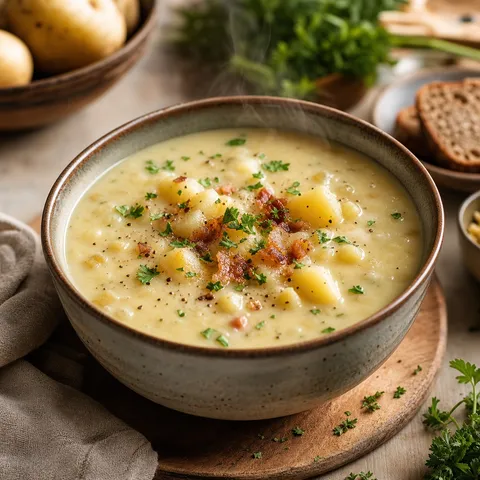
 Kartoffelsuppe (Creamy German Potato Soup)
A creamy, comforting German potato soup with leeks, carrots, and a smoky finish of fried sausage or bacon.
 German Lens Verified Images are for illustrative purposes only, may be inaccurate, and do not guarantee the presence or absence of specific ingredients.
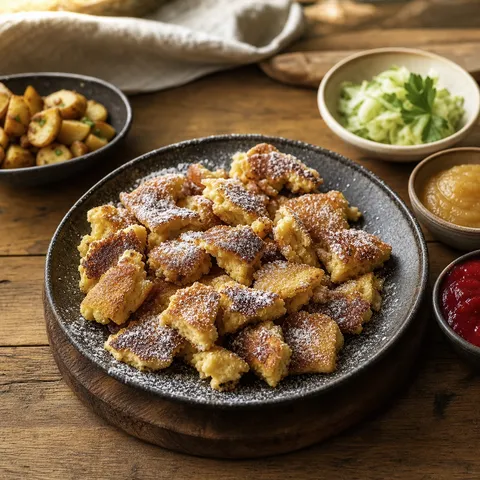
 Kaiserschmarrn (Shredded Sugared Pancake)
A fluffy shredded pancake dusted with powdered sugar and studded with golden raisins, torn into rustic pieces and served with stewed fruit compote.
 German Lens Verified Images are for illustrative purposes only, may be inaccurate, and do not guarantee the presence or absence of specific ingredients.
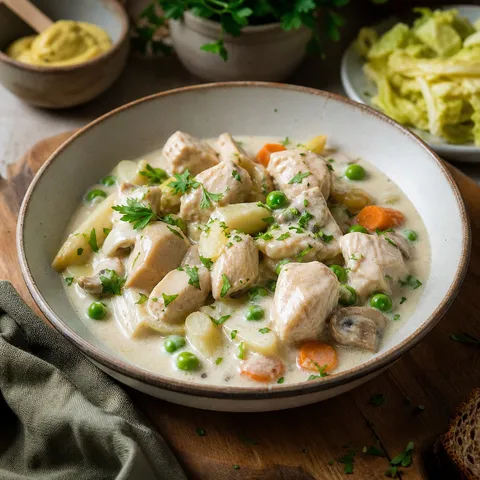
 Hühnerfrikassee (German Chicken Fricassee)
A comforting German chicken fricassee in a silky lemon-cream sauce studded with mushrooms, peas, and capers.