 Food Lens Images are for illustrative purposes only, may be inaccurate, and do not guarantee the presence or absence of specific ingredients.
 Food Lens · Beverages
Beer
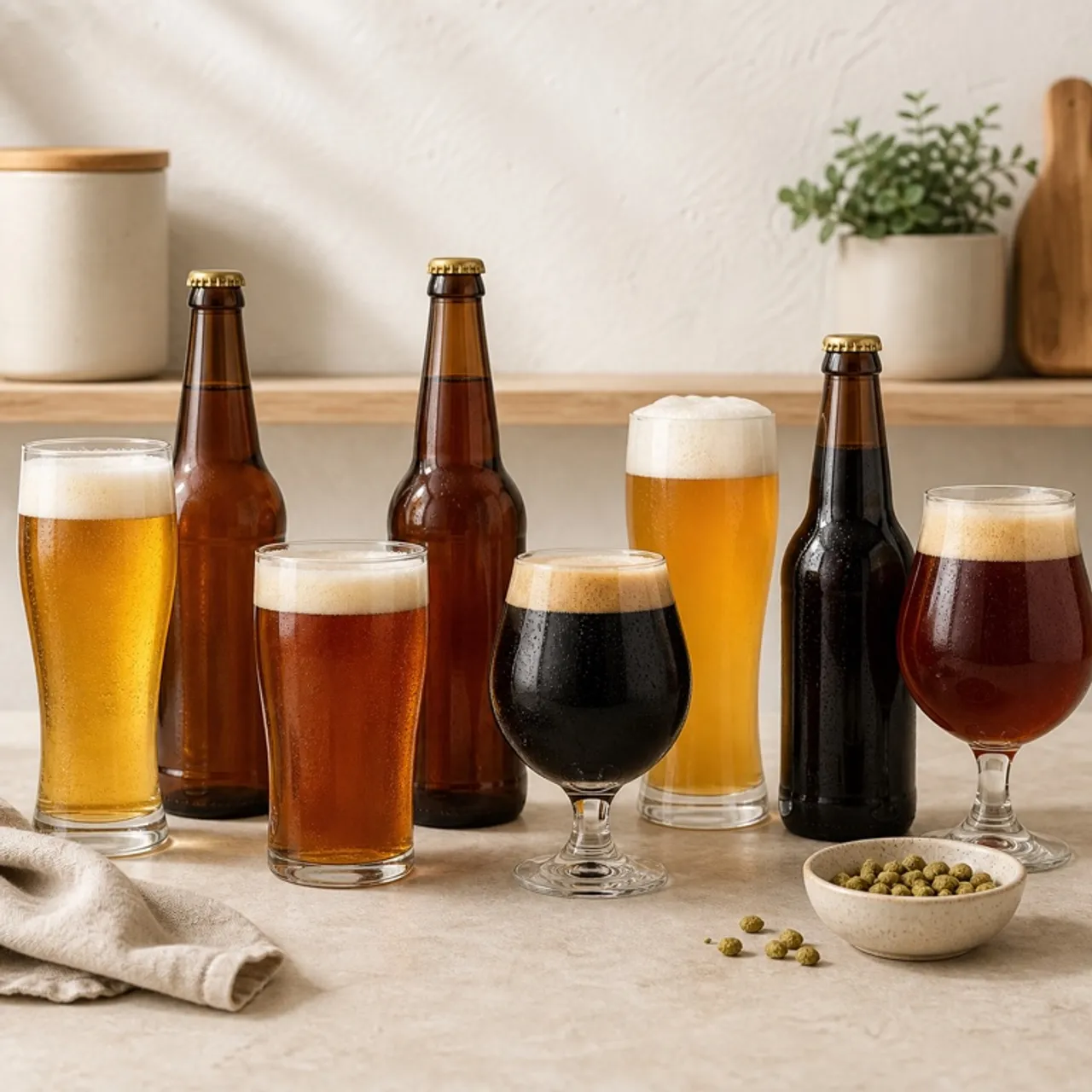
Varies enormously by style — lagers are light and clean with mild bitterness; ales are fruity and hoppy; stouts are roasty, bitter, and slightly sweet with coffee and chocolate notes; wheat beers are soft and slightly citrusy.
Lens VerifiedBeer, when used as a cooking ingredient, contributes carbonation, bitterness, malt sweetness, and fermented depth to batters, braises, stews, and breads. Its alcohol and acidity tenderize proteins, while its carbonation creates exceptionally light and crisp coatings. The choice of style — lager, stout, ale, or wheat beer — dramatically shapes the final dish.
Where it comes from
Humans have cooked with fermented grain drinks for at least 5,000 years, with beer's culinary use well documented in ancient Egypt and Mesopotamia and formalized in European monastic and peasant cooking traditions.
Varieties — Lager (light, clean, versatile for batters); pale ale and IPA (hoppy bitterness, good in marinades); stout and porter (rich, roasty, excellent in beef braises and chocolate desserts); wheat beer (fruity, light, suits seafood batters); dark Belgian ales (complex, good with pork and game).
Beer-braised carbonnade flamande from Belgium, German beer-battered sausages, and Irish stout stews are classic expressions of beer's culinary role. In the American South and Midwest, beer-can chicken and beer-steamed brats are backyard staples.
In a modern kitchen — The craft beer boom has given cooks access to an enormous range of styles for culinary experimentation. Chefs use IPAs in vinaigrettes, stouts in brownie batter, and sours in pickling brines for added complexity.
Buying it
Match the beer style to the dish — use lighter lagers for delicate batters, rich stouts for red meat braises. Freshness matters for flavor; avoid skunked or oxidized beer. Flat or day-old beer works fine in braises but fresh beer provides better carbonation for batters.
Storing it
Keep beer used for cooking cold and upright, away from light, which can give it a skunky off-flavor. Once opened, it flattens quickly — recap tightly and use within a day or two for cooking.
Keeps about 6 months in the fridge.
Out of beer? Good swaps
General cooking guidance — always check the labels on the products you use. Listahan’s allergen checks run automatically when you plan a recipe in the app. Not medical advice.
Recipes that use beer
- Coconut Shrimp With Orange Mustard Sauce
- Schweinebraten (German Pork Roast with Gravy)
- Pachamanca (Andean Earth-Oven Roasted Meats and Potatoes)
- Weisswurst (Bavarian White Sausage with Sweet Mustard)
- Schweinshaxe (Bavarian Roasted Pork Knuckle)
- Seco de Cordero (Peruvian Lamb and Cilantro Stew)
- Aguadito de Pollo (Peruvian Green Chicken Soup)
- Arroz con Pollo Peruano
- Grilled Bratwurst with Peppers and Onions
- Baja Fish Tacos
- Blodpudding
- Nghêu Hấp Sả (Lemongrass Steamed Clams)
Common questions about beer
Is beer vegan?
Beer is generally plant-based and suitable for a vegan diet, but brands differ — confirm on the label.
What can I use instead of beer?
Good swaps include , , . Each behaves a little differently — see the swaps above for notes, and always check labels for allergens.
How do I store beer?
Keep beer used for cooking cold and upright, away from light, which can give it a skunky off-flavor. Once opened, it flattens quickly — recap tightly and use within a day or two for cooking. It keeps about 6 months in the fridge.
More beverages
See all


Make beer about your kitchen — with Listahan Pro
Everything above is free, forever. Pro adds the Household Lens — the same food, seen for your family:
-
Checked for each member
Flags beer per person against your household's allergies and school rules — not just a generic "contains" tag.
-
Pantry-aware
Knows whether you already have it, what is running low, and the best swap from what is in your kitchen tonight.
-
What it costs near you
A real price from the Presyo community index, so you can plan the budget — not guess.
-
Your household memory
Who likes it, plus your own private notes — brand, where you keep it, who skips it.
Allergen safety is always free — Pro adds the automation, never the safety.
Cook with beer — safely
Plan a recipe in Listahan and the household allergen check runs automatically — every plan, every swap, every lunchbox. Safety is never paywalled.