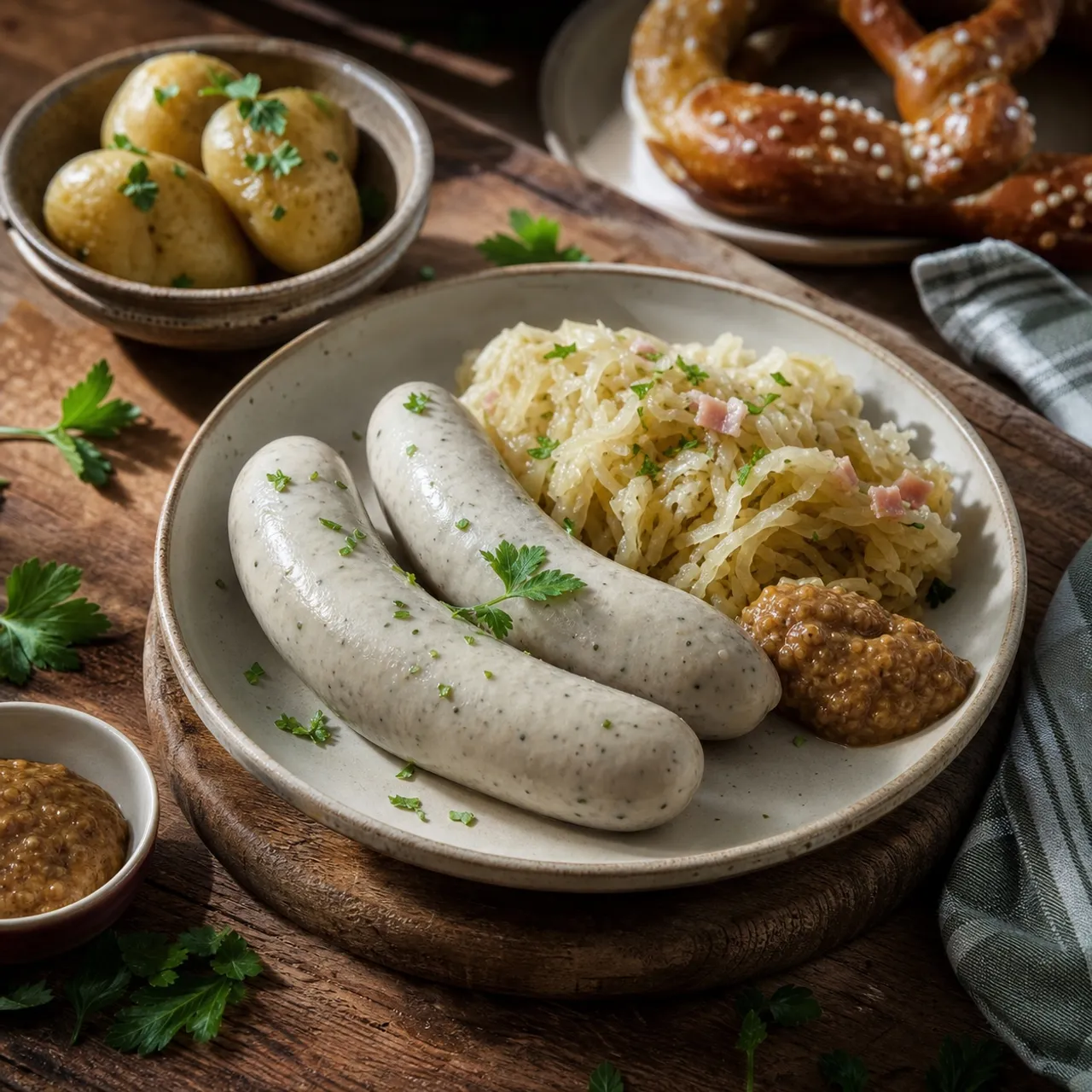
 German Images are for illustrative purposes only, may be inaccurate, and do not guarantee the presence or absence of specific ingredients.
 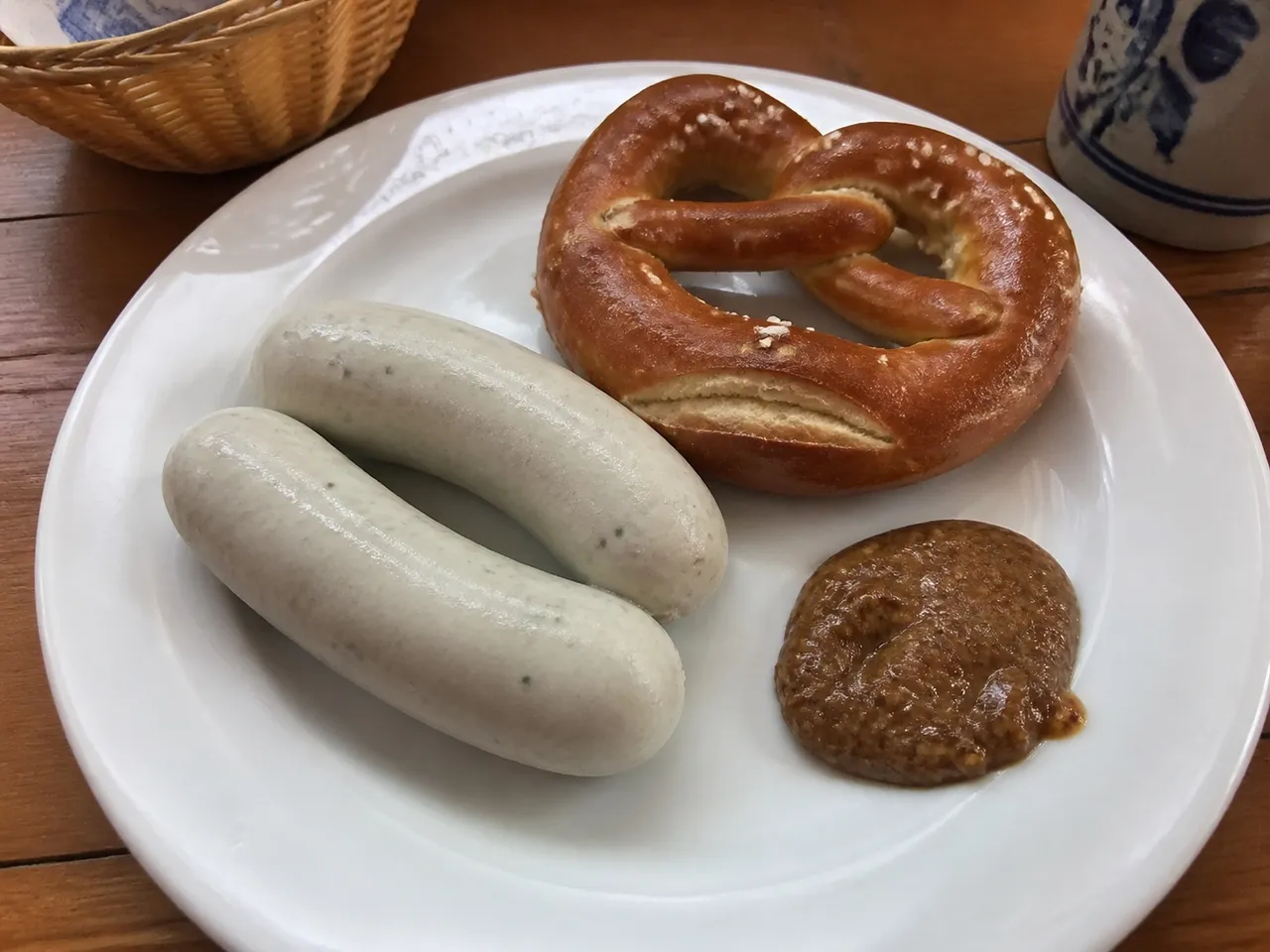 Serving Images are for illustrative purposes only, may be inaccurate, and do not guarantee the presence or absence of specific ingredients.
 Weisswurst (Bavarian White Sausage with Sweet Mustard)
Delicate Bavarian white sausages of veal and pork, gently poached and traditionally enjoyed as a late-morning snack with sweet mustard and a soft pretzel.
Contains common allergens
In the app, Listahan checks these against your household automatically.
Good to know
- One-pot
- Ready in under 30 minutes
Matched from this dish's own ingredients and timing. Browse more: one-pot dinners30-minute meals
Instructions
6 steps- 1
Bring water and salt to a gentle simmer in a large pot, being careful not to let it boil.
- 2
Add the Weisswurst and poach gently for 10-12 minutes, keeping the water just below a simmer.
- 3
Remove the sausages carefully with a slotted spoon.
- 4
Serve the sausages whole with a small dish of sweet mustard for dipping.
- 5
Traditionally the skin is slit and peeled back before eating.
- 6
Accompany with warm soft pretzels and a wheat beer if desired.
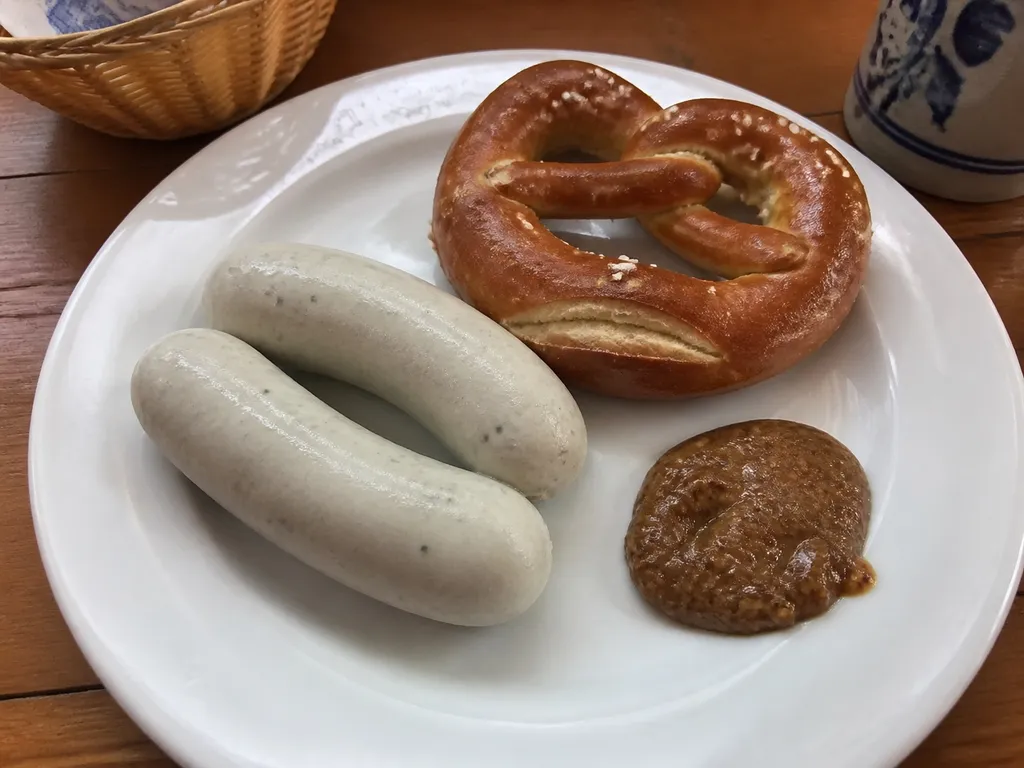 Images are for illustrative purposes only, may be inaccurate, and do not guarantee the presence or absence of specific ingredients.
 Listahan Family Score™
77/100
Good fit for most families
Score reflects how well this recipe fits a typical busy household. In the app, your Family Score is personalized to your household's allergens, kids, and pantry.
Nutrition
per serving85
Calories
1 g
Protein
4 g
Carbs
1 g
Fat
Estimated per serving. Actual values depend on the brands and portions you use.
Listahan cooking guide
Chef notes & practical guide
Technique notes, ingredient swaps, serve-alongside ideas, storage guidance, and equipment for this recipe.
Cultural context
Weisswurst is a Bavarian veal-and-pork-back-fat sausage, seasoned with parsley, lemon zest, mace, and onion, traditionally made fresh each morning because it was never meant to keep. There's an old rule that Weisswurst should not hear the noon bell, reflecting a time before refrigeration when the sausage had to be eaten by midday. It is a Munich beer-hall breakfast dish, served with sweet mustard, a pretzel, and often a wheat beer, not a dinner entree.
Listahan note
This version keeps the poaching gentle on purpose, since Weisswurst is delicate casing around a soft, finely ground filling that splits if the water actually boils, and treats the mustard and pretzel as equal partners to the sausage rather than afterthoughts.
Technique cues
- Keep the water at a bare tremble, not a simmer; a rolling boil will burst the casing and push the fat out into the water.
- Poaching from a cold or barely warm pot rather than dropping sausages into already-hot water helps them heat through evenly without splitting.
- The casing is not meant to be eaten; German diners typically slit it lengthwise and peel it back, or dip and pull the meat out with a fork (zuzeln).
Kitchen flow
- Parallel prep
- Warm the pretzels in the oven while the sausages poach; both should be ready within a few minutes of each other.
- Make-ahead
- Weisswurst is traditionally made fresh and eaten the same morning; if using pre-made sausages, poach them just before serving rather than reheating a second time.
- Leftover move
- Leftover Weisswurst is best sliced cold into a potato salad rather than reheated, since re-poaching can toughen the delicate filling.
- Cleanup rhythm
- One pot for poaching and a baking sheet for the pretzels; wipe the pot while it's still warm since poaching leaves little residue.
Ingredient brief
Role, handling, and swap guidance for each key ingredient.
Weisswurst (Bavarian white veal sausages)
Main sausage
Purpose: It's a finely emulsified veal and pork sausage that stays pale because it's never smoked or heavily browned, only gently poached.
Handling: Prick nothing; leave the casing whole and lower the sausages in gently so they don't crack.
Adaptation: Bratwurst or a mild veal sausage can stand in, but expect a firmer, more savory result rather than the classic delicate crumb.
Sweet Bavarian mustard
Traditional condiment
Purpose: Its mellow sweetness balances the sausage's mild, herby filling without the sharp bite of a Dijon-style mustard.
Handling: Serve it cold in a small dish alongside, not stirred into anything.
Adaptation: A honey-sweetened yellow mustard is a reasonable stand-in if sweet Bavarian mustard isn't available.
Soft pretzels
Traditional bread accompaniment
Purpose: The chewy crust and soft interior are the classic vehicle for mopping up mustard between bites of sausage.
Handling: Warm them briefly in the oven so the crust is fragrant and the inside stays soft.
Adaptation: A crusty white roll works if pretzels aren't on hand, though the flavor will be blander.
Wheat beer
Traditional pairing
Purpose: Its light sweetness and clove-banana yeast notes echo the sausage's mild, aromatic profile, which is why the two are served together at breakfast.
Handling: Pour it with a full head into a tall glass; no additional prep needed.
Adaptation: A non-alcoholic wheat beer or sparkling apple juice keeps the same flavor register without the alcohol.
Technique notes
- If the water starts to bubble, pull the pot off the heat for a moment rather than turning down a stubborn burner; recovery is faster that way.
- Serving a small dish of the poaching liquid alongside is optional but traditional in some households, since it keeps the sausage from drying out on the plate.
- Buy Weisswurst from a butcher who makes it fresh that day if possible; it doesn't freeze or hold well, unlike most other German sausages.
Ingredient swaps
- Gluten-free direction
- Skip the pretzel and wheat beer, and serve with a gluten-free roll and a gluten-free cider instead; the sausage itself is naturally gluten-free.
- Lower-sodium direction
- Use a smaller portion of mustard and season the poaching water lightly, since the sausage itself already carries a good amount of salt.
- Weeknight shortcut
- Poach store-bought Weisswurst for the full 10-12 minutes rather than trying to shorten the time; there's no faster path that keeps the casing intact.
Serve alongside
- Warm soft pretzels
- Bavarian potato salad
- Obatzda cheese spread
- Sweet mustard on the side
- Wheat beer (Weissbier)
- Sparkling apple juice
- Black coffee
Serving suggestions only — check pairings for your household's allergens.
Storage & reheating
- Refrigerate cooked sausages in their poaching liquid for up to 2 days.
- Reheat gently by rewarming in barely simmering water for 3-4 minutes; do not boil.
- Freezing is not recommended, since the texture turns grainy and the casing can split on thawing.
Equipment
- Large pot for poaching
- Slotted spoon
- Kitchen thermometer (optional, to keep water below a simmer)
Make this household-aware
Listahan Pro checks this recipe against your household's allergens, finds pantry-aware swaps, builds the shopping list, and helps you plan the week around it.
Plan it in Listahan
Add Weisswurst (Bavarian White Sausage with Sweet Mustard) to your week, check it against your household's allergens, and build the shopping list automatically.
More German recipes
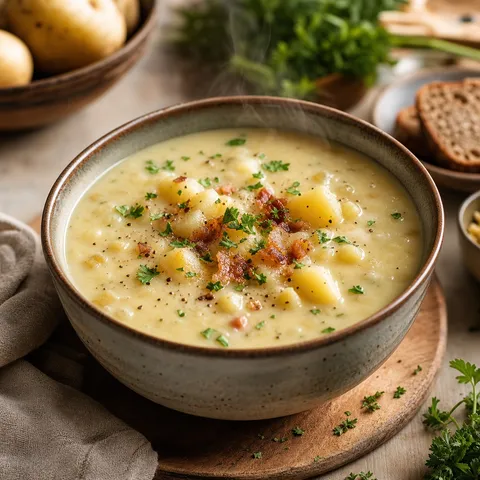 German Lens Verified Images are for illustrative purposes only, may be inaccurate, and do not guarantee the presence or absence of specific ingredients.
 Kartoffelsuppe (Creamy German Potato Soup)
A creamy, comforting German potato soup with leeks, carrots, and a smoky finish of fried sausage or bacon.
 German Lens Verified Images are for illustrative purposes only, may be inaccurate, and do not guarantee the presence or absence of specific ingredients.
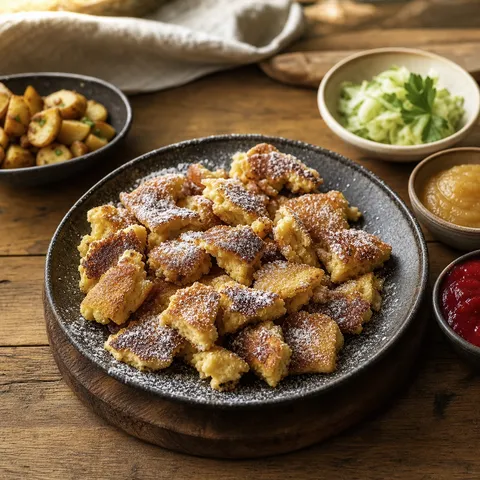
 Kaiserschmarrn (Shredded Sugared Pancake)
A fluffy shredded pancake dusted with powdered sugar and studded with golden raisins, torn into rustic pieces and served with stewed fruit compote.
 German Lens Verified Images are for illustrative purposes only, may be inaccurate, and do not guarantee the presence or absence of specific ingredients.
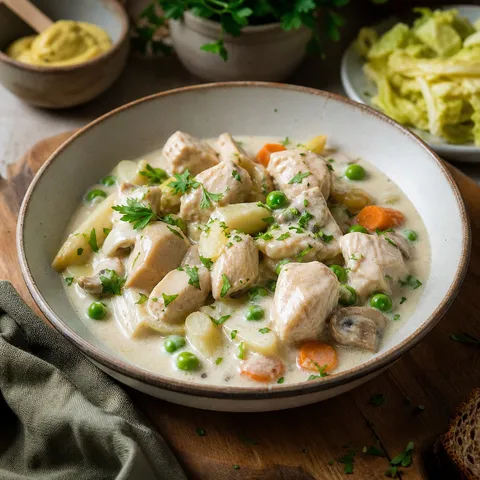
 Hühnerfrikassee (German Chicken Fricassee)
A comforting German chicken fricassee in a silky lemon-cream sauce studded with mushrooms, peas, and capers.