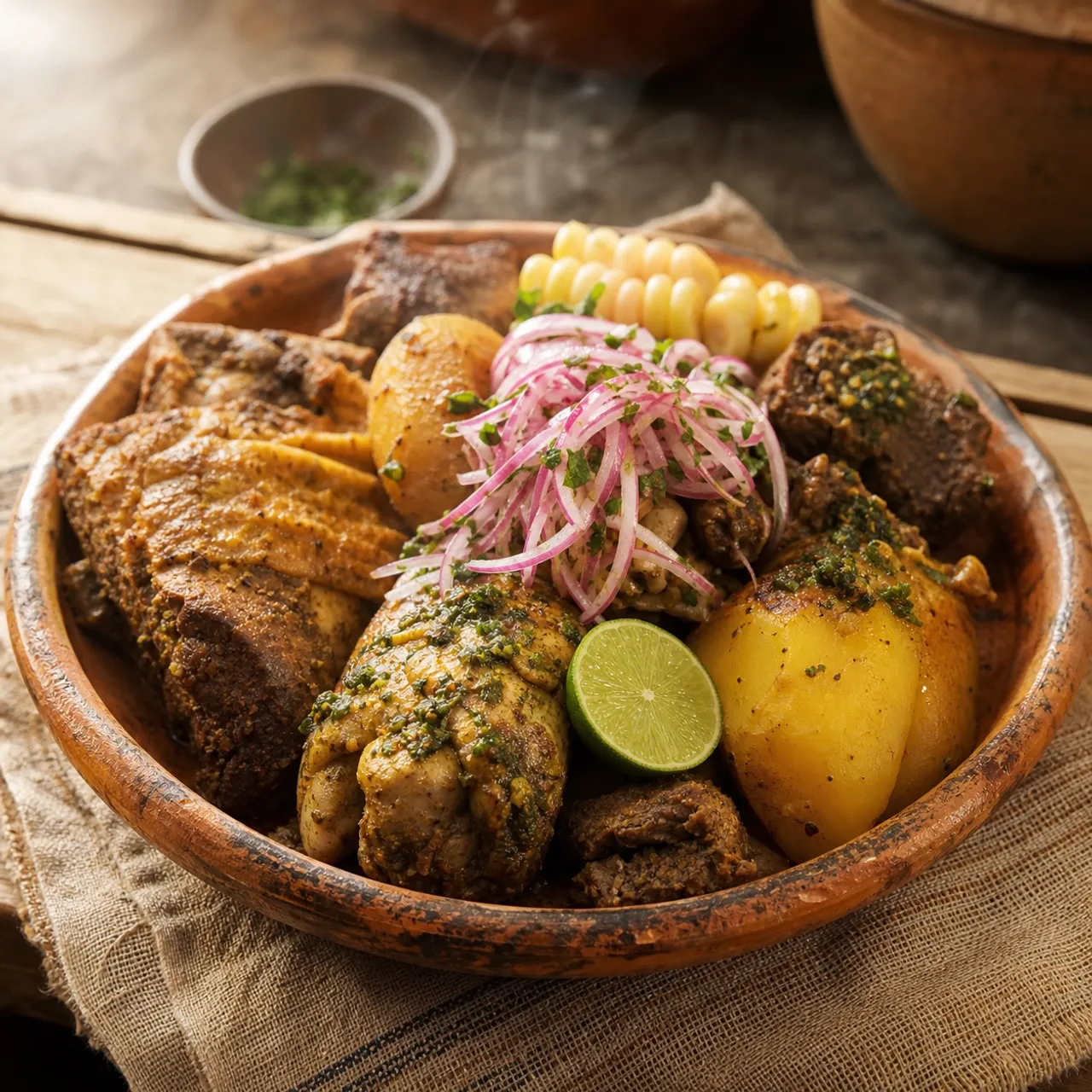
 Peruvian Images are for illustrative purposes only, may be inaccurate, and do not guarantee the presence or absence of specific ingredients.
 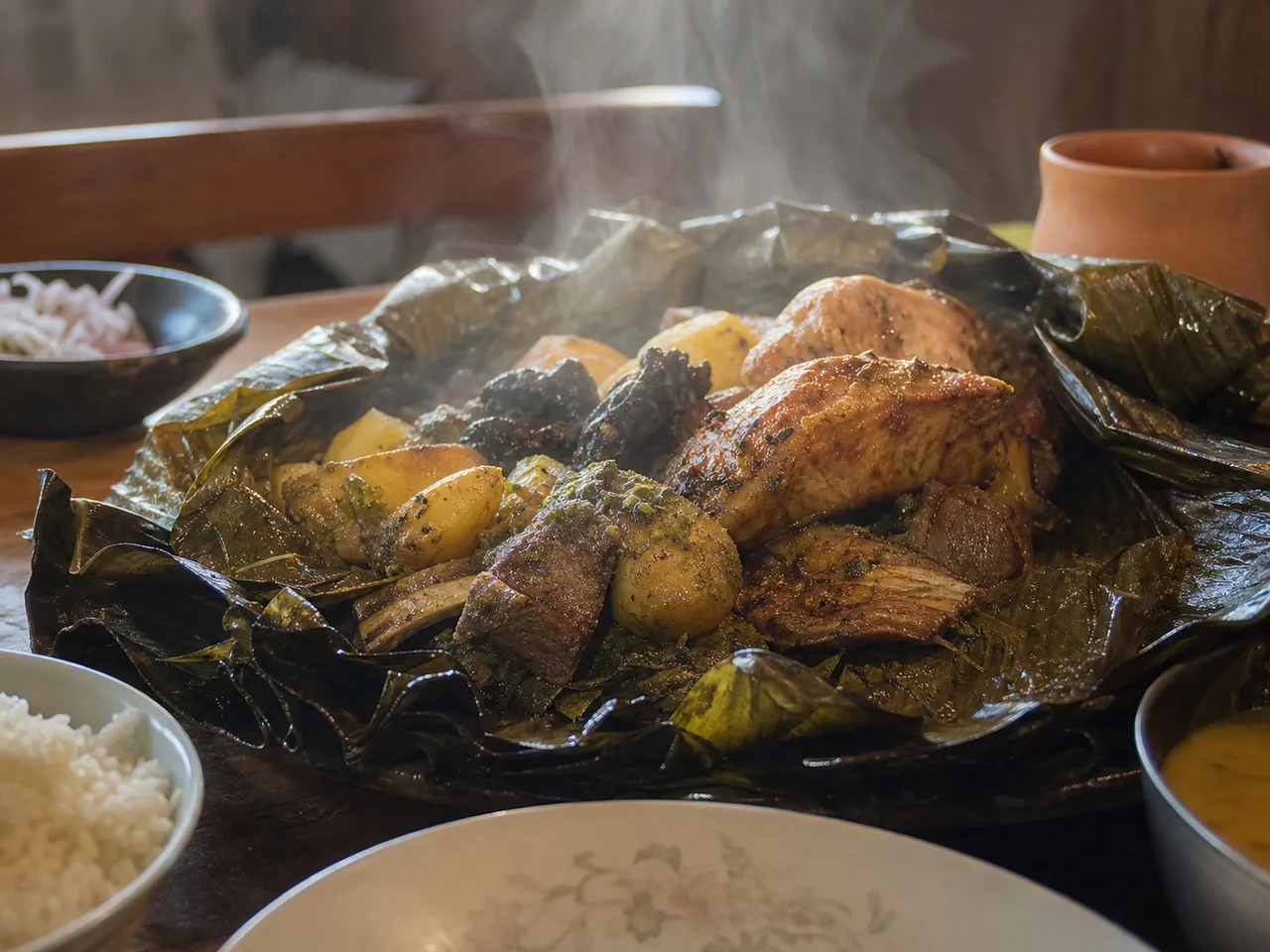 Serving Images are for illustrative purposes only, may be inaccurate, and do not guarantee the presence or absence of specific ingredients.
 Pachamanca (Andean Earth-Oven Roasted Meats and Potatoes)
A ceremonial Andean feast of marinated meats, potatoes, and fava beans traditionally cooked over hot stones underground, adapted here for a home oven for a special-occasion feast.
No common allergens detected
Based on this recipe's ingredient list. Always verify with your own brands and labels.
Instructions
6 steps- 1
Blend the huacatay, aji panca paste, garlic, chicha de jora, oil, salt, and pepper into a marinade.
- 2
Coat the pork, chicken, and lamb thoroughly with the marinade and refrigerate for at least 4 hours or overnight.
- 3
Preheat the oven to 375°F (190°C) and line a large roasting pan with banana leaves.
- 4
Layer the potatoes and sweet potatoes on the bottom, arrange the marinated meats on top, and tuck the fava bean pods in among the layers.
- 5
Fold the banana leaves over everything to enclose tightly, cover with foil, and roast for 2.5 to 3 hours until the meats are very tender.
- 6
Carefully unwrap and serve everything together on a large platter, family-style.
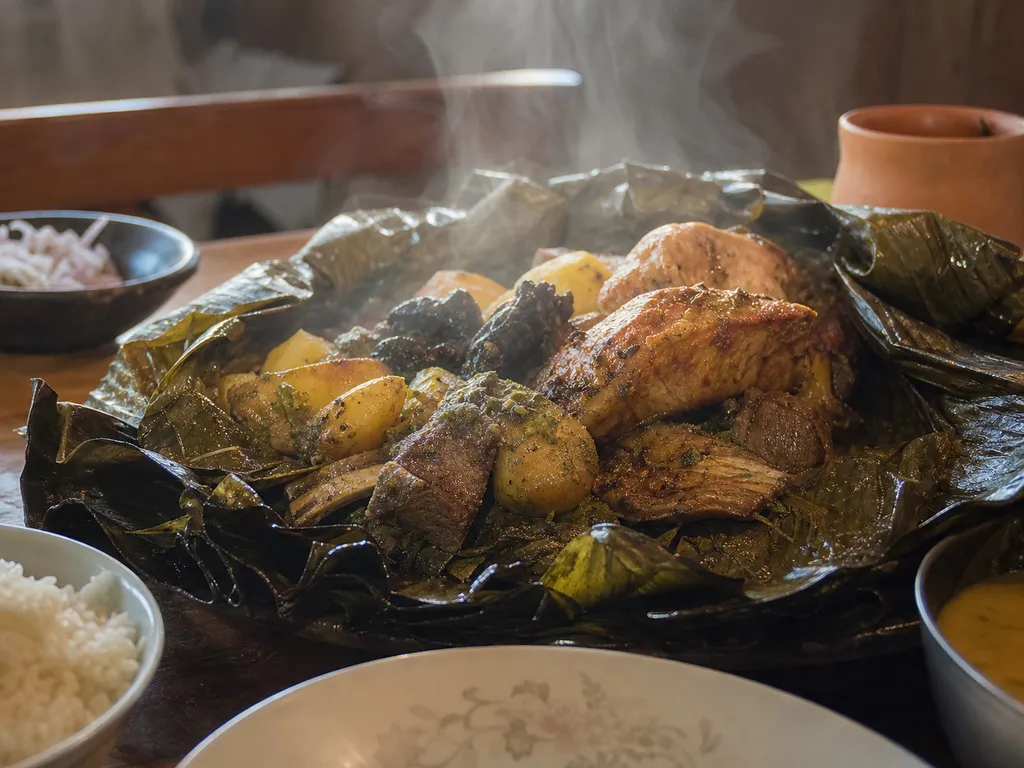 Images are for illustrative purposes only, may be inaccurate, and do not guarantee the presence or absence of specific ingredients.
 Listahan Family Score™
66/100
Works for many families
Score reflects how well this recipe fits a typical busy household. In the app, your Family Score is personalized to your household's allergens, kids, and pantry.
Nutrition
per serving1435
Calories
99 g
Protein
114 g
Carbs
62 g
Fat
Estimated per serving. Actual values depend on the brands and portions you use.
Listahan cooking guide
Chef notes & practical guide
Technique notes, ingredient swaps, serve-alongside ideas, storage guidance, and equipment for this recipe.
Cultural context
Pachamanca means earth pot in Quechua and is one of Peru's oldest cooking methods, traditionally cooked in a pit lined with hot stones in the Andes for community gatherings and harvest festivals. This stovetop and oven adaptation keeps the layered meats, potatoes, and huacatay marinade central even without the literal underground oven.
Listahan note
This version trades the traditional buried hot-stone pit for a sealed roasting pan in a home oven, keeping the banana-leaf wrapping and layering order that lets the different meats and potatoes share flavor as they steam together.
Technique cues
- The order of layering matters; potatoes and sweet potatoes go on the bottom because they need the longest, most direct heat contact, while the meats sit above so their rendered fat and marinade drip down and baste the vegetables as everything cooks.
- Huacatay is a distinct Andean herb, not simply a mint substitute in flavor; it carries an almost tarragon-and-basil quality that gives the marinade its signature character and doesn't translate well if swapped for regular mint.
- Sealing tightly with banana leaves and foil is what makes this a true earth-oven-at-home; the trapped steam is what tenderizes the tougher cuts and cooks the vegetables through without drying anything out.
Kitchen flow
- Parallel prep
- Blend the marinade and let the meats marinate overnight while doing nothing else, so the actual roasting day is mostly hands-off.
- Make-ahead
- The marinating step is the true make-ahead move; do it the night before so roasting day only involves layering and a long, unattended oven time.
- Leftover move
- Leftover meats and potatoes reheat well together in a covered dish with a splash of water to restore moisture, and shredded leftover pork works well in a sandwich the next day.
- Cleanup rhythm
- Line the roasting pan under the banana leaves with extra foil for the easiest cleanup, since the marinade and rendered fat can scorch onto an unlined pan.
Ingredient brief
Role, handling, and swap guidance for each key ingredient.
pork ribs
primary protein
Purpose: Ribs hold up to the long, moist roast and pick up huacatay and aji panca flavor deeply thanks to their fat and connective tissue.
Handling: Pat dry before marinating so the paste clings rather than sliding off.
Adaptation: Swap pork shoulder for a leaner, less bony cut, adjusting cook time down slightly.
huacatay paste
signature herb marinade base
Purpose: This Andean black mint gives pachamanca its distinct, slightly anise-and-basil aroma that defines the dish's flavor identity.
Handling: Blend into the marinade rather than adding whole leaves so it distributes evenly over all three meats.
Adaptation: Swap a mix of cilantro and a little mint as the closest available approximation, understanding the flavor will be noticeably different.
aji panca paste
base marinade chile
Purpose: Aji panca is a mild, smoky-sweet dried chile that builds color and gentle warmth into the marinade without much heat.
Handling: Blend into the huacatay mixture so the two bases meld before hitting the meat.
Adaptation: Swap a mix of smoked paprika and a touch of tomato paste for a milder, chile-free approximation.
chicha de jora
marinade liquid and tenderizer
Purpose: This fermented purple corn beer adds acidity and depth that helps tenderize the meat while contributing its own subtle sourness.
Handling: Whisk into the blended marinade last so its carbonation and flavor aren't lost to prolonged blending.
Adaptation: Swap a light beer or apple cider vinegar diluted with water for the acidity, though the corn character will be missing.
potatoes
starch base layer
Purpose: Small potatoes cooked unpeeled at the bottom of the pan soak up all the rendered fat and marinade drippings from the meats above.
Handling: Leave whole and unpeeled so they hold their shape through the long roast.
Adaptation: Swap baby Yukon gold potatoes if Andean varieties aren't available, texture stays close.
fava beans
vegetable component
Purpose: Fresh favas in the pod steam alongside the meats and vegetables, adding a mild, slightly sweet counterpoint to the rich meats.
Handling: Tuck the whole pods in among the layers so they steam gently rather than drying out.
Adaptation: Swap fresh green beans or lima beans if favas are out of season.
Technique notes
- Don't skip the overnight marinating time even if pressed for time; a shorter soak leaves the interior of the ribs and lamb under-seasoned since the paste needs hours to penetrate, not just coat the surface.
- Seal the banana leaves and foil as tightly as possible before roasting; any gaps let steam escape and the vegetables at the bottom will undercook.
- Check for doneness by pulling one rib away from the bone rather than by time alone, since oven hot spots can mean some areas finish before others.
Ingredient swaps
- Dairy-free and nut-free direction
- This dish is naturally dairy-free and nut-free as written, making it an easy fit for those restrictions without changes.
- Milder direction
- Cut the aji panca paste by half and add an extra tablespoon of huacatay for a gentler, herb-forward version with less chile presence.
- Weeknight shortcut
- Skip the whole-cut lamb and use only chicken thighs and pork, which cook through a bit faster and simplify the shopping list.
Serve alongside
- aji verde sauce
- a simple tomato and onion salad
- boiled sweet corn
- chicha de jora
- a Peruvian pilsner-style beer
- chicha morada for a non-alcoholic option
Serving suggestions only — check pairings for your household's allergens.
Storage & reheating
- Keeps refrigerated up to 3 days in a covered container.
- Reheat covered in a low oven or on the stovetop with a splash of water or stock to keep the meat moist.
- The cooked meats freeze well up to 2 months, thaw overnight before reheating.
Equipment
- a large roasting pan
- a blender for the marinade
- banana leaves (or heavy-duty foil)
- kitchen twine or extra foil for sealing
Make this household-aware
Listahan Pro checks this recipe against your household's allergens, finds pantry-aware swaps, builds the shopping list, and helps you plan the week around it.
Plan it in Listahan
Add Pachamanca (Andean Earth-Oven Roasted Meats and Potatoes) to your week, check it against your household's allergens, and build the shopping list automatically.
More Peruvian recipes
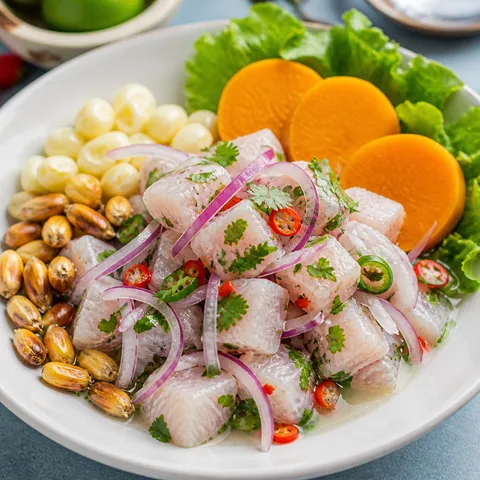 Peruvian Lens Verified Images are for illustrative purposes only, may be inaccurate, and do not guarantee the presence or absence of specific ingredients.
 Ceviche de Pescado
The iconic dish of Peru—exquisitely fresh, raw white fish "cooked" purely by the acidity of freshly squeezed lime juice, infused with chili heat and red onion bite.
 Peruvian Lens Verified Images are for illustrative purposes only, may be inaccurate, and do not guarantee the presence or absence of specific ingredients.
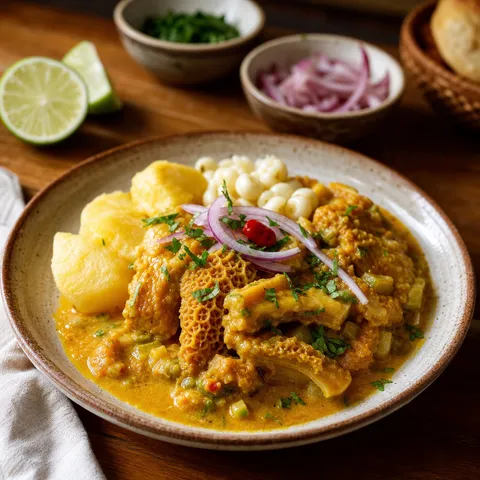
 Cau Cau (Peruvian Tripe Stew)
A hearty yellow stew of tender beef tripe and potatoes simmered in aji amarillo and mint, spooned over rice for a classic home-style meal.
 Peruvian Lens Verified Images are for illustrative purposes only, may be inaccurate, and do not guarantee the presence or absence of specific ingredients.
 Alfajores (Peruvian Dulce de Leche Sandwich Cookies)
Delicate, crumbly shortbread cookies sandwiched with rich dulce de leche and dusted with powdered sugar, a favorite Peruvian teatime treat.