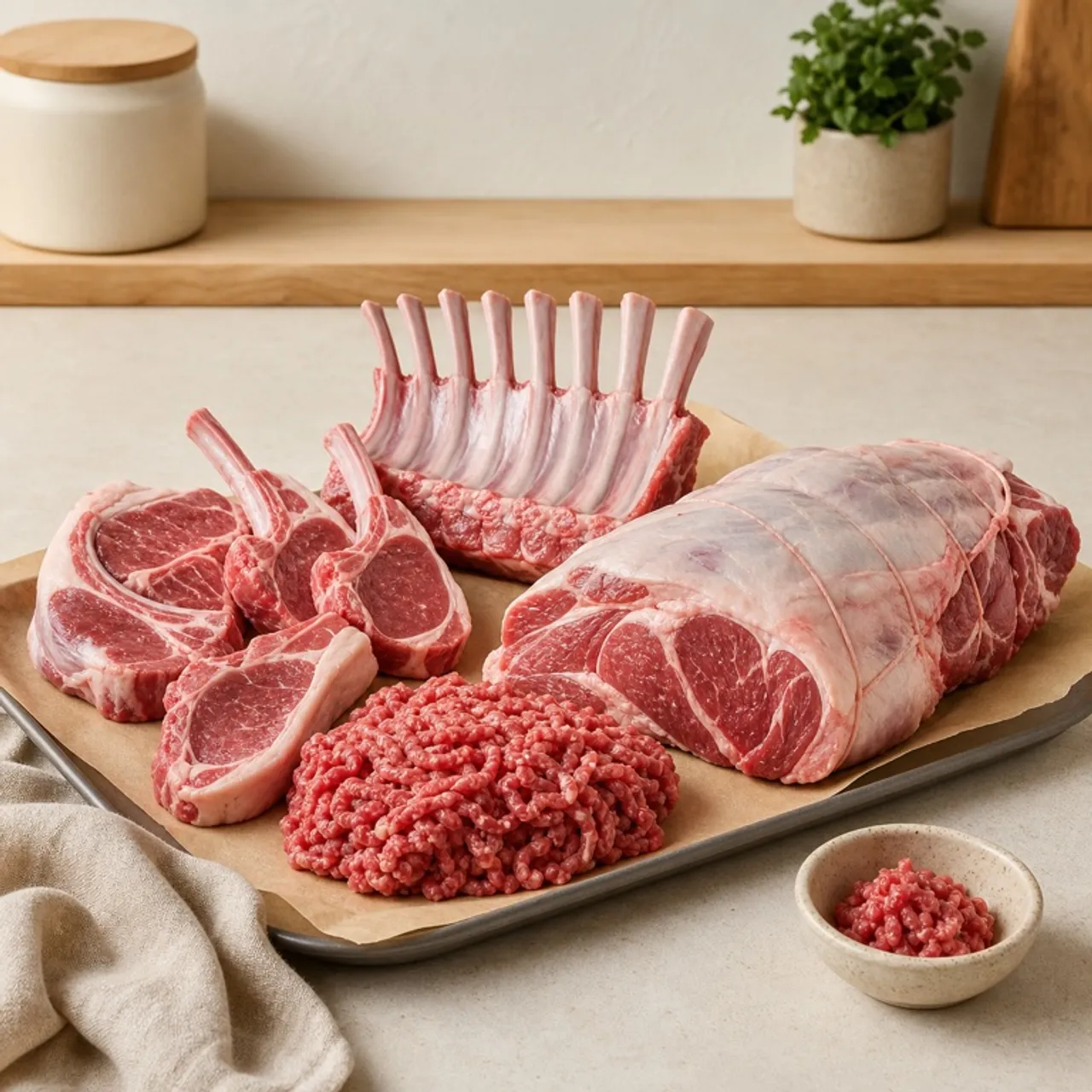
 Food Lens Images are for illustrative purposes only, may be inaccurate, and do not guarantee the presence or absence of specific ingredients.
 Food Lens · Recipe ingredients
Lamb
Rich, slightly gamey, and savory with a lush fat that carries herbs and spices beautifully; younger lamb is milder and more delicate than mutton.
Lens VerifiedLamb is the meat of a young sheep, prized for its rich, slightly gamey flavor that varies by cut and age. From delicate rack of lamb to hearty leg roasts and quick-cooking chops, it's one of the most versatile red meats in the world. Ground lamb brings the same depth to burgers and meatballs, while bone-in cuts reward slow cooking with deep, savory results.
Where it comes from
From the first sheep corralled on the plains of ancient Mesopotamia, lamb has fed families and marked celebrations across nearly every culture on earth.
Varieties — Common cuts include rack (elegant, quick-cooking), leg (roast whole or butterflied), shoulder (best braised), loin and rib chops (pan or grill), shanks (slow-braise classics), and ground lamb. Milk-fed lamb (very young) is prized in Spain and Italy for its pale, mild flesh.
Lamb is central to Eid al-Adha feasts, Greek Easter celebrations, and Indian Eid and wedding banquets. In the UK, Sunday roast leg of lamb is a family institution; in Morocco, slow-cooked mechoui is a feast centerpiece.
In a modern kitchen — A simple herb crust of rosemary, garlic, and Dijon transforms a rack of lamb into a dinner-party showstopper in under 30 minutes.
Buying it
Look for meat that is pinkish-red (very young lamb) to deeper red (older lamb), with creamy white fat — yellow fat signals older age or grass-heavy feed. For roasting, bone-in cuts retain more moisture and flavor. Ask your butcher for 'frenched' rack if presentation matters.
Storing it
Keep refrigerated and use within a few days, or freeze for longer storage. Ground or thinly cut lamb spoils faster than roasts or chops — a sour smell or sticky surface means it's gone off.
Keeps about 3 days in the fridge.
Out of lamb? Good swaps
- goat — Similar gamey depth; slightly leaner; use in curries and braises interchangeably
- beef (chuck or short rib) — Milder flavor but similar fat content; works well in slow-cooked preparations
- venison — Leaner and wilder in flavor; suits the same herb-forward seasonings as lamb
General cooking guidance — always check the labels on the products you use. Listahan’s allergen checks run automatically when you plan a recipe in the app. Not medical advice.
Recipes that use lamb
Common questions about lamb
What can I use instead of lamb?
Good swaps include goat, beef (chuck or short rib), venison. Each behaves a little differently — see the swaps above for notes, and always check labels for allergens.
How do I store lamb?
Keep refrigerated and use within a few days, or freeze for longer storage. Ground or thinly cut lamb spoils faster than roasts or chops — a sour smell or sticky surface means it's gone off. It keeps about 3 days in the fridge.
More recipe ingredients
See all


Make lamb about your kitchen — with Listahan Pro
Everything above is free, forever. Pro adds the Household Lens — the same food, seen for your family:
-
Checked for each member
Flags lamb per person against your household's allergies and school rules — not just a generic "contains" tag.
-
Pantry-aware
Knows whether you already have it, what is running low, and the best swap from what is in your kitchen tonight.
-
What it costs near you
A real price from the Presyo community index, so you can plan the budget — not guess.
-
Your household memory
Who likes it, plus your own private notes — brand, where you keep it, who skips it.
Allergen safety is always free — Pro adds the automation, never the safety.
Cook with lamb — safely
Plan a recipe in Listahan and the household allergen check runs automatically — every plan, every swap, every lunchbox. Safety is never paywalled.