 Nordic Images are for illustrative purposes only, may be inaccurate, and do not guarantee the presence or absence of specific ingredients.
  Serving Images are for illustrative purposes only, may be inaccurate, and do not guarantee the presence or absence of specific ingredients.
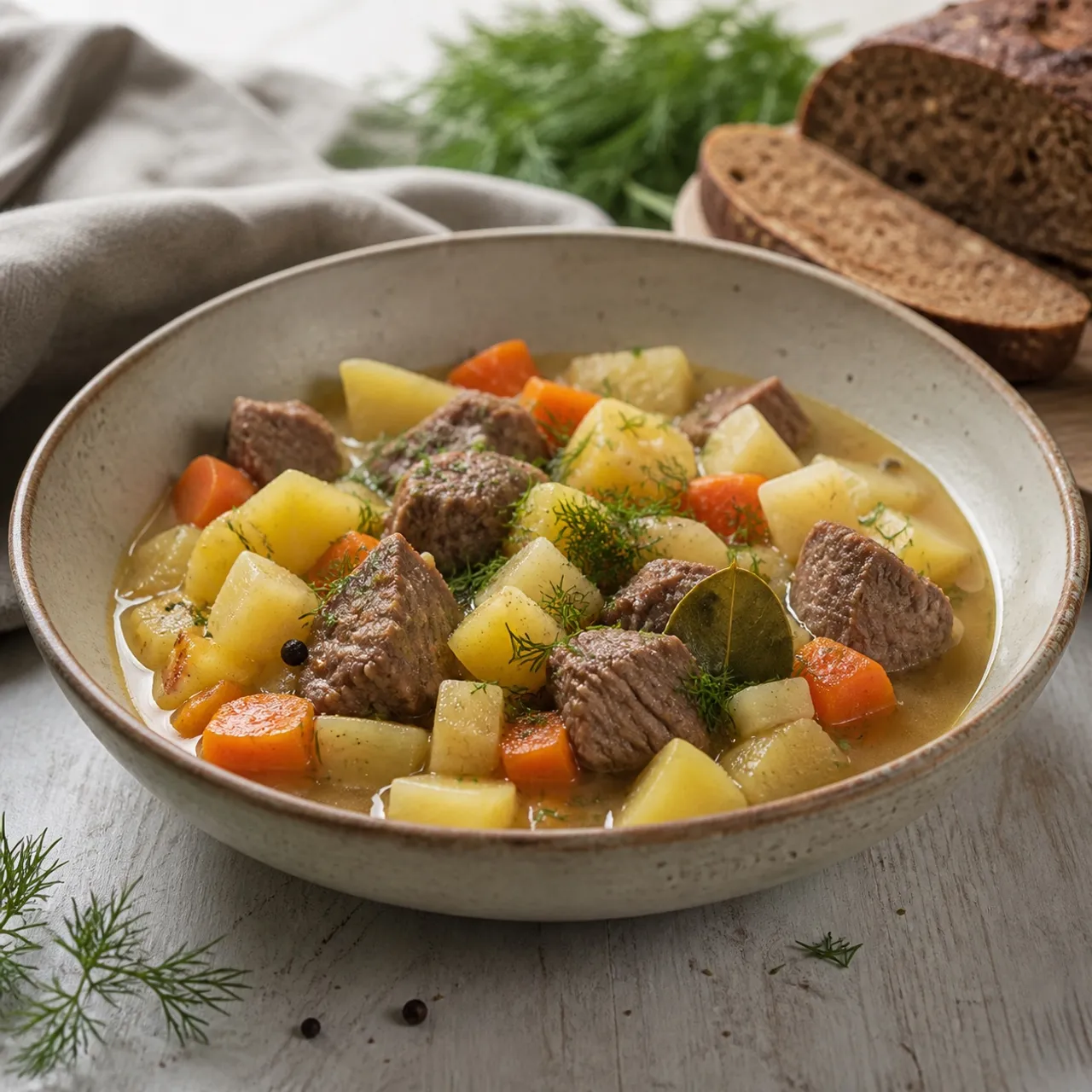
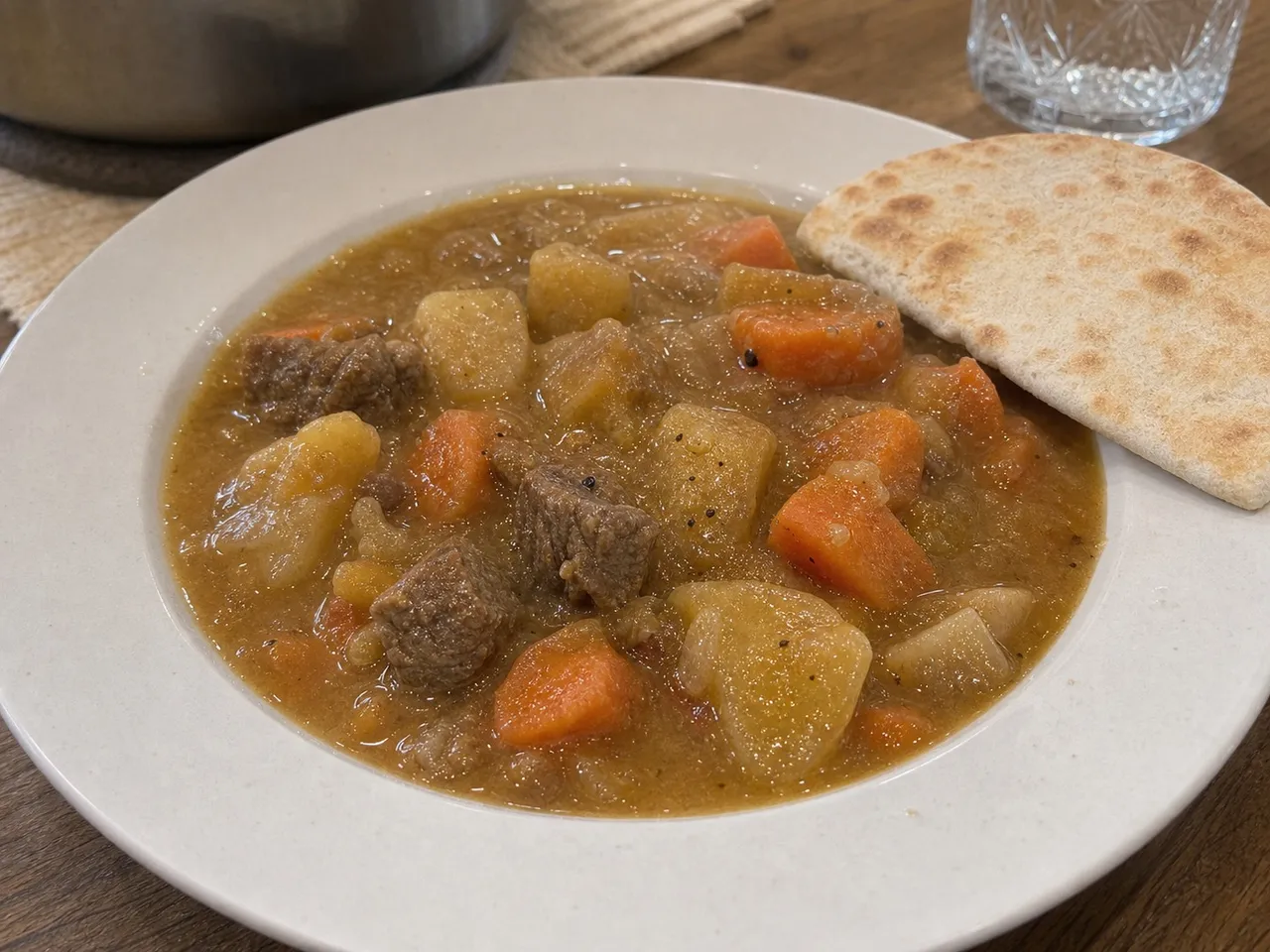
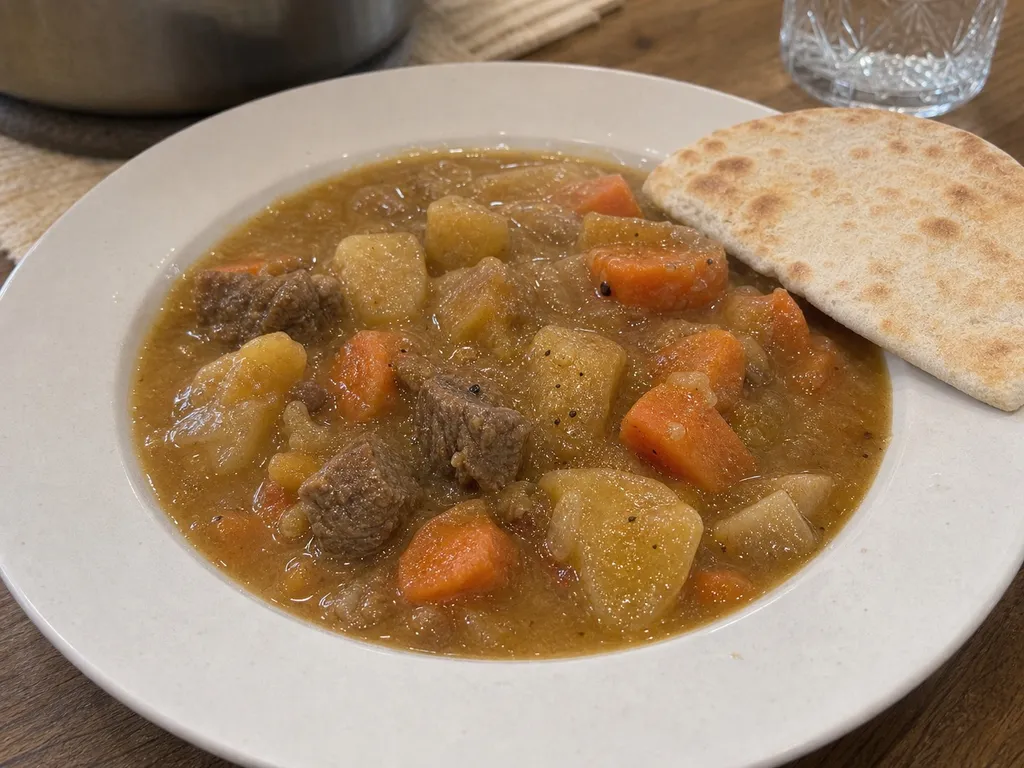
 Lapskaus
Norway's thick, nourishing stew of beef or lamb simmered with root vegetables and potatoes until everything melds into one rich, stick-to-your-ribs winter bowlful.
Contains common allergens
In the app, Listahan checks these against your household automatically.
Good to know
- One-pot
Matched from this dish's own ingredients and timing. Browse more: one-pot dinners
Instructions
7 steps- 1
Pat the meat dry and brown it in batches in the butter over high heat in a heavy pot, so as not to crowd the pan, then set aside.
- 2
Lower the heat, add the onion to the same pot, and cook until softened, scraping up the browned bits from the bottom.
- 3
Return the meat to the pot, add the stock, bay leaf, and allspice berries, bring to a simmer, cover, and cook over low heat for 45 minutes, until the meat is starting to turn tender.
- 4
Add the rutabaga and carrots and simmer for another 20 minutes.
- 5
Add the potatoes and continue simmering uncovered for 20 to 25 minutes, until the potatoes and meat are fork-tender and the broth has thickened slightly.
- 6
Mash a few of the potato chunks against the side of the pot to naturally thicken the stew.
- 7
Season generously with salt and pepper, remove the bay leaf, and serve piping hot in deep bowls with flatbread.
 Images are for illustrative purposes only, may be inaccurate, and do not guarantee the presence or absence of specific ingredients.
 Listahan Family Score™
66/100
Works for many families
Score reflects how well this recipe fits a typical busy household. In the app, your Family Score is personalized to your household's allergens, kids, and pantry.
Nutrition
per serving435
Calories
33 g
Protein
34 g
Carbs
17 g
Fat
Estimated per serving. Actual values depend on the brands and portions you use.
Listahan cooking guide
Chef notes & practical guide
Technique notes, ingredient swaps, serve-alongside ideas, storage guidance, and equipment for this recipe.
Cultural context
Lapskaus is Norway's definitive sailor and working-class stew, recorded in Norwegian ports as far back as the 19th century and likely derived from the same 'lobscouse' tradition that produced Liverpool scouse and Labskaus in Hamburg. Norwegian sailors cooked it from whatever preserved meat and root vegetables were available on long voyages — salt beef, rutabaga, and dried peas — and it became so embedded in everyday home cooking that it remains a standard Thursday supper across the country today.
Listahan note
This version uses fresh beef chuck rather than salted meat and builds the broth from scratch, prioritizing a thick, cohesive texture where the potato melts slightly into the stew.
Technique cues
- The potatoes are the natural thickener here: starchy varieties like Russet or Yukon Gold break down at the edges during simmering, releasing starch that gives lapskaus its characteristic thick, almost porridge-like consistency.
- Brown the meat well before adding liquid — lapskaus can taste flat and boiled if the beef goes directly into cold stock without caramelization.
- Season in stages: once after the meat is browned, again when the vegetables go in, and a final adjustment before serving, because root vegetables absorb considerable salt as they cook down.
Kitchen flow
- Parallel prep
- Dice all root vegetables while the beef is browning in batches; by the time the meat is ready the vegetables will be prepped.
- Make-ahead
- Make the full stew up to 2 days ahead; the flavors knit together overnight and the potatoes thicken the broth further as it sits.
- Leftover move
- Mash leftover lapskaus coarsely and pan-fry in butter into thick patties for a traditional Norwegian 'biksemad'-style hash.
- Cleanup rhythm
- A single heavy pot handles everything; soak it immediately after serving to loosen any starch that sticks to the bottom.
Ingredient brief
Role, handling, and swap guidance for each key ingredient.
beef chuck or lamb shoulder, cut into 1-inch cubes
primary protein
Purpose: The collagen in chuck or lamb shoulder dissolves into the long-simmered broth, adding body without a separate roux.
Handling: Cut into uniform 1-inch cubes so every piece cooks at the same rate and none dry out before others are tender.
Adaptation: Leftover roast beef or corned beef can replace fresh meat — add it in the last 20 minutes so it does not overcook.
starchy potatoes, peeled and diced
thickener and filler
Purpose: Starchy potatoes partially dissolve during the long simmer, giving lapskaus its signature thick consistency.
Handling: Dice into roughly 3/4-inch cubes so some edges melt into the stew while the centers remain intact.
Adaptation: Waxy potatoes (red or fingerling) hold their shape but do not thicken the broth — use starchy if possible for the right texture.
rutabaga or parsnip, peeled and diced
root vegetable body
Purpose: Rutabaga adds a mild sweetness and earthy depth that distinguishes Nordic stews from generic beef-and-potato soups.
Handling: Dice slightly larger than the potato (about 1 inch) so both finish at roughly the same time.
Adaptation: Turnip works as a direct substitute; parsnip is sweeter and softer, so reduce the quantity by a third.
beef or lamb stock
braising and cooking liquid
Purpose: A flavorful stock carries all the seasoning in a stew this simple — it has nowhere to hide.
Handling: Use unsalted stock and season the stew yourself so the final concentration does not make it too salty.
Adaptation: A combination of water and a good-quality beef bouillon cube works in a pinch if homemade stock is unavailable.
butter
fat for browning and richness
Purpose: Butter provides the browning fat and rounds out the flavor of the finished stew with dairy richness.
Handling: Use unsalted butter so you retain full control of seasoning in a dish that is otherwise quite simply flavored.
Adaptation: Neutral oil or beef drippings can replace butter and keep the dish dairy-free without loss of flavor.
Technique notes
- If the stew is not thick enough after the potatoes have cooked down, mash a ladleful of potato-heavy stew separately and stir it back in rather than adding flour, which can taste raw.
- Keep the lid on for the first 45 minutes so the liquid does not reduce too fast; remove for the final 15 minutes to let the stew reach the right thick, almost spoonable consistency.
- A few whole black peppercorns added with the bay leaves pull out during serving and prevent you from over-grinding pepper at the end, which can turn bitter in a long-cooked stew.
Ingredient swaps
- Gluten-free direction
- The dish is naturally thickened by potato starch; no flour is used, making it gluten-free as written as long as stock is certified gluten-free.
- Dairy-free option
- Replace butter with neutral vegetable oil or beef drippings; the stew loses a little richness but the flavor profile is otherwise unchanged.
- Leaner protein
- Pork shoulder works well and is traditional in some Norwegian coastal versions; reduce the simmer time slightly as pork becomes tender faster than beef chuck.
Serve alongside
- flatbrod (Norwegian flatbread) or crispbread for dipping
- pickled cucumber slices with dill and white vinegar
- a sharp yellow mustard on the side for spreading
- cold Norwegian Ringnes lager or any light Pilsner
- warm black coffee, as served traditionally alongside in Norwegian home kitchens
Serving suggestions only — check pairings for your household's allergens.
Storage & reheating
- Refrigerate for up to 4 days; the stew thickens considerably when cold, so add a splash of water or stock when reheating.
- Reheat over medium-low heat, stirring frequently from the bottom to prevent the potato from scorching.
- Freezes well for up to 2 months, though the potato texture softens further on thawing — stir vigorously when reheating to reintegrate.
Equipment
- 5-6 quart heavy-bottomed Dutch oven or stockpot
- sturdy wooden spoon or silicone spatula for scraping the bottom
- ladle for serving and for the mash-back thickening trick
- potato masher (optional, for thickening)
Make this household-aware
Listahan Pro checks this recipe against your household's allergens, finds pantry-aware swaps, builds the shopping list, and helps you plan the week around it.
Plan it in Listahan
Add Lapskaus to your week, check it against your household's allergens, and build the shopping list automatically.
More Nordic recipes
 Nordic Lens Verified Images are for illustrative purposes only, may be inaccurate, and do not guarantee the presence or absence of specific ingredients.
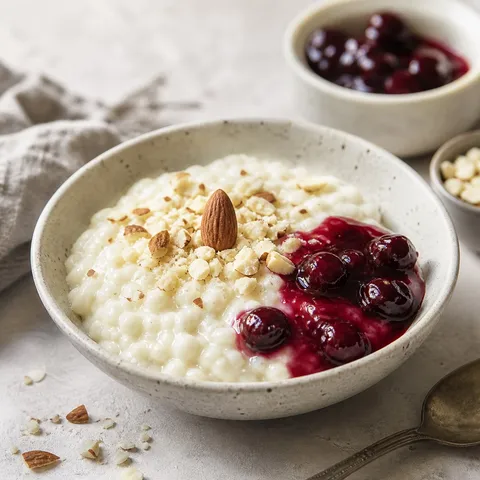
 Risalamande
A creamy Danish cold rice pudding folded with whipped cream and chopped almonds, served with a glossy warm cherry sauce on Christmas Eve.
 Nordic Lens Verified Images are for illustrative purposes only, may be inaccurate, and do not guarantee the presence or absence of specific ingredients.
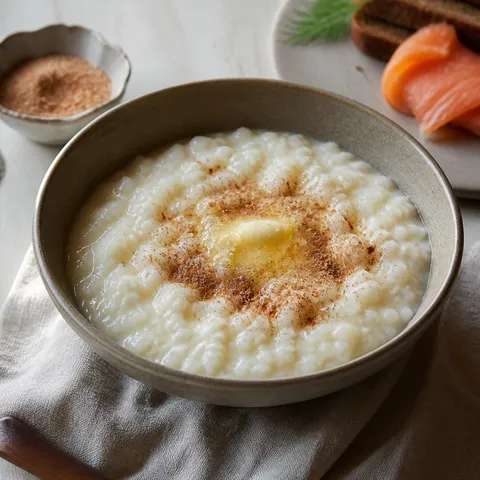
 Risgrynsgröt
Creamy Nordic rice porridge, slow-cooked until thick and comforting, scented with cinnamon and served with a pat of melting butter — Christmas morning in a bowl.
 Nordic Lens Verified Images are for illustrative purposes only, may be inaccurate, and do not guarantee the presence or absence of specific ingredients.
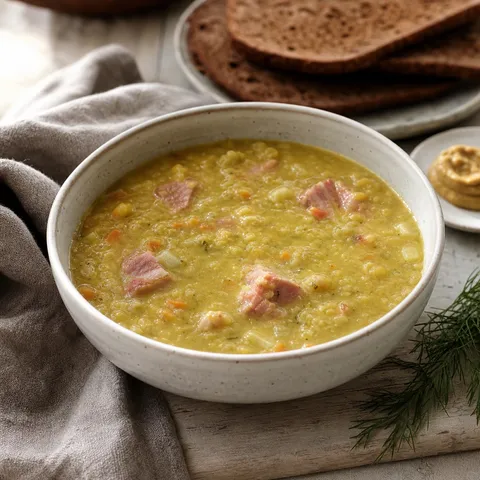
 Hernekeitto
Finland's beloved Thursday pea soup — yellow split peas simmered with smoky ham until thick and hearty, traditionally served with a shot of Finnish mustard and pancakes.