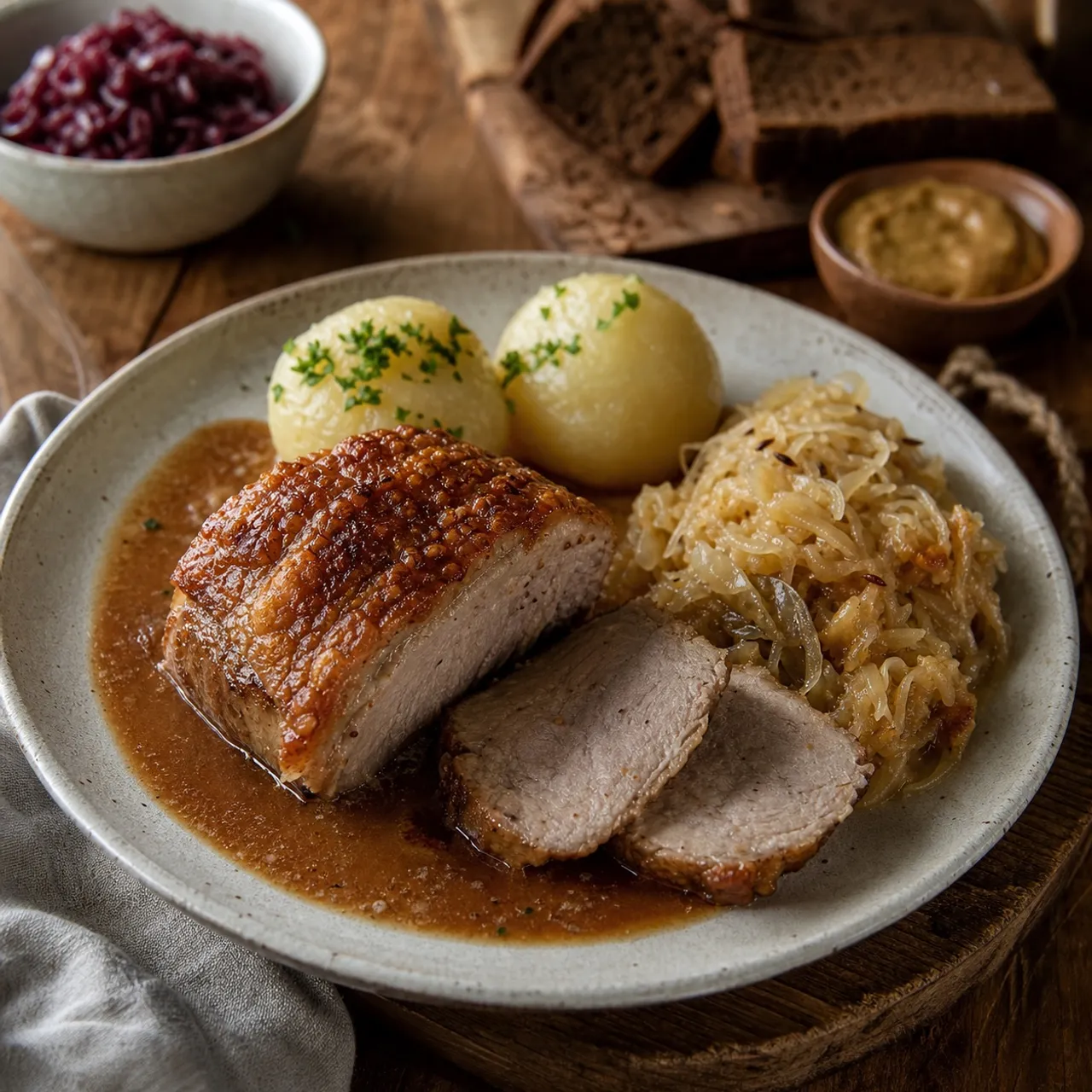
 German Images are for illustrative purposes only, may be inaccurate, and do not guarantee the presence or absence of specific ingredients.
 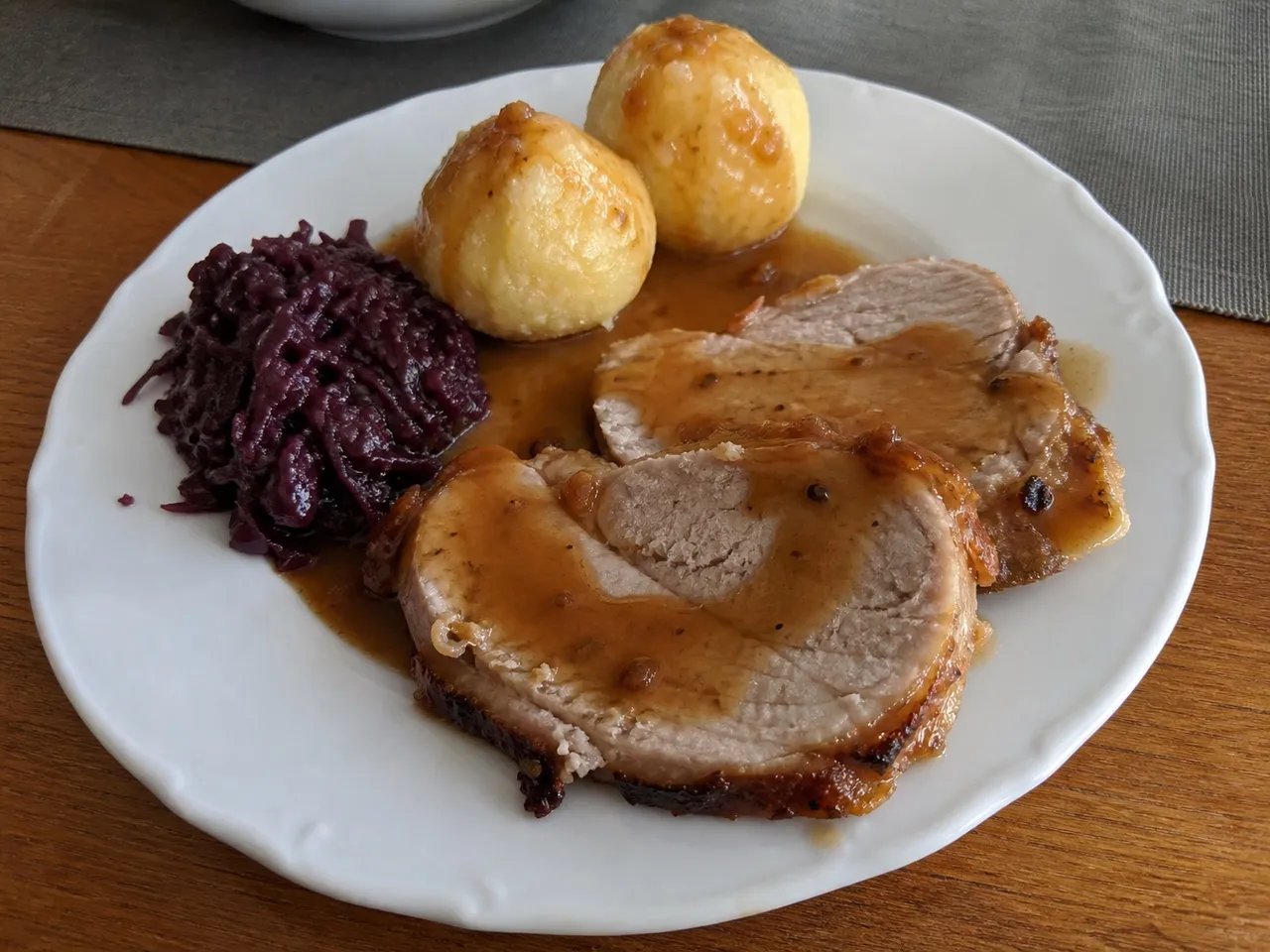 Serving Images are for illustrative purposes only, may be inaccurate, and do not guarantee the presence or absence of specific ingredients.
 Schweinebraten (German Pork Roast with Gravy)
A hearty German pork roast with a crackling crust, slow-roasted with onions and caraway and finished in a rich, savory pan gravy.
Contains common allergens
In the app, Listahan checks these against your household automatically.
Good to know
- Crispy
Matched from this dish's own ingredients and timing. Browse more: crispy recipes
Instructions
7 steps- 1
Preheat oven to 160°C (320°F) and pat the pork shoulder dry.
- 2
Cut small slits into the meat and insert garlic slivers, then rub the skin generously with salt and caraway seeds.
- 3
Place onions and carrots in a roasting pan, set the pork on top, and pour in beer and stock.
- 4
Roast uncovered for about 2 hours, basting every 30 minutes, until the internal temperature reaches 74°C (165°F).
- 5
Increase oven temperature to 220°C (425°F) for the last 15-20 minutes to crisp the skin.
- 6
Rest the roast for 10 minutes, then strain the pan juices, whisk in flour mixed with cold water, and simmer to make gravy.
- 7
Slice the pork and serve with the gravy.
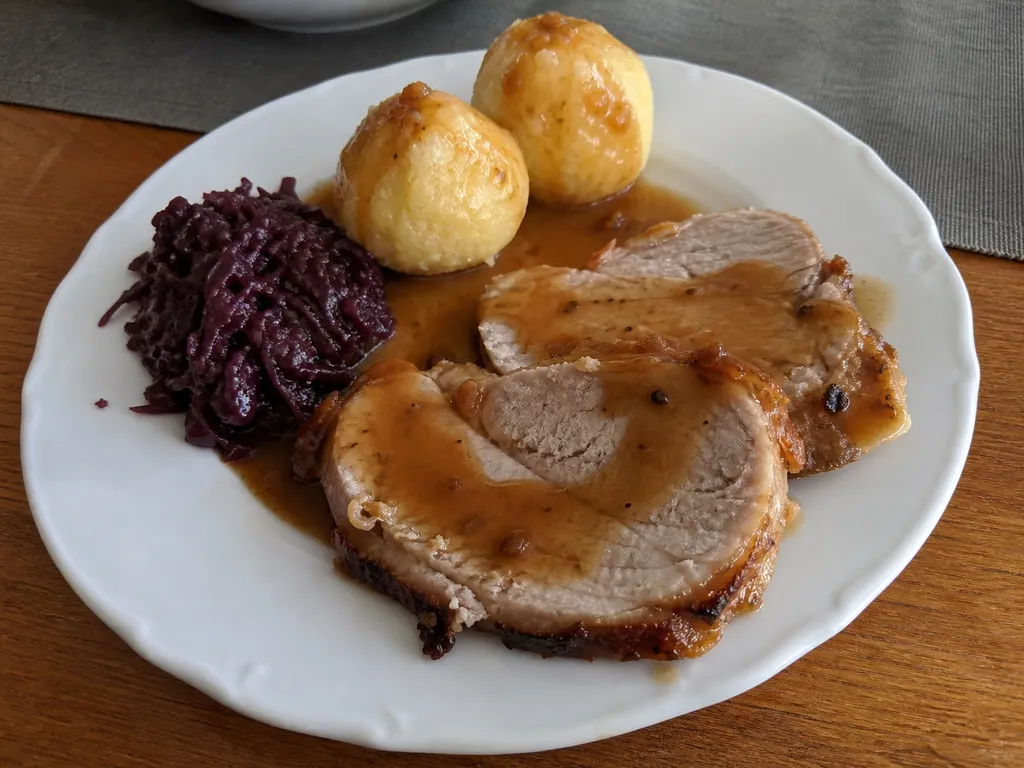 Images are for illustrative purposes only, may be inaccurate, and do not guarantee the presence or absence of specific ingredients.
 Listahan Family Score™
71/100
Good fit for most families
Score reflects how well this recipe fits a typical busy household. In the app, your Family Score is personalized to your household's allergens, kids, and pantry.
Nutrition
per serving770
Calories
77 g
Protein
11 g
Carbs
40 g
Fat
Estimated per serving. Actual values depend on the brands and portions you use.
Listahan cooking guide
Chef notes & practical guide
Technique notes, ingredient swaps, serve-alongside ideas, storage guidance, and equipment for this recipe.
Cultural context
Schweinebraten is the everyday Sunday pork roast found across German-speaking regions, distinguished from the more festive Bavarian Schweinshaxe by using a boneless shoulder roast instead of a whole knuckle. The scored skin, caraway rub, and beer-based pan gravy come from the same family of technique, just built around a cut that feeds more people from one roast and carves into neat slices rather than being pulled apart.
Listahan note
This version scores the skin and slivers garlic directly into the meat before roasting, then raises the oven temperature only at the very end, so the skin has a real chance to crisp without drying out the meat during the long initial roast.
Technique cues
- Inserting garlic slivers into small slits in the meat, rather than just rubbing garlic on the surface, seasons the roast from the inside as it cooks.
- Basting every 30 minutes during the long roast keeps the surface moist so the final high-heat blast crisps the skin instead of drying it out before it can blister.
- Check the internal temperature rather than relying on time alone; pork shoulder can vary in how quickly it reaches a safe, tender finish depending on its exact size and shape.
Kitchen flow
- Parallel prep
- Prepare the vegetable bed and slit the meat for garlic while the oven preheats, so the roast goes in as soon as it's seasoned.
- Make-ahead
- The roast can be scored and seasoned the night before and left uncovered in the fridge, which also helps dry the skin for better crisping.
- Leftover move
- Slice cold leftover pork thin for sandwiches with mustard and pickles, or dice and fry with the leftover gravy for a quick hash.
- Cleanup rhythm
- Strain the pan juices into a saucepan right after the roast comes out, so the roasting pan can soak while the meat rests.
Ingredient brief
Role, handling, and swap guidance for each key ingredient.
Pork shoulder with skin scored
Main cut
Purpose: A well-marbled shoulder stays moist through the long roast while the scored skin crisps separately.
Handling: Cut small slits and insert garlic slivers before rubbing the exterior.
Adaptation: A boneless pork loin roasts faster but is leaner and less forgiving of the long cook time.
Salt
Skin seasoning
Purpose: Draws moisture from the skin surface to help it crisp.
Handling: Rub in generously, working it into the scored cuts.
Adaptation: Kosher or coarse sea salt both work equally well here.
Caraway seeds
Signature aromatic
Purpose: Gives the roast its distinctly German, slightly anise-like flavor.
Handling: Rub into the skin along with the salt so it toasts as the roast cooks.
Adaptation: Fennel seeds are a milder substitute with a similar aromatic effect.
Garlic
Interior seasoning
Purpose: Inserted into slits, it seasons the meat itself rather than just the surface.
Handling: Sliver thinly so each piece tucks easily into a small cut.
Adaptation: Garlic powder rubbed on the surface is a weaker substitute if fresh cloves aren't available.
Dark beer
Braising and gravy base
Purpose: Its malty depth flavors the pan juices that become the finished gravy.
Handling: Pour around the roast, not over the skin, so the top stays dry and able to crisp.
Adaptation: A dry stout or additional stock can substitute for the beer.
All-purpose flour
Gravy thickener
Purpose: Turns the strained pan juices into a proper gravy rather than a thin jus.
Handling: Whisk with cold water into a smooth slurry before adding to the simmering juices.
Adaptation: A cornstarch slurry thickens just as well for a gluten-free version.
Technique notes
- The temperature increase at the end is what crisps the skin; roasting the whole time at one temperature gives tender meat but soft, chewy skin.
- Baste with the pan liquid during the main roast, but stop basting once you raise the heat, or the added moisture will steam the skin instead of blistering it.
- Rest the roast a full 10 minutes before slicing so the juices redistribute and the slices hold together instead of falling apart.
Ingredient swaps
- Gluten-free direction
- Thicken the gravy with a cornstarch slurry instead of flour, and use a gluten-free beer or additional stock in the braise.
- Dairy-free direction
- As written, the recipe is pork, caraway, garlic, onions, carrots, beer, and stock — no dairy ingredient in that list.
Serve alongside
- Bavarian potato dumplings (Kartoffelknödel)
- Braised red cabbage
- Roasted carrots
- Warm sauerkraut
- Dunkel lager
- Dry Riesling
- Sparkling water
Serving suggestions only — check pairings for your household's allergens.
Storage & reheating
- Refrigerate sliced leftovers in the gravy for up to 3 days.
- Reheat gently in a covered dish in the oven or on the stovetop with a splash of stock to keep the meat from drying out.
- Freeze sliced meat and gravy together for up to 2 months; thaw overnight in the fridge before reheating.
Equipment
- Roasting pan
- Sharp knife for scoring and inserting garlic
- Meat thermometer
- Fine strainer for the gravy
Make this household-aware
Listahan Pro checks this recipe against your household's allergens, finds pantry-aware swaps, builds the shopping list, and helps you plan the week around it.
Plan it in Listahan
Add Schweinebraten (German Pork Roast with Gravy) to your week, check it against your household's allergens, and build the shopping list automatically.
More German recipes
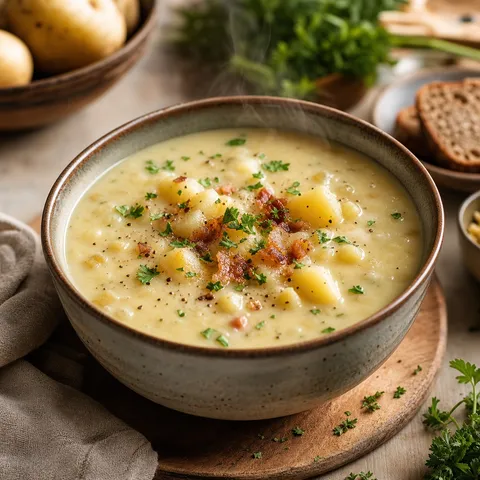 German Lens Verified Images are for illustrative purposes only, may be inaccurate, and do not guarantee the presence or absence of specific ingredients.
 Kartoffelsuppe (Creamy German Potato Soup)
A creamy, comforting German potato soup with leeks, carrots, and a smoky finish of fried sausage or bacon.
 German Lens Verified Images are for illustrative purposes only, may be inaccurate, and do not guarantee the presence or absence of specific ingredients.
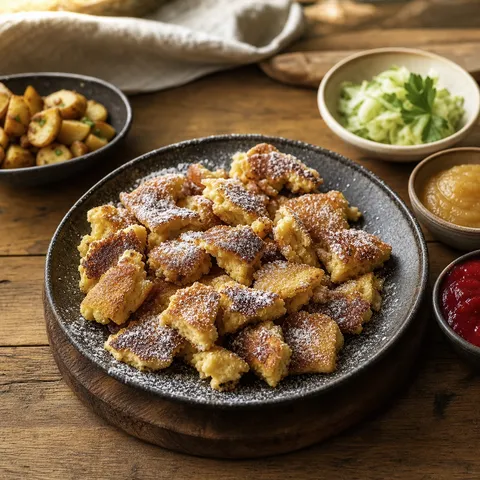
 Kaiserschmarrn (Shredded Sugared Pancake)
A fluffy shredded pancake dusted with powdered sugar and studded with golden raisins, torn into rustic pieces and served with stewed fruit compote.
 German Lens Verified Images are for illustrative purposes only, may be inaccurate, and do not guarantee the presence or absence of specific ingredients.
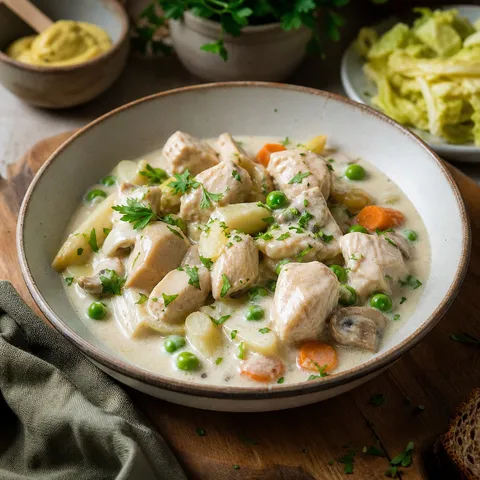
 Hühnerfrikassee (German Chicken Fricassee)
A comforting German chicken fricassee in a silky lemon-cream sauce studded with mushrooms, peas, and capers.