 German Images are for illustrative purposes only, may be inaccurate, and do not guarantee the presence or absence of specific ingredients.
  Serving Images are for illustrative purposes only, may be inaccurate, and do not guarantee the presence or absence of specific ingredients.
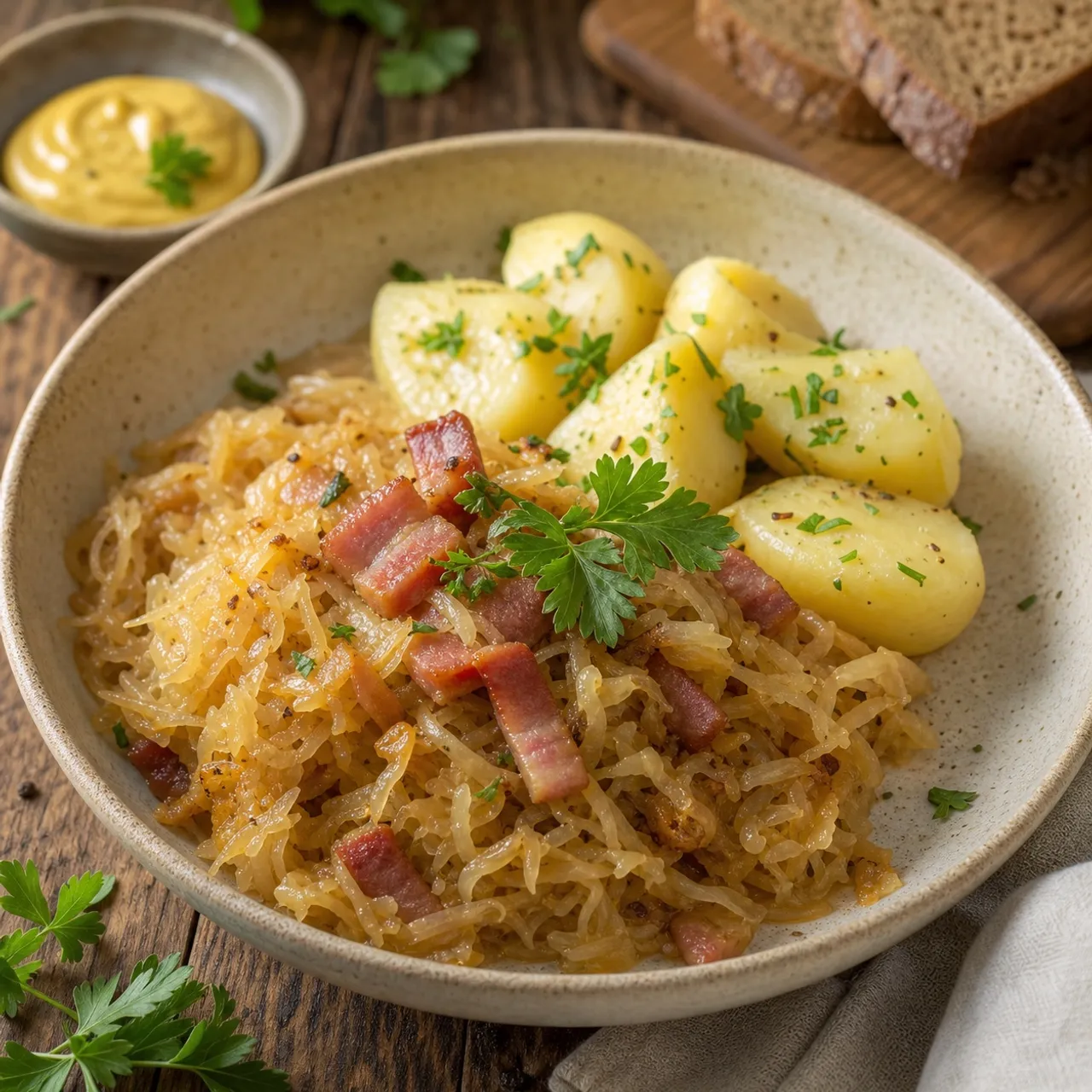
 Sauerkraut mit Speck (Braised Sauerkraut with Bacon)
Tangy sauerkraut slowly braised with bacon, onion, and juniper berries until mellow and deeply savory.
No common allergens detected
Based on this recipe's ingredient list. Always verify with your own brands and labels.
Good to know
- One-pot
Matched from this dish's own ingredients and timing. Browse more: one-pot dinners
Instructions
6 steps- 1
Fry the bacon in a large pot until it renders its fat and turns crisp.
- 2
Add the chopped onion and cook until softened.
- 3
Stir in the sauerkraut, grated apple, stock, caraway seeds, juniper berries, and bay leaf.
- 4
Bring to a simmer, cover, and cook over low heat for 30-40 minutes, stirring occasionally.
- 5
Stir in sugar and season with salt and pepper to taste.
- 6
Remove the bay leaf and serve hot as a side to sausages or roasts.
 Images are for illustrative purposes only, may be inaccurate, and do not guarantee the presence or absence of specific ingredients.
 Listahan Family Score™
79/100
Good fit for most families
Score reflects how well this recipe fits a typical busy household. In the app, your Family Score is personalized to your household's allergens, kids, and pantry.
Nutrition
per serving315
Calories
23 g
Protein
11 g
Carbs
20 g
Fat
Estimated per serving. Actual values depend on the brands and portions you use.
Listahan cooking guide
Chef notes & practical guide
Technique notes, ingredient swaps, serve-alongside ideas, storage guidance, and equipment for this recipe.
Cultural context
Sauerkraut mit Speck is braised sauerkraut simmered with bacon, onion, and a grated apple, a gentler and more savory preparation than eating sauerkraut cold or straight from the jar. The braise mellows the cabbage's sharp fermented tang and rounds it out with fat and sweetness, making it a side that can carry a meal on its own rather than just cutting through richer dishes. It's common alongside sausages and roasts across Germany, especially in colder months.
Listahan note
This version uses grated apple rather than chunks so the sweetness melts into the braise evenly, and lets the bacon render fully before the sauerkraut goes in so the fat has time to season the whole pot.
Technique cues
- Render the bacon fully before adding the sauerkraut; rushing this step means less fat to carry flavor through the rest of the braise.
- Grate the apple rather than dicing it, so it breaks down into the braise and sweetens it evenly instead of staying in separate soft chunks.
- Simmer low and covered rather than at a rolling boil; sauerkraut braised too hard turns mushy and loses the pleasant bite it should still have at the end.
Kitchen flow
- Parallel prep
- Start the sauerkraut braising alongside sausages or a roast, since both take a similar amount of time on low heat.
- Make-ahead
- This braise reheats and even improves after a day in the fridge, so it's a good one to make ahead of a bigger meal.
- Leftover move
- Fold leftovers into a hash with diced potatoes and a fried egg for a quick next-day meal.
- Cleanup rhythm
- One pot handles the whole dish; the rendered bacon fat makes for easy cleanup since little sticks once it's wiped down warm.
Ingredient brief
Role, handling, and swap guidance for each key ingredient.
Sauerkraut
Main vegetable
Purpose: Its fermented tang is the backbone of the dish, and braising it mellows the sharpness into something rounder without losing the characteristic sourness.
Handling: Drain well before adding to the pot so the braise doesn't turn watery.
Adaptation: A milder, less-fermented sauerkraut can be used if a sharper tang isn't wanted, though the dish's character will be gentler.
Bacon
Fat and savory base
Purpose: Its rendered fat and smoky flavor are what turn plain sauerkraut into a rich, savory side rather than a purely tangy one.
Handling: Fry until it renders most of its fat and turns crisp before adding the onion.
Adaptation: Smoked pancetta or a good smoked lardon can substitute for a similar effect.
Apple, peeled and grated
Sweetness balance
Purpose: It softens the sauerkraut's sourness with natural sweetness that dissolves into the braise rather than sitting as separate pieces.
Handling: Peel and grate on the coarse side of a box grater right before adding, since grated apple browns quickly.
Adaptation: A tablespoon or two of applesauce can substitute in a pinch.
Caraway seeds
Warming spice
Purpose: Caraway is the traditional partner to sauerkraut in German cooking, adding an anise-like warmth that complements the fermented tang.
Handling: Add early in the braise so the seeds have time to soften and release their flavor.
Adaptation: Fennel seed can substitute with a slightly sweeter, more licorice-forward flavor.
Juniper berries
Aromatic accent
Purpose: Their piney bitterness adds depth and is a classic match with both pork and sauerkraut in German and Alsatian cooking.
Handling: Add whole to the braise so they can be easily removed before serving.
Adaptation: A couple of crushed allspice berries can approximate the effect, though the flavor will be sweeter.
Technique notes
- Taste the sauerkraut straight from the package before starting; brands vary a lot in sourness, and that should guide how much sugar and apple you actually need.
- Keep the lid on for most of the simmer to trap moisture, then remove it for the last few minutes if the braise looks too wet.
- Fish out the bay leaf and juniper berries before serving; they're easy to lose in the sauerkraut and unpleasant to bite into.
Ingredient swaps
- Meatless direction
- Skip the bacon and start the braise in a couple tablespoons of oil with a pinch of smoked paprika for a similar savory depth.
- Dairy-free direction
- This dish is naturally dairy-free as written, since it relies on bacon fat rather than butter.
- Lower-sodium direction
- Use a lower-sodium stock or water instead of chicken stock, and season with salt only at the very end after tasting.
Serve alongside
- Bratwurst or other sausages
- Bratkartoffeln (fried potatoes)
- Boiled potatoes
- Rye bread
- Pilsner
- Dry Riesling
- Sparkling apple cider
Serving suggestions only — check pairings for your household's allergens.
Storage & reheating
- Refrigerate in a sealed container for up to 5 days.
- Reheat gently on the stovetop, adding a splash of water or stock if it looks dry.
- Freeze for up to 2 months; thaw overnight in the fridge before reheating.
Equipment
- Large pot with a lid
- Box grater for the apple
- Wooden spoon
Make this household-aware
Listahan Pro checks this recipe against your household's allergens, finds pantry-aware swaps, builds the shopping list, and helps you plan the week around it.
Plan it in Listahan
Add Sauerkraut mit Speck (Braised Sauerkraut with Bacon) to your week, check it against your household's allergens, and build the shopping list automatically.
More German recipes
 German Lens Verified Images are for illustrative purposes only, may be inaccurate, and do not guarantee the presence or absence of specific ingredients.
 Kartoffelsuppe (Creamy German Potato Soup)
A creamy, comforting German potato soup with leeks, carrots, and a smoky finish of fried sausage or bacon.
 German Lens Verified Images are for illustrative purposes only, may be inaccurate, and do not guarantee the presence or absence of specific ingredients.
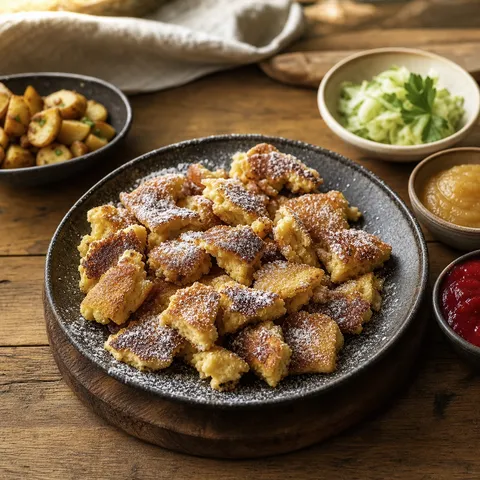
 Kaiserschmarrn (Shredded Sugared Pancake)
A fluffy shredded pancake dusted with powdered sugar and studded with golden raisins, torn into rustic pieces and served with stewed fruit compote.
 German Lens Verified Images are for illustrative purposes only, may be inaccurate, and do not guarantee the presence or absence of specific ingredients.
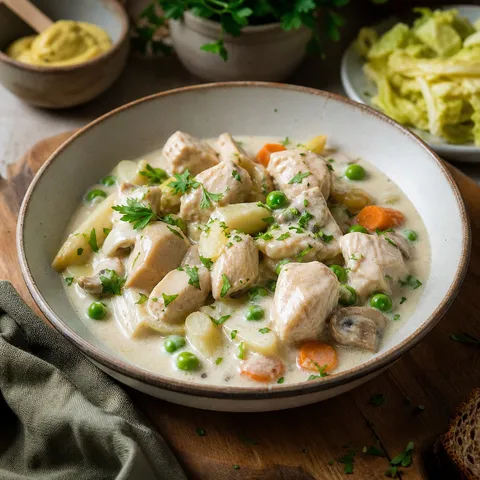
 Hühnerfrikassee (German Chicken Fricassee)
A comforting German chicken fricassee in a silky lemon-cream sauce studded with mushrooms, peas, and capers.