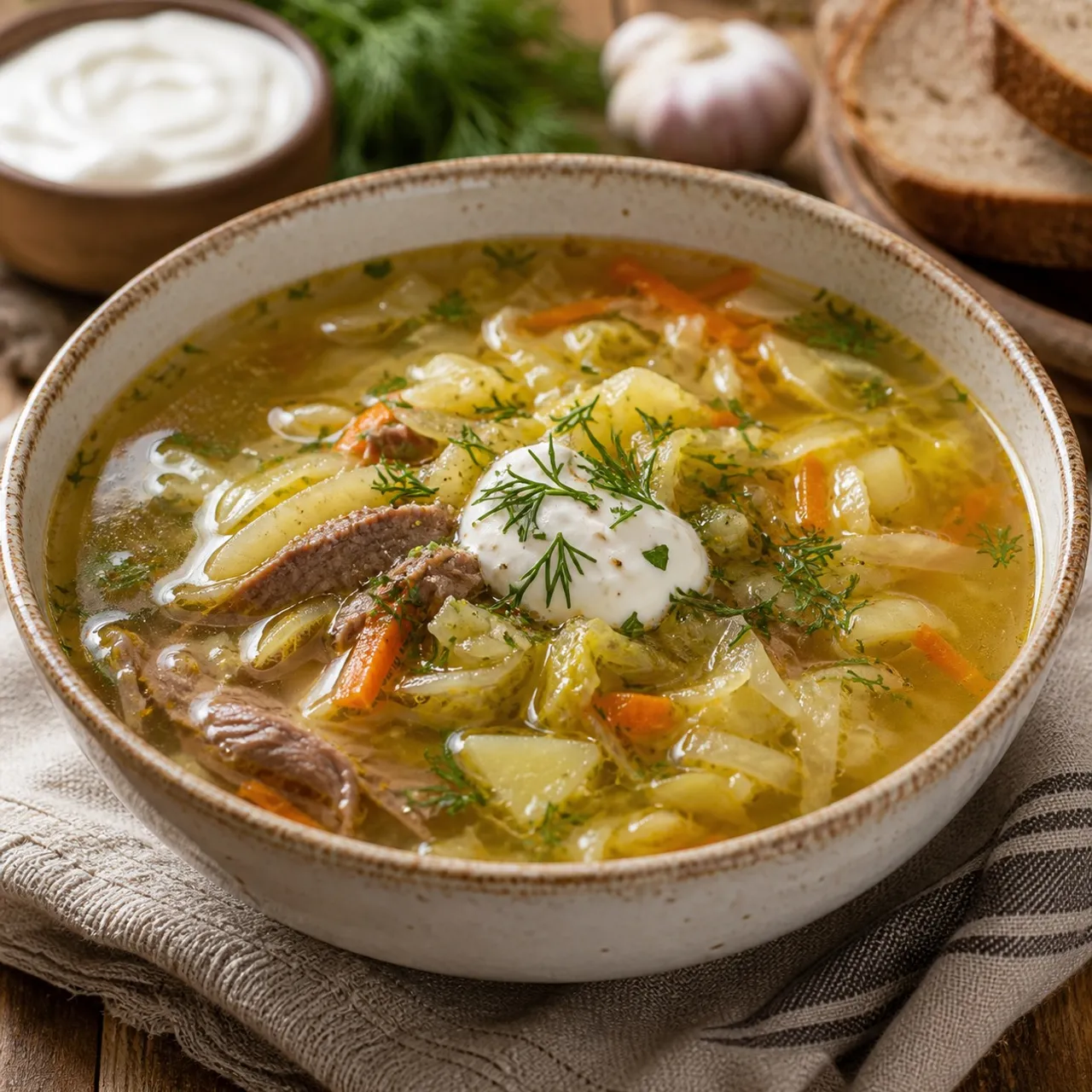
 Eastern European Images are for illustrative purposes only, may be inaccurate, and do not guarantee the presence or absence of specific ingredients.
 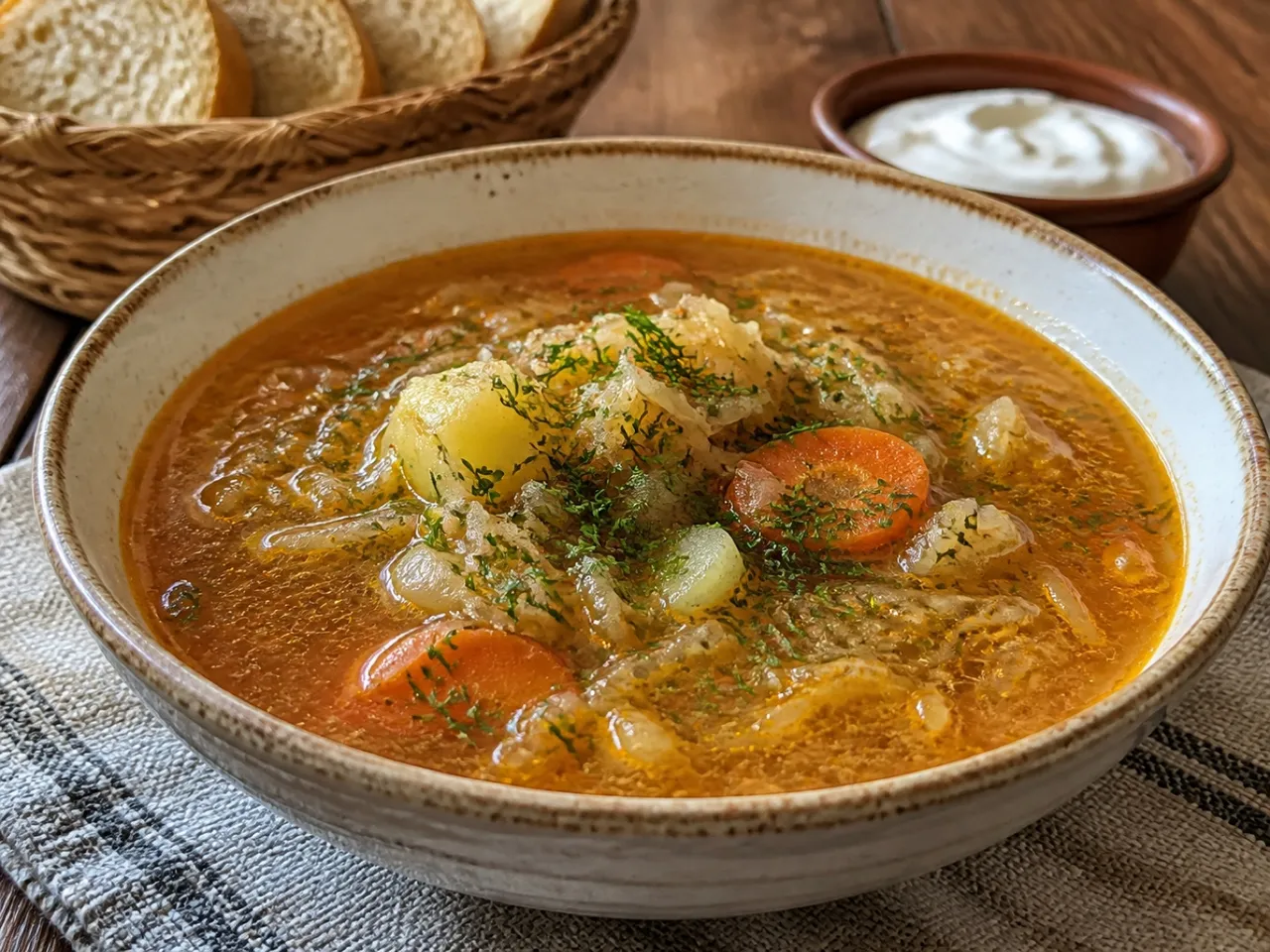 Serving Images are for illustrative purposes only, may be inaccurate, and do not guarantee the presence or absence of specific ingredients.
 Shchi
Russia's ancient, soul-warming cabbage soup — simmered with onion, carrot, and meat until mellow and savory, served with rye bread and a spoonful of sour cream.
Contains common allergens
In the app, Listahan checks these against your household automatically.
Good to know
- One-pot
Matched from this dish's own ingredients and timing. Browse more: one-pot dinners
Instructions
8 steps- 1
Place the beef in a large pot with the water, bring to a boil, and skim off any foam that rises to the surface.
- 2
Reduce to a simmer, add the bay leaves, and cook covered for about 1.5 hours, until the meat is tender enough to pull apart.
- 3
Remove the meat, shred or cube it, and return it to the pot along with the diced onion and carrot.
- 4
Simmer for 10 minutes, then add the cubed potato and cook for another 10 minutes until nearly tender.
- 5
Stir in the shredded cabbage and tomato paste, and simmer for 15 more minutes until the cabbage is soft but still has a little bite.
- 6
Season generously with salt and pepper, tasting and adjusting as the flavors come together.
- 7
Let the soup rest off the heat for at least 15 minutes, or overnight, since shchi tastes even better the next day.
- 8
Ladle into bowls and serve with a spoonful of sour cream, fresh dill, and rye bread on the side.
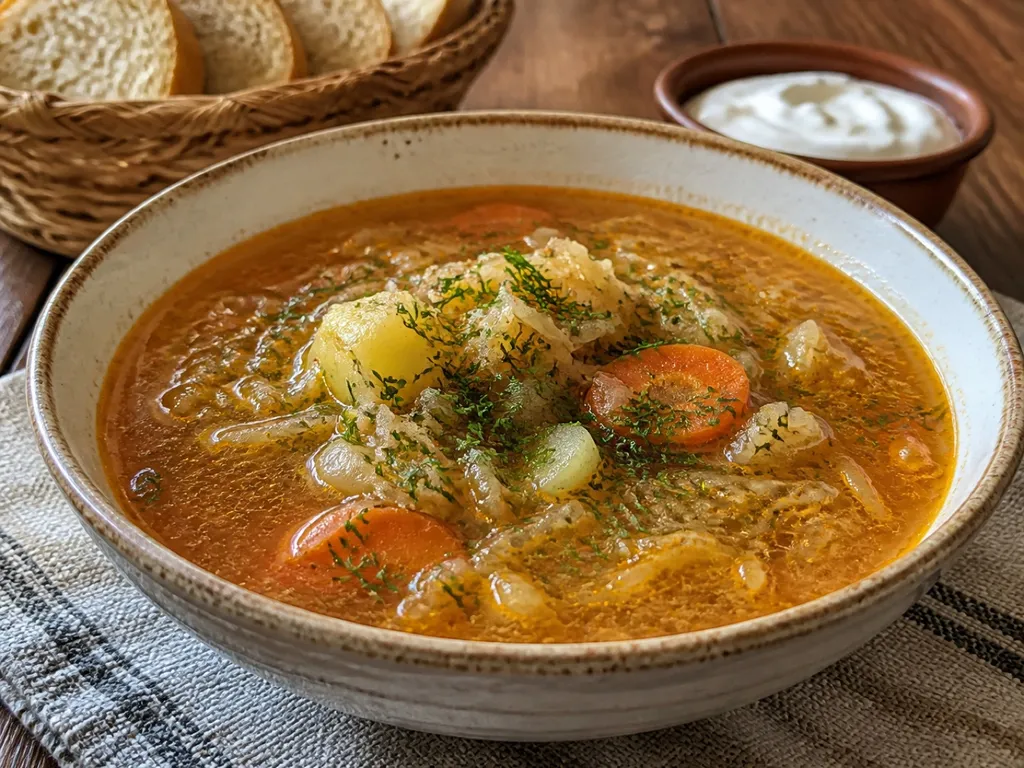 Images are for illustrative purposes only, may be inaccurate, and do not guarantee the presence or absence of specific ingredients.
 Listahan Family Score™
65/100
Works for many families
Score reflects how well this recipe fits a typical busy household. In the app, your Family Score is personalized to your household's allergens, kids, and pantry.
Nutrition
per serving130
Calories
9 g
Protein
24 g
Carbs
1 g
Fat
Estimated per serving. Actual values depend on the brands and portions you use.
Listahan cooking guide
Chef notes & practical guide
Technique notes, ingredient swaps, serve-alongside ideas, storage guidance, and equipment for this recipe.
Cultural context
Shchi is a Russian cabbage soup with roots in peasant cooking, traditionally made with either fresh cabbage or fermented sauerkraut depending on the season and what was available in a household's stores. The sour, fermented-cabbage version in particular was valued for keeping well and, according to old sayings, improving in flavor the longer it sat.
Listahan note
This version builds the broth with the cabbage added early rather than at the end, letting it soften fully into the stock the way the traditional long-simmered version does.
Technique cues
- Sweating the onion and carrot before adding broth builds an aromatic base rather than relying on the broth alone for flavor.
- Cutting the cabbage into rough, medium pieces rather than a fine shred keeps some texture in the soup instead of it dissolving completely.
- Simmering the potatoes until just tender, rather than to the point of falling apart, keeps the soup's texture varied instead of uniformly soft.
- A long, gentle simmer of an hour or more lets the cabbage lose its raw sharpness and take on the broth's savory depth.
Kitchen flow
- Parallel prep
- Prepare garnishes, sides, or serving dishes while Shchi handles its longest simmer or reduce step.
- Make-ahead
- Shchi is a genuine make-ahead dish — it actually tastes better the next day once sour cream and fresh dill to serve have had time to meld; make it a day early and reheat gently. The simmer step is what sets the pace here.
- Leftover move
- Leftover Shchi is often better the next day — refrigerate and reheat gently on the stove, thinning with a splash of water or broth if it's thickened. This one leans on the sour cream and fresh dill to serve. Everything else is quick — the simmer is the one step that takes real time.
- Cleanup rhythm
- Let the pot for Shchi soak while you eat — a long simmer tends to leave a stuck layer on the bottom that's easier to lift once soaked. This one leans on the sour cream and fresh dill to serve.
Ingredient brief
Role, handling, and swap guidance for each key ingredient.
1/2 head green cabbage
Flavor support
Purpose: head green cabbage supports the balance of Shchi and should taste integrated.
Handling: Prep before heat is high so the cooking step can move without rushing.
Adaptation: Use the closest fresh equivalent and expect a modest shift in flavor or texture.
8 cups beef or vegetable broth
Main protein or body
Purpose: cups beef or vegetable broth gives Shchi its main substance and carries the seasoning.
Handling: Pat dry, cut evenly, and season before cooking so browning or sauce coverage is consistent.
Adaptation: Use the closest fresh equivalent and expect a modest shift in flavor or texture.
2 medium potatoes
Structural base
Purpose: medium potatoes defines the shape and texture of the dish.
Handling: Wash, trim, and cut evenly so the pieces cook at the same pace.
Adaptation: Use the closest fresh equivalent and expect a modest shift in flavor or texture.
1 onion
Aromatic base
Purpose: onion creates the savory foundation before stronger ingredients are added.
Handling: Wash, trim, and cut evenly so the pieces cook at the same pace.
Adaptation: Use the closest fresh equivalent and expect a modest shift in flavor or texture.
1 large carrot
Flavor support
Purpose: large carrot supports the balance of Shchi and should taste integrated.
Handling: Prep before heat is high so the cooking step can move without rushing.
Adaptation: Use the closest fresh equivalent and expect a modest shift in flavor or texture.
Technique notes
- Shchi is traditionally served with a dollop of sour cream stirred in at the table rather than during cooking.
- The soup keeps and reheats well over several days, with many home cooks preferring it a day after it's made.
- A scattering of fresh dill right at serving keeps its aroma sharp, since dill dulls quickly if it sits in the hot broth.
Ingredient swaps
- Beef or vegetable broth
- mushroom broth
- Sour cream (to serve)
- coconut yogurt - coconut is a tree nut allergen for some
- Green cabbage
- rinsed sauerkraut for a tangier kislye shchi
Serve alongside
- Steamed rice
- Cucumber salad
- Roasted vegetables
- Pickled vegetables
- Iced tea
- Sparkling water with citrus
Serving suggestions only — check pairings for your household's allergens.
Storage & reheating
- Refrigerate up to 4 days (flavor improves overnight); reheat on the stove. Freezes well for 2 months.
- Reheat gently with a splash of water, broth, milk, or sauce as appropriate.
- Freeze only when the texture is sturdy enough to thaw and reheat cleanly.
Equipment
- Large soup pot
- Box grater
Make this household-aware
Listahan Pro checks this recipe against your household's allergens, finds pantry-aware swaps, builds the shopping list, and helps you plan the week around it.
Plan it in Listahan
Add Shchi to your week, check it against your household's allergens, and build the shopping list automatically.
More Eastern European recipes
 Eastern European Lens Verified Images are for illustrative purposes only, may be inaccurate, and do not guarantee the presence or absence of specific ingredients.
 Shashlik
Smoky, charred cubes of marinated lamb or pork threaded on skewers and grilled over embers — Central Asia's festive open-fire classic, fragrant with onion and spice.
 Eastern European Lens Verified Images are for illustrative purposes only, may be inaccurate, and do not guarantee the presence or absence of specific ingredients.
 Vatrushka
Soft, pillowy Russian buns filled with a sweetened quark or farmer's cheese center — lightly golden and gently sweet, perfect alongside tea or coffee.
 Eastern European Lens Verified Images are for illustrative purposes only, may be inaccurate, and do not guarantee the presence or absence of specific ingredients.
 Kurtosh Kalach
Hungary's iconic chimney cake — sweet yeast dough spiraled around a spit, rolled in cinnamon sugar, and roasted until the outside caramelizes into a crackly, warm shell.