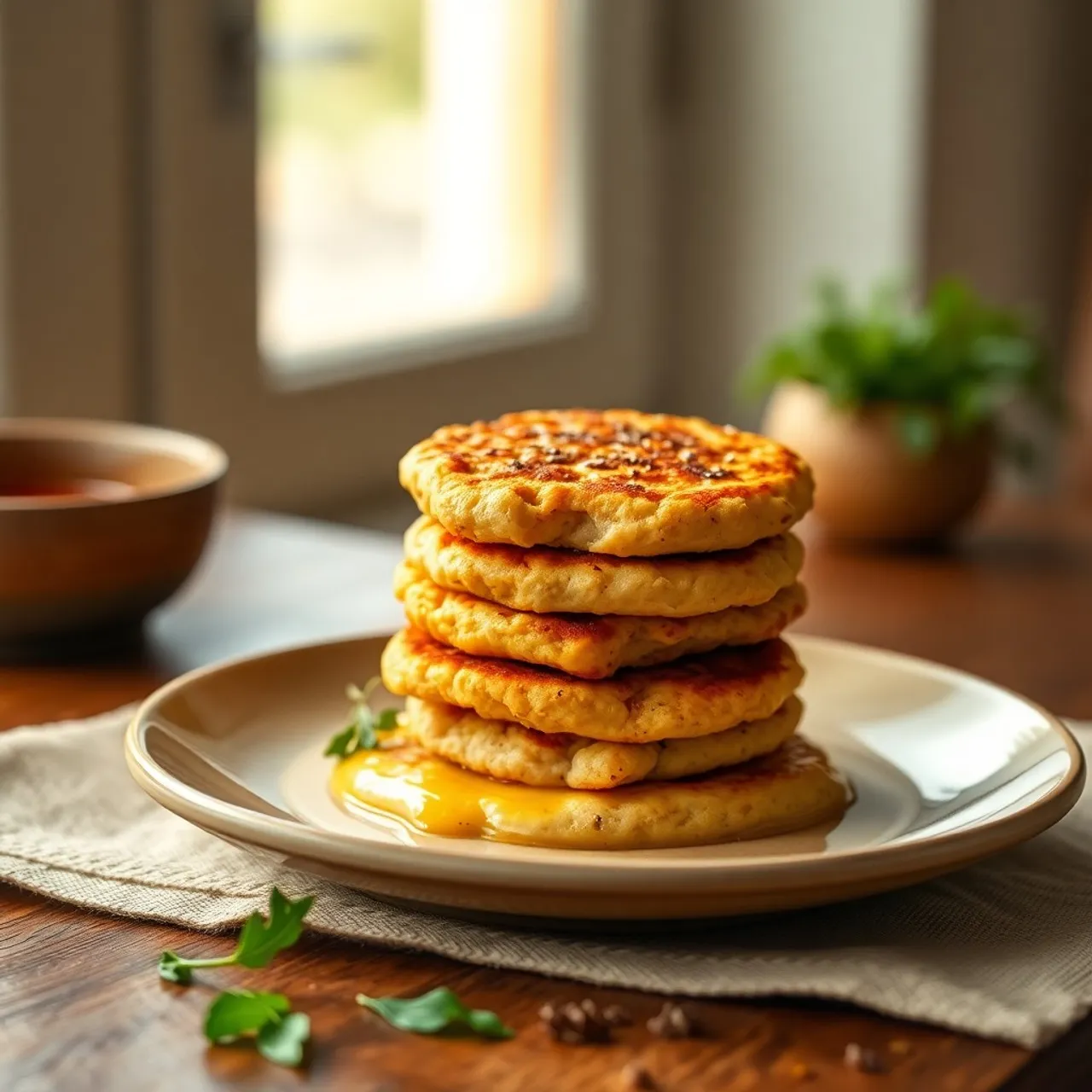
 Eastern European Images are for illustrative purposes only, may be inaccurate, and do not guarantee the presence or absence of specific ingredients.
 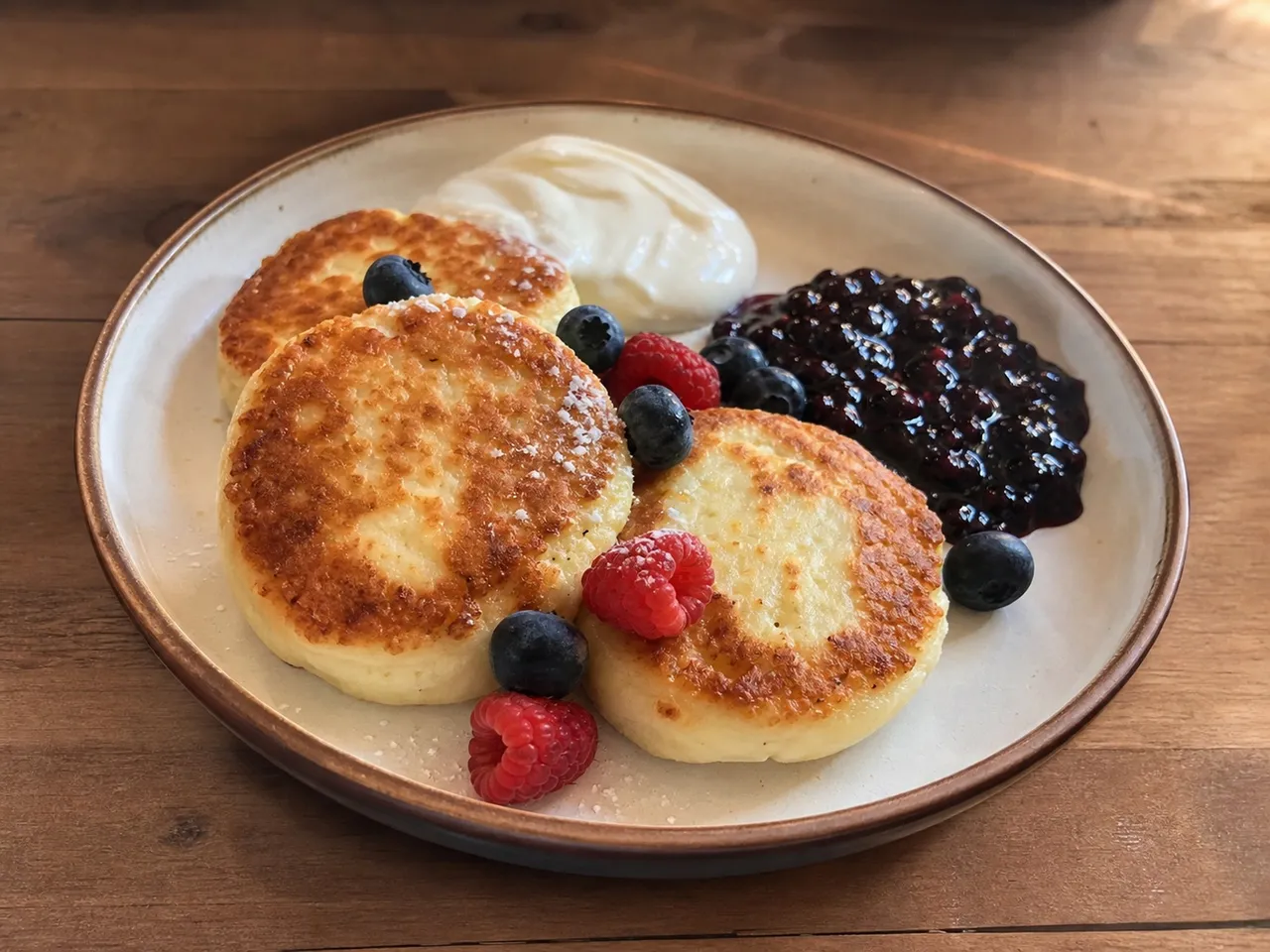 Serving Images are for illustrative purposes only, may be inaccurate, and do not guarantee the presence or absence of specific ingredients.
 Syrniki
Fluffy pan-fried quark pancakes with a golden crust and pillowy center — Russia's beloved breakfast, served with sour cream, jam, or a drizzle of honey.
Contains common allergens
In the app, Listahan checks these against your household automatically.
Good to know
- Ready in under 30 minutes
Matched from this dish's own ingredients and timing. Browse more: 30-minute meals
Instructions
8 steps- 1
If the farmer's cheese seems wet, press it through a fine sieve or wring it in cheesecloth to remove excess moisture, since a dry curd is essential for the pancakes to hold together.
- 2
In a bowl, mash the cheese with the eggs, sugar, salt, and vanilla until mostly smooth with a few small curds remaining.
- 3
Fold in the flour just until a soft, slightly sticky dough forms; avoid overmixing, which toughens the pancakes.
- 4
Turn the dough onto a well-floured surface and shape into a log. Divide into 8 to 10 pieces and pat each into a disc about 1/2 inch thick, dusting with flour as needed to prevent sticking.
- 5
Melt the butter in a nonstick skillet over medium-low heat.
- 6
Fry the patties in batches, 3 to 4 minutes per side, until the crust is deep golden brown and the center is cooked through but still tender, lowering the heat if they brown too fast.
- 7
Transfer to a plate lined with paper towel briefly to catch excess butter.
- 8
Serve warm with a dollop of sour cream and a spoonful of jam or a drizzle of honey.
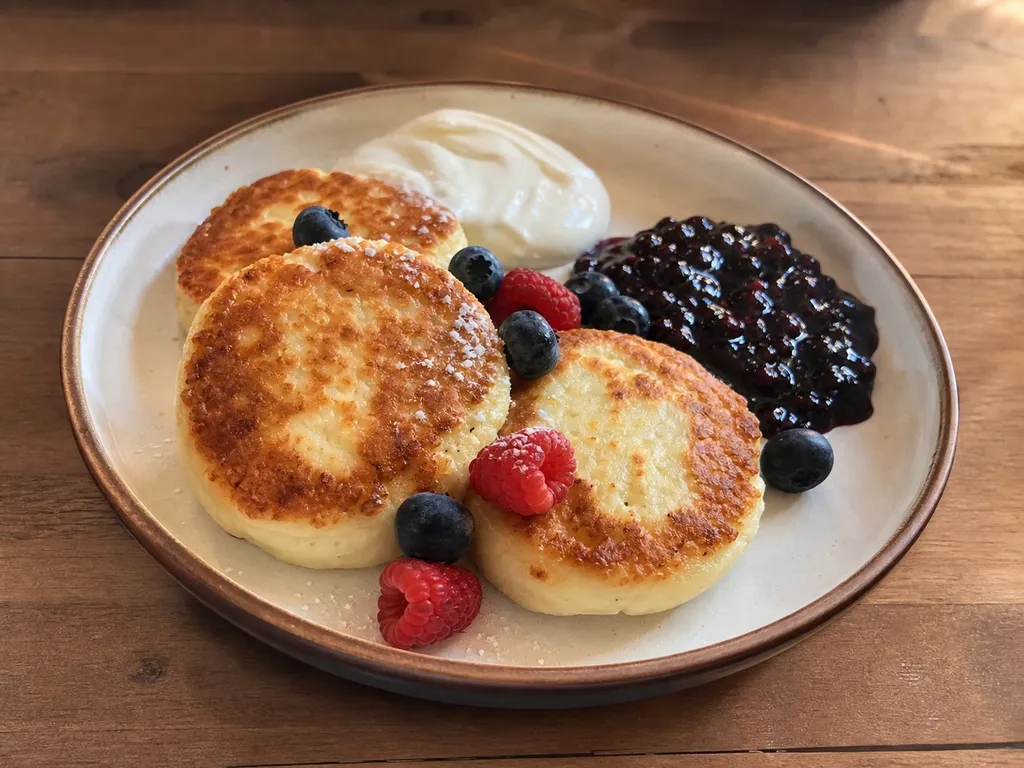 Images are for illustrative purposes only, may be inaccurate, and do not guarantee the presence or absence of specific ingredients.
 Listahan Family Score™
79/100
Good fit for most families
Score reflects how well this recipe fits a typical busy household. In the app, your Family Score is personalized to your household's allergens, kids, and pantry.
Nutrition
per serving575
Calories
34 g
Protein
14 g
Carbs
43 g
Fat
Estimated per serving. Actual values depend on the brands and portions you use.
Listahan cooking guide
Chef notes & practical guide
Technique notes, ingredient swaps, serve-alongside ideas, storage guidance, and equipment for this recipe.
Cultural context
Syrniki -- also called tvorozhniki -- are cottage cheese pancakes that have been a morning staple across Russia, Ukraine, and Belarus for generations. The name comes from the Slavic word for cheese (syr), though the key ingredient is tvorog, a fresh farmer-style cheese closer to dry-curd cottage cheese than to aged varieties. Before refrigeration, tvorog was made weekly from soured milk and syrniki were one of the most practical ways to use it up before it spoiled, making them a fixture of domestic cooking rather than restaurant cuisine.
Listahan note
This version uses dry-curd cottage cheese or farmer cheese to keep the pancakes dense enough to hold their shape without tasting heavy -- we add just enough flour to bind and let the cheese flavor stay front and center. The pan is kept at medium heat throughout so the outside caramelizes gently without burning before the center firms.
Technique cues
- Drain the cottage cheese through a fine-mesh strainer or cheesecloth for at least 30 minutes before mixing; wet curd makes the batter too loose to shape, so this step is the single biggest predictor of whether your syrniki hold together.
- Handle the dough with lightly floured hands and work quickly -- the warmth of your hands softens the cheese, so overworking or taking too long to shape makes sticky patties that fall apart when flipped.
- Pan-fry over medium-low heat in clarified butter or a neutral oil with a high smoke point; regular whole butter browns too fast at the temperature needed to cook the cheese centers through, leaving raw middles under a dark crust.
Kitchen flow
- Parallel prep
- Set the cheese to drain at the start of prep; while it drains, measure the remaining ingredients and bring the pan to temperature so you can mix and cook in one smooth sequence.
- Make-ahead
- Shaped raw syrniki can be arranged on a parchment-lined tray, covered, and refrigerated for up to eight hours before frying -- the cold actually firms them up and makes them easier to handle.
- Leftover move
- Reheat cooked syrniki in a dry nonstick pan over medium-low heat for two minutes per side to restore the crust; they are also surprisingly good cold from the refrigerator, eaten like a snack with a spoonful of jam.
- Cleanup rhythm
- Work the dough on a lightly floured sheet of parchment for zero-scrub cleanup; the pan needs only a paper towel wipe between batches unless the fat darkens significantly.
Ingredient brief
Role, handling, and swap guidance for each key ingredient.
dry-curd cottage cheese
main structure
Purpose: Tvorog or dry cottage cheese provides the protein and fat that give syrniki their distinctive dense, custardy interior and their slightly tangy flavor.
Handling: Drain through a fine strainer or cheesecloth for at least 30 minutes; if using regular supermarket cottage cheese, press firmly to remove as much whey as possible before measuring.
Adaptation: Ricotta drained overnight in the refrigerator is the most common substitute and gives a slightly creamier, less tangy result.
egg
binder
Purpose: Egg proteins set during cooking and hold the loose cheese and flour mixture into a cohesive pancake that does not crumble when flipped.
Handling: Beat lightly before adding so it distributes through the cheese without requiring extended mixing.
Adaptation: One tablespoon of cornstarch dissolved in two tablespoons of water can replace the egg for a dairy-tolerant but egg-free version, though the texture will be slightly less tender.
all-purpose flour
minimal binder and coating
Purpose: A small amount of flour keeps the pancakes from spreading flat and sticking to the pan while still letting the cheese texture dominate.
Handling: Mix into the cheese in two additions to avoid overworking and developing gluten, which would make the syrniki tough.
Adaptation: Semolina flour in a 1-to-1 swap gives a slightly grainier, crunchier exterior that many cooks prefer for the textural contrast.
sugar
sweetness and crust development
Purpose: Sugar adds light sweetness that signals breakfast rather than savory and encourages a golden caramel crust on the exterior during frying.
Handling: Add with the flour so it disperses evenly and does not leave sweet pockets in the finished pancake.
Adaptation: Omit entirely for a savory version topped with sour cream and fresh herbs instead of jam -- both styles are traditional.
vanilla extract
aromatic sweetness
Purpose: Vanilla lifts the mild tang of the cheese and rounds out the sweetness without adding more sugar.
Handling: Add to the egg before mixing into the cheese so it distributes evenly in a single addition.
Adaptation: Vanilla sugar (common in Eastern European baking) can replace both the sugar and extract; use one packet (about 8 grams) in place of the vanilla.
Technique notes
- Roll each shaped patty lightly in flour before it goes into the pan -- this thin coating sets immediately on contact with the hot fat and creates a crust that keeps the soft cheese interior from sticking or breaking apart during the flip.
- The ideal syrniki is about three-quarters of an inch thick and two and a half inches across; thicker pancakes need too long at low heat and dry out, while thinner ones cook through before a proper crust can develop.
- A teaspoon of lemon zest in the batter is a quiet upgrade that sharpens the cheese flavor and makes the finished pancakes taste noticeably brighter without tasting citrusy.
Ingredient swaps
- Gluten-free direction
- Substitute the flour with rice flour in the same amount; the crust will be slightly crisper and the pancake a touch more fragile, so handle gently when flipping.
- Lower-sugar direction
- Reduce the sugar by half and finish with a drizzle of honey at the table; the reduction does not affect how the syrniki hold together and gives diners control over sweetness.
- Dairy-free option
- Use well-drained firm silken tofu blended smooth as the cheese base; the flavor will be neutral rather than tangy, so add a teaspoon of lemon juice to compensate.
Serve alongside
- Sour cream and strawberry jam served in small bowls for dipping
- Fresh berry compote with a pinch of sugar
- Sliced fresh fruit and a cup of black tea
- Strong black tea with a cube of sugar
- Cold kefir or plain drinking yogurt
Serving suggestions only — check pairings for your household's allergens.
Storage & reheating
- Cooked syrniki keep in the refrigerator in a covered container for up to three days; layer them with parchment so they do not stick together.
- They freeze well: cool completely, arrange in a single layer on a tray to freeze solid, then transfer to a bag; reheat from frozen in a 350 F oven for 10 to 12 minutes, flipping halfway, to restore their texture.
Equipment
- Fine-mesh strainer or cheesecloth for draining the cottage cheese
- Nonstick or well-seasoned cast-iron skillet for even heat and easy release
- Bench scraper or flat spatula for shaping and moving delicate raw patties
- Wide thin spatula for flipping without breaking the crust
Make this household-aware
Listahan Pro checks this recipe against your household's allergens, finds pantry-aware swaps, builds the shopping list, and helps you plan the week around it.
Plan it in Listahan
Add Syrniki to your week, check it against your household's allergens, and build the shopping list automatically.
More Eastern European recipes
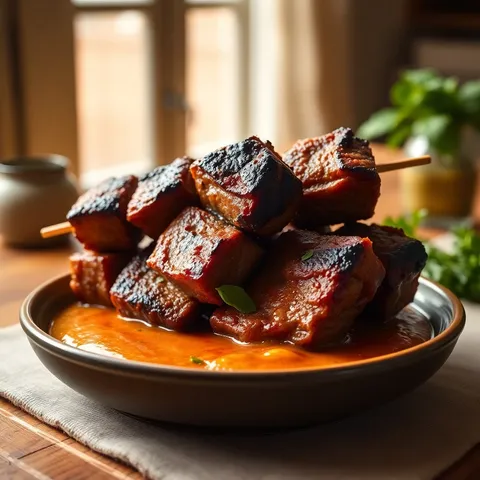 Eastern European Lens Verified Images are for illustrative purposes only, may be inaccurate, and do not guarantee the presence or absence of specific ingredients.
 Shashlik
Smoky, charred cubes of marinated lamb or pork threaded on skewers and grilled over embers — Central Asia's festive open-fire classic, fragrant with onion and spice.
 Eastern European Lens Verified Images are for illustrative purposes only, may be inaccurate, and do not guarantee the presence or absence of specific ingredients.
 Vatrushka
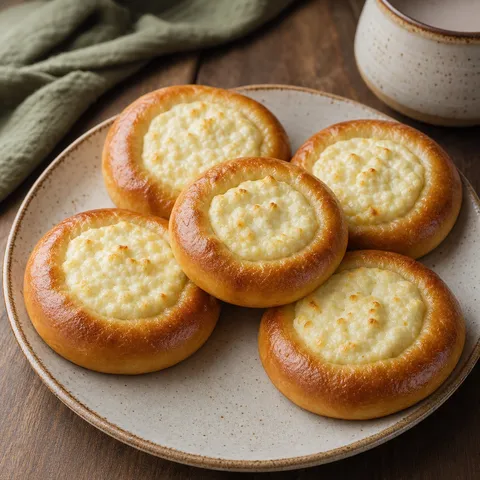
Soft, pillowy Russian buns filled with a sweetened quark or farmer's cheese center — lightly golden and gently sweet, perfect alongside tea or coffee.
 Eastern European Lens Verified Images are for illustrative purposes only, may be inaccurate, and do not guarantee the presence or absence of specific ingredients.
 Kurtosh Kalach
Hungary's iconic chimney cake — sweet yeast dough spiraled around a spit, rolled in cinnamon sugar, and roasted until the outside caramelizes into a crackly, warm shell.