 German Images are for illustrative purposes only, may be inaccurate, and do not guarantee the presence or absence of specific ingredients.
  Serving Images are for illustrative purposes only, may be inaccurate, and do not guarantee the presence or absence of specific ingredients.
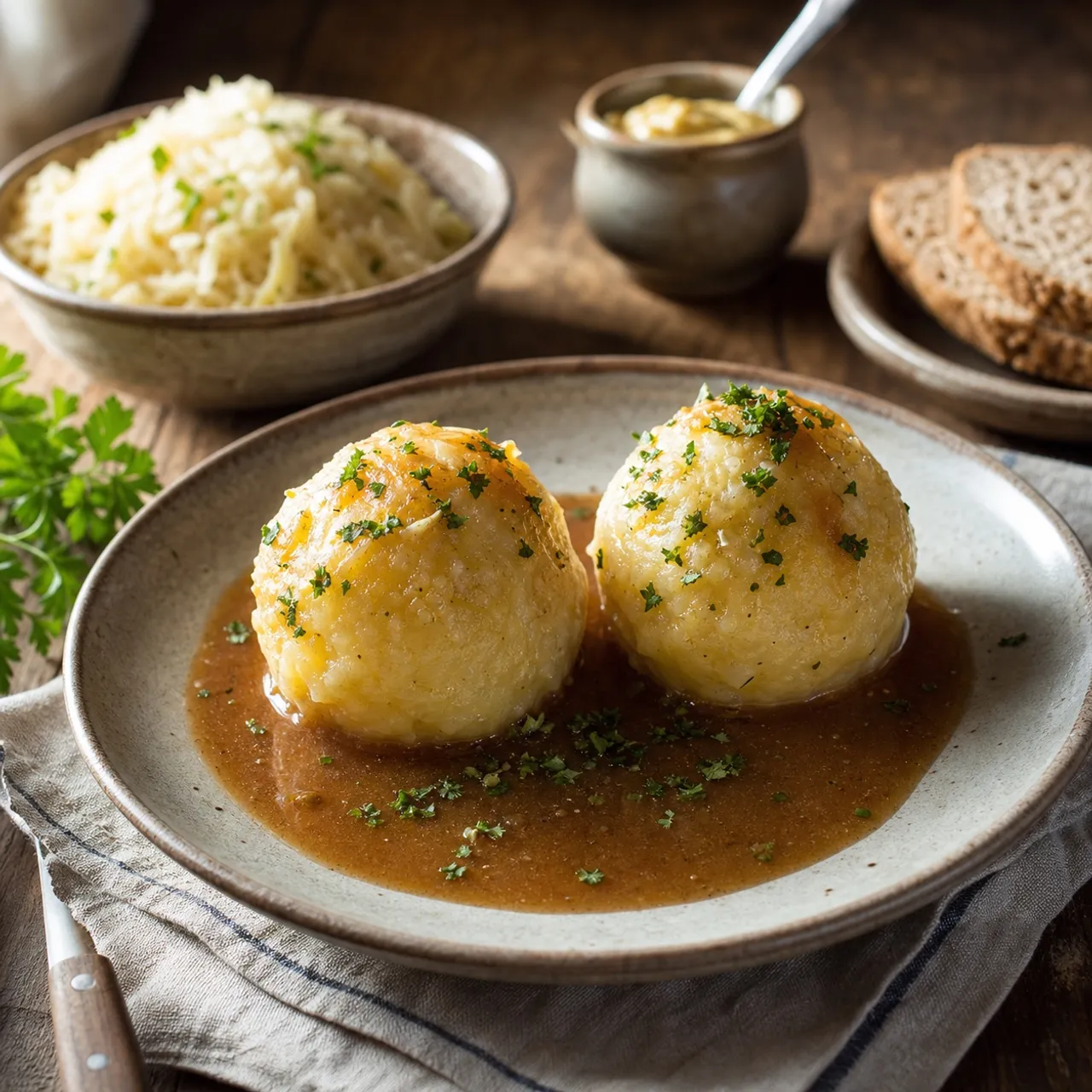
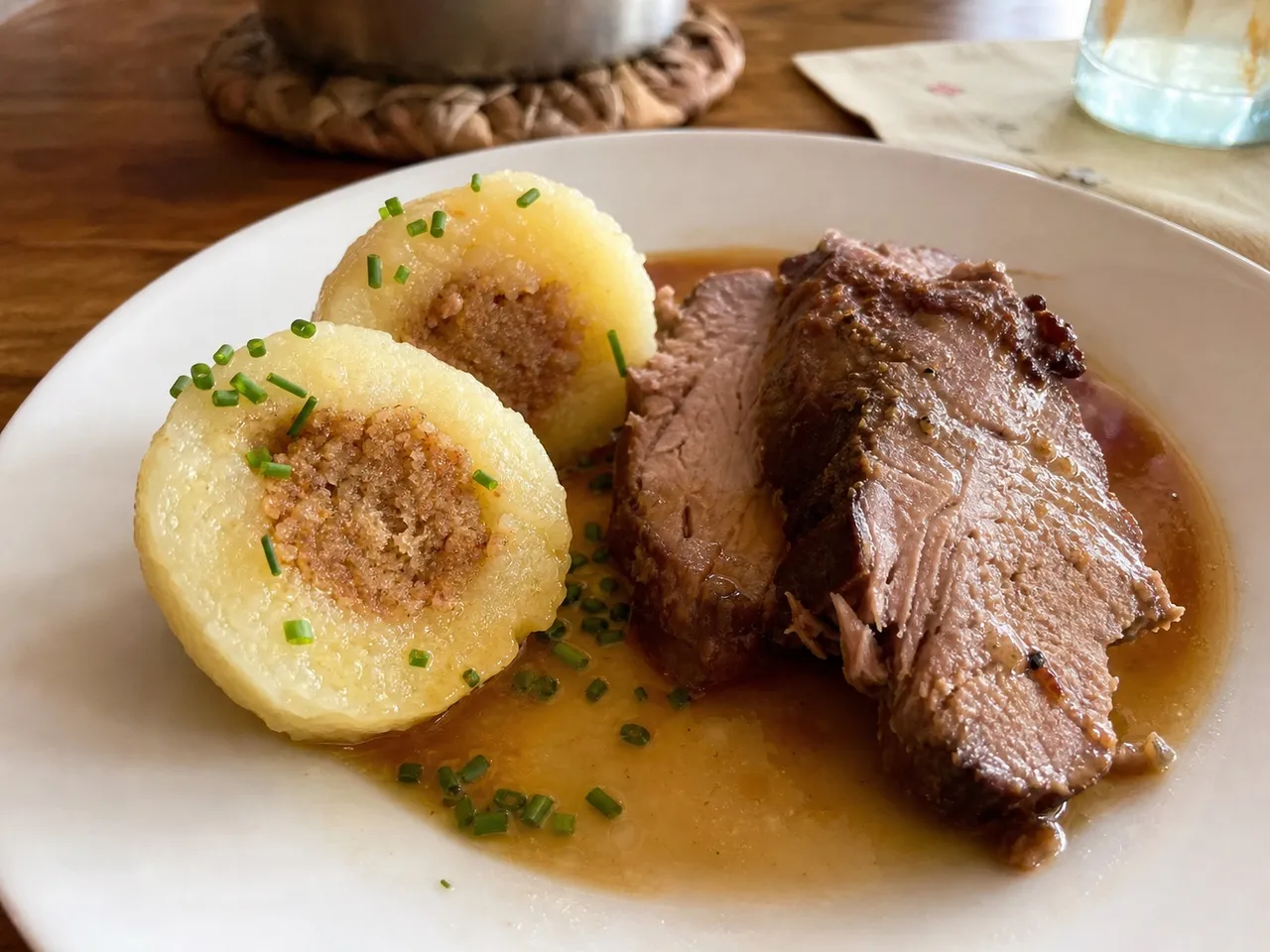
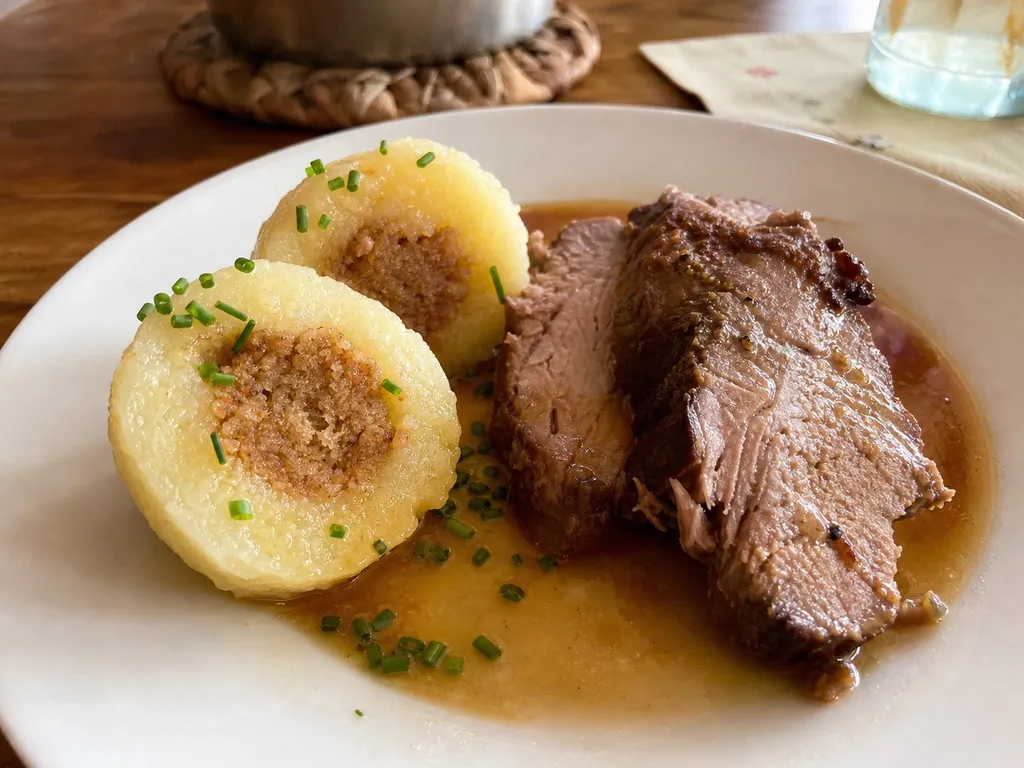
 Kartoffelknödel (Bavarian Potato Dumplings)
Fluffy Bavarian potato dumplings, boiled until tender and perfect for soaking up rich gravies from roasts.
Contains common allergens
In the app, Listahan checks these against your household automatically.
Instructions
6 steps- 1
Boil the potatoes whole in their skins until tender, then peel while still warm and rice them into a bowl.
- 2
Let the riced potatoes cool slightly, then mix in egg, potato starch, nutmeg, and salt until a smooth dough forms.
- 3
Melt butter in a small pan and toast the breadcrumbs until golden; set aside.
- 4
Shape the potato dough into 8 balls, pressing a small pocket of toasted breadcrumbs into the center of each.
- 5
Bring a large pot of salted water to a gentle simmer and drop in the dumplings.
- 6
Simmer for 15-20 minutes until they float and are cooked through, then serve immediately.
 Images are for illustrative purposes only, may be inaccurate, and do not guarantee the presence or absence of specific ingredients.
 Listahan Family Score™
75/100
Good fit for most families
Score reflects how well this recipe fits a typical busy household. In the app, your Family Score is personalized to your household's allergens, kids, and pantry.
Nutrition
per serving350
Calories
8 g
Protein
52 g
Carbs
12 g
Fat
Estimated per serving. Actual values depend on the brands and portions you use.
Listahan cooking guide
Chef notes & practical guide
Technique notes, ingredient swaps, serve-alongside ideas, storage guidance, and equipment for this recipe.
Cultural context
Kartoffelknodel are Bavarian potato dumplings made from riced boiled potatoes bound with a little egg and starch, traditionally served alongside roasts to soak up gravy. Unlike bread dumplings, they lean on the potato's own starch for structure, which is why the potatoes are riced rather than mashed, to avoid gumminess. Many home cooks toast a few breadcrumbs in butter to tuck inside the center as a small textural surprise.
Listahan note
This version keeps the potato dough soft rather than working it too much, since overworking the starch is the most common way these dumplings turn gluey, and it hides a spoonful of toasted breadcrumbs in the center to add a bit of crunch against the smooth potato.
Technique cues
- Rice the potatoes rather than mashing them; a ricer keeps the texture light and starchy without overworking the potato, which mashing tends to do.
- Handle the dough as little as possible once the egg and starch go in; overworking activates the starch and makes for gummy, heavy dumplings.
- Simmer gently rather than boil hard, since aggressive bubbling can knock the dumplings apart before they firm up.
Kitchen flow
- Parallel prep
- Boil the potatoes while prepping whatever roast or gravy the dumplings will accompany, since both take roughly an hour.
- Make-ahead
- The dough can be shaped a few hours ahead and refrigerated; simmer just before serving so the dumplings don't sit and turn dense.
- Leftover move
- Leftover dumplings slice well and pan-fry in butter the next day, developing a golden crust that plain reheating won't give you.
- Cleanup rhythm
- Rice the potatoes directly over the mixing bowl to cut down on extra dishes, and wipe the ricer while the starch is still warm and hasn't dried on.
Ingredient brief
Role, handling, and swap guidance for each key ingredient.
Starchy potatoes (such as russet)
Main structure
Purpose: High-starch potatoes rice into a light, dry texture that holds together with very little added starch or egg.
Handling: Boil whole in their skins so they don't absorb extra water, then peel and rice while still warm.
Adaptation: Yukon gold potatoes work but hold more moisture, so you may need slightly more potato starch to compensate.
Potato starch
Binder
Purpose: It reinforces the potato's own starch to help the dumplings hold their shape through simmering without turning gummy the way flour can.
Handling: Mix in once the riced potato has cooled slightly so the starch doesn't clump from residual heat.
Adaptation: Cornstarch is a reasonable substitute in a similar quantity.
Egg
Binder
Purpose: A single egg adds just enough structure to the dough without making the dumplings dense.
Handling: Mix in after the potato has cooled slightly to avoid partially cooking the egg.
Adaptation: There's no clean egg-free swap here; a flax egg can be tried but the dumplings will be more fragile.
Breadcrumbs
Textural center
Purpose: A small pocket of toasted, buttery breadcrumbs inside each dumpling adds crunch and a savory contrast to the soft potato exterior.
Handling: Toast until golden and fragrant before pressing into the dough, since raw breadcrumbs add no flavor.
Adaptation: Gluten-free breadcrumbs toast the same way if needed.
Technique notes
- Test one dumpling in the simmering water first; if it falls apart, work in a touch more potato starch before shaping the rest.
- Keep the simmer gentle and steady rather than a rolling boil; a hard boil is the main reason these dumplings break apart.
- Rice the potatoes while they're still warm, not after they've cooled, since cold riced potato is harder to bind smoothly.
Ingredient swaps
- Gluten-free direction
- Use certified gluten-free breadcrumbs for the center; the potato dough itself is naturally gluten-free aside from that addition.
- Dairy-free direction
- Toast the breadcrumbs in oil instead of butter; the flavor will be a touch less rich but the texture holds up fine.
- Simpler path
- Skip the breadcrumb center entirely and shape plain dumplings if you're short on time; they'll still hold together well.
Serve alongside
- Roast pork or beef
- Rotkohl (braised red cabbage)
- Mushroom gravy
- Green beans with bacon
- Dry Riesling
- Dunkel lager
- Sparkling water with lemon
Serving suggestions only — check pairings for your household's allergens.
Storage & reheating
- Refrigerate cooked dumplings in a sealed container for up to 3 days.
- Reheat by pan-frying in butter until warmed through and lightly golden, or steam gently to reheat without added color.
- Freeze cooked and cooled dumplings for up to 1 month; simmer from frozen for a few extra minutes to reheat.
Equipment
- Potato ricer
- Large pot
- Small skillet for toasting breadcrumbs
- Slotted spoon
Make this household-aware
Listahan Pro checks this recipe against your household's allergens, finds pantry-aware swaps, builds the shopping list, and helps you plan the week around it.
Plan it in Listahan
Add Kartoffelknödel (Bavarian Potato Dumplings) to your week, check it against your household's allergens, and build the shopping list automatically.
More German recipes
 German Lens Verified Images are for illustrative purposes only, may be inaccurate, and do not guarantee the presence or absence of specific ingredients.
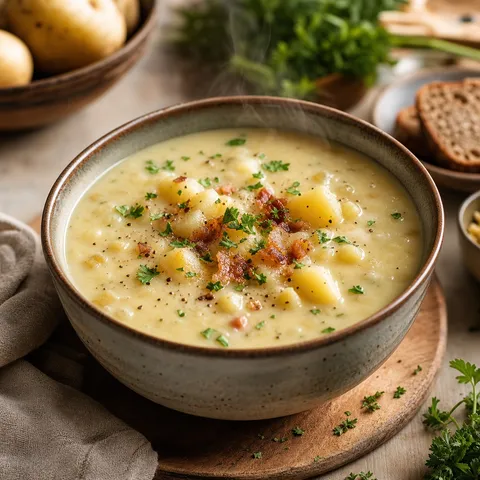
 Kartoffelsuppe (Creamy German Potato Soup)
A creamy, comforting German potato soup with leeks, carrots, and a smoky finish of fried sausage or bacon.
 German Lens Verified Images are for illustrative purposes only, may be inaccurate, and do not guarantee the presence or absence of specific ingredients.
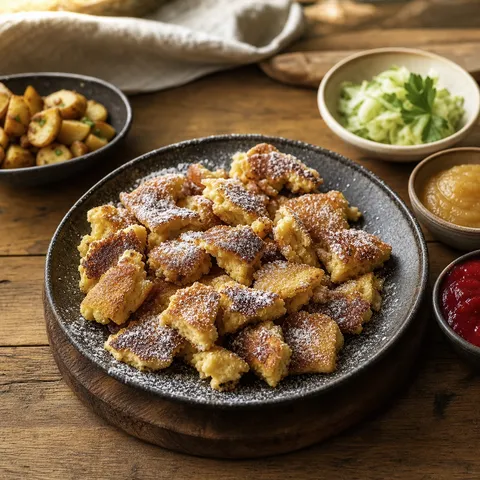
 Kaiserschmarrn (Shredded Sugared Pancake)
A fluffy shredded pancake dusted with powdered sugar and studded with golden raisins, torn into rustic pieces and served with stewed fruit compote.
 German Lens Verified Images are for illustrative purposes only, may be inaccurate, and do not guarantee the presence or absence of specific ingredients.
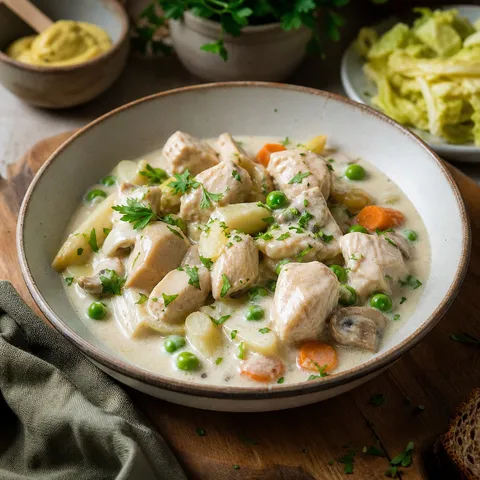
 Hühnerfrikassee (German Chicken Fricassee)
A comforting German chicken fricassee in a silky lemon-cream sauce studded with mushrooms, peas, and capers.